


On January 21, 2024, Storm Isha’s 90mph gusts left thousands of UK homeowners facing collapsed boundaries and exposed gardens. If your fence is leaning or panels have snapped, you're dealing with a serious security risk and the stress of a potential full replacement bill. A broken fence is more than an eyesore; it's a safety hazard that leaves your property wide open. Learning how to fix a storm damaged fence using professional trade techniques allows you to restore your garden's security quickly and cost-effectively.
You don't always need to scrap the entire run to get a professional, secure result. This guide teaches you how to assess the damage like a trade expert and use high-quality materials to make your boundary stronger than it was before the wind hit. We'll walk you through a clear, step-by-step process for assessing structural integrity, replacing specific panels, and reinforcing posts with the right ironmongery to withstand future weather events.
Key Takeaways
- Identify if your boundary is beyond repair by checking for hidden structural failures in the post-to-ground connections.
- Learn how to fix a storm damaged fence by replacing panels correctly without compromising your existing post-fixings.
- Use concrete repair spurs as a cost-effective, trade-standard solution to secure posts that have snapped at ground level.
- Strengthen your garden fencing against future weather events by installing gravel boards and inspecting arris rail brackets for fatigue.
- Understand why trade-grade materials from Romford Fencing Ltd provide superior wind resistance compared to budget retail alternatives.
Assessing Storm Damage: Is Your Fence Beyond Repair?
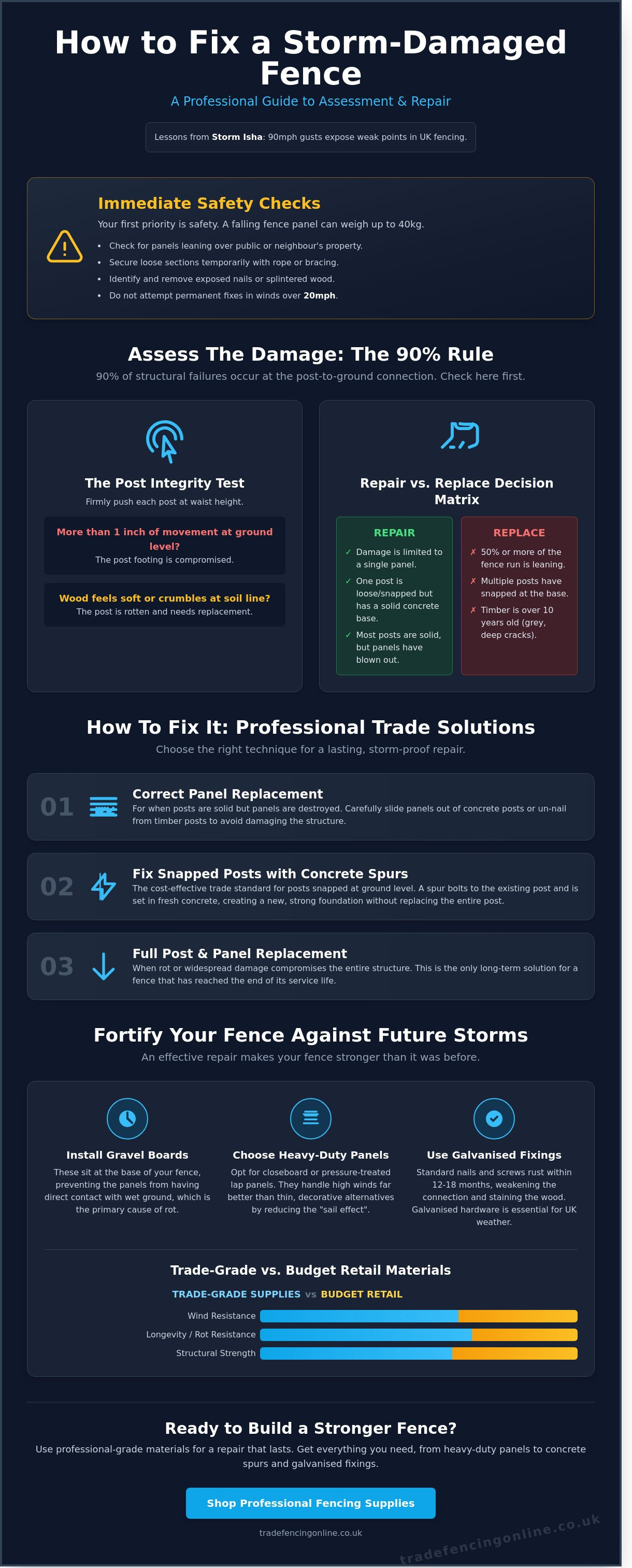
Storm damage is rarely just a missing slat. It is typically a structural failure caused by wind-load pressure or extreme ground saturation. A standard 6ft solid fence panel acts like a sail during high winds. In gusts exceeding 50mph, these panels transfer immense force to the posts. If the ground is saturated from heavy rainfall, the soil loses its ability to hold the post footings in place. This combination leads to leaning or complete collapse. To understand how to fix a storm damaged fence, you must first identify if the skeleton of the structure is still viable.
Walk your entire boundary line to find hidden failures. Don't just look at the panels. Focus on the post-to-ground connection. This is where 90% of structural breaks occur. Push each post firmly. If there is more than 1 inch of movement at the ground level, the footer is compromised. You should also look for signs of rot that the storm has finally exposed. High winds often snap timber that has been decaying internally for 3 to 5 years. Use a screwdriver to poke the wood at the soil line. If the timber feels soft or crumbles, the material is past its service life.
Immediate Safety Checks After High Winds
Your first priority is safety, not aesthetics. Check for leaning panels that could fall onto public footpaths or a neighbour's property. A standard fence panel weighs between 25kg and 40kg; a falling section can cause serious injury. Look for exposed nails and splintered timber in fencing that has partially shattered. These are immediate hazards for pets and children. Secure any loose sections with temporary rope or timber bracing. This prevents the wind from catching the panel again and causing further damage to the remaining upright posts. Do not attempt a permanent fix until the wind speeds have dropped below 20mph.
The Repair vs. Replace Decision Matrix
Deciding whether to patch a section or install a new run depends on the extent of the damage and the age of the materials. Use this direct criteria to make your choice:
- When to replace: If 50% or more of the fence run is leaning or if multiple posts have snapped at the base. If the timber is older than 10 years and shows signs of grey weathering and deep cracks, it is rarely worth patching.
- When to repair: If the damage is limited to a single panel failure or a solitary loose post that still has a solid concrete base. You can often use a repair spur to reinforce a single broken post without digging out the entire footer.
- Structural Integrity: If the posts are vertical and solid, but the panels have blown out, a simple panel replacement is the most cost-effective route.
Learning how to fix a storm damaged fence effectively means knowing when to stop throwing money at rotten wood. If the structural posts are compromised across the majority of the line, a full replacement with high-quality pressure-treated timber is the only way to ensure the fence survives the next season.
How to Replace Damaged Fence Panels Correctly
Storm damage often leaves posts standing while the panels are shredded or blown out. Learning how to fix a storm damaged fence starts with careful removal. You shouldn't simply rip the old timber out. Doing so risks cracking the post or loosening the ground fixings, which turns a simple panel swap into a full post replacement. Clear the site of all splinters and debris first so you have a stable, safe workspace for the new installation.
Selecting the right replacement is vital for long-term durability. If your garden is a known wind tunnel, avoid thin, decorative panels. Opt for heavy-duty closeboard or pressure-treated lap panels instead. These designs handle high-pressure gusts much better than standard alternatives. Always use galvanised nails or screws for every fix. Standard steel fasteners corrode within 12 to 18 months in the UK climate. This leads to timber rot around the nail hole and creates permanent, ugly orange streaks on your new wood.
Trade Tip: Use a spirit level on every single panel. If your new panels aren't level, wind-loading becomes uneven across the run. A tilted panel creates a "wind trap" where pressure is concentrated on specific corners. A perfectly level installation distributes wind-loading across the entire post surface, which can increase the lifespan of your repair by several years.
Removing Broken Panels from Slotted Concrete Posts
Concrete systems allow for relatively easy swaps if you follow the right steps. Start by clearing grit and organic debris from the grooves of your concrete fence posts. Small stones or wood splinters often jam the new panel halfway down the slot. Slide the old timber out vertically and check the gravel board at the base for hairline cracks. If the new panel is a tight fit, lubricate the slot with a small amount of water. This helps the timber slide into place without the need for excessive force.
Securing New Panels to Timber Posts
When working with timber posts, don't nail directly through the face of the panel. Use U-clips or fence brackets for a more secure, professional finish. These metal connectors make future repairs much easier and prevent the panel from rattling in high winds. Always pilot drill your holes in the frame to prevent the timber from splitting when you drive the screws home. Maintain a 50mm gap from the ground to prevent moisture wicking into the wood. If you can't have a gap, install a concrete or timber gravel board to act as a sacrificial barrier against rot. This is a critical step when you want to know how to fix a storm damaged fence so it actually lasts through the next season.
If you need high-quality materials to complete your repair, browse our range of fence panels and accessories to find the right match for your garden.
Fixing Snapped or Leaning Posts with Concrete Spurs
A post snapped at ground level is the most common casualty of high winds. You don't always need to replace the entire timber post. Installing a concrete repair spur, often called a Godfather post, is the most cost-effective way to restore structural integrity. It avoids the labour-intensive task of digging out an old concrete base. This method saves approximately 2 hours of labour per post compared to a full replacement. You'll need a spade, a spirit level, a drill, and heavy-duty coach bolts to complete this repair.
Alignment is critical for maximum stability. Position the spur against the solid wood of the existing post. Ensure the pre-drilled holes in the concrete sit against a healthy section of timber, not the rotted or snapped area. This reinforcement provides a solid anchor that resists future wind loads. It's a pragmatic choice for homeowners learning how to fix a storm damaged fence on a budget without sacrificing quality.
Digging and Setting the Repair Spur
Start by digging a hole 600mm deep. Place this hole on the "strong" side of the leaning post, which is usually the side facing away from the prevailing wind. Position the spur so it stands flush against the timber. Use a spirit level to check the spur is perfectly vertical. If the spur is even slightly tilted, the entire fence line will remain weak. Secure the spur to the post using coach bolts before you add any concrete. This ensures the alignment stays true during the setting process and prevents the post from shifting.
Using Postcrete for a Rapid Storm Fix
Speed is essential when a fence is down and security is compromised. Using professional fencing supplies like Postcrete allows for a 10-minute set time. This rapid-setting mix is ideal for emergency repairs. Pour water into the hole first, then add the powder. Follow the manufacturer's specific water-to-mix ratio to ensure a secure, long-lasting set.
Once the hole is filled, use a trowel to slope the top of the concrete away from the post. This simple step prevents water pooling at the base. It stops the timber from rotting prematurely and extends the life of your repair by several years. Knowing how to fix a storm damaged fence effectively means thinking about long-term drainage as well as immediate stability. The concrete should sit slightly above ground level to ensure the timber stays dry during wet weather.
Strengthening Your Fence Against Future Storms
Repairing the immediate damage is only half the job. If you want to avoid learning how to fix a storm damaged fence every winter, you must reinforce the structure. High-exposure gardens in Essex and East London often face gusts exceeding 50mph. These conditions require specific hardware and design choices to ensure your boundary stays upright.
Start by inspecting your arris rail brackets. These metal components are the primary connection points between your rails and posts. Look for signs of metal fatigue, rust, or screws pulling away from the timber. Replace any compromised brackets immediately. It's also vital to maintain timber flexibility. Apply a high-quality treatment every 24 months. Dry, brittle wood snaps under pressure, while treated timber retains the slight "give" needed to absorb wind energy without fracturing.
- Install gravel boards: These protect the base of your panels from ground moisture.
- Check ironmongery: Ensure all bolts and clips are tightened and corrosion-free.
- Clear debris: Remove heavy climbing plants that add weight and wind resistance to panels.
Upgrading to Wind-Resistant Fencing Styles
Standard solid panels act like sails in a storm. They catch the full force of the wind, putting immense pressure on the posts. "Hit-and-miss" or slatted fencing designs are much more effective for windy sites. These styles feature overlapping boards with small gaps that allow air to pass through safely. This reduces the physical load on the fence by up to 30% compared to solid boundaries.
For those preferring a traditional look, closeboard fencing offers excellent structural rigidity when paired with thick arris rails. If you have 6ft solid panels, consider swapping the top foot for a decorative topper. Adding a trellis allows wind to break through at the highest point. This simple modification significantly reduces the "sail effect" and prevents the leverage that often snaps posts at the ground line.
The Role of Concrete Gravel Boards
Concrete gravel boards provide a massive boost to fence stability. They add significant weight to the bottom of the structure, which lowers the centre of gravity. This makes the entire run less likely to lean or wobble during sustained gales. They also serve a critical maintenance function by keeping the timber panels 150mm above the damp soil.
Waterlogged wood is heavy and prone to rot. A wet panel can weigh 20% more than a dry one, increasing the strain on your posts. Concrete boards prevent this moisture absorption. They also create a solid seal at the bottom of the fence. This stops extreme upward gusts from getting underneath the panels and "lifting" them out of the post channels. Investing in concrete components now is a pragmatic way to ensure you don't have to worry about how to fix a storm damaged fence after the next big storm.
Secure your garden with professional-grade materials. Shop our range of reinforced fencing and gravel boards today.
Professional Fencing Supplies in Romford and Essex
High-speed winds across Essex often exceed 60mph during winter storms. Budget fence panels from general DIY retailers frequently fail under this pressure because they use thinner slats and lower-grade timber. Romford Fencing Ltd provides trade-grade materials designed to withstand these conditions. Our stock includes heavy-duty panels, reinforced concrete posts, and industrial-strength ironmongery that outlasts retail alternatives by several years. We are the home of quality garden fencing, focusing on durability and structural integrity for every repair project.
Local knowledge is vital when selecting materials for the East London and Essex climate. Coastal winds and heavy clay soil require specific installation techniques and tougher components. We supply the same high-specification products to professional contractors that we offer to the public. This ensures your repair isn't just a temporary patch but a long-term upgrade to your property's security.
Sourcing the Right Components for Your Project
Selecting the correct fence panels is the most important step in learning how to fix a storm damaged fence effectively. Specialist suppliers provide timber that has undergone UC3 or UC4 pressure treatment. This process forces preservatives deep into the wood grain, which prevents the internal rot that causes posts to snap at the base during high winds. Trade-grade panels also feature more robust framing and closer-knit slats to reduce wind resistance and vibration.
- Pressure-Treated Timber: Resists moisture and fungal decay for up to 15 years.
- Galvanised Fixings: Professional-grade brackets and screws that won't rust or snap under tension.
- Gravelboards: Essential for keeping timber panels off the damp ground, extending their lifespan significantly.
Fast Local Delivery Across Romford, Essex, and East London
A collapsed boundary is a security risk that needs immediate attention. Trade Fencing Online operates as your one-stop-shop for everything fencing, prioritising rapid response times after severe weather events. You can order online to access trade prices and professional-grade service without the typical retail markup. Our logistics team understands the urgency of post-storm repairs and works to get materials to your site as quickly as possible.
Our delivery network covers the entire Romford area and extends across Essex and East London. We offer flexible delivery options to suit your schedule. If you're unsure how to fix a storm damaged fence that has sustained complex structural issues, you can contact our team directly. We provide pragmatic advice on the specific components required to restore your perimeter. For quality fencing, call Romford Fencing Ltd today or email our team to secure your supplies.
Secure Your Property with Professional Grade Fencing
Fixing a storm-damaged perimeter requires a systematic approach. Start by checking if posts are snapped or just leaning. You can often save a leaning post using concrete spurs instead of digging out the entire base. Replacing broken panels quickly prevents wind from catching the rest of the structure. Learning how to fix a storm damaged fence correctly keeps your home safe and maintains your curb appeal. Don't wait for the next gale to test your repairs. Strengthening your garden boundary now with 5-star trade-rated supplies ensures long-term durability.
Trade Fencing Online provides the high-quality materials you need to get the job done. We back every product with the professional expertise of Romford Fencing Ltd. We offer free local delivery options across Essex and East London to help you start your project without delay. Our stock includes everything from heavy-duty panels to essential ironmongery. Take action today to restore your garden's privacy and strength.
Order your replacement fence panels from Trade Fencing Online today
You've got the tools and the knowledge to get your garden back in top shape.
Frequently Asked Questions
Does home insurance cover storm damage to garden fences?
Most standard UK insurance policies from providers like AXA or Admiral exclude fences and gates from storm damage claims. A 2023 analysis of major policy wordings shows that these structures are typically listed as specific exclusions under the "Storm" section. You should check your policy schedule for optional "Extended Accidental Damage" cover which might provide a solution.
What is the most wind-resistant type of garden fencing?
Hit and miss fencing is the most effective design for high-wind areas because it allows 30% to 50% of air to pass through the gaps. This design significantly reduces the "sail effect" that causes solid panels to collapse. Pair these panels with 100mm concrete posts to create a boundary that withstands gusts exceeding 60mph.
Can I fix a leaning fence post without digging it up?
You can fix a leaning post by installing a 1.2m concrete repair spur, often called a "Godfather" post. Bolt the spur to the existing timber and set it in a new 600mm deep hole using Postcrete. This method provides a permanent anchor for the structure without the need to remove the original concrete footing or the damaged post base.
How much does it typically cost to repair a storm-damaged fence section?
According to 2024 data from Checkatrade, the average cost for a professional fence repair ranges from £40 to £160 per panel. This price includes both materials and labour. Costs vary depending on whether you choose standard lap panels or premium pressure-treated closeboard timber. DIY repairs using a single 1.8m panel and bags of Postcrete usually cost under £60.
Is it better to use wooden or concrete posts for high-wind areas?
Concrete posts are the superior choice for windy locations because they don't rot or snap at the ground line. A standard 100mm x 100mm concrete post offers significantly more weight and rigidity than a timber alternative. While timber posts are easier to handle, they have a 15% higher failure rate during storms due to moisture weakening the wood at the soil level.
How long should I wait after a storm to start permanent repairs?
Wait 24 to 48 hours until wind speeds drop below 20mph to ensure it's safe to handle large panels. The ground must be stable and free of standing water before you pour new Postcrete. If the soil is waterlogged, wait 3 days for the area to drain so the concrete sets correctly within its 24-hour curing window.
What tools do I need to replace a broken fence panel?
You need a 16oz claw hammer, a 600mm spirit level, and a 5m tape measure. Use 35mm stainless steel screws or galvanised nails to prevent rust streaks on your timber. If you're researching how to fix a storm damaged fence, keep a 15-inch pry bar handy to remove old clips and debris from the existing posts.
Do I need my neighbour’s permission to fix a shared boundary fence?
You must get permission if the "T" mark on your Land Registry title deed points toward your neighbour's property. This symbol indicates they own the boundary and the fence. If the fence is shared, the Party Wall Act 1996 suggests both parties should agree on the repair style and cost before work begins on the boundary line.