


Choosing the right garden trellis can be a difficult decision. You need a structure that not only enhances your garden's appearance but also provides robust support for climbing plants like roses or clematis. Many homeowners worry about selecting the wrong material, leading to rot or damage, or face confusion when it comes to installation. Getting it wrong means wasted time and money on a feature that doesn't last.
This guide provides the clear, practical information you need. We cover everything from the different types of trellis available to the pros and cons of wood versus metal. You will learn how to select a durable, low-maintenance product that will stand up to the UK weather. We also include simple, step-by-step instructions for securely installing your trellis on any wall or fence, helping you achieve a professional result and create the perfect feature for your outdoor space.
What is a Garden Trellis and What Are Its Main Uses?
A garden trellis is a functional framework, typically made of interwoven wood or metal, designed to support and display climbing plants. Its origins are firmly rooted in agriculture as a practical structure for vining crops. While its core function remains, the modern trellis is a versatile garden essential used for three primary purposes: functional plant support, decorative enhancement, and creating privacy. For a complete architectural history, you can read more about what a trellis is and its evolution over time.
Supporting Climbing Plants
The main purpose of a trellis is to provide a robust support system for climbing plants. The open lattice structure gives tendrils, stems, and vines a secure framework to cling to, encouraging healthy vertical growth. This not only saves valuable ground space in smaller gardens but also significantly improves plant health. By lifting foliage off the ground, it promotes better air circulation, which helps to reduce the risk of common fungal diseases like mildew. It is the ideal solution for training everything from flowering climbers like roses and clematis to productive vegetable vines.
Creating Privacy and Screening
A well-placed trellis is a practical and cost-effective solution for enhancing privacy and screening off less attractive garden areas. Use a sturdy trellis panel to conceal wheelie bins, compost heaps, or unsightly utility meters from view. For extra height and security, trellis toppers can be easily fitted to existing fence panels. This adds privacy without creating a solid, imposing barrier that blocks all sunlight. Freestanding trellis screens are also excellent for creating distinct 'zones', separating a patio dining area from a lawn or a children's play space.
Adding Decorative Interest
Beyond its practical applications, a trellis serves as a striking architectural feature in any garden design. It can instantly transform a plain brick wall or a bare fence panel into a beautiful focal point. Available in a wide range of designs-including fan-shaped for corners, elegant arched styles for doorways, and classic diamond or square patterns-it adds structure and visual dimension. For a fully custom look, simply paint your trellis to match your garden shed and fence panels or choose a bold, contrasting colour to create a unique backdrop for your plants.
Popular climbing plants that are ideal for growing on a garden trellis in the UK include:
- Clematis
- Climbing Roses
- Honeysuckle (Lonicera)
- Jasmine
- Wisteria
- Sweet Peas
- Runner Beans and Garden Peas
Choosing Your Trellis: A Breakdown of Types and Styles
Selecting the right trellis involves more than just aesthetics. The design, shape, and construction directly impact its function, whether you need privacy, plant support, or a decorative boundary. Understanding the key differences ensures you invest in a product that meets your specific garden requirements.
Common Trellis Patterns and Shapes
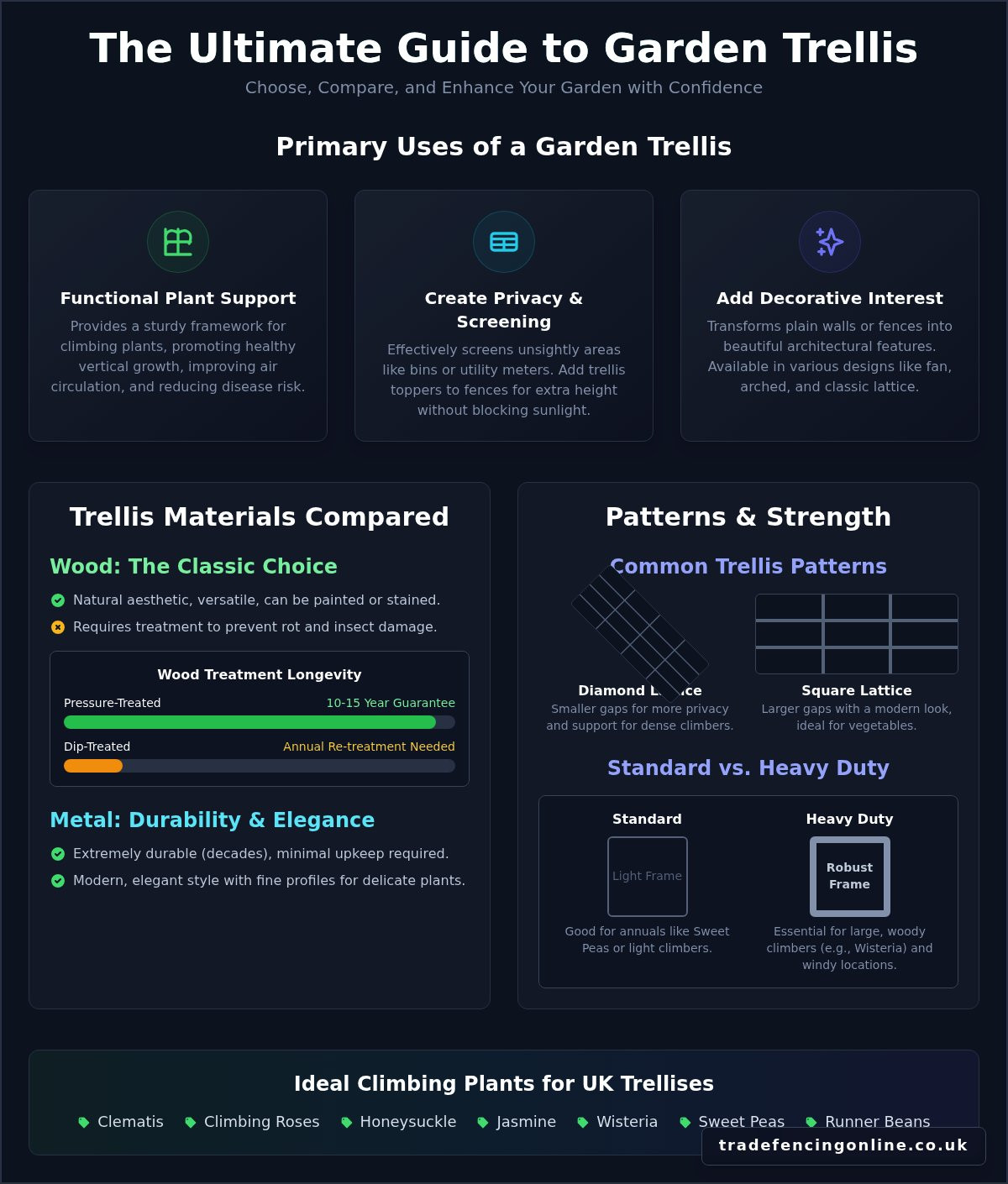
The two most common patterns are diamond and square lattice. A traditional diamond trellis features smaller gaps, offering greater privacy and excellent support for dense climbing plants like clematis or ivy. In contrast, a square lattice provides a more modern look with larger gaps, which is suitable for bigger climbers or when using trellises for vegetables like beans and peas. For a decorative finish, consider panels with arched or domed tops. A fan trellis is a specialist shape, designed to train plants like climbing roses outwards from a single point against a wall.
Functional Trellis Types for Fencing
Trellis is a versatile addition to any fencing project. Fence top panels are an effective way to add height and visual interest to standard solid fence panels without blocking light. Full trellis panels can be used to create an entire decorative fence run, perfect for zoning different areas of a garden or creating a light and airy boundary. For smaller or temporary needs, an expanding trellis offers a flexible, low-cost solution that can be moved as required.
Heavy Duty vs. Standard Trellis
The main difference between standard and heavy-duty trellis is the construction. Heavy-duty versions are made with thicker, more robust battens and a sturdier frame. This makes them essential for supporting large, woody climbers like wisteria or for installations in windy, exposed locations where a standard panel might fail. If your project demands maximum strength and longevity, choosing a heavy-duty option is a sound investment. Browse our range of heavy-duty trellis panels to find the right product for your needs.
Trellis Materials Compared: Wood, Metal, and Composite
Choosing the right material for your trellis is a critical decision that impacts its durability, maintenance requirements, and overall cost. The three main options-wood, metal, and composite-each offer distinct advantages. Your choice will depend on your budget, your garden's style, and how much maintenance you are prepared to undertake.
Wooden Trellis: The Classic Choice
Wood is the traditional material for garden structures, offering a natural and versatile aesthetic that blends seamlessly into any garden. It can be painted or stained to match your fencing and is widely available at a competitive price point, making it ideal for rustic or classic garden designs.
The main drawback is its vulnerability to rot and insect damage. To ensure longevity, proper treatment is essential, especially for effective vertical gardening with trellises where moisture is a constant. There are two common types of treatment:
- Pressure-Treated: Preservatives are forced deep into the timber under high pressure. This provides long-term protection against rot and decay, often with a 10-15 year guarantee. It is the superior choice for durability.
- Dip-Treated: The timber is briefly submerged in a preservative. This offers surface-level protection and is a lower-cost option, but it requires annual re-treatment to remain effective.
Metal Trellis: Durability and Elegance
For a modern or formal garden style, a metal trellis provides strength and elegance. Materials like powder-coated steel or aluminium are extremely durable and can last for decades with minimal upkeep. Their fine profiles are ideal for supporting delicate climbing plants like clematis without overwhelming them visually.
The primary considerations are cost and corrosion. Metal is typically more expensive than wood, and if the protective coating is scratched, rust can form on steel variants. However, for a strong, long-lasting structure with a contemporary look, it is an excellent investment.
Composite & Vinyl Trellis: Low Maintenance
Composite and vinyl (PVC) trellises are the ultimate 'fit and forget' solution. Engineered from a mix of recycled wood fibres and plastic, they will not rot, warp, splinter, or ever need painting. Cleaning is simple, usually requiring just soap and water. This makes them perfect for busy homeowners who prioritise convenience over a traditional appearance.
The trade-off comes with a higher initial cost, often the most expensive option per panel, and fewer design choices compared to wood. While styles can be limited, the long-term value is undeniable for anyone seeking a zero-maintenance garden feature.
How to Install Trellis: A Practical Guide
Installing a trellis is a manageable DIY task with the right equipment. Before you start, ensure you have a drill, a spirit level, screws, and appropriate wall plugs for your surface. The most critical rule for a healthy climbing plant is to leave a gap of at least 25-50mm between the trellis and the surface. This allows for essential air circulation and gives plants room to twine and grow.
Fixing Trellis to a Wall or Brickwork
To ensure plant health, fix timber battens to the wall first. This creates the vital air gap. Hold the battens in position, use your level to ensure they are straight, and mark your drill points. Use a masonry bit to drill into the brickwork, insert wall plugs, and then securely screw the battens to the wall. Finally, attach the trellis panel to the battens using weather-resistant screws suitable for the combined weight.
Attaching Trellis to a Fence
For maximum stability, fix your trellis directly to the fence posts using U-brackets or fence clips. This provides a solid anchor point that will withstand wind and the weight of mature plants. If you are adding a trellis topper to an existing fence panel, secure it to the sturdy top and bottom rails of the panel. Avoid fixing directly into the thinner, weaker slats, as they may not support the weight.
Creating a Freestanding Trellis Screen
For a standalone privacy screen or garden divider, you will need to set fence posts in the ground. This method provides the best structural support. Dig holes for your posts, position them correctly, and secure them with a rapid-setting concrete mix like Postcrete for a robust foundation. Once the posts are set, you can attach the trellis panels between them using screws or clips to create a durable and effective garden feature.
Order your Postcrete and fixings with your trellis to get everything you need in one delivery.
Find the Perfect Trellis for Your Garden Project
A garden trellis is a versatile and functional addition to any outdoor space. From providing essential support for climbing plants to creating attractive privacy screens, the right panel makes a significant impact. By understanding the different materials, styles, and installation methods, you are now equipped to choose the perfect solution for your garden's needs and your personal aesthetic.
Ready to bring your project to life? At Trade Fencing Online, we provide quality fencing solutions built to last. Our timber trellis panels are pressure-treated for a long life, ensuring they withstand the British weather. As a trusted supplier with 5-star reviews, we are committed to excellent products and service. We also offer fast local delivery across Essex and East London to get your project started without delay.
Shop our full range of quality trellis panels and get your garden transformation underway today.
Frequently Asked Questions
How high can I have a trellis on my fence in the UK?
In the UK, the total height of your fence, including any trellis on top, must not exceed 2 metres (6ft 6in) without planning permission. If the fence is adjacent to a highway used by vehicles, the limit is 1 metre. This rule applies to most residential garden boundaries. It is always best to check specific regulations with your local council, as rules can vary, especially in designated areas. Ensure your measurements are accurate before installation.
Do I need planning permission to put up a trellis?
Generally, you do not need planning permission for a trellis if the total height does not exceed 2 metres. However, you will likely require permission if your property is a listed building or located within a conservation area or National Park. If you are unsure, contacting your local planning authority is the most direct way to get a definitive answer and avoid any potential disputes. This simple check ensures your project complies with all local guidelines.
What is the best way to protect a wooden trellis from rot?
The most effective way to protect a wooden trellis is to use a pressure-treated product from the start. This industrial treatment forces preservatives deep into the timber for long-lasting defence against rot and insects. For added protection or for untreated wood, apply a high-quality wood preservative, stain, or exterior paint every few years. Ensure the base of the trellis is not in direct contact with wet soil by using post supports or gravel boards.
How far should a trellis be from a wall?
A trellis should be installed at least 5-8cm (2-3 inches) away from a wall. This gap is essential for good air circulation, which helps to prevent moisture build-up, dampness, and fungal diseases on both the wall and your plants. This space also gives climbing plants enough room to twine and grow around the structure without being constricted, ensuring healthier growth and making maintenance easier. Use wooden battens or specialised brackets to create the necessary gap.
What are the best climbing plants for a trellis in a shady spot?
Several climbing plants perform well on a trellis in shady UK gardens. Climbing Hydrangea (Hydrangea anomala subsp. petiolaris) is an excellent choice, offering green foliage and white summer flowers. Certain varieties of Ivy, such as Hedera helix, are extremely hardy and provide year-round green coverage. For a splash of colour, some Clematis varieties like 'Nelly Moser' can tolerate partial shade, as can the winter-flowering Jasmine (Jasminum nudiflorum).
Can you cut a trellis panel to a smaller size?
Yes, you can cut a standard trellis panel to fit a specific space. Use a fine-toothed hand saw or a jigsaw for a clean cut. After cutting, it is crucial to treat the exposed cut ends of the timber with a quality wood preservative. This step re-seals the wood and protects it from moisture ingress, which can lead to rot and decay. Failing to treat the cut ends will compromise the longevity of the panel, especially if it was originally pressure-treated.