


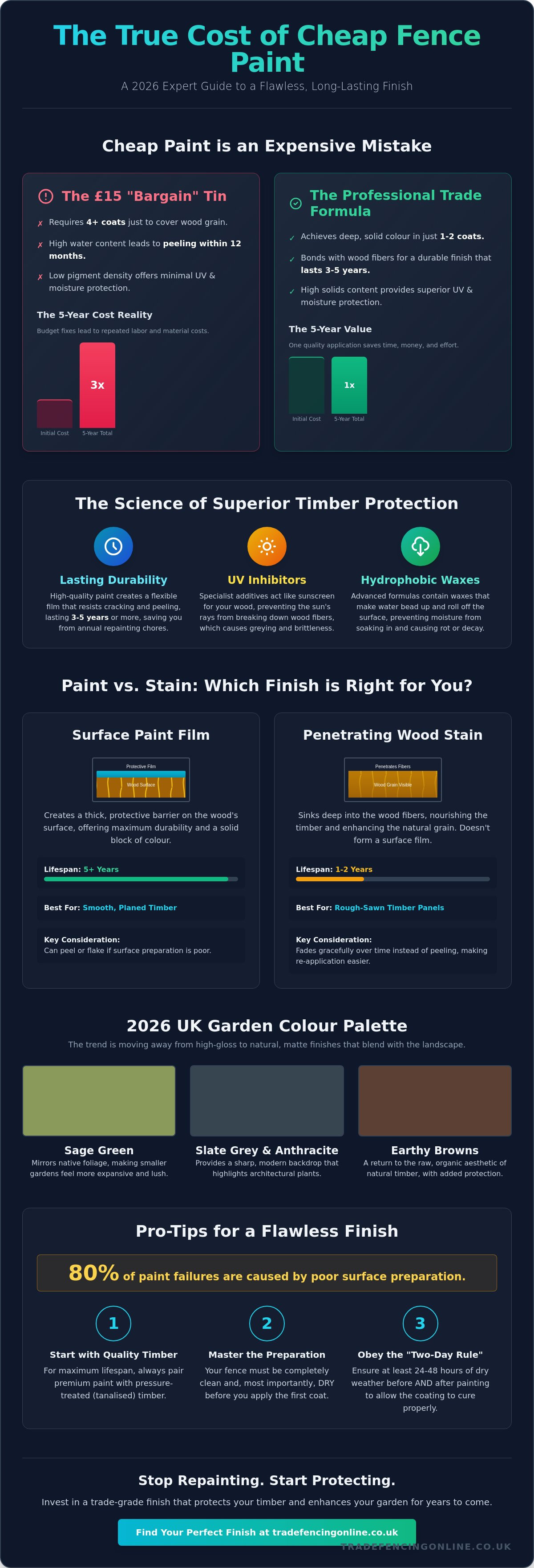
Buying cheap garden paint is the most expensive mistake you can make this year. While a £15 tin from a supermarket looks like a bargain, it usually results in peeling within 12 months and requires four coats just to cover the grain. According to 2024 trade surveys, homeowners spend three times more on budget fixes over a five-year period than they would on a single quality application. You already know that your timber deserves better protection than a thin layer of coloured water. Finding the best fence paint 2026 means looking past the marketing fluff and choosing formulas that actually bond with the wood fibres.
We've selected the most durable, stylish, and cost-effective paints for 2026, hand-picked by trade experts to maximize your timber's lifespan. You'll learn exactly which oil-based stains provide deep nourishment and which water-based coatings offer the fastest application without sacrificing quality. This guide breaks down the top industry performers to ensure you achieve a professional finish that lasts for at least 3 to 5 years. We'll compare the latest trade-grade options so you can stop scrubbing off old flakes and start enjoying a maintenance-free garden.
Key Takeaways
- Shield your timber against moisture and UV damage while adopting the 2026 trend for natural, earthy finishes over high-gloss alternatives.
- Identify the best fence paint 2026 for your specific project by comparing deep-penetrating stains against high-durability trade surface films.
- Evaluate the long-term value and coverage of trade-grade brands like Johnstone’s compared to standard DIY-friendly options.
- Master professional application techniques, including the "Two-Day Rule," to prevent the 80% of paint failures caused by poor surface preparation.
- Understand why premium paint must be paired with quality, pressure-treated (tanalised) timber to ensure maximum lifespan for your garden boundaries.
Choosing the Best Fence Paint in 2026: Trends and Protection
Fence paint serves as the primary defense for timber against moisture, UV radiation, and fungal decay. It's a critical barrier. Choosing the best fence paint 2026 requires looking beyond the initial price tag. Quality formulas act as a seal, preventing water ingress that leads to rot and structural failure. Modern products integrate advanced wood preservation techniques to extend the lifespan of standard dip-treated or pressure-treated panels. Without this protection, softwood fences can lose their structural integrity within five years.
Low-cost retail paints often rely on high water content and low pigment density. You'll likely need three or four coats to achieve a solid finish. Trade-grade options offer higher solids content, meaning better coverage and fewer labor hours. Buying "cheap" usually results in higher costs over a five-year maintenance cycle because the coating fails sooner. For a professional finish, look for high-opacity formulas that provide deep colour with fewer applications.
Modern gardens require eco-friendly solutions. The 2026 standards focus on VOC-compliant, water-based formulas that are safe for pets and plants. These products offer the same durability as old solvent-based paints but without the harsh fumes or environmental impact. Trade suppliers now prioritise these low-emission coatings to meet strict UK environmental regulations, ensuring your garden remains a healthy space for wildlife.
2026 Colour Trends for UK Gardens
Current market data shows a move away from high-gloss finishes toward matte, natural textures. Homeowners want their boundaries to blend into the landscape rather than distract from it.
- Sage Green: This remains the dominant choice for UK gardens. It mirrors the silver-green tones of native English foliage, making smaller gardens feel more expansive and lush.
- Slate Grey and Anthracite: These shades provide a sharp, high-contrast background. They work best for highlighting architectural plants or modern outdoor furniture.
- Earthy Browns: Traditional timber aesthetics are returning. Rich, deep browns satisfy the demand for a raw, organic look without the maintenance of untreated wood.
Weatherproofing: Fighting the UK Climate
UK weather is notoriously hard on timber. The best fence paint 2026 must include specific additives to survive wet winters and humid summers. High-performance waxes are now standard in trade-grade paints. These additives create a hydrophobic surface, causing rainwater to bead and roll off rather than soaking into the wood grain. UV inhibitors are equally vital. Without them, the sun's rays break down the lignin in the wood, making it brittle and grey within 12 months.
UV stability is the core factor in ensuring your chosen colour remains vibrant and the timber stays structurally sound over several seasons.
Wood Stain vs. Paint: Which Finish Lasts Longest?
Choosing the right finish depends on your timber type and how much time you want to spend on maintenance. Wood stains and paints work in completely different ways. Stains penetrate deep into the wood fibres to provide internal protection. Paints sit on the surface, creating a thick, protective film. If you're looking for the best fence paint 2026, you must match the product to your specific fence style to get the best value for your money.
Timber texture dictates your success. Rough-sawn wood has an open grain that drinks up stain. Planed, smooth timber has a closed surface that often rejects stains, leading to a patchy finish. Maintenance cycles also differ significantly. You'll likely need to refresh a stain every 1 to 2 years. A high-quality exterior paint can last 5 years or more before it needs a fresh coat. Professional installers note that 70% of premature fence failures are caused by choosing a finish that doesn't match the wood's absorption rate.
The Case for Wood Stains
Stains are the pragmatic choice for rough-sawn lap panels. Their main advantage is the "no-peel" wear pattern. Because the product lives inside the wood, it doesn't flake off when it reaches the end of its life. It simply fades. This saves hours of prep work because you don't need to sand the fence back to bare wood. When looking at top-rated fence paints and stains, experts often prefer penetrating oils for closeboard fence panels. Brands like Ronseal and Cuprinol provide excellent timber preservation that keeps the wood supple and prevents splitting.
The Case for Exterior Paints
Paints are better for homeowners who want bold, opaque colours like Sage Green or Anthracite. It's the superior choice for a trellis or decorative latticework where a uniform look is required. Modern paints for 2026 are formulated to be breathable. This is a critical feature. Breathable paint allows moisture to escape from the wood. If the paint isn't breathable, water gets trapped behind the film. This leads to internal rot and causes the paint to bubble. Always check the tin for "micro-porous" labels to ensure your best fence paint 2026 project lasts the full 5-year cycle.
Before you start your project, ensure you have the right materials. You can browse our full selection of quality garden fencing to see which panels work best with these finishes.
The Top-Rated Fence Paints for 2026: Expert Comparison
Selecting the best fence paint 2026 involves looking past the marketing slogans. You need to focus on three core metrics: coverage, durability, and total cost per square metre. The market is currently split between DIY-friendly brands like Cuprinol and trade-grade options such as Johnstone’s. While retail brands offer ease of use, trade paints typically contain higher resin levels for a longer-lasting finish.
"One Coat" technologies have seen a massive surge in 2026. These products use advanced thickeners to give the illusion of high coverage. In reality, they often sit on the surface without penetrating the wood grain. For a professional result that lasts more than two seasons, two thin coats are always superior to one thick layer. This ensures the timber is fully sealed against moisture and UV rot.
Best for Durability: Cuprinol Ducksback
Cuprinol Ducksback remains the trade favourite for standard garden fencing due to its wax-enriched formula. This coating creates a hydrophobic barrier that forces water to bead and roll off the surface. It's specifically designed for rough-sawn timber, making it the go-to choice for traditional lap or closeboard panels. In 2026 testing, it maintains its colour integrity for up to five years under standard UK weather conditions.
- Smooth wood coverage: Approximately 25m² per 5L tin.
- Rough-sawn coverage: Approximately 10-12m² per 5L tin.
- Drying time: Showerproof in 60 minutes.
Best for Colour Variety: Johnstone’s Garden Colours
Johnstone’s Garden Colours is the top choice for homeowners wanting a designer aesthetic. Their 2026 palette offers a wider range of muted greys, sage greens, and contemporary blacks than most competitors. This formula is thinner than Ducksback, which makes it ideal for smooth-planed timber where you want to see the wood grain. It's particularly effective for finishing fencing supplies like wooden gravel boards and decorative trellis. The paint behaves more like a traditional woodstain, soaking deep into the fibres to prevent flaking and peeling over time.
When you're working with smooth surfaces or garden furniture, this product provides a more refined finish. It doesn't have the "plastic" look often associated with cheaper, thicker fence paints. It's a reliable, mid-priced option that balances style with professional-grade protection.
Preparation and Application: How to Paint Like a Professional
Industry data shows that 80% of paint failures result from poor surface preparation. You can buy the best fence paint 2026, but it will peel within a season if the wood is damp or dirty. Proper prep ensures the coating bonds with the timber fibres rather than sitting on top of debris. It's the difference between a five year finish and a job you have to redo next summer.
UK weather requires the Two-Day Rule. Never apply paint if it has rained within the last 48 hours. Timber is porous and holds moisture long after the surface looks dry. If you trap that moisture under a fresh coat of paint, it will eventually push the finish off as it evaporates. Check the forecast for a clear three-day window to allow for application and full curing.
Choosing your tools depends on the scale of the job. Sprayers are efficient for long runs of fencing. They can cover a standard panel in under five minutes. However, brushes offer superior control and better penetration into the wood grain. For the best results, many professionals use a combination of both. Use a sprayer for speed, then immediately work the paint in with a brush.
Safety is a priority. Cover nearby plants with dust sheets or plastic membrane to prevent overspray damage. Keep pets indoors until the paint is completely dry to avoid paw prints or accidental ingestion of wet product. Most modern formulas are low-VOC, but they still require sensible handling during application.
The Professional Prep Checklist
- Cleaning: Use a stiff brush to remove algae, lichen, and dirt. A dedicated fungicidal wash is often necessary to kill spores that cause rot.
- Sanding: Older fence posts often develop a grey, weathered patina. Sand these back to reveal fresh wood fibres so the paint can adhere correctly.
- Drying time: Trade professionals use moisture meters to verify the wood's condition. Aim for a moisture content below 20% before you start.
Application Techniques for Longevity
Back-brushing is a vital trade secret. After spraying or rolling, use a large brush to push the paint deep into the grain and joints. This ensures every nook is sealed against the elements. It also levels out the finish for a more uniform appearance. Using the best fence paint 2026 requires this level of detail to maximise the product's lifespan.
Avoid painting in direct sunlight or high winds. Strong sun dries the paint too quickly, preventing it from levelling out and causing it to crack. High winds blow dust and grit into your wet finish, ruining the texture. To avoid visible lap marks, always work on one panel at a time from top to bottom and maintain a wet edge until the section is complete.
Get the right supplies for your project. Shop our professional fencing range today for reliable delivery across the UK.
Maximising Your Fence’s Lifespan with Quality Supplies
Buying the best fence paint 2026 has to offer is a wasted investment if you apply it to low-grade, untreated timber. Paint acts as a protective skin, but it cannot stop rot that starts from the inside of a poor-quality board. If your panels are already damp or poorly manufactured, the finish will bubble and flake off within a single season. You must establish a solid foundation before you even open a tin of paint.
Why Timber Quality Matters More Than Paint
Cheap, dip-treated panels only receive a thin surface coating of preservative. This often leaves the core of the wood vulnerable to moisture and decay. Pressure-treated (tanalised) timber is the industry standard for longevity. During this process, preservative is forced deep into the wood fibres under high pressure. This provides long-term protection against fungal decay and wood-boring insects. Romford Fencing Ltd ensures all panels are built to these trade standards, meaning they are ready for a high-quality finish immediately. For professional installation tips and advice on selecting the right materials, read our comprehensive fencing guide.
Ground-level rot is the primary cause of fence failure in the UK. Wet soil, fallen leaves, and long grass stay in constant contact with the bottom of the timber panel. This leads to water wicking up into the grain, which eventually destroys the wood. You should always use concrete or pressure-treated timber gravel boards to create a physical barrier between the damp ground and your panels. This simple addition can double the lifespan of your garden boundaries by keeping the decorative panels dry.
Your One-Stop-Shop in Essex and London
We provide fast local delivery across Essex and London for all your fencing needs. Trade professionals and homeowners trust Romford Fencing Ltd because we stock durable materials that stand up to the British weather. We don't deal in flimsy, low-grade products. Every post, rail, and panel we supply meets our strict quality control standards. You get the right materials at the right price, delivered directly to your site with our efficient delivery service. Browse our range of quality fence panels today to find the perfect match for your 2026 project.
Use this checklist to ensure your project stays on track and lasts for years:
- Select pressure-treated (tanalised) panels for maximum rot resistance.
- Install gravel boards to prevent the timber from touching damp soil.
- Ensure all ironmongery and fixings are galvanised to prevent unsightly rust streaks.
- Wait for a dry 48-hour weather window before applying the best fence paint 2026 brands suggest.
- Check your posts are set at a minimum depth of 600mm for structural stability.
- Clear any debris or heavy vegetation away from the base of the fence to allow for airflow.
Secure Your Garden with Trade-Quality Protection
Selecting the best fence paint 2026 involves more than just picking a colour. You need a high-performance finish that offers UV resistance and moisture protection to ensure your timber lasts for the long term. Industry data suggests that professional-grade treatments can prevent rot for up to 15 years when paired with correct application techniques. Always prioritise thorough sanding and cleaning before you start. If your existing panels show signs of structural failure, it's often more efficient to replace them with durable, pressure-treated alternatives that provide a solid foundation for your finish.
Trade Fencing Online is your one-stop-shop for everything fencing. We're a 5-star rated trusted supplier providing trade quality materials at unmatched prices. We offer free local delivery options in Romford and Essex to help you get your project moving quickly. Order High-Quality Fence Panels for Local Delivery and give your garden the professional finish it deserves. It's time to build a boundary that stands the test of time.
Frequently Asked Questions
Do I need to prime my fence before painting it?
Most rough-sawn timber panels don't require a separate primer because the wood is porous enough to absorb the paint directly. However, you should apply a dedicated wood primer if you're painting smooth planed timber or wood that's been previously coated with an oil-based product. Using a primer ensures the best fence paint 2026 products adhere correctly and last for the full 5 year guarantee period often found on premium trade brands.
How long does fence paint take to dry in the UK climate?
In typical UK conditions with 60% humidity and 15°C temperatures, most water-based fence paints are touch-dry within 1 to 2 hours. You should allow at least 4 hours of dry weather after application to ensure the coating is rainproof. If the temperature drops below 10°C or humidity rises above 80%, drying times can double, so check the 24 hour local forecast before you start the job.
Can I paint a fence that has been pressure treated?
You can paint pressure-treated wood, but you must wait for the green-tinted preservative to dry completely first. Freshly treated timber often has a high moisture content above 20%, which causes paint to blister and peel within weeks. Wait at least 6 months for the wood to weather before applying any decorative coatings. This allows the internal chemicals to settle and the wood grain to open up for better absorption.
Is it better to spray or brush paint a garden fence?
Brushing is the superior method for ensuring the paint penetrates deep into the wood grain, especially on rough-sawn traditional closeboard panels. While a pump sprayer can cover a 6ft panel in under 4 minutes, it often misses the gaps between overlapping slats. For the best results, use a 4 inch masonry brush to work the product into the timber. This provides a more durable finish and uses 15% less paint than spraying.
What is the best temperature for painting a fence?
The ideal temperature for applying the best fence paint 2026 is between 10°C and 25°C. Don't paint in direct sunlight on days exceeding 30°C, as the paint will dry too quickly and fail to bond with the wood fibres. You should also avoid painting if the temperature is forecast to drop below 5°C overnight. Cold temperatures prevent the acrylic polymers from forming a proper protective film, leading to a finish that flakes off easily.
How many coats of paint does a new fence panel actually need?
A new fence panel requires at least two coats of paint to achieve the manufacturer's stated level of protection. The first coat acts as a sealer, soaking into the dry wood, while the second coat provides the uniform colour and UV resistance. If you're switching from a dark colour to a lighter shade, you'll likely need a third coat to ensure 100% opacity and a professional finish.
Will painting my fence prevent it from rotting?
Painting provides a protective surface barrier that sheds water, but it doesn't stop rot that starts from within the wood or from ground contact. To prevent rot effectively, ensure your panels are installed with concrete gravelboards to keep the timber 150mm above the soil. High-quality paint reduces moisture absorption by up to 70%, which significantly slows down the natural decay process of the timber above the ground line.
How do I remove old, peeling paint from my fence?
Use a stiff wire brush or a dedicated paint scraper to remove loose, flaking bits from the surface. For stubborn areas, a power washer on a medium setting can strip old coatings, but you must let the wood dry for 48 hours afterward. Ensure all grey, weathered wood fibres are sanded back to a healthy tan colour. This provides a solid foundation for your new coat of paint and prevents premature peeling.