


The cheapest fence panel you buy today might be the most expensive mistake you make this year. You want a secure, private garden, but with installer day rates reaching £400 in March 2026, those high labor quotes are frustrating. It’s a common pain; a standard 15-metre project now costs between £1,200 and £1,800 on average. Finding affordable garden boundary ideas shouldn't mean you have to settle for a flimsy barrier that collapses in the first winter storm.
Discover how to secure your property with cost-effective, durable fencing solutions that balance style with professional trade secrets. We'll show you how to maximize your ROI by choosing the right materials, such as £20 lap panels or £45 feather edge boards, while explaining why components like gravelboards and quality ironmongery are non-negotiable for longevity. This guide provides a clear breakdown of essential components and current UK regulations to help you build a boundary that lasts without overspending.
Key Takeaways
- Master the "Total Cost of Ownership" approach to ensure your budget fencing doesn't require expensive replacements within two years.
- Compare the benefits of Waney Edge and Closeboard panels to identify the most effective affordable garden boundary ideas for your property.
- See how using gravel boards and correct postmix protects your fence from ground rot and extends its lifespan.
- Learn why sourcing materials directly from a trade supplier provides superior quality and better prices than big-box retail stores.
- Identify the practical steps to reduce installation costs, including when to DIY and how to leverage trade pricing.
Defining Your Boundary: Balancing Cost, Privacy, and Durability
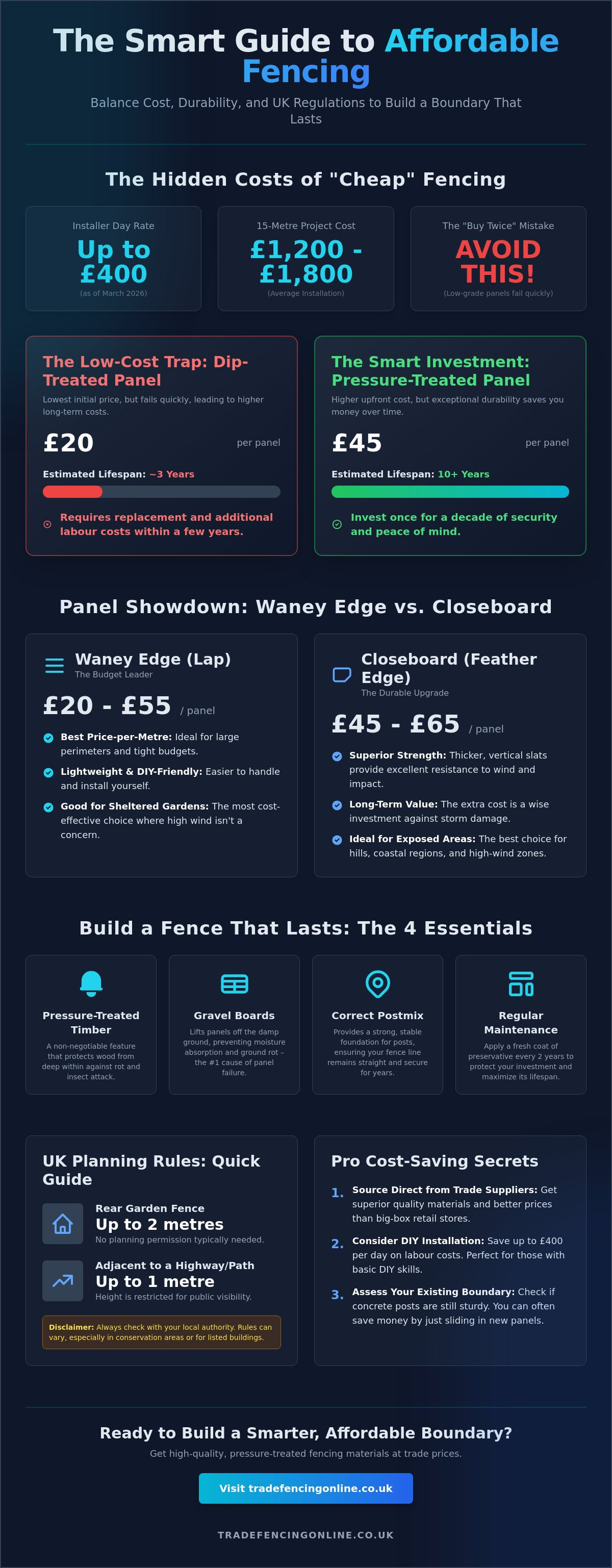
Before you buy a single panel, you must identify what your fence actually needs to do. A barrier meant to keep a large dog contained requires different specifications than one installed for simple kerb appeal. Most homeowners looking for affordable garden boundary ideas start by looking at the lowest price tag. This is a mistake. True affordability is measured by the "Total Cost of Ownership." If you buy a low-grade, dip-treated panel for £20 that rots within three years, you'll spend more on replacements and labour than if you'd invested in a £45 pressure-treated panel that lasts a decade. In the fencing trade, "cheap" almost always means buying twice.
You also need to stay on the right side of UK planning laws. For most residential properties in 2026, you don't need planning permission for a rear garden fence up to 2 metres high. However, if your boundary is adjacent to a highway or a public footpath, the limit drops to 1 metre. Listed buildings or homes in conservation areas often have stricter Article 4 directions that remove these permitted development rights. Always check with your local authority before installing a 2-metre screen to avoid a costly enforcement notice.
The Three Pillars of Budget Fencing
Success depends on three factors: privacy, longevity, and maintenance. If privacy is your main goal, overlap (waney edge) panels are the most cost-effective way to block a line of sight. For longevity, pressure-treated timber is a non-negotiable requirement. It resists fungal decay and insect attack far better than surface-level treatments. Finally, factor in the maintenance. A budget fence requires a fresh coat of preservative every two years to reach its full life expectancy. If you aren't prepared to do the work, your "cheap" fence will fail prematurely.
Assessing Your Existing Boundary
You might not need a completely new fence line. Check your existing posts for structural integrity by applying firm pressure at the top; if there's significant movement at the base, the post is likely rotten. You can often save money by keeping sturdy concrete posts and simply sliding in new panels and gravelboards. There are many different types of fencing configurations that allow for partial repairs rather than a full teardown. To avoid neighbour disputes, remember that you are generally responsible for maintaining the boundary fence where the "fair side" faces your neighbour and the posts are on your land, though you should always check your property deeds first.
Cost-Effective Panel Styles: From Traditional Lap to Modern Slatted
Selecting the right panel is the fastest way to manage your budget. While social media often showcases high-end Venetian slats, those premium options aren't always the most affordable garden boundary ideas for large perimeters. You need a style that balances material volume with structural integrity. As of March 2026, the market offers several distinct tiers of value. Choosing based on your garden's specific exposure to wind and your privacy needs will prevent overspending on features you don't require.
Waney Edge panels, often called lap panels, remain the undisputed budget leader. These use horizontal slats that overlap within a perimeter frame. Because the timber is thinner and uses the natural edge of the tree, manufacturing costs stay low. Prices for a standard 6ft panel typically range between £20 and £55. If you have a large garden to enclose, these offer the best price-per-metre ratio available today.
Closeboard panels are the next step up. They use vertical feather edge slats that are thicker and more robust. While the average cost for a 6ft panel sits between £45 and £65, the investment pays off in high-wind areas. The vertical orientation and reinforced backing rails make them less likely to buckle under pressure compared to horizontal lap styles. For front gardens, picket fencing is a practical alternative. Since UK regulations limit front boundaries to 1 metre in height, these shorter panels use less timber and keep your material costs down.
Waney Edge vs Closeboard: The Value Comparison
The price gap between these two styles comes down to timber volume and assembly time. Waney edge panels are mass-produced and lightweight, making them easy to handle during a DIY install. Closeboard panels are heavier and require more fixings. If your garden is sheltered, the lap panel is your best value choice. If you're on a hill or in a coastal area, the extra £20 per panel for closeboard is a necessary insurance policy against storm damage. For more help deciding, see A Complete Guide to Choosing Fence Panels.
Decorative Options on a Budget
You don't need to buy premium designer panels to get a modern look. A standard lap panel looks professional when treated with a high-quality dark grey or black wood stain. Upgrading your ironmongery, such as using heavy-duty gate latches and hinges, also improves the overall feel of the boundary. Adding a trellis topper is another trade secret. It adds height and privacy for a fraction of the cost of a full-height solid panel. Browse our latest panel deals to see how these styles fit your budget.
Posts and Gravel Boards: Investing in Longevity to Save Money
Ground-rot is the silent killer of budget fences. Most affordable garden boundary ideas fail prematurely because the owner ignored the foundation. Timber panels rarely fail in the middle; they rot from the bottom up. Constant contact with damp soil and grass allows bacteria to attack the wood fibres. Without a physical barrier at the base, even a high-quality pressure-treated panel can decay within five years. If you want your investment to last, you must address the point where the fence meets the earth.
Concrete gravel boards are the most effective way to prevent timber-to-earth contact. These boards cost between £10 and £20 each as of May 2026. While this adds to your initial bill, it can double the life of your timber panels. A gravel board protects the bottom rail of a panel by keeping it away from damp grass and soil. This simple addition ensures the most vulnerable part of your fence stays dry and structurally sound. It's a pragmatic choice for any homeowner who values long-term ROI over the lowest possible checkout price.
Wood vs Concrete: The 10-Year Cost Analysis
Wooden posts are the cheapest option upfront, averaging £25.50 each. However, in typical UK clay soil, timber posts often rot at the ground line within 8 to 10 years. Concrete posts range from £14 to £50 but offer a "set and forget" solution. If you choose wood, you'll likely pay for labour twice within a decade to dig out and replace rotten stumps. Concrete posts don't rot, meaning you only ever need to slide in new panels. Read our guide to fence posts for a full durability comparison.
Essential Hardware and Fixings
Don't cut corners on fencing supplies like clips and screws. Galvanised ironmongery is essential to prevent the ugly rust streaks that often ruin the look of budget boundaries. Use high-quality postmix to ensure a stable foundation; a leaning fence puts unnecessary stress on the panels and leads to structural failure. For garden gates, choose heavy-duty ironmongery to prevent sagging. Sagging is the most common reason budget gates fail, and spending slightly more on a robust latch and hinge set saves you from future repairs.
Practical Ways to Reduce Fencing Installation Costs
Labour costs typically account for 50% of your total project spend. In May 2026, professional fencers charge day rates between £300 and £400 on average. If you're looking for affordable garden boundary ideas, reducing the time a contractor spends on-site is the most effective strategy. You don't always need to do the heavy lifting yourself to see a significant saving. By managing the procurement and preparation phases, you can keep your budget focused on high-quality materials rather than expensive man-hours.
DIY installation is the ultimate cost-saver, potentially removing £30 to £60 per metre from your quote. For a standard 15-metre garden, this equates to a saving of up to £900. However, if you aren't confident in your ability to set posts straight and level, consider a hybrid approach. Many homeowners buy their own materials through a trade supplier to avoid the markups often found in "all-in" contractor quotes. Splitting the bill with a neighbour is another pragmatic move. Since most garden fences serve two properties, a 50/50 split on a shared boundary is a standard industry recommendation that slashes your personal costs instantly.
Preparation: The Key to Saving Labour Costs
Clear the fence line before the installer arrives. If a contractor has to spend three hours hacking back ivy or digging out old, rotten stumps, you're paying trade rates for basic garden maintenance. Dispose of your old panels yourself at a local recycling centre to avoid the £200 to £300 cost of a skip. Accurate measuring is also vital. Measure the total run twice to ensure you order the exact number of panels and posts required, preventing the waste of expensive timber or the need for a second delivery fee.
Standardisation for Savings
Stick to industry standards to keep prices low. Standard fencing panels are 6ft (1.82 metres) wide. Buying these off-the-shelf is significantly cheaper than requesting bespoke widths to fit an awkward gap. If you have a small remaining space at the end of a run, it's more cost-effective to cut a standard panel down on-site than to order a custom-sized one. Purchasing from a local Romford supplier also reduces the lead time and delivery costs compared to national retailers. Check our current stock for standard panels that ready for immediate delivery.
Sourcing Your Materials: Why Trade Suppliers Offer the Best Value
Buying from a general DIY retailer often means paying for their high overheads and national marketing budgets. When searching for affordable garden boundary ideas, sourcing directly from a trade specialist is the most logical way to cut costs. Trade suppliers focus on volume and product quality rather than showroom aesthetics. You won't find the same flimsy, thin-slat panels that populate big-box retail aisles. Trade-grade timber is typically thicker and consistently pressure-treated, ensuring your boundary doesn't warp or rot within the first 24 months.
Logistics are the hidden cost of any fencing project. Many national websites offer low headline prices but hide substantial delivery fees for heavy items like concrete posts or gravel boards. Sourcing locally in Essex and East London removes this barrier. A local supplier understands regional ground conditions and can provide the exact volume of postmix and ironmongery required for your specific run. This prevents the waste of over-ordering and the frustration of under-ordering essential components mid-project.
The Romford Fencing Ltd Advantage
We are your one-stop-shop for everything fencing. As an established local expert, Romford Fencing Ltd provides unmatched prices on everything from traditional closeboard panels to essential ironmongery. Our business-like approach means we value your time. We offer free local delivery options to ensure your project stays on schedule and under budget. Our 5-star reputation is built on providing substance over style; we sell the products that professional installers use every day.
Getting Started with Your Project
Use our online store to build an accurate material list today. Simply select your panels, posts, and gravel boards to see a transparent price without hidden surcharges. This allows you to compare different affordable garden boundary ideas in real-time. If you need specific advice on security or residential boundaries, our team is available via phone or email to provide professional guidance. Browse our full range of affordable garden fencing today.
Secure Your Garden with Professional Grade Materials
Building a durable boundary on a budget is about making pragmatic choices. Prioritising the "Total Cost of Ownership" ensures you don't waste money on repeat repairs or premature replacements. By choosing pressure-treated timber and using concrete gravel boards, you protect your panels from ground rot and significantly extend their lifespan. These affordable garden boundary ideas work best when you source trade-grade materials directly, avoiding the high markups and thinner timber often found in national retail chains.
Romford Fencing Ltd is a trusted Essex supplier with 5-star reviews. We provide quality trade-grade materials at unmatched prices; helping you secure your property without the unnecessary fuss of expensive design services. With free local delivery options available for East London and Essex, you can focus your budget on the components that offer the best long-term ROI. Take control of your fencing project and achieve a secure, private finish that lasts for years. You can build a high-quality boundary that fits your budget perfectly.
Order Your Affordable Fencing Materials Online Now and get your project started today.
Frequently Asked Questions
What is the cheapest type of garden fencing to install?
Lap panels, also known as waney edge or overlap panels, are the most cost-effective option. Research from March 2026 shows that a standard 6ft panel costs between £20 and £55. These panels use thinner horizontal timber slats to keep manufacturing costs low while still providing a solid, private barrier for your garden perimeter.
How can I make my garden boundary more private on a budget?
Adding trellis toppers to your existing fence is one of the best affordable garden boundary ideas for increasing privacy. This adds height without the cost of replacing full panels. You can also use dark wood stains to make standard panels look more substantial; this creates a modern aesthetic that obscures gaps and makes your garden feel more enclosed for the price of a tin of preservative.
Is it cheaper to use wood or concrete fence posts?
Wooden posts are cheaper upfront, with an average cost of £25.50 each as of May 2026. However, concrete posts are cheaper in the long run because they don't rot. While concrete posts can cost up to £50 each, they offer a "set and forget" solution that prevents you from paying for labour to replace rotten timber stumps every 8 to 10 years.
Do I need my neighbours permission to change a garden fence?
You don't usually need permission if the fence is entirely on your land and stays within the standard 2-metre height limit. It's still vital to check your property deeds to confirm which boundary you're responsible for maintaining. Discussing your plans with neighbours beforehand is a pragmatic way to avoid disputes and potentially split the material costs 50/50.
How long should a budget-friendly lap panel fence last?
A pressure-treated lap panel fence should last between 10 and 15 years if it's installed correctly. Panels that are only dip-treated have a much shorter lifespan and require a fresh coat of treatment every two years to prevent decay. Using gravel boards is the most effective way to ensure a budget fence reaches its full life expectancy by preventing ground-level rot.
What is the best way to secure a garden boundary without a full fence?
Trellis panels combined with fast-growing climbing plants offer a secure, high-privacy boundary for a lower material cost than solid fencing. For front gardens, a 1-metre picket fence is a cheap way to define your property line while staying within UK planning regulations. Wire mesh is another functional option for security, though it provides no privacy from passers-by.
Can I install a new fence myself to save money?
Installing a fence yourself can save you between £30 and £60 per metre in labour costs. For a typical 15-metre UK garden, a DIY approach keeps up to £900 in your pocket. You'll need to be physically able to dig post holes to a depth of 600mm and ensure everything is level, but it's the fastest way to reduce your total spend.
Are gravel boards really necessary for an affordable fence?
Gravel boards are a non-negotiable component for anyone implementing affordable garden boundary ideas. They act as a sacrificial barrier between the timber panel and the damp earth, where rot almost always starts. Spending £10 to £20 on a concrete gravel board now is a pragmatic investment that prevents you from having to replace a £50 panel every few years.