


Why do so many Essex homeowners spend hundreds on new garden boundaries only to see them collapse during the next 60mph winter gale? Selecting the wrong fence panels is a costly mistake that often leads to premature rot and total structural failure within just three years of installation. You deserve a professional boundary that provides security and curb appeal without the constant worry of wind damage or the need for expensive repairs every spring.
It's frustrating to deal with confusing terminology like Closeboard versus Lap or to face steep delivery charges for bulky timber items. This ultimate guide helps you select the perfect fence panels by comparing durability, styles, and value to ensure your investment lasts for over a decade. We will explain the science behind pressure treatments, clarify industry-standard terms, and show you how to secure reliable local delivery in Romford and the wider Essex area. By the end of this article, you'll have the confidence to order exactly what your garden needs from a trusted local supplier.
Key Takeaways
- Compare the privacy and wind resistance of Closeboard, Waney Lap, and Decorative styles to find the ideal match for your garden’s environment.
- Understand the "Value Engineering" trap and why choosing trade-grade 47mm framing prevents your boundary from sagging or failing early.
- Master the correct way to measure your garden and account for posts and gravel boards to ensure a perfect fit and accurate order.
- Learn how to select high-quality fence panels that offer the best balance of price, performance, and long-term durability.
- Discover Romford Fencing’s top-rated recommendations for heavy-duty security and cost-effective garden boundary solutions.
Understanding Fence Panels: Styles, Sizes, and Terminology
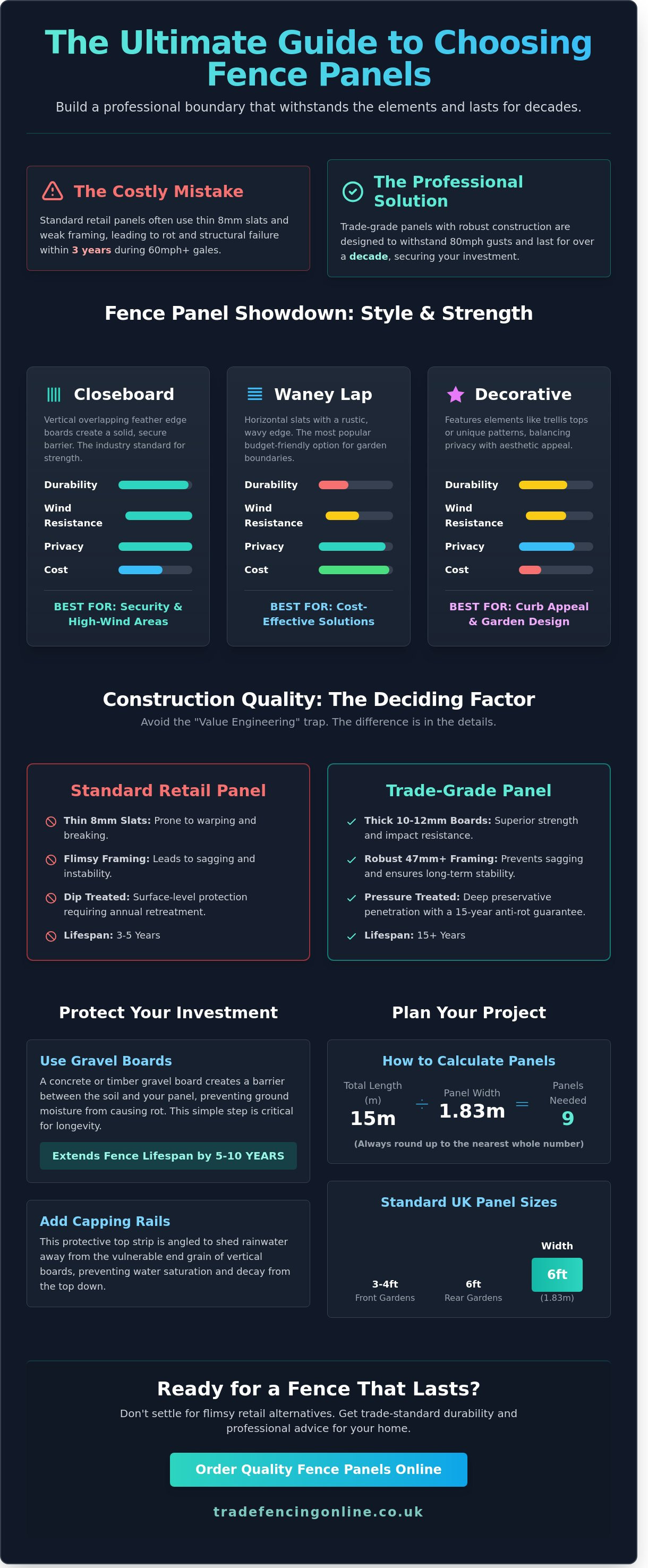
Quality fence panels are the foundation of a secure and private garden. In the UK market, a high-quality panel is defined by its timber grade, construction method, and treatment process. Trade Fencing Online is The Home Of Quality Garden Fencing, providing products designed to withstand 80mph wind gusts and heavy rain. Most standard retail panels found in big-box stores use 8mm slats. In contrast, trade-quality panels typically feature 10mm to 12mm boards and additional horizontal back rails for structural integrity.
Longevity depends heavily on how the panel interacts with the ground. You should always use gravel boards to create a barrier between the soil and the bottom of your fence. This simple addition prevents ground moisture from seeping into the timber. Using a concrete or pressure-treated timber gravel board can extend the lifespan of your fencing by 5 to 10 years by preventing premature rot at the base.
Standard Fence Panel Sizes Explained
The universal width for fence panels in the UK is 6ft (1.83m). This standardization allows for easy replacement of old sections between existing posts. While the width is constant, heights vary to suit different areas of your property. A 3ft or 4ft panel is the standard choice for front gardens where visibility is required. For rear gardens, 6ft panels are the industry standard to ensure maximum privacy and security.
To calculate how many panels you need, measure the total length of your boundary in metres and divide by 1.83. For a 15-metre run, you will need 9 panels. Always round up to the nearest whole number to account for cuts or adjustments at the corners. If you're using concrete posts, remember that the 6ft width must include the panel and any necessary tolerances for the post grooves.
Common Fencing Terms You Need to Know
Understanding the various fence styles and terminology helps you choose the right product for your specific boundary needs. One of the most durable options is "feather edge" fencing. These boards are tapered, meaning they're thicker on one side than the other. When overlapped, they create a solid, wind-resistant barrier that's much stronger than basic lap panels.
- Pressure Treated: Timber is placed in a vacuum where preservative is forced deep into the wood grain. It usually has a 15-year anti-rot guarantee.
- Dip Treated: Panels are submerged in a preservative tank. This provides a surface coating that requires annual retreatments to prevent decay.
- Capping Rails: This is a protective strip of wood fixed to the top of the panel. It's angled to encourage water runoff, which protects the end grain of the vertical boards from saturation.
Trade Fencing Online is your one-stop-shop for everything fencing. We focus on providing reliable, professional-grade materials that last. Don't settle for flimsy retail alternatives when you can get trade-standard durability for your home. For quality fencing, call our team today or order online for fast delivery.
Comparing Popular Fence Panel Styles for Your Garden
Selecting the right fence panels requires a balance between cost, structural durability, and visual appeal. Most UK homeowners choose between three primary styles: Closeboard, Waney Lap, or Decorative. Each style performs differently under environmental stress. If you need a deep dive into technical specifications, refer to our complete guide to choosing fence panels. The choice between vertical and horizontal slats isn't just about looks; it affects how the wind hits your boundary and how long the timber lasts.
Closeboard and Feather Edge Panels
Closeboard is the industry standard for strength and security. These panels consist of vertical overlapping feather edge boards fixed to a robust rear frame. Because the boards overlap, they create a solid barrier that offers 100% privacy and excellent noise reduction. This vertical design is superior for shedding rainwater, which prevents moisture from sitting on the timber grain. The USDA Guide to Fencing highlights that vertical alignment in heavy-duty fencing provides better structural stability against downward loads. Closeboard is the best choice for gardens in exposed areas or spots prone to high winds.
Waney Lap Panels: The Cost-Effective Choice
Waney Lap panels are the most popular budget-friendly option. They feature horizontal slats cut from the outer curve of the log, giving them a rustic, wavy edge. These slats are framed with timber battens to provide rigidity. While they offer excellent privacy for large-scale projects, they are generally thinner than Closeboard alternatives. To ensure you aren't buying a flimsy product, check the number of vertical battens. High-quality Lap panels usually feature at least five battens to prevent the horizontal slats from sagging or warping over time. They are ideal for standard garden boundaries where extreme wind resistance isn't the primary concern.
Decorative and Slatted Panels for Modern Landscapes
Contemporary garden designs often move away from solid barriers toward slatted or "hit and miss" styles. These panels use horizontal boards planed on all sides for a smooth finish. The hit and miss design allows air to flow through the gaps, which significantly reduces wind resistance and prevents the "sail effect" that can blow over solid fences. Many homeowners add trellis toppers to these panels. This adds height and decorative interest without blocking natural light from reaching flower beds. While decorative fence panels often carry a higher price point, they offer a premium aesthetic that increases property curb appeal. You can explore a variety of these styles at Trade Fencing Online to find a match for your modern garden layout.
Construction Quality: Why Trade-Grade Panels Last Longer
Many homeowners fall into the "Value Engineering" trap. This happens when manufacturers strip out material quality to hit a lower price point. Cheap fence panels found in big-box retail stores often use 16mm slats and thin 32mm framing. These products typically fail within 24 to 36 months as the timber warps or snaps under wind pressure. Trade-grade panels are built to a different standard. We prioritise 47mm rails because the extra 15mm of thickness provides the structural integrity needed to prevent sagging. Romford Fencing stocks heavy-duty specifications because they offer better long-term value for professional installers and domestic customers alike.
The Importance of Pressure Treatment (Tanalising)
Pressure treatment, often called Tanalising, is a high-pressure vacuum process. It doesn't just coat the surface; it forces preservative chemicals deep into the wood cells. This creates a permanent barrier against rot, wood-boring insects, and fungal decay. You'll notice both Green and Brown treated timber in our stock. It's a common misconception that one is better than the other. The difference is purely cosmetic. Both options provide the same level of protection. You don't need to paint pressure-treated wood immediately to protect it. It's actually better to let the timber weather for 6 to 12 months before applying any decorative stains. For a detailed look at how different materials perform over time, check this Guide to Fencing Types from Utah State University.
Framing and Fixings: The Hidden Strength
The longevity of fence panels depends on what holds them together. A fully encapsulated frame is essential for stability. This design ensures the internal slats are locked into a rigid outer border, which prevents the panel from twisting as the wood dries and moves. We use galvanised or stainless steel nails exclusively. Standard steel fixings will rust within a single season, leaving permanent black streaks down the face of your fence. A robust capping rail is another non-negotiable feature. It sheds water away from the exposed end grain of the vertical slats. Without this protection, rainwater sits on top of the timber and accelerates rot from the top down. Look for these specific build markers to ensure your investment lasts:
- 47mm Framing: Prevents the panel from bowing or sagging over time.
- Galvanised Fixings: Stops rust spots and maintains structural pull-strength.
- Weather Capping: Protects the most vulnerable part of the timber from rain.
- Ribbed Slats: Increases surface area and adds rigidity to the panel face.
Choosing trade-grade quality means you won't be replacing your boundaries after the first winter storm. It's the difference between a fence that lasts 5 years and one that stays standing for 15 or more.
Measuring and Planning Your Fencing Installation
Accurate planning prevents waste and ensures your project stays on budget. Measurement is the first step. You'll need to measure the total perimeter in metres and then divide that figure by the width of your chosen panels. Most standard fence panels are 1.83m (6ft) wide. Don't forget to account for the width of your posts. If you use 100mm fence posts, your total run length increases by 10cm per section. Factoring this in now prevents you from being short on materials at the end of the line.
On uneven ground, you'll need to use the "stepping" technique. This involves keeping each panel perfectly level while creating a vertical step down at each post. This method requires longer posts than a standard flat installation to account for the drop in ground level. For example, a gradient of 1:10 might require an extra 150mm of post length to remain secure in the ground. If you're replacing panels in existing concrete posts, check the internal slot width first. Most UK concrete posts feature a 50mm channel designed to accept standard timber panels without modification.
Choosing the Right Posts and Accessories
Pairing your panels with concrete posts is the best way to achieve a service life of 25 years or more. While wood posts are cost-effective, concrete won't rot in wet soil. You also need essential fencing supplies like Postcrete to finish the job. Use two 20kg bags per post for a secure 600mm deep foundation. Gravel boards are mandatory for any installation where timber meets the ground. They protect the bottom of the panel from moisture, often extending the life of the wood by 5 to 10 years.
Planning for Delivery and Access
Delivery logistics are a major part of the planning process. Large 6ft panels are bulky and heavy, weighing up to 25kg each. Check for narrow alleyways or height restrictions under 2.5m before you place your order. We specialise in deliveries across Romford and East London, using vehicles designed for residential access. Choosing a local supplier allows you to take advantage of "Free Local Delivery Options" which keeps your overall project costs down. Ensure you have a clear space ready for offloading before the driver arrives.
Ready to start your project? Order your fence panels and accessories from Trade Fencing Online for reliable local delivery.
Top Fence Panel Recommendations from Romford Fencing
Romford Fencing Ltd provides trade-grade solutions for every garden project. The Traditional Closeboard remains our best-selling heavy-duty option. It's built for maximum strength and longevity, making it the primary choice for boundary security in high-wind areas. For those needing a balance of price and performance, the Waney Lap panel is the standard choice. It offers total privacy without the higher cost of feather edge. If you want to add a high-end finish to garden walls or existing structures, our Decorative Trellis range provides the perfect architectural detail. These panels allow light to pass through while maintaining a clear boundary.
Professional installers across Essex can streamline their projects by setting up a trade account. This gives pros direct access to bulk stock and priority service. To register, contact our Romford office or sign up through our online portal. We focus on getting materials to your site quickly so your crew stays productive. Our trade partners benefit from consistent stock levels and a dedicated point of contact for all technical queries.
Standout Products for 2026
The 6ft Heavy Duty Feather Edge Panel in Tanalised Brown is our top pick for 2026. This pressure-treated panel resists rot and stands up to harsh Essex weather conditions for years. For modern garden centres and contemporary home designs, our Square Horizontal Slatted Panels offer a sleek, minimalist look. These products represent the best value in the Essex market because they combine local manufacturing quality with competitive trade pricing. We don't compromise on timber thickness or nail quality, ensuring every panel lasts.
Why Order from Trade Fencing Online?
We are "The Home of Quality Garden Fencing." Our team maintains a commitment to 5-star service for every customer, whether you're buying a single gate or 50 fence panels. We provide fast, reliable delivery across Romford, Essex, and East London. You can rely on our fleet for on-time arrivals at your site or home. We focus on being a trusted supplier that delivers substance over style. We understand that your project deadlines depend on our efficiency. For dependable materials and expert advice, we are your one-stop-shop.
Upgrade Your Garden with Trade-Grade Durability
Selecting the right timber products requires balancing your privacy needs with long-term durability. Trade-grade construction outlasts standard retail options. You now know how to measure your boundary accurately and choose a style that keeps your garden secure. Romford Fencing Ltd has operated as a trusted trade supplier for over 20 years. We maintain a consistent record of 5-star customer reviews by providing heavy-duty materials that withstand the elements. Don't settle for flimsy alternatives when you can access professional-standard materials directly.
Our team provides free local delivery options across Essex and East London to keep your installation project on schedule. You have the knowledge to choose the best style, size, and construction for your specific landscape. Shop our trade-quality fence panels for fast Essex delivery. Secure your property with confidence and enjoy a garden that's built to last.
Frequently Asked Questions
How many fence panels do I need for a 30-metre garden?
You need 17 panels for a 30-metre run. Standard UK fence panels are 1.83 metres wide. Dividing 30 by 1.83 gives you 16.39, so rounding up ensures you have enough material to cover the full distance. This calculation assumes you're using standard 100mm posts between each panel. Always order an extra panel to account for cutting or mistakes during the installation process.
What is the difference between green and brown pressure-treated fence panels?
The primary difference is the aesthetic finish. Green pressure treatment uses copper-based preservatives that leave a natural, pale green tint. Brown treatment includes a built-in pigment to provide a darker, more traditional look immediately. Both processes provide the same level of protection against rot and wood-boring insects. Your choice depends entirely on the colour scheme of your garden and personal preference.
Do I need planning permission to install 6ft fence panels in my garden?
You don't need planning permission for 6ft panels in most rear gardens. UK building regulations state that fences can be up to 2 metres high without formal approval. However, if the fence borders a public highway or a pavement, the height limit drops to 1 metre. Always verify local restrictions if your property is a listed building or situated within a conservation area.
Can I fit these fence panels into my existing concrete slotted posts?
You can fit these fence panels into most existing concrete slotted posts. Standard UK concrete posts feature a 50mm wide channel. Most trade-grade panels are manufactured to a thickness of 40mm to 45mm, allowing them to slide into the slots easily. If you find the panels rattle, secure them with small timber wedges or specialised fence clips to keep them stable during heavy winds.
How long should a high-quality trade-grade fence panel last?
Expect a high-quality trade-grade fence panel to last 10 to 15 years. The exact lifespan depends on the treatment type and local weather conditions. Pressure-treated timber lasts longer than dip-treated wood. You can extend the life of your fencing by 25 percent if you use gravel boards to keep the timber off the damp ground. Annual inspections help catch minor issues before they become structural problems.
What is the best type of fence panel for a very windy garden?
Hit and miss panels are the most effective style for windy locations. The staggered boards allow wind to flow through the fence rather than hitting it as a solid barrier. This design reduces the wind load on your posts by roughly 30 percent. If your garden is particularly exposed, combine these panels with 2.4-metre concrete posts buried 600mm deep for maximum structural integrity and peace of mind.
Should I use wooden or concrete gravel boards with my new panels?
Use concrete gravel boards if you want a maintenance-free solution that lasts over 20 years. Concrete doesn't rot when in contact with wet soil, which protects the bottom of your panels from moisture. Wooden gravel boards are more affordable and provide a seamless timber look, but they usually rot within 5 to 8 years. For a professional, long-lasting installation, concrete is the industry standard choice.
Is it better to buy dip-treated or pressure-treated fencing?
Pressure-treated fencing is the superior option for durability and value. The treatment process penetrates the core of the timber, offering 15 years of protection against rot. Dip-treated panels are cheaper initially but only have a surface layer of preservative. These require a fresh coat of treatment every 12 months. Investing in pressure-treated wood saves you significant time and money on maintenance over a 10 year period.