


Last summer, one Essex homeowner spent 18 hours replanting a prize border after a contractor's vehicle strayed off the driveway during a renovation. It only takes one unsecured gap for a puppy to escape or for your privacy to disappear when a hedge is removed. You shouldn't have to rush into an expensive permanent installation just to keep your property secure today.
Finding effective temporary fencing solutions for garden use is a practical way to manage your outdoor space while you plan your long-term layout. You want a boundary that's easy to install yourself and costs significantly less than a full run of traditional closeboard panels. It's a smart, value-oriented approach to garden management that prioritizes safety and privacy without the immediate commitment of a permanent build.
This 2026 guide provides the essential information you need to select the right temporary barriers for your specific needs. We'll look at the best options for pet containment, plant protection, and maintaining privacy during construction. You'll discover how to achieve a secure boundary with minimal effort and a low upfront investment.
Key Takeaways
- Learn how to effectively secure your property during renovations or puppy training with lightweight, relocatable barriers.
- Compare cost-effective barrier mesh against decorative no-dig metal panels to find the ideal temporary fencing solutions for garden protection.
- Determine the specific height and mesh requirements needed to keep different dog breeds safe while maintaining your garden's privacy.
- Master a straightforward DIY installation process using steel stakes and string lines to ensure a straight and sturdy temporary run.
- Discover the key indicators that it is time to transition from a short-term fix to a permanent investment in quality fence posts and panels.
Understanding Temporary Fencing Solutions for Garden Use
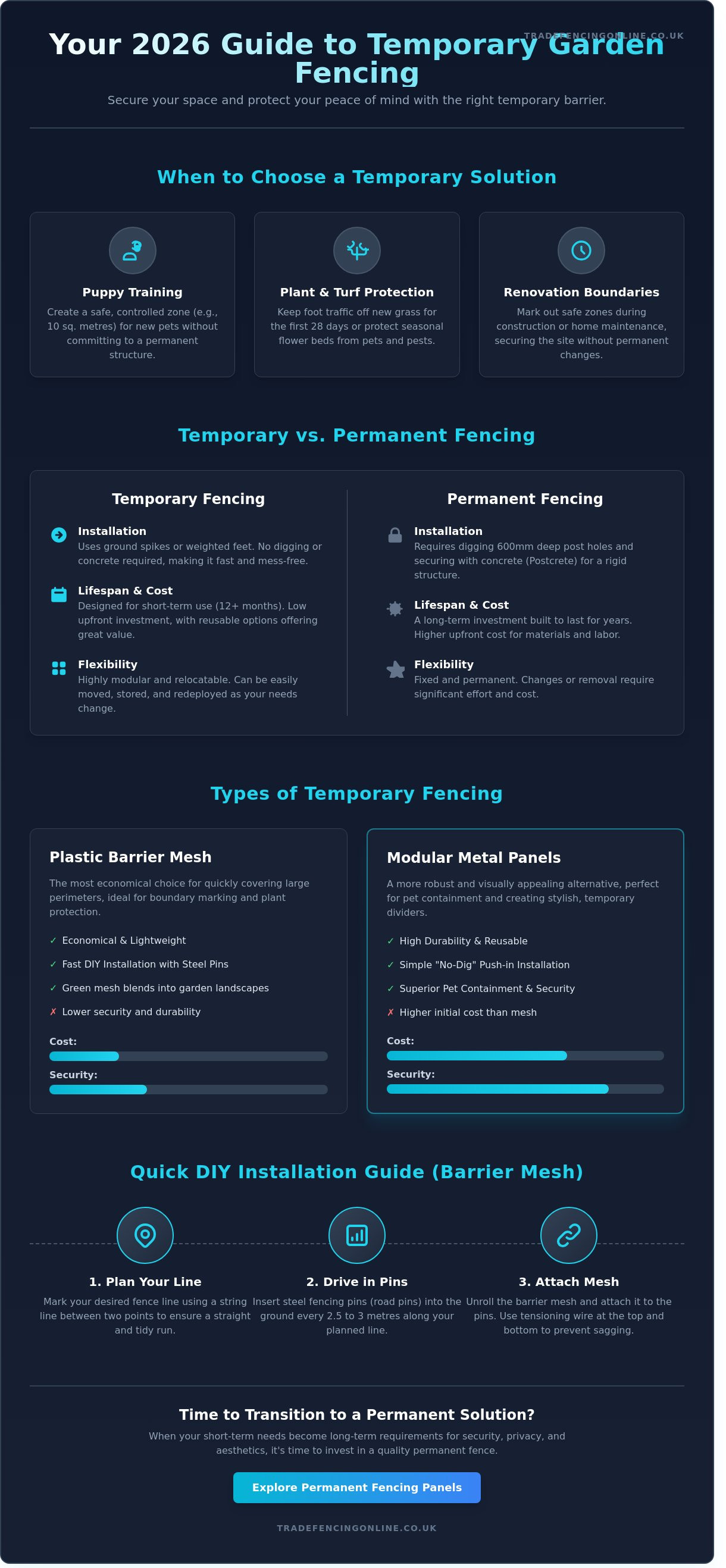
Temporary fencing solutions for garden use are lightweight, relocatable barriers designed for short-to-medium-term applications. These systems don't require permanent foundations or concrete footings. They offer a flexible way to manage your outdoor space without a long-term commitment. In 2026, the market has moved toward modular, reusable fencing. Homeowners now avoid disposable plastic rolls, opting instead for systems that can be stored and redeployed as needs change. Understanding Temporary Fencing is about selecting the right balance between aesthetic appeal and functional strength.
Choosing the right setup involves a trade-off. While a metal mesh provides high security, it may lack the visual charm of a timber alternative. Most garden projects require a barrier that's easy to remove but strong enough to withstand wind or curious pets. You aren't just buying a fence; you're buying a tool for garden management. It's about efficiency and getting the job done without unnecessary fuss or permanent changes to your landscape.
Temporary vs. Permanent Fencing: Key Differences
Installation depth is the primary differentiator. Permanent fences require digging 600mm holes and using postcrete to secure the structure. Temporary options avoid this mess. They use ground spikes or weighted feet for stability. Material lifespan also varies. UV-stabilised plastics are common for 12-month projects, while treated timber offers a more robust feel. For Romford homeowners, the cost analysis shows that investing in a reusable metal or timber system provides better value over three years than replacing cheap plastic netting every season.
When to Choose a Temporary Solution
Specific scenarios demand a non-permanent approach. You might need to protect seasonal flower beds from dogs during the spring months. It's also a practical visual boundary while waiting for heavy-duty fence panels to be delivered and installed. Security during building works is another major driver. If you have contractors on-site for a three-week renovation, a temporary barrier keeps the area safe without requiring a permanent construction. These temporary fencing solutions for garden use provide the agility needed for modern property maintenance.
- Puppy training: Creating a safe, 10-square-metre zone for new pets.
- Turf protection: Keeping foot traffic off new grass for the first 28 days.
- Renovation boundaries: Marking out safe zones during external home maintenance.
Types of Temporary Garden Fencing: Materials and Styles
Selecting the right temporary fencing solutions for garden projects requires a balance between cost, durability, and aesthetics. Different materials serve specific functions, from keeping pests out to creating secure zones for pets during landscaping. Your choice should depend on how long the barrier needs to stay in place and the specific level of security required.
Plastic Barrier Mesh and Fencing Pins
Plastic barrier mesh is the most economical choice for covering large perimeters quickly. While orange mesh is standard on construction sites for high visibility, green mesh is the preferred option for residential gardens. It blends into the landscape, providing a tidier appearance while protecting new turf or seeded areas. You'll need steel fencing pins, often called road pins, to secure the mesh into the ground. Space these every 2.5 to 3 metres to maintain structural integrity. For the best results, use a tensioning wire at the top and bottom to prevent the mesh from sagging. This setup is effective for basic crowd control or marking boundaries during garden parties.
When choosing materials, this University of Georgia guide to garden fencing highlights how different mesh sizes and wire types impact effectiveness against specific garden pests. For example, smaller apertures are necessary if you're trying to exclude rabbits rather than just defining a boundary. Plastic mesh remains popular because it's lightweight, easy to store, and requires zero maintenance.
Modular Metal and Decorative Wire
Modular metal panels offer a more robust alternative to plastic mesh. These systems often feature no-dig installation where the legs push directly into the soil. Many homeowners now use modular pet playpens as temporary garden dividers. These are ideal for training new puppies or keeping dogs away from fresh flower beds. Hoop top edging provides a subtle, decorative finish that protects borders without obstructing the view of your plants. In the UK climate, ensure any metal fencing is powder-coated or PVC-coated to prevent rust. High-quality coatings can extend the life of these temporary panels by 5 years or more, making them a reusable asset for seasonal gardening tasks.
Expanding willow or plastic trellises provide instant privacy and support for climbing plants. These are lightweight and easy to move as your garden layout evolves. If you need a more permanent look without the commitment, you can view our range of quality fencing to find professional-grade materials that offer better value than standard DIY store alternatives.
Windbreak netting serves a dual purpose. It creates a soft boundary while protecting delicate plants from harsh gusts and providing roughly 50% shade. This is particularly useful for vegetable patches in exposed locations. Most windbreak solutions are UV-stabilised to ensure they don't become brittle after a single summer of sun exposure. This makes them a reliable, multi-season tool for any serious gardener.
Selecting the Right Solution for Your Specific Needs
Choosing the correct temporary fencing solutions for garden projects depends on your environment and your specific goals. If you're containing a large breed like a German Shepherd, a 1.2m mesh roll is the minimum height required to prevent jumping. For smaller breeds like Jack Russells, the mesh size matters more than the height. Ensure the gaps are smaller than 50mm x 50mm to stop them from squeezing through narrow openings.
Ground conditions dictate your hardware choices. Soft lawns allow for spiked metal stakes or timber posts driven 300mm into the earth for maximum stability. If you're working on a patio or a driveway, use weighted rubber bases or water-filled barriers. These provide a secure stand without damaging your paving or requiring permanent holes. Budgeting for your project also requires a choice between rolls and panels. Rolls are often sold in 25m or 50m lengths and offer the lowest cost per linear metre. Individual panels cost more per unit but offer faster assembly and better durability for high-traffic areas.
The Best Temporary Fencing for Dogs and Pets
Height is your first line of defence against escape artists. High-energy dogs often require 1.5m fencing to stop climbers and jumpers. Security at the bottom is just as critical for dogs that dig. A 'no-dig' barrier must sit flush with the grass. Use U-shaped ground pegs every 500mm to secure the bottom wire firmly to the turf. For families on the move, foldable metal systems are the best choice. These kits pack flat for car boots and provide instant security when visiting family or staying at campsites.
Privacy and Screening Options
Standard green netting is a budget-friendly option but offers limited visual blockage. For better aesthetics and complete privacy, use a trellis with temporary supports. This creates an instant, attractive screen for seating areas or hot tubs. Artificial ivy rolls are another quick fix for hiding unsightly construction sites or blocking views from neighbours. These rolls attach easily to wire mesh with cable ties. If you live in high-wind areas like coastal Essex, secure your screening with heavy-duty ties every 300mm. This prevents the "sail effect" from pulling down your temporary fencing solutions for garden during autumn storms.
How to Install Temporary Fencing: A DIY Guide
Installing temporary fencing solutions for garden protection or pet containment is a straightforward task when you follow a professional process. Start by measuring the perimeter and marking the line with a string line. This ensures a straight run and prevents the fence from encroaching on neighbouring property or flower beds. Use wooden pegs to mark corner points before you begin driving any stakes into the ground.
Drive steel stakes into the ground every 2 to 3 metres. For maximum support, stakes should be driven at least 300mm deep into the soil. Maintaining a consistent 2.5-metre spacing provides enough tension to prevent the mesh from sagging under its own weight. If the ground is particularly soft or the area is prone to high winds, reduce the spacing to 1.5 metres to increase stability.
Unroll the mesh along the line of stakes. Attach it using heavy-duty cable ties or galvanised wire for a more secure, long-term fit. Start at the top of the first stake and work your way down; ensure the mesh is pulled taut before moving to the next pin. Finally, trim any excess wire or cable ties. Blunt the ends or tuck them behind the mesh to ensure there are no sharp edges that could harm pets or children playing nearby.
Tools Needed for a Fast Setup
Efficiency depends on having the right equipment. You'll need a heavy mallet, wire cutters, and heavy-duty gloves to protect your hands from sharp wire ends. Ensure you have the essential ironmongery ready before you start. Choose dedicated fence clips over standard zip ties if you need a solution that withstands heavy weather. Always conduct a safety check. Verify the location of underground pipes or electrical cables before driving pins into the soil. Statistics from utility safety groups indicate that even shallow stakes can cause damage if they hit buried services.
Maintenance and Easy Removal
Check the tension of your temporary fencing solutions for garden areas after heavy rain or high winds. Wet soil can cause pins to lean, which compromises the entire run. If the mesh feels loose, tighten the ties or reset the stakes immediately. When the fence is no longer needed, removal is quick. Cut the ties, roll the mesh tightly, and store it in a dry shed. Clean metal panels or stakes with a wire brush to remove dirt and prevent rust during winter storage. This ensures your materials remain in top condition for your next project.
Moving from Temporary to Permanent: The Romford Fencing Approach
Temporary fencing solutions for garden use are excellent for managing immediate needs like pet containment or site security during a renovation. However, these systems are not designed for long-term durability. You will know it is time for a permanent upgrade when your temporary mesh begins to sag, or the support stakes require constant repositioning after heavy winds. If you find yourself repairing your temporary barrier every few months, you are wasting time and money. A permanent fence is a one-time investment that secures your perimeter for 15 to 20 years.
Investing in professional-grade materials significantly boosts your property value. High-quality fence posts and thick timber panels provide a level of security and aesthetic appeal that temporary fixes cannot match. You can also integrate temporary elements into your permanent plan. For example, use temporary wire mesh to protect a new hedge while it grows against your permanent closeboard fence. This hybrid approach ensures total security while your long-term landscaping matures.
Choosing High-Quality Permanent Panels
Selecting the right panel style is the first step in a permanent upgrade. Closeboard panels are the gold standard for privacy and strength, featuring overlapping vertical boards that block wind and sightlines. Lap panels offer a more traditional, cost-effective alternative for side boundaries. Regardless of the style, you must use gravel boards at the base of every section. These boards prevent the bottom of your fence panels from touching the damp ground. This simple addition is the most effective way to stop rot and ensure your new fence lasts for decades. Romford Fencing makes this transition easy by offering complete kits online that include everything from the panels to the fixings.
Local Delivery and Support in Essex and London
Ordering from a local Essex supplier like Romford Fencing removes the stress of logistics. We offer fast delivery options across Romford, Ilford, and the surrounding areas, ensuring your materials arrive on-site exactly when your installer is ready. You don't have to deal with the long lead times or damaged goods often associated with national couriers. We provide trade-quality materials directly to the public at competitive prices. This means you get the same heavy-duty timber used by professional contractors, ensuring your garden boundary is built to a professional standard. Our local expertise means we understand the specific soil conditions and weather patterns in Essex, allowing us to recommend the best products for your specific location.
Ready for a permanent solution? Browse our full range of quality fence panels today.
Secure Your Garden with a Permanent Perimeter
Choosing the right temporary fencing solutions for garden use allows you to manage pet safety and construction zones during your 2026 landscaping projects. You've seen how easy it's to install mesh or lightweight panels for short-term needs. While these options provide immediate relief, they don't offer the durability of a professional timber installation. Trade Fencing Online is a trusted Romford supplier with a track record of 5-star reviews across the region. We make trade prices available to the general public, so you get the best value for your money. Our fleet handles fast local delivery across Essex and East London, arriving exactly when you need your materials. It's time to move past temporary fixes and invest in a boundary that lasts. Your garden deserves the security and style of professional-grade materials.
Shop Trade-Quality Fencing Supplies for Your Permanent Garden Upgrade
Frequently Asked Questions
What is the cheapest temporary fencing for a garden?
Plastic barrier mesh paired with steel fencing pins is the most budget-friendly option for temporary fencing solutions for garden projects. This setup provides a functional boundary for a fraction of the cost of traditional timber panels. It's a pragmatic choice for short-term site demarcation or pet control. You can install it in minutes without professional help or specialized tools.
Do I need planning permission for a temporary garden fence in the UK?
You don't usually need planning permission for a temporary fence if it's under 2 metres high. If the fence is adjacent to a highway used by vehicles, the height limit drops to 1 metre under UK Class A permitted development rights. These rules apply to 90% of residential installations. Always check with your local planning authority if your property is a listed building.
Can I install a temporary fence on a patio or hard standing?
You can install temporary fencing on hard standing by using heavy-duty rubber feet or weighted base plates. These blocks weigh approximately 18kg each and provide a stable foundation without drilling into your stone or concrete. This method ensures your patio remains undamaged. It's a reliable way to secure a perimeter on surfaces where you can't drive stakes into the ground.
How do I stop my dog from digging under a temporary fence?
Secure the bottom of the mesh with 150mm galvanised ground staples to prevent dogs from digging underneath. You can also fold an extra 30cm of fencing inward along the ground to create a skirt that stops persistent diggers. This physical barrier is effective for 95% of domestic breeds. It's a direct solution that keeps your pets contained and your garden secure.
How long does plastic barrier mesh last outdoors?
High-density polyethylene (HDPE) barrier mesh typically lasts between 12 and 24 months when exposed to UK weather conditions. The UV-stabilised material resists degradation from sunlight, though extreme winds can shorten its functional lifespan. It's designed for temporary use rather than permanent installation. This makes it a dependable choice for short-term projects or seasonal garden protection.
What is the best way to secure a temporary fence against high winds?
Use 45-degree angled stabiliser struts and ground pins to secure temporary fencing solutions for garden areas against high winds. These braces should be installed every two panels to provide maximum rigidity during storms. For mesh fencing, ensure the stakes are driven at least 300mm into firm ground. This setup prevents the fence from toppling in gusts exceeding 40 miles per hour.
Can I use temporary fencing to support climbing plants?
You can use temporary mesh to support light climbing plants like sweet peas or runner beans. Avoid heavy woody climbers like wisteria, as these can exceed the load-bearing capacity of the stakes. A standard 1-metre high plastic mesh can support approximately 5kg of plant weight per linear metre. It's an efficient way to create a vertical green screen during the growing season.
Is it better to use wood or metal stakes for temporary fencing?
Metal fencing pins are better for hard or stony ground because they're easier to drive in and reuse. Timber stakes offer more stability for longer-term temporary setups lasting over 6 months. Use 30mm by 30mm square wooden stakes for a more traditional look and better wind resistance. Metal pins are the pragmatic choice for quick, short-term boundaries that require minimal effort.