


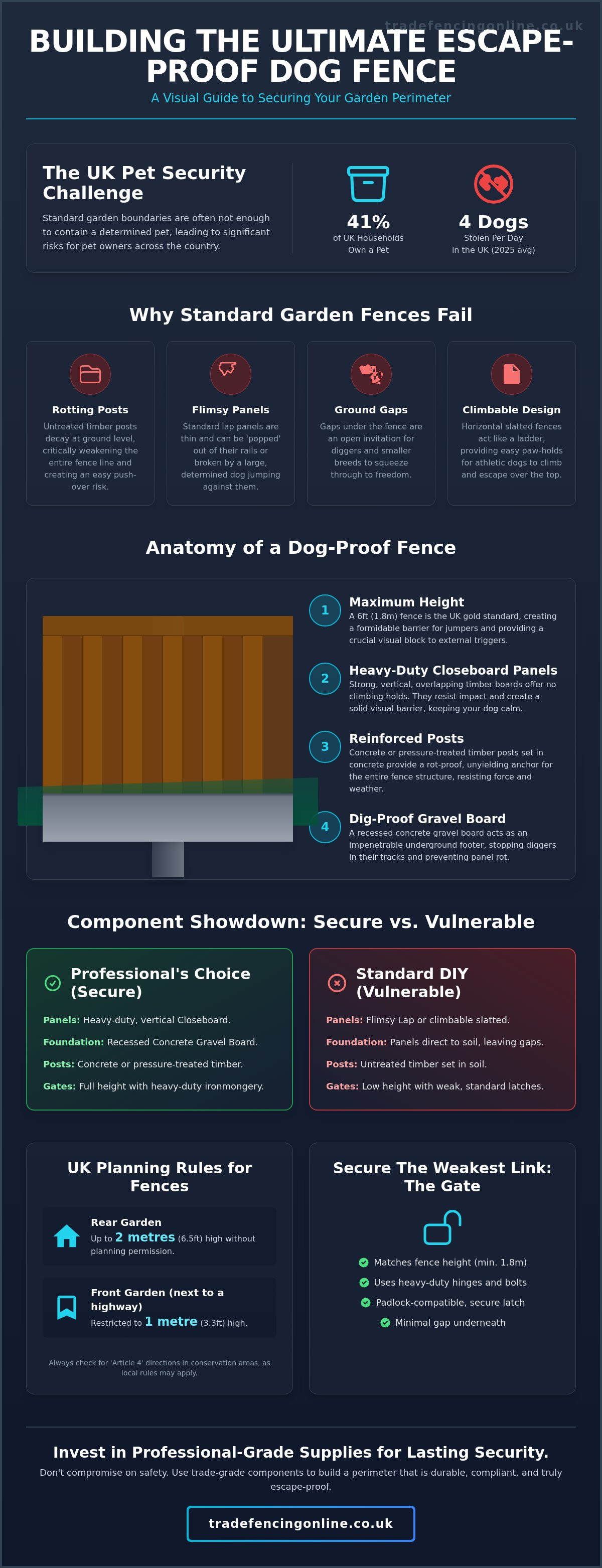
With 41% of UK households now owning a pet, the challenge of making my garden secure for my dog is a priority for millions. In 2025, an average of four dogs were stolen every day in the UK. This reality, alongside the Dogs (Protection of Livestock) Act 2025, makes a secure perimeter a legal necessity rather than a luxury. You need a boundary that stops escape artists from digging out or jumping over the fence.
Flimsy DIY solutions often fail when tested by a determined pet or a typical UK storm. You deserve a professional-grade, escape-proof garden that remains durable for years. This guide provides a direct strategy for building a robust perimeter using quality fence panels, concrete gravel boards, and heavy-duty ironmongery. You'll learn how to navigate UK planning laws regarding fence heights and choose components that provide total security.
We'll break down the "base-to-height" strategy, focusing on reinforced fence posts and dig-proof foundations. This walkthrough ensures your garden is compliant, permanent, and safe for your dog to enjoy.
Key Takeaways
- Identify common failure points in standard boundaries, such as rotting post bases and loose panels, to build a truly escape-proof perimeter.
- Discover why heavy-duty closeboard panels are the professional choice for making my garden secure for my dog compared to standard lap alternatives.
- Learn how to use recessed concrete gravel boards as an impenetrable underground footer to stop dogs from digging under the fence line.
- Secure the "weakest link" in your garden by matching gate height to your fencing and using high-quality ironmongery for reliable access control.
- Understand the importance of using trade-grade fencing supplies and professional installation to ensure your boundary remains durable and compliant with UK regulations.
Understanding the Risks: Why Standard Garden Boundaries Fail
Standard garden boundaries are usually designed for basic privacy or aesthetics. They rarely account for the physical strength and intelligence of a determined pet. A true dog-secure perimeter is more than just a line on a map. It's a physical barrier that prevents jumping, digging, and chewing. When making my garden secure for my dog, the first step is Understanding the Risks: Why Standard Garden Boundaries Fail, especially if the dog has a history of stress-driven escape attempts.
Common failure points include rotting post bases, loose panels, and significant gaps at ground level. Timber posts that sit in damp soil without proper protection will eventually fail. Once a post weakens, a large dog can push the entire section over. Many standard lap panels are too flimsy. They can "pop" out of the rails if a dog jumps against them. Gaps under the fence are also a major risk for smaller breeds who can squeeze through surprisingly tight spaces.
Solid panels provide a vital "visual barrier" for your pet. When a dog can see cyclists, cats, or other dogs through gaps, it often leads to excessive barking and fence-running. A solid fence removes these external triggers and keeps the dog calm within its own territory. This setup prevents the dog from becoming fixated on what happens outside the boundary.
Durability is essential in the unpredictable UK climate. High winds and heavy rain can warp cheap timber or snap poorly installed posts. A single failed panel after a storm creates an immediate escape route. Using trade-grade fencing supplies ensures the boundary remains intact throughout the year. It's a professional solution for a permanent problem.
The Jumpers vs. The Diggers: Assessing Your Dog
Security needs vary by breed and temperament. High-drive jumpers like Collies or Labradors require height. For medium-to-large dogs, a 6ft (1.8m) fence is the UK gold standard. Terriers and other persistent diggers focus their efforts on the ground. Avoid horizontal slatted fences. These act like a ladder, providing easy paw-holds for climbing. Vertical styles, such as closeboard fence panels, are much safer because they offer no leverage for climbing pets.
UK Planning Permission and Fence Heights
You must stay within legal limits when making my garden secure for my dog. In the UK, you can generally install a fence up to 2 metres high in a rear garden without planning permission. Front gardens are usually restricted to 1 metre if they are next to a highway. Always check for "Article 4" directions if you live in a conservation area. These local rules can restrict your fencing choices even if you stay under the standard height limits.
Choosing the Right Fence Panels for Maximum Security
The choice of panel material is the most critical decision when making my garden secure for my dog. Standard retail lap panels are often too lightweight for medium or large breeds. A determined dog can "pop" these thin panels out of their rails or even break through the horizontal slats. For a professional-grade boundary, you need heavy-duty components that resist impact and remain structurally sound under pressure.
Solid panels provide an essential visual barrier. Many dogs engage in "distraction barking" or fence-running when they see movement from neighbours or passersby. By using solid timber, you remove these external triggers and create a calmer environment. This approach aligns with official UK standards for Professional Supplies for a Dog-Proof Perimeter, which emphasize robust construction to prevent escape and stress.
Durability is another key factor. All timber components should be pressure-treated to prevent rot. Rotting wood creates weak spots that a dog can easily exploit by chewing or pushing. If you want a perimeter that lasts for years, invest in trade-grade materials from the start. You can view our range of heavy-duty timber panels to see the difference in build quality.
Closeboard vs. Lap Panels for Pet Owners
The technical difference between these two styles is significant for pet security. Closeboard fence panels use thick vertical pales that overlap. This vertical orientation makes it nearly impossible for a dog to get a foothold. In contrast, lap panels use thin, horizontal slats that are much easier to chew through or damage. Closeboard fencing offers superior impact resistance if a large dog jumps against it. To keep these panels secure, ensure they are fixed tightly into their clips or posts to prevent rattling, which can startle nervous pets.
Adding Trellis for Extra Height and Deterrence
If you have a high-energy jumper, adding a trellis topper is an effective way to increase height without blocking natural light. Diamond trellis is the preferred choice for dog owners. The small, angled gaps are much harder for a dog to use as a ladder compared to square mesh. It acts as a psychological and physical deterrent. Always remember the 2-metre rule. If your panel is 6ft, adding a trellis topper may take you over the legal height limit for rear gardens without planning permission. Check your total boundary height before installation.
Dig-Proofing and Ground Security with Gravel Boards
Ground security is the most overlooked element of a pet-safe boundary. While many owners focus on height, the area where the fence meets the soil is where most escapes begin. A gravel board is traditionally used to keep timber panels away from damp ground, extending the life of the wood. When making my garden secure for my dog, this component doubles as an impenetrable underground footer. Unlike flimsy mesh or chicken wire, which can rust and injure paws, a solid gravel board provides a permanent physical stop.
By recessing the board into the earth, you create a barrier that stops a dog from seeing or smelling what lies on the other side of the fence line. This setup significantly reduces the motivation to dig. This method aligns with RSPCA guidance on secure fencing, which recommends extending boundaries into the ground to prevent persistent diggers from tunneling out. It's a professional solution that addresses the root cause of escape attempts.
Why Concrete Gravel Boards are the Ultimate Dog-Proof Choice
Concrete is the professional standard for high-energy digging breeds like Terriers or Beagles. The primary advantage is weight. A standard concrete gravel board is heavy enough that a dog cannot lift or shift it, unlike lightweight timber alternatives. It's a "set and forget" solution for anyone making my garden secure for my dog. Concrete won't rot, warp, or weaken, regardless of how much soil your pet moves against it. It maintains its structural integrity for decades, providing consistent security at the base of your perimeter.
Step-by-Step: Installing a Dig-Proof Base
A secure base requires a structured installation process to be effective. Follow these steps to ensure your boundary is tunnel-proof:
- Clear the perimeter line. Remove all debris, large stones, and loose soil to create a level surface for the boards.
- Set your fence posts securely. Use Postcrete to ensure there is zero movement once the concrete sets. Stability at the post is vital for the strength of the entire line.
- Slot in the gravel board. Ensure the board is level and partially submerged. Burying the board 2 to 3 inches below the surface creates an effective barrier that stops tunneling before it starts.
- Secure the board. Use galvanised clips or brackets to fix the board to the posts. This ensures the board cannot be pushed outward by a determined pet.
This method provides a much higher level of security than burying wire. It creates a professional finish that adds value to the property while keeping your pet safely enclosed. Using high-quality concrete components eliminates the risk of rot and ensures the bottom of your fence remains as secure as the top.
Gates, Ironmongery, and Access Control
Gates are the primary point of failure in most residential boundaries. While your panels may be structurally sound, a flimsy gate or a weak latch provides an easy exit for a determined pet. You must treat the gate as a continuation of the structural perimeter. This means matching the gate height exactly to your surrounding fence line. A 6ft fence loses its value if the adjacent gate is only 4ft high, creating an obvious jumping point for high-energy breeds.
Ironmongery is the mechanical core of gate security. Standard latches are designed for convenience, not containment. When making my garden secure for my dog, you should upgrade to professional-grade hardware. Spring-loaded latches and self-closing hinges are essential for high-traffic gardens. These components remove the risk of human error by ensuring the gate swings shut and locks automatically every time someone enters or exits. It is a simple, effective way to prevent accidental escapes.
For total peace of mind, you need hardware that stands up to physical force and environmental wear. You can buy heavy-duty gate ironmongery and secure latches to ensure your access points remain as tough as your fence panels.
Secure Latches and Locking Mechanisms
Standard thumb latches are a common security risk. Intelligent dogs often observe their owners and learn to manipulate the lever with their paws or noses. Swap these for heavy-duty pad-bolt latches. Mount the bolt high on the gate, well out of reach of a jumping dog. For large, powerful breeds that lean or throw their weight against the gate, install two latches. Placing one at the top and one at the bottom provides double the resistance against physical force and prevents the gate from warping under pressure.
Preventing the "Escape Artist" Dash
Some dogs wait by the gate for any opportunity to bolt. A "safety airlock" or double-gate system is the most effective professional solution for this behaviour. This involves a small fenced enclosure inside the main gate, requiring two separate barriers to be opened. Ground clearance is also vital. Ensure the gap between the bottom of the gate and the ground is minimal. If the gap is larger than 2 inches, it invites digging or allows smaller breeds to squeeze through. Check your hinges monthly. Timber gates are heavy, and any sag in the hinges can create uneven gaps or prevent latches from engaging correctly.
Professional Supplies for a Dog-Proof Perimeter
Sourcing the right materials is the final step in ensuring your boundary remains intact. Many homeowners make the mistake of purchasing decorative fencing from standard retail centres. These products are often built for aesthetics rather than structural security. Trade-grade fencing supplies outperform retail options because they use thicker pales and reinforced frames. When making my garden secure for my dog, you need components that can withstand consistent physical pressure and the UK's unpredictable weather.
Romford Fencing Ltd provides a significant advantage for projects in Essex and London. We maintain a constant stock of heavy-duty concrete and pressure-treated timber. These materials are specifically designed for high-stress environments where security is the priority. Buying your supplies in bulk is the most cost-effective method for securing a large garden. It ensures consistency in the timber batch and reduces the logistical friction of multiple deliveries.
Use this final checklist to ensure you have every component required for a professional-grade installation:
- Fence Posts: Choose concrete or 4x4 pressure-treated timber for maximum stability.
- Postcrete: Use fast-setting cement to ensure posts are anchored with zero movement.
- Gravel Boards: Opt for concrete to create a permanent, dig-proof footer.
- Fence Panels: Select heavy-duty closeboard panels to stop impact and eliminate visual triggers.
- Ironmongery: Invest in pad-bolts and self-closing hinges for every gate.
The Benefit of Local Essex and London Delivery
Transporting 6ft fence panels and heavy concrete posts is a difficult task without the right equipment. Our delivery service covers Romford, Essex, and East London, removing the hassle of logistics. Fast delivery is essential if you are making urgent security repairs after a storm or a recent escape attempt. You also benefit from expert advice from a local supplier who understands the specific soil conditions and weather patterns in the South East. We provide the structural goods you need without the "decorative" markup found in retail stores.
Next Steps: Securing Your Garden Today
Don't wait for an escape to happen before upgrading your boundary. Start by measuring your entire perimeter and counting the exact number of posts and panels required. Account for any changes in ground level that might require stepped fencing or extra-deep gravel boards. Once you have your requirements, order your materials from a specialist who understands the demands of pet security. A professional boundary is a one-time investment that ensures your dog's safety for years to come.
SHOP SECURE FENCE PANELS AT ROMFORD FENCING LTD
Secure Your Perimeter Today
Building a professional-grade boundary requires a shift from decorative retail items to structural, trade-quality components. You now understand that a truly escape-proof garden relies on the structural integrity of closeboard panels and the dig-proof footer provided by concrete gravel boards. These elements work together to eliminate common failure points like rotting timber and ground-level gaps. It's a pragmatic approach to a permanent security need.
Don't ignore the gate. It remains the most vulnerable point for many owners. By matching gate height to your fence line and installing heavy-duty latches, you remove the risk of mechanical failure or pet manipulation. This comprehensive strategy is essential for making my garden secure for my dog. Using the right ironmongery ensures that your access points are as robust as your main fence line.
We are a reliable, local supplier with the inventory and expertise to support your project. GET TRADE-QUALITY FENCING SUPPLIES DELIVERED ACROSS ESSEX. Benefit from trade prices for public customers and fast local delivery across Romford and East London. We maintain a huge stock of heavy-duty concrete and timber to help you get the job done right. Secure your boundary today and provide your dog with the safe outdoor space they deserve.
Frequently Asked Questions
How high should a fence be for a dog?
A 6ft (1.8m) fence is the recommended height for medium and large breeds. High-energy dogs like Huskies or Labradors can easily clear shorter boundaries if they have a running start. Smaller dogs or those with low drive may only require a 4ft (1.2m) barrier. Always match the height to your specific breed's jumping ability to ensure total containment.
How do I stop my dog from digging under the fence?
Installing concrete gravel boards is the most effective way to stop digging. Bury the board 2 to 3 inches below the surface to create an impenetrable underground footer. This physical barrier prevents tunneling and blocks the dog's view of the soil on the other side. It is a permanent, professional solution compared to temporary wire mesh which can rust and break.
What is the most durable type of fencing for dog owners?
Heavy-duty closeboard fencing combined with concrete posts and gravel boards is the most durable option. The vertical pales of closeboard panels provide superior impact resistance against large dogs that jump or lean. Concrete components ensure the structure remains stable even in wet soil. This setup resists rot and prevents the perimeter from weakening over time.
Do I need planning permission for a 6ft dog-proof fence?
Planning permission is generally not required for fences up to 2 metres (approximately 6.5ft) in rear gardens in the UK. However, if the fence is next to a highway, the legal limit is usually 1 metre without permission. Always check with your local council for Article 4 directions or conservation area restrictions before making my garden secure for my dog.
Can dogs chew through wooden fence panels?
Dogs can chew through standard thin lap panels, especially if they are bored or anxious. Pressure-treated closeboard panels are much harder to damage due to the thickness of the vertical pales. If your dog is a persistent chewer, ensure the timber is high-quality and look for any existing rot that might make the wood easier to splinter or break.
Is concrete or wooden fencing better for dogs?
A hybrid system using concrete posts and gravel boards with timber panels is the professional choice. Concrete provides a rot-proof, stable foundation that dogs cannot move or dig through. Timber panels offer a solid visual barrier to reduce barking at external triggers. This combination offers the best balance of structural security and behavioural management for pet owners.
How can I secure the gap under my garden gate?
Secure the gap under your gate by installing a solid timber threshold or a concrete strip on the ground. The gap should be no larger than 2 inches to prevent small breeds from squeezing through or larger dogs from getting a paw-hold. Ensure the gate is hung correctly to maintain a level clearance across its entire swing area.
What is the best way to stop a dog from jumping over a fence?
Adding a diamond trellis topper is an effective way to increase height and discourage jumping. The angled gaps make it difficult for dogs to find a foothold compared to square mesh. For persistent jumpers, an inward-leaning topper can provide a psychological deterrent. Making my garden secure for my dog often requires these extra vertical layers to stop high-drive pets from clearing the 6ft line.