


The cheapest treated timber post often ends up being the most expensive when it rots through in just five years. If you're asking how long do treated fence posts last, the answer depends entirely on the specific treatment grade and your installation method. Most buyers see a green tint and assume the wood is protected, but using the wrong specification for ground contact is a guaranteed way to waste your budget and labor.
We understand the frustration of seeing a solid fence line lean because the posts have decayed at the soil level. You want a professional result that stands firm for 15 years or more without the cost and hassle of a total replacement. This 2026 guide explains the critical differences between UC3 and UC4 timber under the updated BS 8417:2024 standards. We will show you how to identify the correct treatment grade for your project. You will also learn the specific installation techniques, including the proper use of postmix and gravel boards, to prevent premature rot and protect your investment.
Key Takeaways
- Standard posts last 8 to 15 years, but premium UC4 timber can reach 25 years. Learn how specific treatment grades determine how long do treated fence posts last in your garden.
- Identify the critical difference between UC3 and UC4 timber before you buy. UC4 is the only grade rated for direct ground contact and long-term resistance to rot.
- Learn why heavy clay soil and moisture cycles accelerate timber decay. Proper drainage and soil management are vital for maintaining a stable fence line.
- Extend your fence's lifespan by using gravel boards and ground-line protection. These practical steps prevent moisture from sitting against the wood and causing premature failure.
- Decide when to choose traditional timber or pragmatic concrete posts. Match your materials to your local environment and wind exposure for the best long-term value.
Understanding the Average Lifespan of Treated Wooden Fence Posts
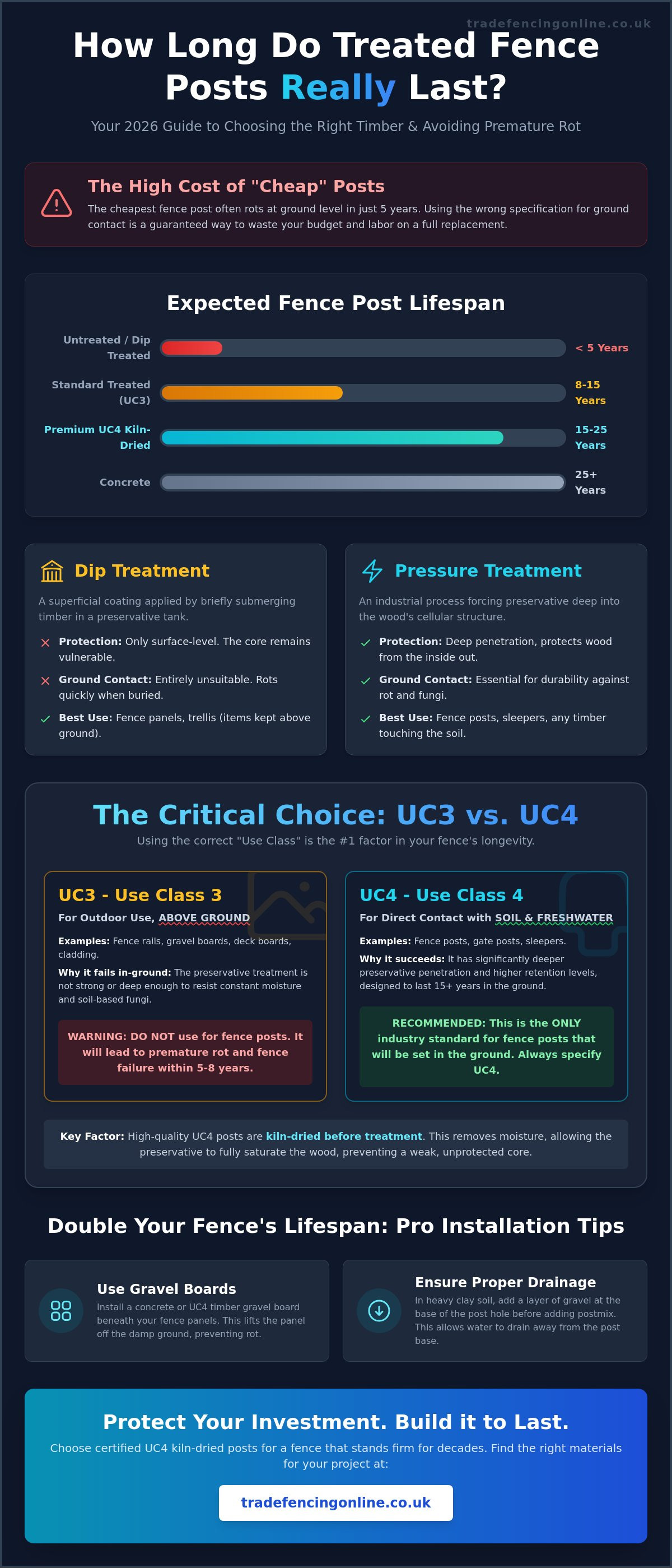
Choosing the right timber determines whether your fence stands for decades or collapses in a few seasons. If you want to know how long do treated fence posts last, look at the treatment process first. The durability of any wooden post depends on its ability to resist fungal decay and moisture at the ground-line. This specific point, where the wood meets the soil, is the most vulnerable area. It experiences the highest concentration of bacteria and constant moisture cycles. Standard pressure-treated posts typically offer a service life of 8 to 15 years. However, premium UC4 kiln-dried posts can realistically last 15 to 25 years. In contrast, untreated timber or basic dip-treated posts often fail in under 5 years because they cannot withstand the harsh conditions of direct soil contact.
Pressure Treated vs. Dip Treated: What is the Difference?
The difference between these two methods is fundamental to performance. Pressure treatment involves placing timber in a vacuum chamber to remove air from the wood cells. This vacuum then pulls preservatives deep into the grain, ensuring protection throughout the post. Various wood preservation techniques are used to achieve this, resulting in a product that resists rot even when buried. You can usually identify pressure-treated wood by its natural green or brown hue. Dip treatment is a much simpler process. The timber is submerged in a tank for a short period, which only coats the surface. While this is acceptable for garden fencing panels or trellis that sit above the ground, it's entirely unsuitable for posts. Dip-treated posts rot quickly because moisture and soil bacteria penetrate the unprotected core almost immediately.
Realistic Expectations for Modern UK Timber
Durability standards have evolved significantly. Following the removal of traditional chemicals like arsenic from domestic wood treatments, the industry shifted toward more sustainable but complex formulas. The current BS 8417:2024 standard provides the framework for these modern preservatives. For a post to reach its maximum lifespan, kiln-drying is essential. This process reduces the moisture content of the wood before treatment, creating space for the preservative to saturate the timber. Without kiln-drying, the treatment often creates a "shell" that leaves the center of the post vulnerable. In 2026, rigorous auditing ensures that timber labeled for ground contact meets these high requirements. If you buy standard trade posts, expect 8 to 15 years. If you invest in premium UC4 kiln-dried posts, you're looking at a 15 to 25-year lifespan. Always check the product specification to ensure it's rated for Use Class 4 before starting your installation. Understanding how long do treated fence posts last helps you budget for a fence that doesn't require constant repairs.
UC3 vs UC4: Why Treatment Grades Determine Your Fence's Future
Understanding treatment grades is the only way to accurately predict how long do treated fence posts last. Timber treatment is categorized into "Use Classes" based on the environment the wood will face. UC3 (Use Class 3) timber is intended for outdoor use but must remain above the ground. It is suitable for deck boards, cladding, or fence rails. UC4 (Use Class 4) is the specific industry standard for timber in direct contact with the soil. Using UC3 timber for fence posts is the primary cause of premature rot in UK gardens. The wood simply lacks the chemical depth to survive constant exposure to soil moisture and fungi.
Preparation is just as important as the treatment itself. High-quality UC4 posts undergo a kiln-drying process before entering the pressure chamber. This step removes excess moisture from the wood cells, creating space for the preservative to penetrate deep into the sapwood. Without this, the treatment often only coats the outer few millimeters. When you buy from a reputable supplier, ensure your posts are explicitly labeled as UC4 to avoid a costly failure within five years. If you want a fence that stands for 15 years or more, don't settle for anything less than kiln-dried, pressure-treated timber.
The UC4 Standard: What You Need for Ground Contact
UC4 timber requires significantly deeper preservative penetration and higher retention levels than UC3. These standards ensure the wood remains structurally sound even in boggy or poorly drained conditions. This strength is essential when supporting heavy fence panels that catch the wind. You should always verify the treatment grade with your fencing supplier. According to Wood Protection Association standards, UC4 is the only appropriate choice for any timber component that touches the earth. If you're unsure, look for the WPA Benchmark certificate or ask for a product data sheet before making a purchase.
Why UC3 Fails in the Soil
UC3 timber fails in the ground because of the "wicking" effect. Wood fibers act like tiny straws, drawing moisture up from the wet soil into the post. Because UC3 treatment only provides a thin surface barrier, soil bacteria easily breach this layer. Once the bacteria reach the untreated core, the post rots from the inside out. This usually happens at the ground-line, where oxygen and moisture levels are highest. Saving a few pounds on UC3 posts is a false economy. You'll eventually pay for the labor and materials to replace the entire fence years earlier than necessary. Investing in the right fence posts from the start is the most cost-effective way to secure your property.
Environmental Factors: Why Soil and Drainage Matter in Essex
In regions like Romford and across Essex, heavy clay soil is a common challenge for fencing projects. Clay retains water for long periods, creating a saturated environment around the base of the timber. This constant moisture is the single biggest threat to the longevity of your fence. When considering how long do treated fence posts last, you must account for these local conditions. It isn't just about the rain; it's about how long that water stays in contact with the wood. Saturated soil prevents the timber from drying out, which creates the ideal environment for rot-inducing organisms to thrive.
The wood fibers also undergo significant stress from moisture cycles. In the South East, we often experience intense wetting in winter followed by rapid drying in summer. This cycle causes the timber to expand and contract, which can create small cracks or "checks" in the surface. These openings allow moisture and bacteria to bypass the outer treated layer and reach the core. Garden layout plays a role too. Shaded, damp corners are often the first places where posts fail. Without sunlight to dry the ground, the wood stays permanently damp. Similarly, if your garden has a slope, surface runoff will naturally pool at the lowest point. If you install posts in these areas without extra drainage, their lifespan will be significantly shorter than posts on higher ground.
The Danger of 'Concrete Collars' and Trapped Water
Many installers make the mistake of creating a "concrete collar" that actually traps water against the timber. If the concrete is flat or sunken at the top, it acts as a cup. Water sits against the post, leading to rot just above the soil level. To prevent this, always finish your postcrete with a "weathering" slope. This involves troweling the wet concrete so it angles away from the post, allowing water to run off onto the surrounding soil. Adding a gravel base at the bottom of the hole before pouring concrete is another professional tip. It provides a path for vertical drainage, ensuring the bottom of the post doesn't sit in a puddle of trapped water.
Biological Decay: The Role of Fungi and Bacteria
Decay is caused by soil-borne fungi and bacteria that break down the cellulose and lignin within the wood. This biological attack is most aggressive at the ground-line. This is the precise point where the post has access to both moisture from the soil and oxygen from the air. Without one of these elements, rot slows down significantly. However, the UK climate provides the perfect balance for decay. Professional data suggests that even high-quality UC4 timber has a service life of about 15 years in these conditions. By managing your garden's drainage and ensuring proper installation, you help your posts reach the upper end of their durability range. Understanding how long do treated fence posts last requires looking at both the quality of the timber and the environment where it lives.
Practical Steps to Double the Life of Your Fence Posts
Installation quality determines how long do treated fence posts last just as much as the timber grade itself. Even a premium UC4 post will fail prematurely if it sits in standing water or has its protective barrier breached. You can significantly extend the lifespan of your installation by following professional trade practices. Start by ensuring the base of your post hole has proper drainage. Use a "shingle shoe," which is a 50mm to 100mm layer of gravel or ballast at the bottom of the hole before you add the post and postmix. This allows water to drain away vertically into the subsoil rather than pooling around the bottom of the timber.
Avoid "notching" or cutting your posts whenever possible. Pressure treatment creates a protective envelope, but the very center of the post may still be vulnerable heartwood. When you cut or notch the timber to fit a rail, you expose this untreated core to the elements. This creates a direct entry point for fungal decay. If a cut is unavoidable, you must saturate the exposed grain with a dedicated end-grain preservative. This simple step is often overlooked by DIYers but is a standard requirement for professional contractors who want their work to last 15 years or more.
The Role of Gravel Boards in Post Protection
Gravel boards are a critical component for any long-lasting fence. They sit at the base of the fence and keep the panels off the damp ground. This prevents soil moisture from wicking into the panels, which are usually made of thinner, less resilient timber. You must decide between fence posts the complete uk buyers guide wood vs concrete and matching gravel boards. Concrete boards are impervious to rot and provide a permanent base. Timber gravel boards are more aesthetic but act as a sacrificial layer that you can replace easily without disturbing the main posts. Both options prevent "splash back," where rain hitting the soil bounces mud and bacteria onto the wood fibers.
Post Sleeves and Additional Treatments
Post sleeves provide an additional mechanical barrier at the critical ground-line section. These heat-shrink sleeves create an airtight and watertight seal around the part of the post most likely to rot. By excluding oxygen and moisture, they make it impossible for fungi to establish a foothold. Some installers prefer applying bitumen-based coatings to the bottom section of the post. While bitumen is effective, it can be messy and may eventually crack. A more reliable method for modern timber is applying an extra coat of wood preserver to the bottom 600mm of the post before it goes into the ground. Ensure the wood is dry before applying any extra treatments to allow for maximum absorption. To get the best results, order professional-grade UC4 fence posts and gravel boards from a specialist supplier.
Choosing the Right Posts: When to Go Wood and When to Go Concrete
The choice between timber and concrete depends on your specific site conditions and long-term maintenance goals. Timber provides the traditional, natural appearance most homeowners want for garden fencing. It is easier to handle, lighter to transport, and allows for much more flexibility during installation. However, concrete is the pragmatic choice for boggy ground or areas with extreme wind exposure. Concrete posts are entirely impervious to biological rot, meaning they will outlast even the best-treated timber. You must balance the higher initial cost and weight of concrete against the eventual replacement cycle of wood.
The Case for Modern Timber Posts
UC4 treated timber remains a reliable choice for a 20-year fence when installed with the correct drainage techniques discussed earlier. It is the preferred option for bespoke builds where you need to attach ironmongery, gates, or trellis directly to the post. Wood also offers environmental benefits, as most trade-grade timber is sustainably sourced from managed forests. When customers ask how long do treated fence posts last, the answer usually comes down to the quality of the wood. High-grade UC4 timber provides a professional finish that concrete cannot match, and it remains the standard for traditional UK gardens.
Why Buy from a Specialist Fencing Supplier?
Avoid buying timber from "big box" retail outlets if you want a fence that lasts. Retail timber is often treated to lower specifications that won't survive the heavy clay soil found in Romford and across East London. Specialist suppliers provide trade-grade fence posts that feature higher preservative retention and proper kiln-drying. We understand the local Essex climate and can recommend the exact materials needed for your specific ground conditions. We also provide fast local delivery for heavy posts and essential fencing supplies, saving you the logistical hassle of transporting bulky materials yourself.
Final Verdict: Maximising Your Investment
To get the most value from your project, stick to the professional formula: UC4 timber plus vertical drainage plus gravel boards. This combination addresses the primary causes of rot and ensures your fence remains structurally sound for 15 to 25 years. If your garden suffers from permanent waterlogging, consider concrete for the posts while using timber for the panels to maintain a natural look. The team at Romford Fencing Ltd is ready to supply the high-quality materials you need for a durable, professional installation. Browse our range of UC4 treated fence posts for local delivery and secure your garden with confidence.
Build a Fence That Stands the Test of Time
Your garden's security depends on making the right technical choices before the first hole is dug. The real answer to how long do treated fence posts last comes down to the "UC4 + Drainage + Gravel Board" formula. By selecting kiln-dried, pressure-treated timber and installing it with proper moisture management, you avoid the cost and labor of premature replacements. These professional standards ensure a stable fence line that can last up to 25 years.
We are an established Romford supplier with a professional reputation for excellence. We provide trade-grade UC4 timber specifically suited for the heavy clay soils found across our region. Don't settle for inferior retail timber that fails in five years. Benefit from our specialist Essex and London delivery to get your project started without delay. We focus on providing the reliable, high-quality materials you need for a durable result.
Shop Trade-Quality UC4 Fence Posts & Supplies
Invest in quality materials today and enjoy a fence that stays firm for years to come.
Frequently Asked Questions
Can I make my treated fence posts last 25 years?
You can achieve a 25-year lifespan by combining UC4 kiln-dried timber with mechanical protection like post sleeves. These sleeves create a barrier at the ground-line where rot typically begins. Regular inspections and ensuring that soil or mulch doesn't build up against the wood also help. Choosing high-quality supplies from a specialist merchant is the first step toward this long-term durability.
Is it better to put fence posts in concrete or dirt?
Concrete is the superior choice for stability, especially in high-wind areas. However, you must ensure water can drain away from the timber. Don't "encase" the bottom of the post in a concrete cup. Instead, place a layer of gravel at the bottom of the hole so moisture doesn't sit against the wood grain. This method provides the best balance of strength and rot resistance.
Do I need to treat the bottom of a pressure-treated fence post?
You must treat any part of the post that's been cut, notched, or drilled. Pressure treatment only reaches a certain depth; cutting exposes the untreated heartwood. Apply a liberal amount of end-grain preservative to these areas before installation. For the buried section, adding a bitumen coating or post sleeve provides a secondary layer of protection that extends the lifespan.
What is the best wood for fence posts in the UK?
Redwood is widely considered the best timber for fence posts in the UK. Its cellular structure allows for much deeper penetration of preservatives compared to cheaper Whitewood. When you're researching how long do treated fence posts last, you'll find that UC4-rated Redwood consistently outperforms other softwoods in ground-contact tests. Always verify the wood species and treatment class with your supplier before purchase.
Why do my fence posts always rot at ground level?
Rot occurs at the ground level because it's the point where fungi have access to both moisture from the soil and oxygen from the air. Below the ground, there's often too little oxygen; above the ground, it's often too dry. The ground-line provides the perfect environment for biological decay. Using gravel boards and sloped concrete helps keep this specific area as dry as possible.
Are 4x4 posts better than 3x3 posts for longevity?
100mm (4x4) posts are significantly better for longevity than 75mm (3x3) alternatives. The extra thickness provides more structural heartwood. This means it takes much longer for fungal decay to compromise the post's integrity. Larger posts also offer better wind resistance. This prevents the swaying motion that can create gaps in the soil where water collects and accelerates rot.
How can I tell if a fence post is UC4 treated?
UC4 posts are often identified by incising marks, which are small slits in the wood surface that allow preservative to penetrate deeper. You should also check for a WPA Benchmark stamp or ask your supplier for a treatment certificate. Genuine UC4 timber is always kiln-dried before treatment. This is a key quality indicator that separates trade-grade posts from standard retail options.
Should I use concrete gravel boards with wooden posts?
Using concrete gravel boards with wooden posts is a highly pragmatic decision. This setup prevents the wooden fence panels from touching the damp earth. While some prefer the look of all-timber construction, concrete boards provide a permanent moisture barrier that never needs replacing. It's a cost-effective way to protect your investment and improve how long do treated fence posts last in wet conditions.