


A garden fence shouldn't be a recurring expense that collapses after the first winter storm. Most homeowners treat fence repairs as an inevitable annual chore, but your boundary shouldn't fail just because the wind picks up. If you're tired of gaps appearing or timber rotting, vertical feather edge fencing offers the structural integrity needed for the UK climate. You want a perimeter that stands firm without warping or leaning after a single year of exposure.
This guide explains why this specific construction is the premier choice for long-term durability and professional aesthetics. We'll show you how board overlap and rail density dictate the lifespan of your installation. You'll also learn about essential UK height regulations, such as the two-metre limit for rear gardens, to ensure your project stays compliant. From selecting pressure-treated timber to understanding professional installation standards, we provide the straightforward facts you need for a fence that lasts over 15 years.
Key Takeaways
- Identify the structural differences between trade-standard vertical feather edge fencing and cheaper alternatives to ensure your boundary lasts.
- Learn why board overlap and back rail density are the most critical factors for preventing panel sagging over time.
- Compare the 20-year potential lifespan of closeboard systems against standard lap panels to maximize your investment.
- Determine the best combination of posts and gravel boards to protect your timber from ground moisture and rot.
- Get professional-grade materials delivered directly to your site with specialist logistics across Essex and East London.
What is Vertical Feather Edge Fencing?
Vertical feather edge fencing is a structural boundary system made from individual, tapered timber boards. These boards are cut diagonally from a single piece of wood, creating a thick "root" edge and a thinner "tip" edge. By overlapping these tapered boards vertically, you create a solid timber wall that remains flexible enough to expand and contract with the seasons. Unlike pre-built panels that use thin slats, this system relies on heavy-duty vertical boards nailed securely to horizontal support rails. This creates a dense, overlapping barrier that is significantly stronger than standard decorative screens.
Within the professional UK trade, this style is the gold standard for Close boarded fencing. The name comes from the way the boards are packed tightly together to ensure zero visibility. This design offers superior strength and privacy compared to almost any other timber option. It creates a clean, traditional aesthetic that suits everything from rural cottages to modern industrial estates. The vertical lines and uniform finish provide a high-end look without the need for complex decorative features. It's a pragmatic choice for those who value substance and long-term performance over temporary trends.
The Difference Between Feather Edge and Overlap
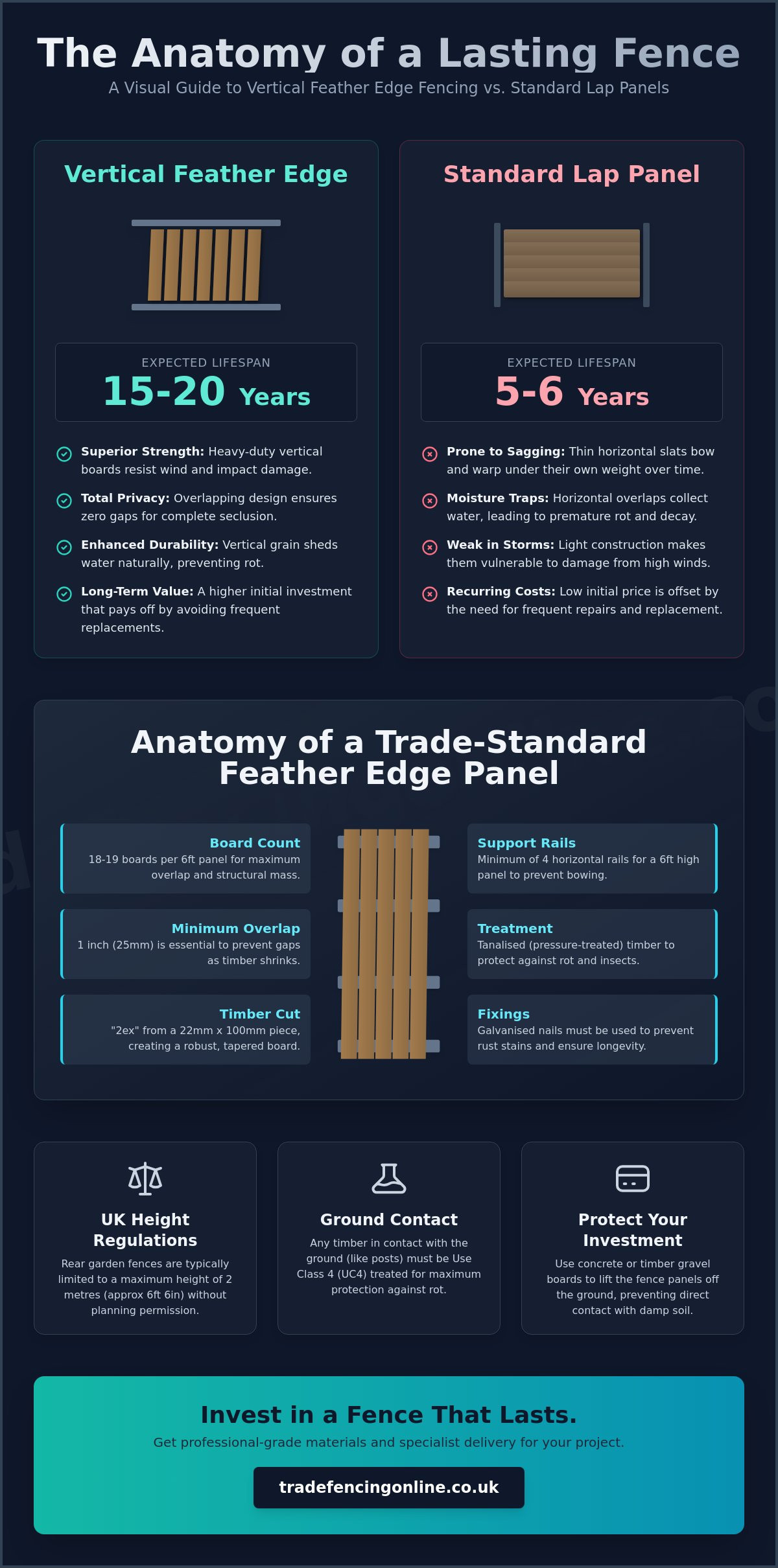
The primary difference between feather edge and standard overlap is the orientation and durability of the timber. Overlap panels use horizontal slats that are often very thin and prone to splitting or sagging. Vertical boards are naturally better at shedding water. Gravity pulls moisture down the grain of the wood and off the bottom, preventing the rot that often starts in the horizontal "pockets" of lap panels. While you'll pay more upfront for a vertical system, the long-term value is clear. You're buying a fence that can last 15 to 20 years, whereas cheap lap panels often fail within five or six seasons.
Common Uses for Vertical Feather Edge
Homeowners in windy or exposed areas rely on vertical feather edge fencing to prevent storm damage. The vertical orientation and rail density allow the fence to absorb high wind pressure without buckling or blowing out. It's also the preferred choice for residential boundaries where total privacy is required. There are no gaps for neighbours to peer through, making your garden a truly private space. Beyond residential use, it serves as an effective security barrier for commercial perimeters. Upgrading to a vertical system instantly improves property value and kerb appeal. It looks professional, stays straight, and signals that the property is well-maintained.
The Anatomy of a High-Quality Feather Edge Panel
Structural integrity in vertical feather edge fencing depends on specific material choices. A professional-grade 6ft wide panel should feature 18 or 19 individual boards. Many budget retailers use only 17 boards to cut costs, but this significantly reduces the overlap. A higher board count ensures a tighter fit and better privacy. It also provides the structural mass needed to resist warping during seasonal temperature changes. When you choose a panel with more boards, you're investing in a denser, heavier barrier that won't easily succumb to the elements.
Timber treatment is non-negotiable for UK gardens. High-quality panels are Tanalised, which means they've undergone high-pressure preservative treatment. This process forces chemicals deep into the wood grain to protect against rot and insect attack. You can typically choose between green and brown finishes. Green is the natural result of the copper-based treatment, while brown includes an added dye for a more traditional look. Following Timber Development UK fencing standards, ensure any timber in ground contact meets Use Class 4 requirements for maximum durability.
Fixings are another critical component that often gets overlooked. Use only galvanised nails for all assembly and installation. Standard steel nails will rust quickly when exposed to the rain, leaving ugly black streaks down your boards. Galvanised fixings resist corrosion and keep the vertical boards secure for decades. This attention to detail prevents the "rattle" often heard in cheaper fences during high winds.
Board Thickness and Overlap Specs
Timber naturally shrinks as it dries. You need a minimum 1-inch (25mm) overlap between boards to prevent gaps from appearing during the summer months. Most trade-quality boards are cut "2ex," meaning two tapered boards are produced from a single 22mm x 100mm piece of timber. This creates a robust profile that handles thermal expansion without cracking. The vertical orientation also aids in the thermoregulation of the wood by allowing air to circulate through the microscopic gaps in the overlap, preventing moisture build-up.
The Role of Horizontal Support Rails
Support rails act as the backbone of the entire fence. A 6ft high panel requires at least 4 horizontal rails to prevent the vertical boards from sagging or bowing over time. Flimsy 2-rail or 3-rail systems often fail within a few years because they cannot support the weight of the timber. For continuous fencing runs, installers often use arris rails or cant rails, which are shaped to shed water away from the fixings. If you're starting a new project, you can find trade-quality fence panels that meet these exact structural specifications. Thick rails ensure the panel remains rigid even during the severe storms common in Essex and East London.
Feather Edge vs. Lap Panels: Which Is Best for Your Garden?
Choosing between these two options is a matter of long-term value against immediate cost. Vertical feather edge fencing typically lasts between 15 and 20 years with proper maintenance. In contrast, standard lap panels, often called waney edge, generally fail within 5 to 10 years. This lifespan gap exists because lap panels use thinner timber and horizontal slats that trap water. Vertical boards allow moisture to drain quickly. This prevents the saturation that leads to timber rot and structural failure.
Wind resistance is a major factor for UK homeowners. In high-wind zones, horizontal lap panels act like a sail. They catch the full force of the air, putting immense pressure on the posts and fixings. The vertical orientation of feather edge allows for better pressure distribution. The air flows more naturally against the vertical grain. The heavy-duty rails behind the boards provide the necessary rigidity to prevent the fence from bowing or blowing down during winter storms.
Repairing your fence is simpler with a vertical system. If a single board gets damaged by a falling branch or impact, you can replace that specific piece of timber. With lap panels, a single break usually means the entire panel needs replacing. Privacy levels also differ significantly. Feather edge boards provide a total screen with no gaps. Cheap lap panels often warp over time. This creates sightlines between the thin slats that compromise your garden security.
When to Choose Lap Fencing (Budget Projects)
Lap fencing is a practical choice for temporary boundary marking or low-traffic areas where longevity isn't the priority. It offers a lower price point that benefits large-scale housing developments or commercial sites needing quick, cost-effective perimeters. However, don't use lap panels on coastal or hilltop properties. These exposed locations will likely destroy flimsy panels in the first major storm. It's a short-term fix rather than a permanent boundary solution.
Why Feather Edge Wins for Permanent Boundaries
For a permanent residential boundary, vertical feather edge is the "set and forget" solution. It integrates perfectly with heavy-duty concrete posts and gravel boards. This creates a solid foundation that doesn't need constant attention or frequent repairs. You get a professional finish that adds value to your property and provides peace of mind. If you're still weighing up your options, read our A Complete Guide to Choosing Fence Panels to see how different styles perform in various garden environments.
Installation Essentials: Posts, Gravel Boards, and Fixings
Installing vertical feather edge fencing requires a systematic approach. It isn't enough to simply buy high-quality panels; the supporting structure determines the final lifespan of your boundary. Follow these five essential steps to ensure a professional finish that stands up to the UK weather.
- Step 1: Measure the run. Determine the total length of the boundary and calculate post spacing. Standard spacing is usually 6ft. Precision here prevents panels from needing awkward cuts during the final fit.
- Step 2: Select your posts. Decide between concrete vs wood based on your maintenance preferences and desired aesthetic.
- Step 3: Fit gravel boards. These are the most critical components for preventing ground moisture rot. They create a physical barrier between the timber and the wet soil.
- Step 4: Secure the panels. Use heavy-duty fencing clips for concrete posts. For timber posts, use direct nailing with galvanised fixings to prevent rust streaks.
- Step 5: Add a top cap. Finish the run with a weathered capping rail. This sheds water away from the exposed end grain at the top of the vertical boards.
Concrete vs. Timber Posts
Concrete posts are the trade standard for vertical feather edge fencing in the UK. They're immune to rot and provide a rigid foundation that won't snap in high winds. If you prefer a seamless wood look, timber posts are an excellent alternative. However, timber posts require regular inspection at the ground line. Concrete is the pragmatic choice for homeowners who want a "set and forget" installation. Timber is better suited for those prioritizing a traditional, all-wood appearance for their garden perimeter.
Why You Must Use Gravel Boards
Gravel boards protect the bottom of your panels from constant contact with damp earth and grass. Without them, the vertical boards act like a wick, pulling moisture up into the grain and causing premature rot. You can choose between durable concrete boards or pressure-treated timber versions to match your posts. Using these boards ensures your panels stay dry and structurally sound for their full 15 to 20-year lifespan. Before you place your order, check our Essential Fencing Supplies: Your Complete Project Checklist to make sure you have every component required for a successful build.
Don't compromise on the foundation of your garden boundary. Order your professional-grade fence posts and gravel boards today to ensure a long-lasting installation.
Why Buy Vertical Feather Edge from Romford Fencing Ltd?
Romford Fencing Ltd provides pragmatic, trade-quality materials directly to homeowners and professional contractors. We don't stock flimsy, retail-grade alternatives that fail after one season. Every piece of vertical feather edge fencing we supply meets the high standards required for permanent UK boundaries. You get the same heavy-duty panels and robust posts used by professional installers across the region. We're a dependable local supplier that lets its track record speak for itself. Substance and reliability are our core priorities.
Our team understands the specific structural challenges of Essex and East London gardens. We know which configurations handle the local clay soil and exposed conditions best. Whether you need a small repair or a full perimeter installation, we have the inventory and expertise to support your project. We focus on product integrity and value, ensuring you receive a reliable solution without unnecessary fuss.
Reliable Local Delivery in Essex & London
Our specialist delivery fleet handles bulky fencing orders with ease. We transport heavy concrete posts, gravel boards, and 6ft panels directly to your site or driveway. We focus on fast turnaround times to keep your landscaping project on schedule. For trade professionals working within RM postcodes, we offer efficient direct-to-site delivery. This logistical support removes the barrier of transporting oversized materials yourself. You can rely on us for consistent, professional service across the entire region.
Trade Accounts and Bulk Savings
Opening a trade account with us provides consistent access to high-quality supplies at competitive rates. We maintain high stock levels of 3ft, 4ft, 5ft, and 6ft panels to meet immediate demand. Large-scale projects and regular trade customers benefit from our bulk pricing structures. This ensures you get the best value on every order of vertical feather edge fencing and ironmongery. We value substance over style and prioritize getting the right products to you at the right price.
Browse our Vertical Feather Edge Panels and Order Today to secure professional-grade materials for your next project. CONTACT OUR OFFICE FOR BULK PRICING OR TRADE ENQUIRIES.
Build a Boundary That Lasts
Investing in vertical feather edge fencing is the most pragmatic choice for any UK homeowner seeking a permanent privacy solution. You've seen how structural specifications like board overlap and rail density dictate the lifespan of your installation. By prioritizing trade-quality materials over budget retail alternatives, you ensure your perimeter withstands high winds and seasonal moisture. Don't settle for flimsy panels that require replacement every few years. A correctly installed closeboard system provides a professional finish that adds genuine value to your property.
We make it easy to source everything you need, from pressure-treated panels to heavy-duty concrete posts and gravel boards. Our team specializes in reliable, fast delivery across Essex and East London, ensuring your project stays on schedule. We maintain high stock levels and offer competitive local pricing for both trade professionals and the general public. You can trust our expertise to provide the most durable fencing solutions in the region. We focus on delivering substance and reliability directly to your site.
Shop Heavy-Duty Vertical Feather Edge Panels at Trade Fencing Online and start your garden transformation today. Build it once and build it right.
Frequently Asked Questions
What is the difference between feather edge and closeboard fencing?
There is no functional difference between these two terms in the UK trade. Feather edge refers to the individual tapered boards used to build the fence. Closeboard describes the finished system where these boards overlap to create a solid barrier. Both terms describe the same heavy-duty vertical fencing style used for permanent garden boundaries.
Can I install vertical feather edge panels into existing concrete posts?
You can slide standard 6ft wide vertical feather edge fencing panels directly into the grooves of existing concrete H-posts. This is a common way to upgrade from flimsy lap panels without digging out the foundations. Ensure your new panels match the width of your previous ones and always use a gravel board at the base to maintain the correct height.
How many rails should a 6ft feather edge panel have?
A professional-grade 6ft panel must have at least 4 horizontal support rails. These rails act as the backbone of the structure and prevent the vertical boards from bowing or sagging. Budget panels often use only 2 or 3 rails to save on costs. This leads to structural failure and warping within just a few years of exposure to the elements.
Does vertical feather edge fencing need to be treated every year?
Pressure-treated or tanalised timber doesn't require annual chemical treatment. The preservative is forced deep into the wood grain during manufacturing to protect against rot and insect attack. You can apply a UV-protective oil or stain every few years to maintain the green or brown colour. This prevents the timber from naturally turning silver-grey over time.
What height of vertical feather edge fencing is legal in the UK without planning permission?
UK regulations allow a maximum height of 2 metres for rear garden fences without needing planning permission. If the fence borders a public highway or footpath, the height limit drops to 1 metre. These rules apply to the total height from the ground. This includes any gravel boards or trellis toppers you add to the main panel.
Are vertical fence panels better for wind than horizontal ones?
Vertical panels are generally more resilient in high winds than horizontal lap styles. The vertical orientation allows air to flow more naturally against the grain and through the microscopic gaps in the overlap. This reduces the "sail effect" that causes horizontal fences to buckle. The heavy-duty rail configuration provides the necessary rigidity to stay upright during winter storms.
Should I use 3x3 or 4x4 posts for feather edge fencing?
Use 4x4 (100mm x 100mm) posts for any fence that is 5ft or taller. Vertical feather edge is significantly heavier than standard fencing and requires the extra stability of a thicker post. 3x3 posts are only suitable for low-level boundaries or very sheltered areas. Choosing the thicker post prevents the fence from leaning as the timber settles and the wind picks up.
How much overlap should there be on feather edge boards?
Standard boards should have a minimum overlap of 25mm. This 1-inch overlap is critical because timber naturally shrinks as it dries out during the summer months. If the overlap is too small, visible gaps will appear between the boards. This compromises your privacy and weakens the overall panel. A 25mm overlap ensures the barrier remains solid throughout the seasons.