


Spending thousands on specialized "soundproof" panels is often a waste of money if you don't understand the physics of a zero-gap installation. Many homeowners believe they need industrial-grade barriers to find peace, but the reality is much simpler. The best fence for blocking road noise relies on material density and a complete lack of gaps rather than just a high price tag.
It's exhausting when a constant traffic drone prevents you from enjoying your garden. You want a quiet space, but the fear of spending a fortune on a fence that fails to perform is a common concern. We understand that you need a reliable, no-nonsense solution that stands up to UK weather. This guide shows you how to choose and install the most effective fencing to silence traffic noise and reclaim your garden sanctuary. We'll explain the difference between sound reflection and absorption, detail the impact of a 30 decibel reduction, and outline the specific components like gravel boards and heavy-duty panels required for a professional result.
Key Takeaways
- Understand why eliminating gaps is more critical than buying expensive acoustic panels to stop sound leaks.
- Compare Closeboard and Tongue and Groove designs to select the best fence for blocking road noise for your property.
- Use concrete gravel boards and posts to create a solid base that stops noise from traveling under your garden boundary.
- Follow a simple installation process to maximize fence height within UK planning laws for optimal acoustic privacy.
- Identify the heavy-duty fencing supplies needed to ensure your barrier remains stable and rattle-free in all weather conditions.
The Science of Sound: How Fencing Blocks Road Noise
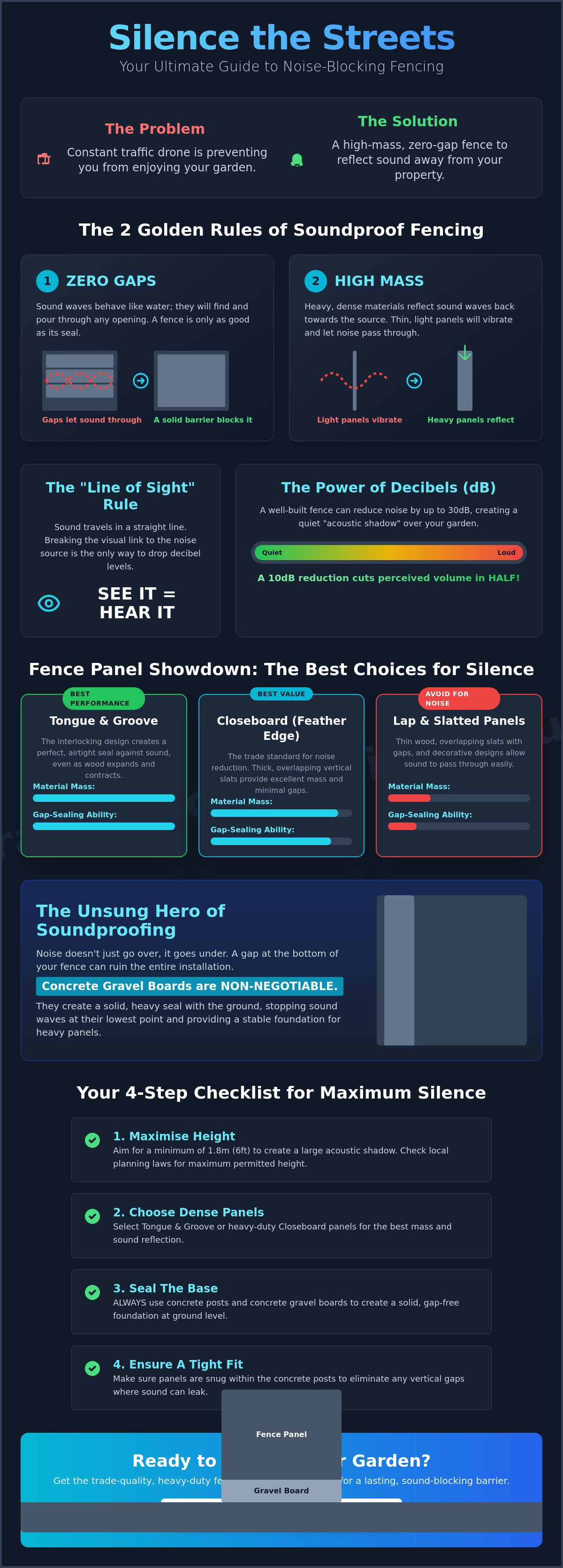
Sound waves behave like water. They don't just stop at a barrier; they find the smallest gaps to flow through. If your fence has even a tiny opening, the noise reduction fails. Understanding The Science of Sound: How Fencing Blocks Road Noise is the first step in reclaiming your garden. To build the best fence for blocking road noise, you must treat the structure like a dam. Any gap at the bottom or between panels acts like a leak that lets traffic drone pour into your space.
Mass is your most effective tool for acoustic privacy. Heavy, dense materials reflect sound waves back toward the road rather than letting them vibrate through the wood. While industrial projects might use expensive absorbent materials, residential gardens usually rely on timber's mass to do the heavy lifting. The heavier the panel, the better it performs. A thin lap panel won't stop a car engine's rumble; it's simply too light to provide a significant barrier.
Always follow the "Line of Sight" rule when planning your installation. It's a simple test for noise potential:
- If you can see the cars on the road from your patio, you can hear them.
- Sound travels in a straight line from the source.
- Breaking the visual link with a solid barrier is the only way to drop decibel levels.
Reflection vs. Absorption: Which do you need?
The Importance of Decibel (dB) Reduction
Acoustic fencing can reduce noise levels by as much as 30 decibels (dB), but even a 5dB to 10dB drop is noticeable. A 10dB reduction effectively cuts the perceived volume of traffic in half. Height plays a vital role here. A taller fence increases the size of the "acoustic shadow" cast over your property. An acoustic shadow is the quiet zone created behind a tall, solid barrier. To get the best fence for blocking road noise, maximize your height within local planning limits.
Comparing the Best Fence Panels for Soundproofing
Selecting the right panel is the most critical decision for your project. While many online resources focus on industrial-grade barriers, trade-quality timber is often the best fence for blocking road noise for residential gardens. According to technical guidelines on Comparing the Best Fence Panels for Soundproofing, the effectiveness of a barrier is directly tied to its density and the elimination of air gaps. You don't need to spend thousands on specialized acoustic brands if you choose heavy-duty standard components that prioritize mass.
Closeboard Fencing: The Trade Choice for Noise
Closeboard fencing, also known as feather edge, remains the gold standard for noise reduction in UK gardens. These panels consist of thick, vertical slats that overlap to create a solid timber wall. This overlapping design provides the necessary mass to reflect sound waves back toward the road. Using high-quality closeboard fence panels allows for custom heights and a robust structure that doesn't rattle when heavy vehicles pass. For effective noise mitigation, 1.8m (6ft) is the minimum recommended height. Anything lower allows sound waves to "overtop" the fence, significantly reducing the size of the quiet zone in your garden.
Tongue and Groove panels offer even better performance for those prioritizing silence. The interlocking design ensures there are absolutely no gaps between the boards, even as the timber naturally expands and contracts. This creates a "water-tight" seal against sound. In contrast, standard overlap or lap panels are generally poor for noise blocking. They use thinner wood and often have small air gaps where the slats meet the frame. If air can pass through the fence, sound will follow it. Similarly, modern double-slatted or "hit and miss" panels are popular for their looks, but they perform poorly as acoustic barriers because sound waves travel easily through the gaps between the slats.
Acoustic Performance Comparison Table
| Panel Type | Material Mass | Gap-Sealing Ability | Acoustic Value |
|---|---|---|---|
| Closeboard (Feather Edge) | High | Excellent | Best "dB-per-£" Value |
| Tongue & Groove | Very High | Superior | Premium Performance |
| Overlap / Lap Panels | Low | Poor | Low Performance |
| Double-Slatted (Hit & Miss) | Medium | Very Poor | Aesthetic Only |
Timber density is the final piece of the puzzle. Pressure-treated trade timber is significantly denser than the budget alternatives found in DIY superstores. Heavy, treated wood resists the warping that creates sound-leaking gaps over time. If you're ready to upgrade your boundary, you can browse our range of heavy-duty fence panels designed for durability and privacy.
The Secret Ingredient: Concrete Posts and Gravel Boards
Even the most expensive timber panels fail if sound leaks through the base of your boundary. The area where the fence meets the ground is the most common failure point in any acoustic barrier. To build the best fence for blocking road noise, you must treat the perimeter like a dam. If water can flow under it, sound can too. A heavy, solid foundation doesn't just block noise; it stops the entire structure from vibrating when heavy lorries pass by.
Standard timber posts often lack the mass required to reflect low-frequency road rumble. Many homeowners overlook the importance of the support structure, focusing only on the panels. This is a mistake. A professional-grade noise barrier requires a rigid, gap-free frame that remains stable for decades. Without this, your investment in high-quality panels will be compromised by sound flanking and structural rattling.
Gravel Boards: Sealing the Base
Using gravel boards is non-negotiable for acoustic privacy. These boards seal the gap between the bottom of your fence panel and the ground, preventing sound from "flanking" underneath. While timber gravel boards are available, concrete is the superior choice for noise protection. Concrete doesn't rot, warp, or shrink over time. This ensures a permanent, flush fit that keeps your garden quiet year after year.
To achieve the best results, ensure the gravel board is partially buried or sits tightly against a level surface. Any daylight visible under the fence acts as a megaphone for tyre noise. Concrete boards provide a dense, immovable base that absorbs ground-borne vibrations. They also protect your timber panels from moisture, extending the life of your entire barrier.
Concrete Posts: Maximum Rigidity
Rigidity is essential for noise reduction. Roadside gardens are often subject to high winds and constant pressure from passing traffic. Concrete fence posts provide a heavy anchor that timber simply cannot match. Concrete has higher density than wood, making it a better sound reflector. This extra mass helps bounce sound waves back toward the road rather than allowing them to pass through the post itself.
The "slot-in" system used with concrete posts is particularly effective for soundproofing. Because the panels sit deep within the post channel, it's much easier to create a tight seal compared to using U-brackets on timber posts. This design eliminates the rattling and "hum" that often occurs when wind or traffic vibrations hit a lightweight fence. By choosing concrete, you're creating a solid wall of material that acts as a definitive shield for your property.
Installation Tips for a Soundproof Garden Barrier
Installing a noise barrier requires precision and a focus on structural integrity. Even the best fence for blocking road noise will fail if you ignore the small details during construction. Follow these four steps to ensure your boundary provides maximum acoustic protection for your property.
- Maximise height: In the UK, you can typically build up to 2 metres in a rear garden without planning permission. Height is your most effective tool for creating a large acoustic shadow.
- Use heavy-duty components: Low-quality materials vibrate and rattle. Always select professional-grade fencing supplies to ensure the structure remains rigid under the pressure of passing traffic.
- Seal every join: Sound behaves like water. Use timber cover strips on feather edge panels to close the vertical gaps between slats and apply acoustic sealant to any small joins in the frame.
- Add soft landscaping: Planting a dense hedge in front of your fence helps break up high-frequency sound waves before they reach the timber barrier.
Eliminating the Air Gaps
Sound flows through gaps like air. Most noise "leaks" occur under the gate, between the posts, or where the panel meets the ground. Check these areas thoroughly. Use a solid gate made from the same heavy-duty material as your panels to maintain a consistent barrier. A thin, decorative gate acts as a megaphone for road noise. For feather edge fencing, cover strips are essential to ensure a total seal where the boards overlap. Don't leave any visible daylight through the structure.
Planning Permission and Height Loopholes
UK regulations are strict regarding boundary heights. Under "The Town and Country Planning (General Permitted Development) (England) Order 2015," rear garden fences are capped at 2 metres. If your fence is adjacent to a highway or footpath, this height is usually reduced to 1 metre. Always check with your local planning authority if you live in a conservation area or a listed building. While trellis toppers are a popular way to add height, they provide almost zero noise reduction. They're useful for privacy and climbing plants but won't help silence a busy road. For a reliable, professional result, you can book our expert fencing installation service across Essex and London.
Get Trade-Quality Fencing for Your Essex or London Home
Romford Fencing Ltd provides the heavy-duty materials required to silence traffic noise. We're an established supplier for homeowners across Essex and East London who need reliable solutions. Finding the best fence for blocking road noise shouldn't be a complicated or overpriced process. We offer trade-quality products directly to the public, ensuring you get the necessary mass for your money. Our team understands the specific noise challenges faced by properties near busy South East commuter routes and motorways.
Efficiency and reliability are the core of our service. We eliminate the friction of sourcing bulky materials by providing a one-stop shop for all your acoustic privacy needs. Whether you're a DIY enthusiast or a professional contractor, we deliver the substance your project requires without unnecessary fuss. Our professional reputation is built on providing goods that stand up to the demands of roadside environments.
Our Heavy-Duty Product Range
Our inventory focuses on density and structural integrity. We stock thick feather edge panels and 4x4 concrete posts that create the rigid barrier discussed throughout this guide. High-quality pressure treatment ensures our timber is denser than standard retail alternatives. This increased density is vital for effective noise reflection and long-term durability against UK weather. We operate from our Romford base, offering fast collection and delivery options for RM7 and the surrounding postcodes.
- Heavy-duty feather edge panels for maximum mass
- Reinforced concrete posts and gravel boards to seal the base
- Professional-grade ironmongery for secure, rattle-free gates
- Postmix and cement for a solid, immovable foundation
Start Your Quiet Garden Project Today
Reclaim your garden sanctuary with a professional-grade boundary. You can order all necessary components through our online store with a simple, multi-step process. We provide clear, competitive pricing and a straightforward checkout. If you're managing a large project or need specialist advice on bulk orders, our Romford team is ready to assist. Use our expertise to ensure you get the right materials for a quiet, private outdoor space. Browse our heavy-duty fence panels and start blocking road noise today.
CONTACT US TODAY FOR FAST DELIVERY ACROSS ESSEX AND EAST LONDON.
Secure Your Garden Sanctuary Today
Building the best fence for blocking road noise doesn't require industrial technology. It requires density, height, and a completely gap-free structure. By choosing heavy-duty closeboard or tongue and groove panels, you create the mass needed to reflect traffic sound. Combining these with concrete gravel boards and posts ensures a rigid foundation that stops noise from flanking at ground level. You don't need to overcomplicate the process to achieve significant results.
Romford Fencing Ltd has served homeowners for over 20 years. We specialize in providing trade-quality materials at competitive prices. Our team offers fast local delivery across Essex and East London, ensuring your bulky panels and posts arrive exactly when you need them. You can rely on our established local reputation for substance over style and professional-grade products.
Take the first step toward a quieter, more private outdoor space. Shop Heavy-Duty Fence Panels & Posts for Noise Reduction and reclaim your garden from constant traffic drone. You'll soon enjoy the peace and quiet you deserve.
Frequently Asked Questions
Can a fence really block traffic noise?
Yes, a solid barrier can reduce perceived noise levels by up to 30 decibels. It works by reflecting sound waves back toward the source and creating an "acoustic shadow" behind the barrier. For this to work, the fence must be dense and completely free of air gaps. If you can see through the fence, sound will pass through it easily.
How high should a fence be to stop noise?
A fence should be as high as possible to break the line of sight between your garden and the road. In the UK, 2 metres is the standard maximum for rear gardens without planning permission. A taller fence creates a larger quiet zone. A low fence allows sound waves to roll over the top and reach your seating area, rendering the barrier much less effective.
Which is better for soundproofing: wood or concrete?
A combination of both materials offers the best performance for residential properties. Concrete has a higher density than wood, making it a superior sound reflector for the base and posts. Use concrete gravel boards and posts to provide a rigid, heavy frame. High-quality, pressure-treated timber panels then provide the necessary mass for the main barrier without the industrial look of a full concrete wall.
Do I need a special "acoustic" fence, or will standard panels work?
You don't need industrial acoustic barriers if you choose heavy-duty standard components. The best fence for blocking road noise is often a trade-quality closeboard or tongue and groove panel. These provide the required density at a fraction of the cost of specialized acoustic systems. The secret is ensuring the installation is completely "water-tight" against sound waves.
Will planting a hedge help block road noise?
Hedges are better for breaking up high-frequency sounds than blocking low-frequency traffic rumble. They work well as a secondary layer in front of a solid fence. While a hedge alone won't provide a significant decibel reduction, it can reduce the harshness of the noise. It also improves the visual privacy of your garden, which helps reduce the psychological impact of traffic.
How much noise reduction can I expect from a 6ft closeboard fence?
A correctly installed 6ft (1.8m) closeboard fence can reduce noise by approximately 5dB to 10dB. This reduction effectively cuts the perceived volume of traffic in half. To achieve this, you must use gravel boards to seal the base and ensure no gaps exist between the feather edge slats. Any gaps will significantly reduce these performance figures.
What is the cheapest way to soundproof my garden fence?
The most cost-effective method is to seal existing gaps and add mass to the structure. If your current fence is in good condition, you can add timber cover strips to overlapping slats or install concrete gravel boards at the base. Replacing thin lap panels with heavy-duty closeboard panels provides the best decibel-per-pound value for a new installation compared to expensive specialist systems.
Are there any UK laws about fence height for noise reduction?
UK planning laws generally limit rear garden fences to 2 metres in height without requiring specific permission. If the fence is adjacent to a highway or footpath, the limit is typically reduced to 1 metre. These regulations are part of the Town and Country Planning Order 2015. Always check with your local council if you live in a conservation area or a listed building before starting work.