


A sagging, rotting side gate isn't just an eyesore; it's a direct security failure for your property. Many homeowners assume any timber door will suffice, but the damp British climate quickly exposes poor material choices and weak ironmongery. Finding the right side gates for houses uk requires more than just picking a style you like. It demands a focus on structural integrity and precise measurements to ensure long-term functionality.
You likely want a secure side entry that matches your existing fence panels without the constant headache of maintenance. It's common to feel frustrated by wood rot or the confusion between bespoke and standard sizing. This guide simplifies the entire process. You'll learn exactly how to select, measure, and secure a gate that stands up to the elements and keeps your home safe.
We'll walk you through the latest material trends for 2026, including high-durability closeboard and composite options. You'll also find clear instructions on hardware selection and the planning rules you must follow to stay compliant. Let's get your side access secured with a solution that lasts.
Key Takeaways
- Understand how a high-quality side gate acts as a primary security barrier to deter intruders and protect your privacy.
- Compare timber, metal, and composite materials to select the most durable side gates for houses uk based on your maintenance preferences.
- Avoid costly installation mistakes by learning the exact steps to measure your side passage and account for gate clearance.
- Recognize the difference between decorative and structural ironmongery to ensure your gate doesn't sag or fail over time.
- Learn why trade-grade supplies offer superior structural integration with your current fence panels and posts compared to retail alternatives.
Choosing the Right Side Gates for UK Houses: An Overview
A side gate is the primary security barrier for any domestic side passage. It's the first line of defence that seals off your rear garden from the street. High-quality side gates for houses uk provide three essential benefits: they boost kerb appeal, ensure total privacy, and act as a major deterrent for intruders. You shouldn't view a gate as an isolated purchase. For the best results, it's vital to match your gate design to your existing fence panels. This creates a seamless perimeter that looks professional and stays structurally sound.
Material choice is the most important factor for longevity. The UK weather cycle is notoriously harsh on timber, with constant shifts between heavy rain and dry spells. Inferior products often warp or swell within the first season. While you can find a general overview of gates in various architectural contexts, residential UK properties require specific, pressure-treated materials. Investing in a gate built for the local climate prevents the common issues of rot and sagging that plague cheaper retail alternatives.
Primary Functions of a Side Gate
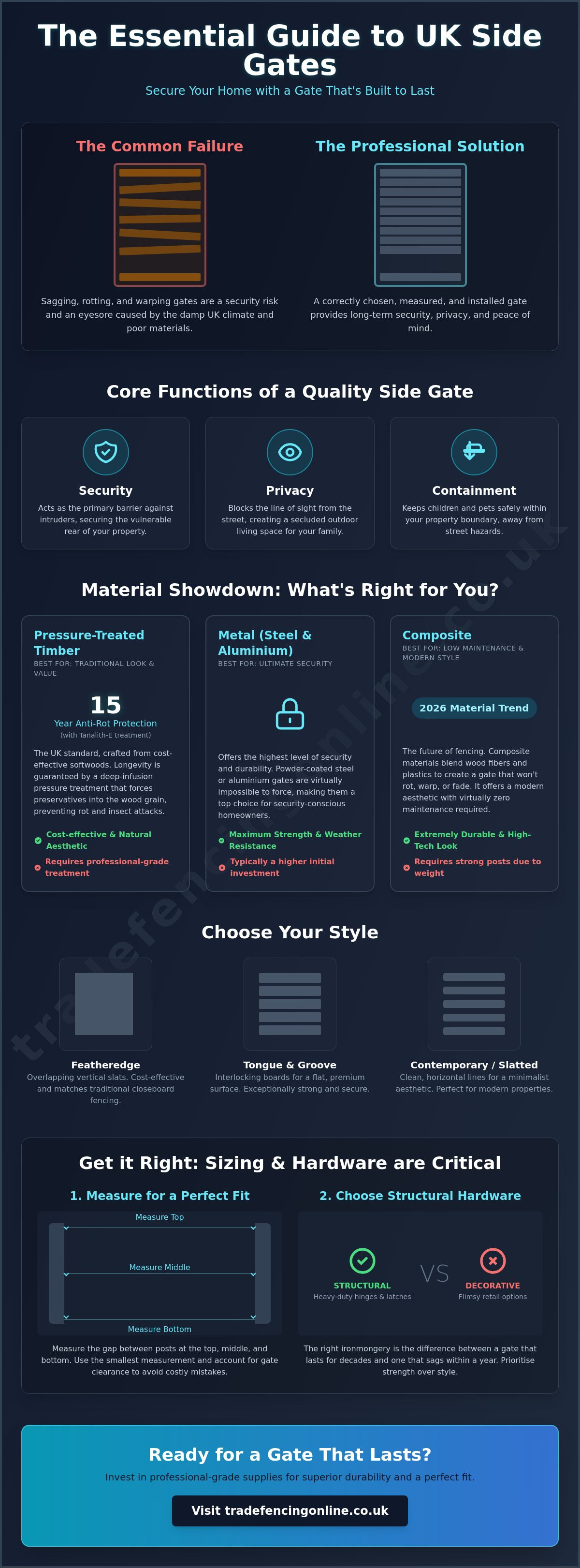
Security is the most critical function. A locked, heavy-duty side gate prevents unauthorised access to the rear of your home, where windows and doors are often more vulnerable. Privacy is equally important. A solid gate blocks the direct line of sight from the pavement into your private outdoor living space. Finally, containment is a practical necessity for families. A sturdy gate keeps pets and children safely within the property boundary, giving you peace of mind that they can't wander off into the street.
Common Styles: From Featheredge to Tongue & Groove
Featheredge gates are the most common choice for UK homeowners. They use vertical overlapping slats that match traditional closeboard fencing. They're cost-effective and reliable, though they require a strong internal frame to prevent twisting. If you want a more premium look, tongue and groove gates are the superior option. These feature interlocking boards that create a flat, flush surface. This design is exceptionally strong and provides a high level of security because there are no gaps or leverage points for an intruder to use.
Modern properties often suit slatted or contemporary designs. These styles use clean, horizontal lines to create a minimalist aesthetic. While some contemporary gates feature small gaps between the slats, they're still built with the same structural integrity as traditional styles. When selecting your style, prioritise the thickness of the timber and the quality of the bracing. A well-constructed gate is a one-time investment that secures your home for years.
Material Matters: Timber, Metal, and Composite Side Gates
Choosing the right material for side gates for houses uk is a balance of security, maintenance, and budget. Most UK properties require a standard 6ft (1.8m) height for side access to ensure total privacy. This height creates significant wind load and physical weight. Your choice of material determines the type of supporting posts you need. Heavy materials like steel or solid composite require deep-set posts with plenty of postmix to prevent leaning over time.
There's a common misconception that all timber gates rot within a few years. This only happens if you buy untreated or "dip-treated" products from budget retailers. High-quality timber gates use advanced preservation techniques to withstand the wet UK climate. Before you install a tall gate, check the official planning permission guidance to ensure your height and material choices comply with local regulations. It's better to verify the rules now than to face a removal order later.
Pressure-Treated Timber Gates
Most timber gates in the UK are crafted from softwoods like pine or spruce because they're cost-effective. Their longevity depends entirely on the Tanalith-E pressure treatment process. Pressure treatment is a deep-infusion preservative process for 15-year protection. Unlike surface stains, this vacuum-pressure method forces chemicals deep into the wood grain. This makes the timber resistant to fungal decay and insect attack. If you're looking for a traditional look that lasts, browse our range of heavy-duty timber gates built for professional standards.
Metal and Composite Alternatives
Metal gates made from powder-coated steel or aluminium offer the highest level of security. They're virtually impossible to breach and don't warp. Steel is incredibly strong but heavy. It requires substantial steel or concrete posts to prevent the gate from sagging. Aluminium is a lighter, rust-resistant alternative that's perfect for coastal environments. It handles salt air much better than standard steel.
Composite gates are the "fit and forget" solution for busy homeowners. They're manufactured from a blend of wood fibres and recycled plastics. They don't require staining, painting, or annual treatments. While they're heavier than timber, they offer excellent wind resistance because of their solid, dense construction. When searching for side gates for houses uk, composite is often chosen for its ability to maintain a consistent colour without fading in the sun. Consider these factors before making your choice:
- Timber: Natural aesthetic, easily customisable, requires periodic staining.
- Metal: High security, modern look, requires specific heavy-duty hardware.
- Composite: Zero maintenance, long lifespan, higher upfront cost.
Measuring and Sizing Your Side Gate Correctly
Measuring side gates for houses uk requires absolute precision. You can't rely on a single measurement because walls and fence posts are rarely perfectly vertical. Start by measuring the width of your opening at three distinct points: the top, the middle, and the bottom. Use the smallest of these three figures to determine your available space. If you use the widest measurement, the gate will likely jam against the frame or brickwork at its narrowest point. It's a simple step that prevents the frustration of a gate that won't close during the first week of installation.
You must understand the difference between the "opening size" and the "gate size." The opening size is the total clear distance between your supports. The gate size is the actual width of the timber or metal panel itself. You can't fill the entire opening with the gate. You need dedicated space for hinges, the latch, and the natural movement of the materials. Always check that the ground is level across the entire swing path. If your side path slopes upwards, the gate won't open fully without significant ground clearance at the bottom, which can compromise security for pets.
The Standard Size Dilemma
Most UK side passages are built to accommodate a standard 900mm wide gate. While a height of 6ft (1.83m) is the industry standard for side gates for houses uk, you must ensure your specific gap doesn't deviate. Before you order a stock item, check the Welsh Government planning rules or your local English council guidelines to verify height restrictions. If your gap is non-standard, such as 940mm or 1050mm, don't try to force a 900mm gate to fit. A bespoke gate is the only way to ensure the locking mechanism aligns correctly and the perimeter remains secure.
Allowing for Clearances and Posts
The 10mm rule is a trade secret for a functional installation. You must allow a 10mm gap on the hinge side and a 10mm gap on the latch side. This 20mm total reduction from your opening width is essential. Timber is a natural material that absorbs moisture and "grows" during wet UK winters. Without these clearances, your gate will swell and jam against the frame by December. If you're installing new supports, choose heavy-duty fence posts that can handle the weight of a 6ft panel. Use 100mm x 100mm pressure-treated timber posts or concrete alternatives, and set them at least 600mm deep with professional postmix to prevent the gate from leaning over time.
Enhancing Security and Longevity with the Right Hardware
Ironmongery is the most overlooked part of gate installation. It's the mechanical engine of your gate. If you use flimsy hardware on heavy side gates for houses uk, the timber will sag within months. You must choose structural ironmongery over purely decorative options. Decorative hardware is designed for lightweight, low-level garden doors. Structural ironmongery is built specifically to support the substantial weight of a 6ft pressure-treated panel and withstand constant daily use.
Always select hot-dipped galvanised steel for your project. This industrial coating provides the highest level of rust resistance against the UK's constant rain and coastal salt air. Zinc-plated alternatives might look similar on the shelf, but they'll corrode quickly. This leaves unsightly rust streaks on your timber and eventually causes the metal to fail. For a complete list of everything you need for a professional install, check our fencing supplies checklist.
Essential Gate Ironmongery
T-hinges are popular for DIY projects but are often undersized for a heavy 6ft side gate. They rely on short screws that can pull out of the post under tension. Instead, professional installers use adjustable band and hook hinges. These allow you to realign the gate easily if the posts shift slightly during seasonal changes. The Band and Hook hinge is the trade standard for heavy-duty gates. Match your hinges with a Brenton bolt for maximum security. Unlike a simple ring latch, a Brenton bolt allows you to use a heavy-duty padlock for a true physical lock that can't be easily bypassed.
Security Upgrades for Side Passages
Enhance your side access with key-lockable drop bolts. These secure the bottom of the gate into the ground or a gravel board, preventing it from being forced open at the base. Installing a gate shroud is another smart security move. It covers the latch area so intruders can't reach over the top of the gate to manipulate the bolt from the outside. Consider adding a heavy-duty gate spring to the rear of the panel. It ensures the gate closes automatically after every use. This is essential for households with pets or children where the gate must never be left ajar. You can find all these components in our range of structural ironmongery designed for the trade.
Why Professional-Grade Fencing Supplies Make the Difference
Sourcing side gates for houses uk from a specialist trade supplier ensures you receive materials designed for structural longevity. Big-box retail outlets often prioritise low price points by reducing the thickness of the timber framing. This results in flimsy gates that warp under the weight of their own ironmongery within a single season. A professional-grade gate from Romford Fencing Ltd is built with heavy-duty framing and pressure-treated timber. It's designed to function as a permanent structural anchor for your property's security. Buying from a specialist means you get access to the same timber quality used by professional fencing contractors across the country.
Structural integration is the key to a gate that doesn't sag or drag. A gate is only as strong as the posts supporting it. When you source from a trade specialist, you're getting components that are designed to work together as a cohesive system. This includes the correct gauge of screws, the appropriate grade of postmix, and timber that has been seasoned correctly to prevent excessive movement. Retail products often lack this cohesive design, leading to a mismatched installation that requires constant adjustment and repair.
Integrating Gates with Existing Fence Lines
A side gate must be compatible with your current boundary. If your garden uses concrete posts, you cannot screw hinges directly into the material. You must bolt a timber wall plate or a dedicated gate post to the concrete or brickwork first. This provides a stable, flat surface for your structural ironmongery. Using gravel boards beneath the gate is another trade secret for longevity. It prevents the bottom of the timber from making contact with wet ground or standing water. This simple addition stops moisture from wicking up into the grain and causing premature rot. A seamless look is achieved by matching the gate's cladding style to your fence panels, ensuring the transition from fence to passage is clean and secure.
Fast Delivery and Local Expertise in Essex & London
Buying direct from a specialist like Romford Fencing Ltd gives you access to a dedicated delivery network. We understand the logistics of moving heavy timber products across Essex and East London efficiently. National retailers often rely on third-party couriers who don't understand how to handle large-scale fencing components without causing damage. Our local expertise ensures that every gate undergoes strict quality control before it leaves our yard. You aren't just buying a product; you're getting trade-standard supplies backed by over 20 years of local knowledge. Don't settle for inferior retail alternatives that fail after one winter. Contact us today for professional advice and high-quality side gates that secure your home for the long term.
GET RELIABLE TRADE-QUALITY SIDE GATES DELIVERED FAST
Secure Your Property with Professional Side Gates
Selecting the right side gates for houses uk involves more than just picking a style. You must prioritise structural integrity through pressure-treated timber, precise measurements, and heavy-duty ironmongery. A well-installed gate acts as a permanent security anchor that withstands the damp British weather. By choosing trade-grade materials over budget retail options, you ensure your side passage remains secure and functional for years. We've seen how the right hardware prevents sagging and how local expertise ensures you get the best timber for the job.
Our team has operated as established experts in Romford for over 20 years, providing trade and public pricing on all inventory. We offer fast local delivery across Essex and East London to keep your project moving without delays. You can trust our professional-grade gates to provide the security and durability your home requires. GET RELIABLE TRADE-QUALITY SIDE GATES DELIVERED FAST
Start your installation today with the right materials for a professional, long-lasting finish.
Frequently Asked Questions
Do I need planning permission for a side gate in the UK?
Planning permission is generally required for side gates over 1 metre high if they are next to a highway or public footpath. For gates located elsewhere on your property, the limit is usually 2 metres. You must check with your local council if your home is a listed building or if you live in a conservation area where permitted development rights are restricted.
How wide should a side gate be for wheelbarrow access?
A width of 900mm is the industry standard for comfortable wheelbarrow access. Most standard wheelbarrows measure between 600mm and 700mm wide. Choosing a 900mm opening provides enough clearance for your hands and prevents damage to the gate frame. If your side passage is particularly narrow, ensure you maintain at least 750mm of clear space for basic utility access.
What is the best wood for a side gate to prevent rot?
Pressure-treated softwood is the most practical choice for side gates for houses uk due to its balance of cost and durability. Timber treated with Tanalith-E preservatives is designed to withstand the damp UK climate for up to 15 years. While premium hardwoods offer natural resistance, pressure-treated pine remains the trade standard for reliable, long-term performance against fungal decay.
Should a side gate open inwards or outwards?
Your side gate should always open inwards into your property. Opening a gate outwards into a public pavement or highway can create a legal obstruction and a safety hazard for pedestrians. An inward-opening design also ensures that the structural bracing and hinges are located on the secure side of the boundary, making it much harder for intruders to remove the gate from the outside.
How do I stop my wooden side gate from sagging?
Prevent sagging by using a diagonal "Z" brace and heavy-duty adjustable band and hook hinges. The diagonal brace must run upwards from the hinge side to the latch side to support the weight of the timber correctly. Using adjustable hinges allows you to realign the gate easily if the posts shift slightly during the winter. Always set your supporting posts at least 600mm deep in professional-grade postmix.
Can I install a side gate myself or do I need a professional?
You can install a side gate as a DIY project if you have basic tools and a second person to help with the lifting. However, professional installation is recommended for heavy 6ft gates or when fixing to difficult masonry. Professionals ensure the gate is perfectly level and structurally integrated with your existing fence panels to prevent future operational issues.
How often should I treat my wooden side gate?
Apply a UV-protective stain or timber oil every 1 to 3 years to maintain the appearance of your side gates for houses uk. Pressure treatment prevents rot, but it doesn't stop the sun from fading the timber or rain from causing surface cracks. Regular treatment keeps the wood grain sealed and prevents the gate from absorbing excessive moisture during the wet months.
What is the standard height for a side gate for houses?
The standard height for a UK side gate is 6ft (1.83m). This height is chosen because it matches the standard height of most domestic fencing and provides total privacy for the rear of the property. It acts as a significant physical deterrent, as it's difficult for an intruder to climb over without being seen.