


Every year, UK homeowners spend an average of 40 hours and over £150 just to keep a standard timber fence from rotting away. You likely bought your fence to secure your property, not to gain a part-time job as a professional painter. It's frustrating to watch expensive panels warp after a single winter storm or rot at the ground level despite your best efforts. We know you want a solution that works as hard as you do without the constant upkeep.
You can break this cycle by choosing low maintenance garden fencing that's engineered to look premium for 15 years or more without a single drop of wood stain. This guide identifies the best long-lasting, low-upkeep fencing options available in 2026 to save you significant time and money on garden maintenance. We'll examine the most durable materials on the market, from storm-resistant composite to heavy-duty treated panels that actually survive the British weather.
Key Takeaways
- Move beyond cheap lap panels and identify the specific materials designed to resist rot, decay, and UV damage with minimal intervention.
- Learn why investing in low maintenance garden fencing now saves you hundreds in "paint and labour" taxes over the next decade.
- Discover how concrete posts and gravel boards act as the ultimate hack to prevent panel rot and extend your fence's lifespan.
- Compare the long-term value of pressure-treated timber against premium composite materials to find the best fit for your budget.
- Understand why trade-quality materials offer superior durability compared to standard DIY store alternatives for the Romford and Essex climate.
What is Low Maintenance Garden Fencing?
Low maintenance garden fencing refers to boundary systems engineered to resist rot, fungal decay, and UV damage with minimal human intervention. In the 2026 market, we've seen a definitive shift in consumer habits. Homeowners are moving away from "cheap" £30 lap panels that require replacement every five years. They're choosing high-quality systems that offer better long-term value. A low maintenance garden fencing solution is an investment in durability. It eliminates the need for the annual cycle of sanding, priming, and staining that traditional timber demands.
It's vital to clarify that "maintenance-free" is a marketing myth. Every external structure requires basic care. Dust, algae, and salt spray can accumulate on any surface. However, the difference is the level of effort. While a standard wooden fence needs hours of manual labour and expensive chemical treatments, a low-upkeep system usually only needs a quick wash with soapy water once or twice a year to maintain its original appearance.
The core benefits of these systems include significant time savings and consistent aesthetics. You won't see the "patchy" look of fading paint or the grey, weathered appearance of untreated wood. By choosing materials designed for the UK climate, you ensure your garden looks professional and secure for decades rather than seasons.
Key Features of Low Upkeep Systems
Modern fencing systems are built to withstand the specific challenges of the British weather. Many of these systems utilise Synthetic Fencing Materials like high-grade PVC or wood-plastic composites to ensure longevity. Key features include:
- Total Biological Resistance: Materials are impervious to wood-boring insects and fungal decay.
- UV Stability: Integrated UV inhibitors prevent the material from becoming brittle or losing its colour under direct sunlight.
- Structural Integrity: These systems are often tested against UK wind speeds of up to 80mph, ensuring they don't rattle or collapse during winter storms.
Why Traditional Fencing Often Fails
Traditional fencing usually relies on dip-treated timber. This process only coats the surface of the wood. Once a small crack appears, moisture enters the core and starts the rotting process from the inside out. Ground contact is the biggest killer of standard fences. When wooden posts sit in damp soil, they act like a wick, drawing water upwards and causing the base to snap within 5 to 7 years.
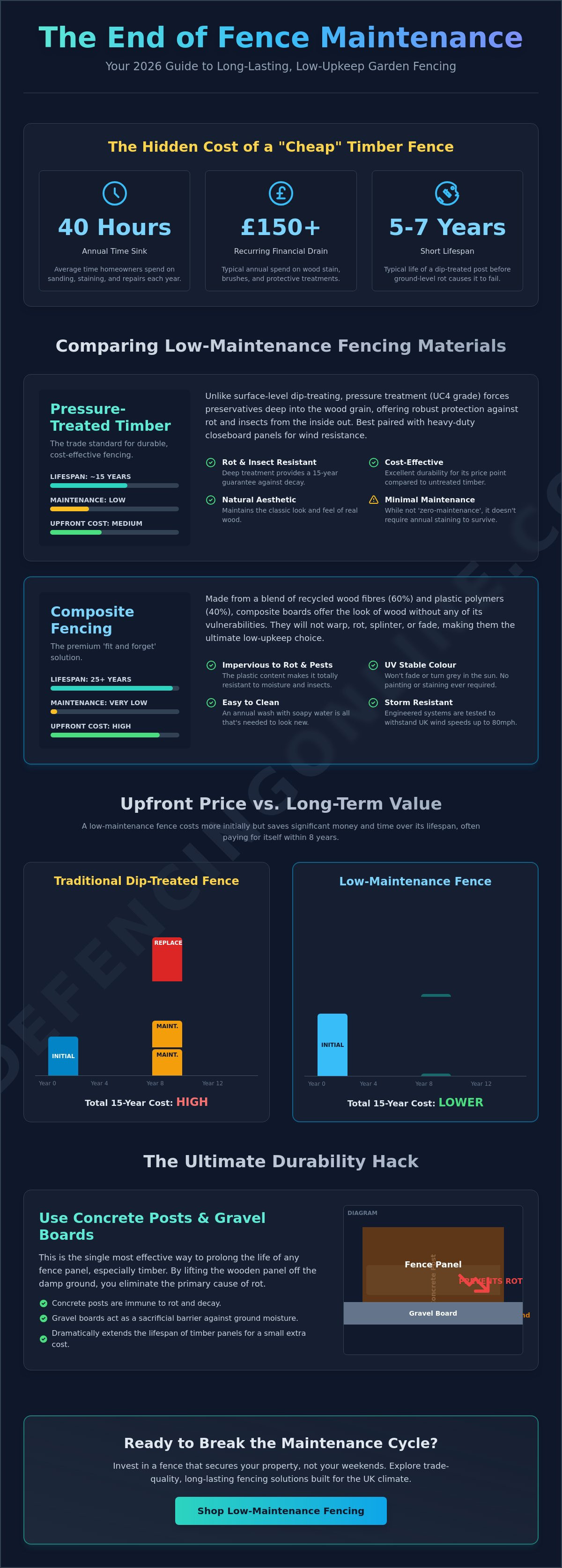
The hidden cost of "cheap" fencing is substantial. Based on 2026 industry data, the average UK homeowner spends approximately £120 on wood stain and brushes every two years. When you factor in the labour time and the inevitable cost of replacing rotten posts, the "expensive" low-maintenance option often pays for itself within the first 8 years of its 25-year expected lifespan.
Comparing the Best Low Maintenance Fencing Materials
Choosing the right low maintenance garden fencing involves balancing your initial budget against the time you want to spend on upkeep. Modern materials have evolved to withstand the UK's wet climate without requiring annual staining or repairs. From treated timber to high-tech composites, each material offers different levels of durability and aesthetic appeal.
Pressure-Treated (UC4) Timber Panels
Pressure-treated timber is the trade standard for cost-effective fencing. Unlike standard dip-treated panels that only receive a surface coating, UC4 pressure treatment involves forcing preservatives deep into the wood grain under high pressure. This process makes the wood significantly more resistant to rot and insect attack. Professionals usually recommend closeboard fence panels because their heavy-duty construction handles wind loads better than thin lap panels. You can expect a 15-year lifespan from UC4 timber with minimal intervention. Researching Fence maintenance and material choices shows that selecting the right grade of wood from the start is the most effective way to reduce long-term labour costs.
The Rise of Composite Fencing
Composite fencing is a premium alternative that mimics the look of wood without the natural drawbacks. These boards are manufactured using a blend of 60% recycled wood fibres and 40% plastic polymers. This composition ensures the boards won't warp, splinter, or rot in the damp British weather. It's a popular choice for homeowners who want a "fit and forget" solution. You won't need to paint or seal these panels. They retain their colour for years, meaning the shade you install today will look consistent through 2030 and beyond. Cleaning is simple; a quick wash with soapy water once a year removes any surface algae or dirt.
Vinyl and Metal Options
For a contemporary look, metal and PVC options provide maximum longevity. Aluminium slatted panels are a frequent choice for modern London gardens. They're lightweight, incredibly strong, and naturally resistant to rust and corrosion. PVC or vinyl fencing offers a high-privacy boundary that requires zero painting. It's an ideal choice for coastal areas where salt air quickly degrades traditional materials. To ensure any low maintenance garden fencing reaches its full potential, always use concrete posts and gravel boards. This creates a solid foundation and keeps your panels off the damp soil, preventing moisture transfer.
The Pragmatic Choice: Concrete Posts and Gravel Boards
The post and board system is the ultimate hack for achieving low maintenance garden fencing. This modular approach separates the structural support from the decorative panels. Trade professionals prefer this setup because it isolates the components most susceptible to ground conditions. It creates a fence that is easy to install and even easier to maintain over a 20 year period.
Concrete provides a permanent skeleton for your boundary. Unlike timber, concrete does not absorb water or suffer from fungal decay. This longevity ensures your fence remains upright through high winds and wet winters. It also simplifies future repairs. If a storm damages a panel, you simply slide the old one out of the grooves and drop a new one in. You won't need to dig new holes or unscrew rusted fixings.
- Longevity: Concrete components can last 25 years or more without structural failure.
- Stability: The weight of concrete provides superior resistance against wind loading.
- Simplicity: Panel replacement takes minutes, not hours.
Concrete Fence Posts: The Permanent Foundation
Slotted concrete fence posts are superior to timber alternatives for heavy-duty applications. Timber posts often fail at the ground line within 10 years because of constant moisture exposure. Concrete removes this point of failure entirely. These posts require zero maintenance. You don't need to paint, stain, or apply preservative treatments to them. They provide the necessary strength for heavy-duty closeboard or decorative panels without the risk of snapping in a gale.
Gravel Boards: The Protective Barrier
Gravel boards act as a protective buffer between the soil and your fence panels. They prevent ground moisture from wicking into the bottom of the timber, which is where rot usually starts. While you can use pressure-treated timber gravel boards, concrete is the superior choice for a truly low maintenance garden fencing project. It creates a solid barrier that keeps your panels dry and clear of wet grass or garden debris.
Proper installation is vital for a long lifespan. Ensure the gravel board is level and partially recessed into the ground to prevent gaps. This setup stops soil from piling against the wooden panel. Using concrete gravel boards ensures your fence stays functional and looks professional without requiring annual chemical treatments or messy repairs.
Cost-Benefit Analysis: Upfront Price vs. Long-Term Value
Choosing a fence based only on the ticket price is a common mistake. You have to look at the total spend over a decade. When you invest in low maintenance garden fencing, you're trading a higher initial cost for years of zero-cost ownership. Cheap timber panels often fail within five to seven years if they aren't treated regularly. This creates a "Paint and Labour" tax. Over a ten-year period, the cost of high-quality wood preservative and the time spent applying it can exceed the original cost of the fence itself.
Property value also plays a role. A sagging, grey fence reduces kerb appeal and can flag up as a repair item during a home survey. Durable, modern systems like composite or metal maintain their appearance and structural integrity. This makes the property more attractive to future buyers who want a move-in-ready garden without a list of chores.
Total Cost of Ownership (TCO) Explained
The "False Economy" of buying the cheapest materials is easy to see when you look at a 15-year horizon. A standard lap panel is inexpensive, but it's prone to wind damage and rot. While composite is 3x the price, it lasts 5x longer. You avoid the cycle of replacement that plagues budget timber options. Consider these factors:
- Standard Timber: Low upfront cost, but requires £50 to £100 in treatments and tools every two years.
- Low Maintenance Systems: High upfront cost, but annual maintenance is limited to a quick wash with soapy water.
Choosing Based on Your Budget
You don't need a massive budget to improve your garden's longevity. The "Best Value" setup involves using concrete posts and gravel boards paired with UC4 treated Closeboard panels. Concrete doesn't rot in the ground; it provides a permanent skeleton for your boundary. UC4 timber is kiln-dried to ensure preservatives penetrate deep into the wood. This setup offers a mid-range price point with significantly better durability than basic DIY store panels.
For those seeking a "Premium" setup, a full composite system is the professional choice. It provides a sleek finish that won't fade or warp. If you're managing a large project, you can phase the installation to manage cash flow. Replace the most visible or damaged sections first to spread the cost over several months. You can find everything you need in this list of fencing supplies to help plan your budget effectively.
Buying Low Maintenance Fencing in Romford and Essex
Local expertise is vital for the Essex and East London climate. High winds across the Thames Estuary and heavy clay soil in areas like Romford often lead to fence failure if materials are substandard. Choosing low maintenance garden fencing requires products built for these specific local conditions. We understand that Essex homeowners need boundaries that stand up to the weather without requiring annual staining or repairs.
Trade Quality vs. Retail Grade
There's a clear gap between trade-grade products and budget retail alternatives found in big-box DIY stores. Retail panels often use thinner timber slats and basic dip-treatments that only protect the surface. Romford Fencing Ltd prioritises durability by supplying panels with thicker components and full pressure treatment. This process forces preservative deep into the wood fibres, ensuring the timber resists rot for 10 to 15 years without constant maintenance. Sourcing the right fence panels for your specific garden depends on your exposure to wind and soil moisture levels. Trade-quality timber is heavier and denser than retail grade, providing a much stronger barrier against the UK weather.
Ordering and Delivery in Essex & London
We operate as your one-stop-shop for everything fencing. Our system streamlines the entire process from selection to arrival at your gate. We provide fast delivery options across Romford, Ilford, and the wider Essex area. You don't have to worry about transport logistics for heavy gravel boards or 1.8m panels. Everything arrives on our own vehicles, ensuring the products stay in top condition. Our team is ready to provide technical advice to ensure you order exactly what's needed for a professional finish.
- Measure your total boundary run in metres and convert this to 1.83m (6ft) sections.
- Decide between 6-inch or 12-inch concrete gravel boards to keep timber off the damp ground.
- Check the condition of existing posts; if they're leaning, it's time to replace them with concrete.
- Identify if you need additional ironmongery or specialist gravel board clips.
- Ensure there's clear access for a delivery vehicle at your property.
FOR QUALITY FENCING, CALL ROMFORD FENCING LTD TODAY OR EMAIL OUR TEAM. We provide the reliable, no-nonsense service that trade professionals and homeowners in Essex trust.
Upgrade Your Property with Durable Fencing
Choosing low maintenance garden fencing is a smart, long-term investment that eliminates the need for annual staining or frequent repairs. By pairing trade-quality panels with concrete posts and gravel boards, you create a barrier capable of lasting 15 years or more without structural failure. This setup prevents the common issue of timber rot at ground level, which affects 70% of standard garden fences within the first decade according to industry durability benchmarks. As a trusted Romford supplier with hundreds of 5-star reviews, Trade Fencing Online provides the reliable materials you need to withstand the wet UK climate.
We focus on value and efficiency, offering free local delivery options across Essex to keep your project costs low. You'll get professional-grade products that are built to last, saving you the expense of a full replacement every few seasons. Don't waste your weekends on garden maintenance when you can install a permanent solution today. Our team is ready to help you find the right fit for your home or trade project.
Shop our range of low maintenance fence panels and posts today
Get started on your garden transformation and enjoy a secure, hassle-free perimeter for years to come.
Frequently Asked Questions
Is composite fencing really maintenance-free?
Composite fencing isn't strictly maintenance-free, but it's the closest option you'll find. It doesn't require the annual painting, staining, or sealing that traditional timber demands. You'll still need to wash the panels once or twice a year to remove surface dirt, pollen, and algae. This makes it a top choice for low maintenance garden fencing in the UK, saving you hours of labour over the lifetime of the product.
Do concrete fence posts need to be painted?
Concrete fence posts don't need painting and will last for 20 years or more without any treatment. They're naturally resistant to rot, rust, and insect damage, making them a fit and forget solution. You can apply specialist masonry paint if you want to match a specific colour scheme, but it's not required for structural integrity. Most UK homeowners leave them in their natural grey state for a clean, professional finish.
How long does a pressure-treated fence last?
A pressure-treated fence typically lasts between 10 and 15 years when installed and maintained correctly. The chemical preservatives forced into the wood grain protect against rot and fungal decay for over a decade. To reach the upper end of this lifespan, ensure your posts aren't sitting in standing water. Using gravel boards can extend this period by keeping the panels off the damp ground.
What is the most durable type of garden fence for windy areas?
Hit and miss fencing is the most durable choice for windy UK gardens. The design allows air to pass through the gaps between boards, which reduces wind resistance and pressure on the posts. Combine these panels with concrete posts buried 600mm deep to ensure the structure stays upright during winter storms. This setup prevents the sail effect that often destroys solid lap panels during high-wind events.
Can I install low maintenance fencing myself?
You can install low maintenance garden fencing yourself if you're comfortable with manual labour and precise measurements. Most modern systems use lightweight composite panels or slot-in designs that simplify the installation process. You'll need a spade, a spirit level, and post-mix concrete to get the job done. If you're installing over a large area or on sloped ground, hiring a professional ensures the line stays straight and secure.
Are gravel boards necessary for low maintenance fencing?
Gravel boards are essential for any low maintenance setup using timber or composite panels. They create a vital barrier between the fence and the damp soil, preventing moisture from soaking into the bottom of the boards. This simple addition can add 5 years to the life of your fence panels. Concrete gravel boards are the most effective because they won't rot or decay, even in wet conditions.
Does low maintenance fencing increase property value?
High-quality fencing can increase property value by improving kerb appeal and security. A 2023 survey by real estate experts suggests that a well-maintained garden can add between 5% and 10% to a property's total valuation. Buyers often prefer low maintenance options like composite because they don't want the immediate task of sanding and staining a weathered timber fence. It's a smart investment for long-term property maintenance.
How do I clean a composite or vinyl fence?
Clean your composite or vinyl fence using a bucket of warm soapy water and a soft-bristled brush. Scrub the surface to loosen dirt, then rinse it down thoroughly with a garden hose. Avoid using a high-pressure power washer at close range, as it can damage the finish or leave marks. For stubborn spots, a mixture of white vinegar and water usually removes organic stains without harming the material.