


That green slime on your timber isn't just a cosmetic issue; it is a biological layer that traps moisture and can reduce the service life of untreated panels by up to 25%. It's frustrating to see quality garden fencing ruined by unsightly stains, especially when you've invested time and money into your outdoor space. We understand the hesitation to use a heavy-duty pressure washer that might splinter the wood or toxic bleach that could kill your garden borders. You want a clean fence without the collateral damage or the need for expensive replacements.
This 2026 guide shows you exactly how to clean green algae off fence panels using trade-tested methods that protect your timber and your plants. We have refined these techniques over years of supplying professional-grade fencing to ensure they work for every homeowner. You'll learn which household solutions actually work, how to apply them safely, and the specific treatments that stop algae from returning for good. From eco-friendly washes to the right scrubbing tools, we provide the practical steps you need to restore your garden aesthetics and maintain your property value this year.
Key Takeaways
- Understand why damp UK weather triggers growth and how to protect your garden with essential PPE.
- Discover three trade-tested methods for how to clean green algae off fence panels without damaging the timber.
- Stop algae from returning by using gravel boards and professional airflow techniques to keep your fencing dry.
- Master the "screwdriver test" to identify structural rot and decide if you need to invest in new fence panels.
Why Do Fence Panels Turn Green? Understanding Algae Growth
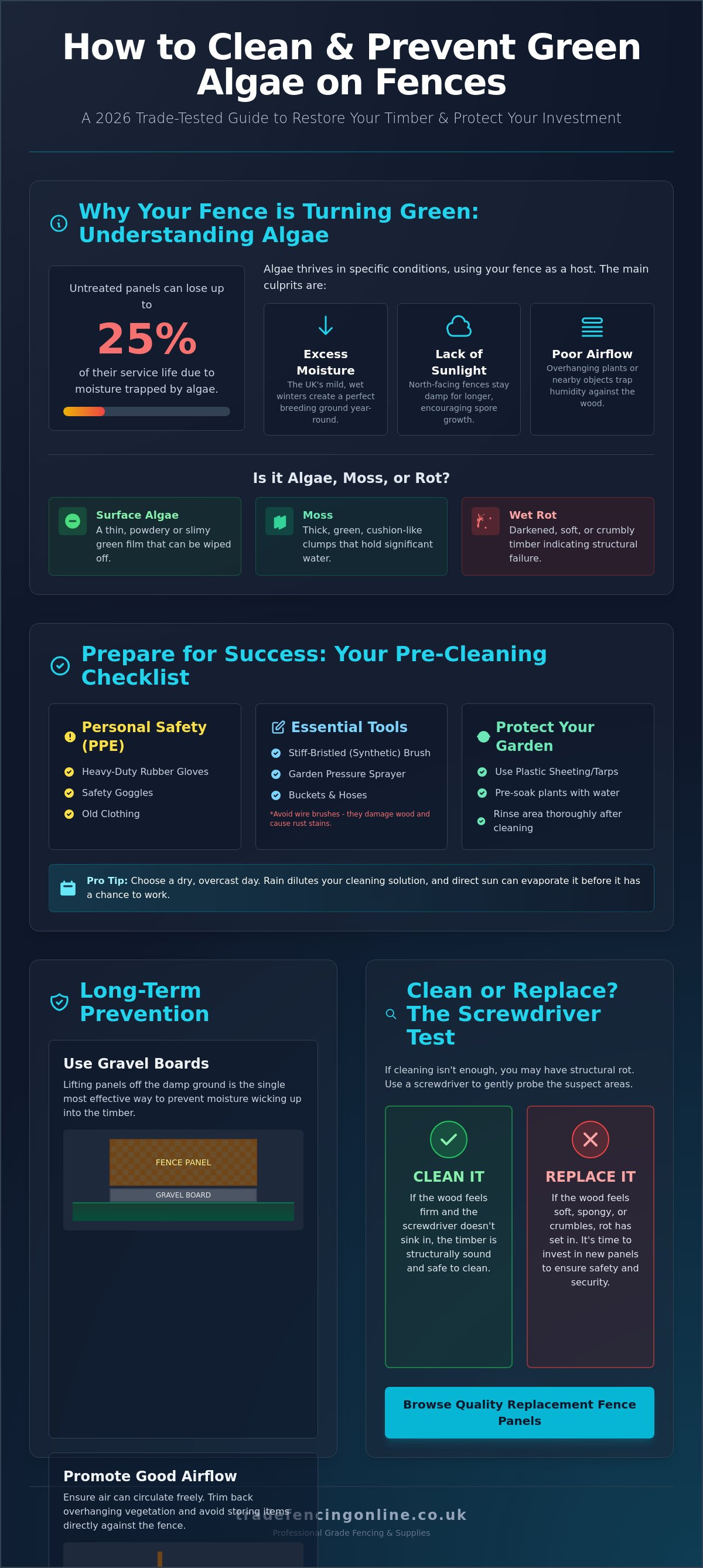
Green stains on your timber panels aren't just an eyesore. They represent a biological growth that thrives in the specific conditions found across Essex and London gardens. What is green algae? It is a non-parasitic, plant-like organism that colonises moist surfaces. Unlike fungi, it doesn't feed on the wood itself. It uses the timber as a host, drawing nutrients from sunlight and moisture. North-facing fences are particularly susceptible because they receive the least amount of direct sunlight. This keeps the wood damp for longer periods, providing a stable environment for spores to settle. You can usually tell the difference between common garden issues by their texture:- Surface Algae: A thin, powdery or slimy green film that wipes off easily.
- Moss: Thick, green, cushion-like clumps that hold significant amounts of water.
- Wet Rot: Darkened, soft, or crumbly timber that indicates structural failure.
The Impact of the UK Climate
The South East of England faces unique challenges. Mild, wet winters create a perfect incubator for biological growth. Weather data from early 2026 indicates that average winter temperatures stayed 1.5 degrees Celsius above the long-term average. This "green winter" effect means algae no longer goes dormant. Instead, it grows year-round, shortening the aesthetic lifespan of untreated timber. Constant moisture exposure is the primary enemy of any wooden structure in a UK garden.Is Algae Damaging Your Fence?
While algae isn't a parasite, it acts as a sponge. It traps a layer of moisture directly against the wood grain. This consistent dampness eventually leads to the breakdown of timber fibres. You'll know your fence has moved from "dirty" to "damaged" if the wood feels spongy or if the green film is replaced by black fungal spots. Knowing how to clean green algae off fencePreparing Your Garden for Algae Removal
Get your gear ready before you touch the wood. Algae removal involves chemicals and physical scrubbing, so safety is the first priority. Wear heavy-duty rubber gloves and safety goggles to protect against splashes. Choose old clothing you don't mind staining; bleach-based cleaners will ruin fabrics instantly. You also need to check the weather forecast. Never start this job on a rainy day. Rain dilutes your cleaning solution and prevents it from soaking into the timber. Aim for a dry, overcast day where the wood can dry steadily without the sun evaporating the treatment too quickly.
Clear all leaves and organic matter from the base of the fence. Wet debris trapped against the gravelboards creates a breeding ground for spores. Removing this material ensures you can reach every inch of the panel. Properly preparing the surface is a key step in preventing algae and mildew from returning within the first 12 months. If your panels are severely damaged or rotting, browse our range of quality garden fencing for a fresh start.
Essential Tools and Equipment
You need the right kit to understand how to clean green algae off fence panels effectively. Use a stiff-bristled synthetic brush. Avoid wire brushes; they gouge the wood grain and leave behind metal fragments that rust. A garden pressure sprayer is the best tool for even chemical application. It ensures the solution penetrates the nooks of traditional closeboard or lap panels. Check for loose boards or rusted nails before you begin. You can find all the necessary fencing supplies to make these quick fixes before the deep clean begins.
Protecting Your Landscaping
Cleaning solutions can be harsh on your garden. Use plastic sheeting or heavy-duty tarpaulins to shield flower beds and lawns. Secure the edges with bricks so the wind doesn't blow them away mid-clean. Use the "pre-soak" method for any plants you can't cover. Drenching them with plain water first helps prevent them from absorbing the cleaning runoff. When you finish, rinse the area thoroughly with a hose. Follow local Romford waste guidelines; don't let concentrated chemical runoff enter public storm drains. Dilute everything heavily before it hits the soil to protect your lawn's root system.
Three Proven Methods for Removing Green Algae
Removing organic growth requires the right tool for the specific job. Professional contractors generally choose between three approaches: DIY mixtures, trade-grade chemicals, or mechanical cleaning. Regardless of your choice, the standard industry workflow is "Apply, Dwell, Scrub." You apply the cleaner, let it dwell for 15 to 30 minutes to kill the spores, and then scrub the surface to lift the debris. Don't skip the final rinse. Rinsing thoroughly prevents chemical staining and ensures no salt deposits remain on the timber. Be careful with your equipment choice. High-pressure washing on older, brittle lap panels often causes irreparable damage to the thin slats.
The DIY Approach: Vinegar and Dish Soap
If you're dealing with light patches, a simple household mix is the most cost-effective solution. Use a ratio of 50% white vinegar to 50% water. Add two tablespoons of dish soap to help the solution stick to the fence. This method is cheap and eco-friendly, making it ideal for gardens with pets or sensitive plants. It isn't a miracle cure, though. Vinegar is less effective on deep-seated spores compared to professional alternatives. For the best results, apply the mix on a dry day and use a stiff-bristled brush to work the solution into the grain before rinsing.
Trade-Grade Solutions: Bleach and Biocides
Heavy infestations require stronger intervention. Many pros use a diluted sodium hypochlorite solution, typically mixed at a 1:4 ratio with water. This is the fastest way to see results when learning how to clean green algae off fence panels. Another option is a "spray and leave" biocide. These products kill the algae and stay active in the wood fibres to stop regrowth for up to 12 months. Safety is vital here. Wear heavy-duty gloves and eye protection. These chemicals are corrosive and will kill grass or border plants if you don't pre-soak the surrounding area with fresh water first.
The Pressure Washer Debate
Pressure washers are excellent for cleaning concrete fence posts or heavy gravel boards, but use caution on timber. High pressure can "fur" the wood, which lifts the fibres and ruins the finish. To avoid this, use a wide fan nozzle and maintain a distance of at least 30cm. Keep the wand moving constantly to prevent gouging. Once the cleaning is done, wait at least 48 hours. The wood must dry completely before you apply any new stains or preservatives. Testing the moisture level is a smart move if you want the new coating to bond properly.
Preventing Algae Return: Maintenance and Gravel Boards
Cleaning is only half the battle. If you don't solve the underlying moisture problem, spores will return within months. Algae thrives on damp, stagnant timber. You must ensure your fence can dry out quickly after rain. Airflow is your best tool for this. Keep a clear gap between the bottom of the panel and the ground. This prevents water from sitting against the wood grain.
Sunlight is a natural enemy of algae. High hedges or thick shrubs block the sun and trap damp air against the fence. Trim back any overhanging vegetation by at least 30cm. This simple step allows the wind to circulate and the sun to bake away surface moisture. Regular application of a quality wood preservative also creates a chemical barrier. It stops the algae from rooting into the timber fibres.
The Role of Gravel Boards in Prevention
A gravel board is a horizontal barrier that protects the bottom of a fence panel from soil contact. Without this protection, timber panels act like a wick. They pull moisture directly from the wet earth, leading to rot and heavy green staining. Using a gravel board is the most effective way to extend the life of your fencing.
- Concrete Gravel Boards: These are the gold standard for algae resistance. They don't rot, they're non-porous, and they provide a solid base that lasts for decades.
- Wooden Gravel Boards: These are a cost-effective alternative. They match the aesthetic of your panels but require regular treatment with a preservative to prevent them from becoming a source of algae growth.
Investing in the right gravel boards ensures your panels stay dry and clear of ground-level damp.
Post-Cleaning Treatments
Knowing how to clean green algae off fence panels is only effective if you seal the wood afterwards. Wait for a dry spell where the timber has had 48 hours to dry completely. Apply a water-repellent seal or a high-quality stain. Oil-based stains are generally superior for prevention. They soak deep into the wood to displace moisture, whereas water-based stains can sometimes sit on the surface and peel over time.
For gardens in Essex and the South East, moisture levels remain high throughout the winter. Follow a strict maintenance schedule. Inspect your panels every March and September. Re-apply your chosen sealant every 24 months to maintain the protective barrier. If you spot small patches of green appearing, treat them immediately with a spot-cleaner before they spread across the entire run.
Ready to upgrade your garden boundaries? Shop our range of professional fencing supplies today.
When Cleaning Isn’t Enough: Assessing Fence Damage
Sometimes knowing how to clean green algae off fence panels isn't the final answer. If the timber is structurally compromised, scrubbing or spraying won't save it. Perform the "screwdriver test" by pressing a flat-head screwdriver into the wood grain. If the metal sinks more than 5mm without effort, the core is rotten. This means the internal cellulose has broken down. No amount of biocide or pressure washing can restore structural strength once the wood fibres have turned to pulp.
Signs of Irreparable Timber Decay
Look for sagging rails, crumbling edges, or panels that have pulled away from their fixings. If the wood feels spongy when wet, it's past its prime. Cleaning rotten wood actually accelerates its collapse. Forcing water or chemicals into cracks traps moisture deep inside, which speeds up internal decay and fungal growth. While you work, assess the stability of your fence posts. If a post moves more than 5cm at the top when pushed, the underground section is likely failing. Replacing a single panel on a rotten post is a waste of resources. It's better to address the entire run than to wait for a winter storm to blow the weakened structure down.
Specific indicators that cleaning isn't enough include:
- Split gravel boards that allow soil to touch the bottom of the panel.
- Fungal brackets or "mushrooms" growing directly out of the timber.
- Deep cracks that run the entire length of the horizontal rails.
- Rust-stained wood around nails, indicating the internal fixings have corroded.
Upgrading Your Fencing
A cost-benefit analysis often favours replacement for panels over 12 years old. Spending £50 on cleaning supplies and four hours of labour on a failing panel offers poor value. Upgrading to pressure-treated fence panels like heavy-duty closeboard provides superior resistance to organic growth. These panels are infused with preservatives that stop algae from taking root in the first place.
A fresh installation using concrete posts and gravel boards eliminates the ground-contact moisture that fuels algae. This setup creates a physical barrier that keeps your timber dry and structurally sound for decades. Romford Fencing Ltd is the local expert for all your replacement supplies. We provide high-spec timber that stands up to the British weather, ensuring you don't have to worry about how to clean green algae off fence panels every single spring.
Protect Your Garden Perimeter Today
Maintaining your garden shouldn't be a chore. Knowing how to clean green algae off fence panels helps prevent long-term timber decay and keeps your property looking sharp. Use the right cleaning solution and install concrete gravel boards to stop moisture from soaking into the wood. If your panels are already bowing or brittle, it's safer and more cost-effective to replace them before the next storm hits. Cleaning works for surface growth, but it won't fix structural rot once it takes hold of the timber.
Trade Fencing Online is the home of quality garden fencing. We're a trusted Romford supplier with a track record of 5-star reviews for our service and reliability. We provide trade-quality materials at unmatched prices, ensuring you get the best value for your home improvement project. Our team handles fast local delivery across Essex and East London, so you won't be waiting around to start your work. We focus on providing durable products that stand up to the British weather without the fuss.
Browse our range of high-quality fence panels and gravel boards
Get your garden back in top shape with materials built to last for years to come.
Frequently Asked Questions
Can I paint over green algae on a fence?
No, you shouldn't paint over green algae. Algae is a living organism that prevents paint from bonding to the timber surface. If you apply paint or stain over it, the finish will peel within 6 to 12 months. Clean the wood thoroughly first to ensure a professional finish. This step prevents the algae from trapping moisture, which leads to wood rot.
Will bleach damage my wooden fence panels?
Bleach can damage wooden fence panels if you use it in high concentrations. Standard household bleach contains sodium hypochlorite, which breaks down lignin, the natural glue holding wood fibres together. This process makes the timber brittle and can cause a fuzzy texture. Use a diluted 1:4 ratio of bleach to water. Always rinse the panel within 15 minutes to prevent long-term structural degradation.
How long does it take for algae to grow back after cleaning?
Algae typically returns within 6 to 24 months depending on your garden's environment. North-facing fences in damp UK conditions see growth faster than those in direct sunlight. Using a professional biocide treatment after you learn how to clean green algae off fence panels can extend this period. These treatments create a residual barrier that kills spores for up to 2 years.
Is white vinegar better than bleach for cleaning a fence?
White vinegar is a safer, eco-friendly alternative to bleach but it's less effective at killing deep-seated spores. It works well for light surface growth on your garden fence. Mix it at a 50/50 ratio with water for the best results. While bleach works faster, vinegar won't kill your lawn or flower beds if it drips during the cleaning process.
Does a pressure washer ruin the wood on a garden fence?
A pressure washer can ruin wood if you use a setting above 1,500 PSI. High pressure strips away the soft summerwood between the harder grain lines, leaving a ribbed, uneven surface. Keep the nozzle at least 12 inches away from the panel. This prevents the water from forcing its way into the grain, which can cause the timber to warp or split as it dries.
What is the best time of year to clean a fence in the UK?
The best time to clean a fence in the UK is during late spring or early autumn. You need a dry window of 48 hours where temperatures stay between 10 and 20 degrees Celsius. This allows the wood to dry out completely before you apply any protective sealants. Cleaning in mid-winter is ineffective because the damp air prevents the timber from drying, which traps moisture inside.
How do I stop my neighbour’s algae from spreading to my fence?
You can stop algae spreading by applying a residual biocide to your side of the fence. Algae spreads via airborne spores, so physical contact isn't necessary for it to jump from a neighbour's panel. Apply a water-repellent treatment to reduce the moisture levels on your timber. Without a damp surface, the spores from the neighbouring garden cannot take root on your property.
Do concrete fence posts get algae?
Concrete fence posts do get algae because concrete is a porous material that holds moisture. While the algae won't cause the concrete to rot like it does with timber, it creates an unsightly green stain. You can clean these posts using the same methods as your panels. Knowing how to clean green algae off fence posts keeps the entire boundary looking uniform and well-maintained.