


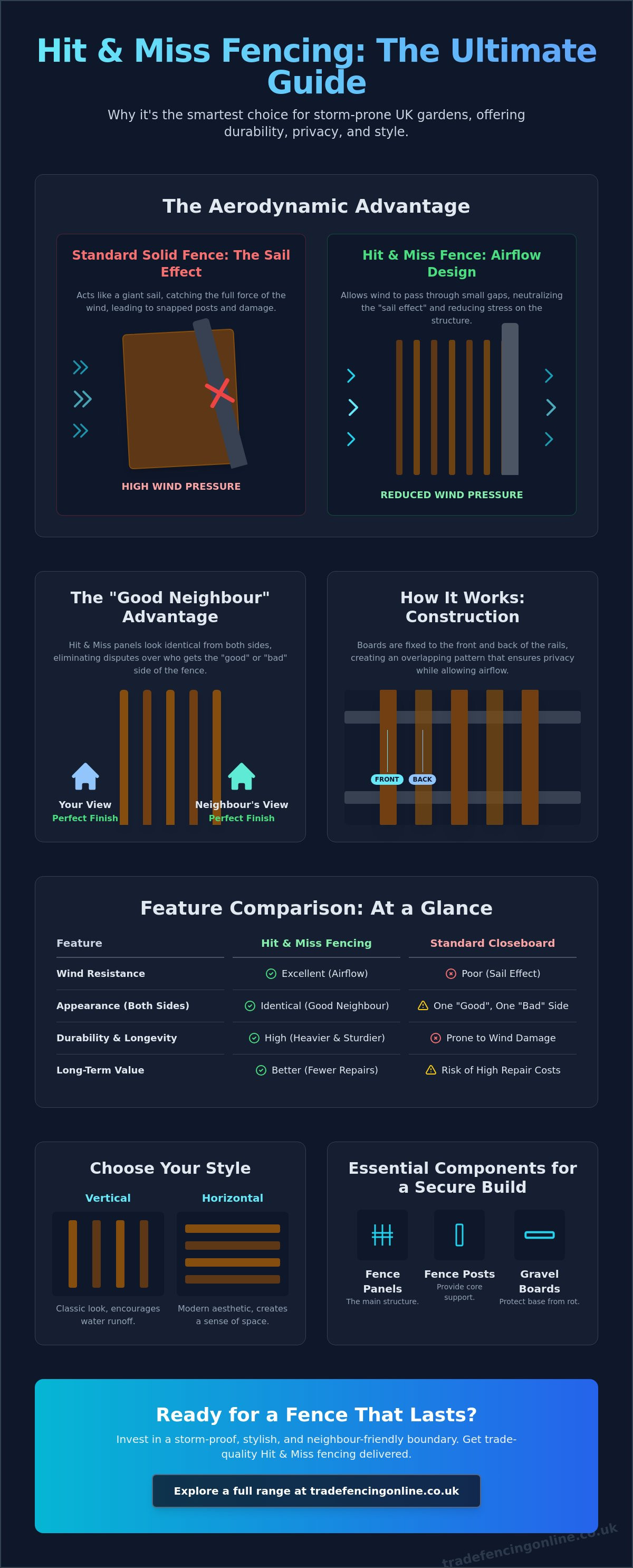
Your standard solid fence panel is essentially a giant wooden sail waiting for the next UK storm to tear it out of the ground. When high winds hit, traditional closeboard fencing takes the full force of the gale. This often leads to snapped posts and expensive repairs. Choosing hit and miss fencing panels changes the physics of your garden boundary. By overlapping the boards on alternative sides of the rail, these panels allow wind to pass through the structure while maintaining total visual privacy. It's the most efficient way to secure a perimeter without creating a wind trap.
We know the frustration of watching a fence succumb to the British weather or arguing with neighbours over who gets the "bad" side of the timber. You need a secure boundary that looks professional from every angle and stays standing when the wind picks up. This guide explains why hit and miss designs are the premier choice for exposed UK gardens and how to choose the right panels for your project. We'll look at the structural benefits, the aesthetic advantages, and how to get the best value for money with long-lasting timber and professional ironmongery.
Key Takeaways
- Understand why the "Good Neighbour" design eliminates boundary disputes by providing an identical, high-quality finish on both sides of the fence.
- Learn how hit and miss fencing panels use gaps to neutralise the "sail effect," preventing structural damage during high winds and storms.
- Compare horizontal and vertical styles to determine which orientation best suits your garden's aesthetic and drainage requirements.
- Identify the essential components needed for a secure installation, including the correct sizes for fence posts and gravel boards.
- Discover how to source trade-quality materials and professional fencing installation services across Romford, Essex, and East London.
What is Hit and Miss Fencing? Construction and Design Explained
Hit and miss fencing panels use a specific construction method where timber pales are fixed to both the front and back of horizontal rails. This creates an alternating pattern. One board is fixed (the "hit"), a gap is left (the "miss"), and the next board is fixed on the opposite side to cover that gap. This design serves a dual purpose. It creates a secure boundary while allowing air to move through the structure. Unlike different types of fences that use solid, flat panels, this style reduces wind resistance significantly. It's a heavy duty solution for gardens that face the brunt of the British weather.
Homeowners often refer to this as the "Good Neighbour" fence. In standard fencing, one person gets the smooth finish while the other sees the rails and posts. Hit and miss panels look identical from both sides. Both you and your neighbour enjoy a premium, finished face. This eliminates common arguments over boundary aesthetics. Privacy remains high because the boards overlap. You can't see through the fence at a direct angle, yet the design prevents the garden from feeling completely boxed in.
The Anatomy of a Hit and Miss Panel
The spacing between pales is calculated to ensure the boards on the rear side fully cover the gaps on the front. We use specific rail depths to create a "shadow gap" effect. This adds depth and architectural interest to your garden. Quality is paramount for these structures. We prioritize pressure-treated timber for all our panels. This treatment forces preservative deep into the wood fibres. It protects against rot and insect attack. This is vital for a fence with many exposed surface areas. The result is a long-lasting, reliable boundary.
Hit and Miss vs. Standard Closeboard
Standard closeboard fencing provides a flat, uniform surface. It's a traditional look, but it creates a solid barrier that catches the wind. Hit and miss fencing panels offer a more textured, 3D appearance. They are often heavier than standard panels. They use more timber to cover both sides of the rail. This extra weight makes them sturdier and less likely to rattle. While the initial investment is different from basic lap panels, the durability provides better long-term value. You spend less on repairs after winter storms. It's a pragmatic choice for any homeowner valuing both style and structural integrity.
The Aerodynamic Advantage: Why Wind Resistance Matters
Solid fence panels behave like sails in a storm. They catch every gust, creating immense pressure on the structure. This force is transferred directly to the supports. In high winds, this often results in snapped timber or leaning boundaries. Hit and miss fencing panels solve this problem through aerodynamics. The alternating board design creates small gaps. These gaps allow air to flow through the panel rather than pushing against it. It's a simple, mechanical solution to a common UK gardening problem.
In exposed areas across Essex and East London, wind speed is a major factor in fence longevity. Solid lap panels often fail here because they lack any pressure relief. Hit and miss designs break up wind pressure without creating harsh drafts. This creates a calmer microclimate in your garden. Your plants aren't battered by turbulent air, and your boundary stays upright. Reducing turbulence also helps prevent the soil around your borders from drying out too quickly during summer gales.
Solving the Wind Pressure Problem
Air pressure equalises on both sides of a hit and miss panel as wind passes through the gaps. This prevents the suction effect that often pulls fences down. Because the wind isn't fighting the panel, it puts significantly less stress on your fence posts. Whether you use timber or concrete supports, reducing the lateral load extends the life of your entire boundary. Solid panels might look secure, but they often become a liability during the winter months. We see many customers in Romford switching to hit and miss panels after their old lap fences fail during seasonal storms.
Privacy Without the Pressure
You don't have to sacrifice security for airflow. The strategic overlap of the pales ensures that you maintain 100% privacy at a direct angle. When compared to double slatted fence panels, hit and miss offers a similar visual barrier but with a more robust, traditional construction. The choice of fencing materials also plays a role. Using high-quality, pressure-treated timber ensures the panels don't warp over time. This keeps those privacy gaps consistent and prevents unwanted sightlines.
The design also allows for unique light filtration. Dappled light passes through the gaps, brightening your garden without exposing your private space to passers-by. It's a pragmatic balance between structural necessity and aesthetic appeal. If you're planning a new project, our team can help you select the right fence panels for your specific location. We supply trade-quality timber that stands up to the toughest conditions.
Choosing Your Style: Horizontal vs. Vertical Hit and Miss
Selecting the right orientation for your hit and miss fencing panels is a critical decision that impacts both the look and the longevity of your boundary. While both styles offer the same aerodynamic benefits, the choice between horizontal and vertical boards changes how your garden feels and how it handles the UK weather. Vertical panels are the traditional standard, but horizontal designs have gained significant popularity for their modern, architectural appeal. The orientation also dictates the internal structure; horizontal panels require vertical support rails, while vertical panels rely on horizontal rails to secure the pales.
The aesthetic impact of your choice should match the existing lines of your property. If your garden features linear decking or modern outbuildings, a matching fence orientation creates a cohesive environment. Beyond the visual, there are practical trade-offs regarding water drainage and installation flexibility that every homeowner should consider before placing an order.
Horizontal Panels for Contemporary Spaces
Horizontal hit and miss panels are currently a major trend in modern East London garden designs. These horizontal lines draw the eye along the perimeter, creating an illusion of a wider, more expansive space. This is particularly effective in smaller urban gardens where you want to maximise the feeling of openness. To achieve a professional finish, we recommend pairing horizontal panels with sleek capping rails. This protects the top grain from water ingress and provides a clean, framed look that suits minimalist landscaping.
One technical consideration for horizontal boards is the risk of sagging over time. Gravity works against the length of the board. This is why we prioritise high-quality, dense timber for these panels. Inferior, thin pales will eventually bow under their own weight, ruining the clean lines of the fence. Choosing a trade-quality supplier ensures the boards are thick enough to remain straight and secure for years, even in exposed conditions.
Vertical Panels for Traditional Durability
Vertical hit and miss panels remain the preferred choice for many established residential areas in Essex. They offer a classic appearance that complements traditional brickwork and mature landscaping. Beyond aesthetics, vertical orientation provides a distinct drainage advantage. Rainwater runs down the grain of the wood and sheds off the bottom of the pales more efficiently than it does on horizontal surfaces. This reduces the time moisture sits on the timber, which directly increases the lifespan of the fence by preventing rot.
Installation is also often simpler with vertical boards. If your garden has a slight slope or uneven ground, vertical panels are easier to trim or step to follow the terrain. The structural rails on these panels run horizontally, providing a solid backbone that supports the weight of the timber without the same bowing risks associated with horizontal styles. This makes them a pragmatic, low-maintenance choice for long-term boundary security.
Planning Your Project: Posts, Gravel Boards, and Sizes
Planning a project with hit and miss fencing panels requires precise measurements and the right hardware. Most UK gardens use standard 6ft (1.83m) panels for maximum privacy. For front boundaries or shared low-level borders, 4ft or 5ft options are common. You should keep in mind that UK planning regulations generally allow fences up to 2 metres high in back gardens without permission. However, this limit drops to 1 metre if the fence is adjacent to a highway or a footpath next to a highway. Always calculate your run by dividing the total length by the panel width. You will need one more post than the total number of panels to finish the run correctly.
Protecting the base of the timber is the most effective way to prevent rot. Using gravel boards keeps the panels off the damp ground. This simple addition can double the life of your timber. Concrete boards are the most durable choice, while timber boards offer a more uniform look. They act as a sacrificial barrier that is much cheaper to replace than the main panels themselves.
Post Selection for Heavy Panels
Hit and miss panels use more timber than standard lap panels, making them significantly heavier. This extra weight demands a secure foundation. Concrete posts provide the ultimate stability and won't rot in the ground. If you prefer a natural wood look, use UC4 kiln-dried timber posts. These are specifically treated for ground contact. Regardless of the material, ensure your post holes are at least 2ft (600mm) deep. This provides the necessary leverage to keep the fence upright during high winds.
Maintenance and Longevity
We supply panels that are pressure-treated, also known as tanalising. This process forces preservatives deep into the wood fibres. If you trim a panel on-site, you must treat the cut ends with a brush-on wood preservative to prevent moisture ingress and rot. While hit and miss panels are low maintenance, cleaning them every few years with a mild detergent and reapplying a UV-protective oil can keep them looking new for over 15 years. This proactive care protects your investment and maintains the timber's structural integrity.
Ready to start your project? You can order trade-quality fencing supplies directly from our online store for fast delivery across Essex and East London.
Quality Hit and Miss Fencing from Romford Fencing Ltd
Romford Fencing Ltd provides trade-quality hit and miss fencing panels to both public customers and professional contractors. We understand that a fence is a long-term investment in your property. That's why we source high-grade, pressure-treated timber that stands up to the unpredictable British weather. Our panels are built for durability and structural integrity. We don't settle for thin, flimsy pales that warp after one season. Instead, we offer robust products designed to maintain their shape and performance for years.
Efficiency is at the heart of our service. We maintain a fast turnaround on all orders to get your supplies on-site exactly when you need them. Whether you're a homeowner tackling a weekend DIY project or a professional installer managing multiple sites, we provide the logistical support to keep your project moving. Our inventory includes everything from the panels themselves to essential ironmongery, postmix, and cement. We are a total solution provider for your garden boundary needs.
Why Buy From a Local Essex Supplier?
Choosing a local supplier in Essex offers distinct advantages. We have years of experience working with the specific soil conditions and weather patterns in Romford and East London. This local expertise allows us to recommend the best products for your specific garden layout. We know which areas face the highest wind speeds and which boundaries require extra reinforcement. Our team provides straightforward, pragmatic advice based on decades of local industry knowledge.
Buying locally also reduces your transport costs. We offer competitive delivery rates across the region, often providing better value than national retailers with high shipping fees. You also benefit from direct contact with our team. If you have questions about your boundary or need technical advice on timber grades, you can speak directly to an expert who understands the local landscape. We pride ourselves on being a reliable, no-nonsense supplier for the local community.
Order Your Fencing Supplies Online
Our online store makes it easy to find the right materials for your project. You can browse our full range of fence panels and matching accessories from your phone or computer. We provide clear specifications so you know exactly what you're buying. The checkout process is straightforward for both trade and DIY customers. We remove the friction from the purchasing process, allowing you to secure your materials with just a few clicks.
We offer a complete inventory for your project. Along with hit and miss fencing panels, you can order concrete posts, gravel boards, and high-quality ironmongery in one transaction. This streamlined approach saves you time and ensures all your components are compatible. SHOP HIT AND MISS FENCING PANELS NOW to secure your garden with a professional, wind-resistant boundary.
Secure Your Garden with Wind-Resistant Fencing
Choosing hit and miss fencing panels is a pragmatic decision for any homeowner in wind-prone areas of Essex and London. You gain a structurally superior boundary that allows air to pass through while maintaining total privacy. This design also ends the "bad side" debate with neighbours, providing a premium finish on both faces. By following the planning and installation advice in this guide, you can create a secure perimeter that lasts for years.
Romford Fencing Ltd is a trusted Romford-based supplier committed to quality. We stock trade-grade, pressure-treated timber that stands up to the British weather. Our team ensures fast local delivery across Essex and East London so your supplies arrive when you need them. Secure your boundary today with materials built for performance and longevity. It's the most efficient way to protect your property and improve your garden's aesthetic.
BROWSE OUR TRADE-QUALITY HIT AND MISS PANELS
Take the first step toward a more resilient garden boundary today.
Frequently Asked Questions
Is hit and miss fencing more expensive than closeboard?
Hit and miss fencing panels are generally more expensive than standard closeboard or lap panels. This is because the design requires almost double the amount of timber to cover both sides of the rails. While the initial investment is higher, you save money over time through increased durability and reduced wind damage. It's a premium trade-quality product that offers better long-term value for exposed UK gardens.
Can people see through hit and miss fencing?
You cannot see through these panels at a direct angle. The pales are fixed in an alternating pattern with a significant overlap that blocks the line of sight completely. While a very slight gap might be visible if you look from an extreme side angle, it remains one of the most secure choices for garden privacy. It provides a solid visual barrier without the "boxed-in" feeling of a flat fence.
Do I need special posts for hit and miss panels?
You don't need a specific "hit and miss" post, but you must use high-quality, heavy-duty supports. Because these panels are heavier than standard fencing, we recommend using concrete posts or UC4 kiln-dried timber posts for maximum stability. Ensure your posts are at least 2ft deep in the ground and secured with plenty of postmix. This foundation is critical to handle the weight and potential wind loads.
Are hit and miss fence panels heavy?
These panels are significantly heavier than traditional lap or closeboard fencing. The double-sided board construction adds considerable mass to the structure. We always recommend a two-person lift for safe installation. This extra weight is actually a benefit once the fence is installed; it makes the boundary much sturdier and less likely to rattle or vibrate during heavy storms. It's a robust choice for permanent boundaries.
How long does hit and miss fencing last?
A well-installed hit and miss fence can easily last 15 years or more. We supply panels made from pressure-treated timber to protect against rot and insect attack. To maximise this lifespan, you should use gravel boards to prevent ground contact. Regularly cleaning the timber and applying a UV-protective treatment every few years will keep the wood healthy and prevent the boards from silvering or warping prematurely in the sun.
Can hit and miss fencing be installed horizontally and vertically?
You can install hit and miss fencing panels in both horizontal and vertical orientations. Horizontal boards are popular for contemporary urban gardens in East London as they create a modern, wide appearance. Vertical boards are the traditional choice for Essex homes and offer superior water drainage. Both styles provide the same aerodynamic benefits. Your choice depends on the specific aesthetic you want to achieve for your property boundary.
Is hit and miss fencing good for wind?
Hit and miss is widely considered the best fencing style for windy UK gardens. The gaps between the boards allow air to pass through the panel, which neutralises the "sail effect" that often destroys solid fences. Instead of the wind pushing against a solid wall, the pressure is broken up and equalised on both sides. This significantly reduces the stress on your posts and gravel boards during seasonal storms.
Do you deliver hit and miss fencing in Essex and London?
We provide specialist delivery services for all our fencing supplies across Romford, Essex, and East London. Our local logistics team ensures that your panels, posts, and ironmongery arrive on-site quickly and in perfect condition. We maintain a fast turnaround to support both trade contractors and DIY homeowners. You can check our delivery coverage or place an order directly through our online store for efficient service.