


The longevity of a heavy gate is determined by the ironmongery, not the timber. You've likely seen a gate that looked perfect on day one only to start dragging across the driveway three months later. It's frustrating to watch expensive timber swell and pull against flimsy fixings. Choosing the correct heavy duty gate hinges is the only way to prevent this common failure.
This guide shows you how to select and install the right ironmongery to ensure your garden or security gates remain sag-free and functional for years. You'll learn why trade-quality 5mm steel beats budget options and how adjustable designs handle the British weather. We will cover weight-class selection, the benefits of hot-dipped galvanised finishes, and the professional installation techniques used by Trade Fencing Online to keep gates opening smoothly every time.
Key Takeaways
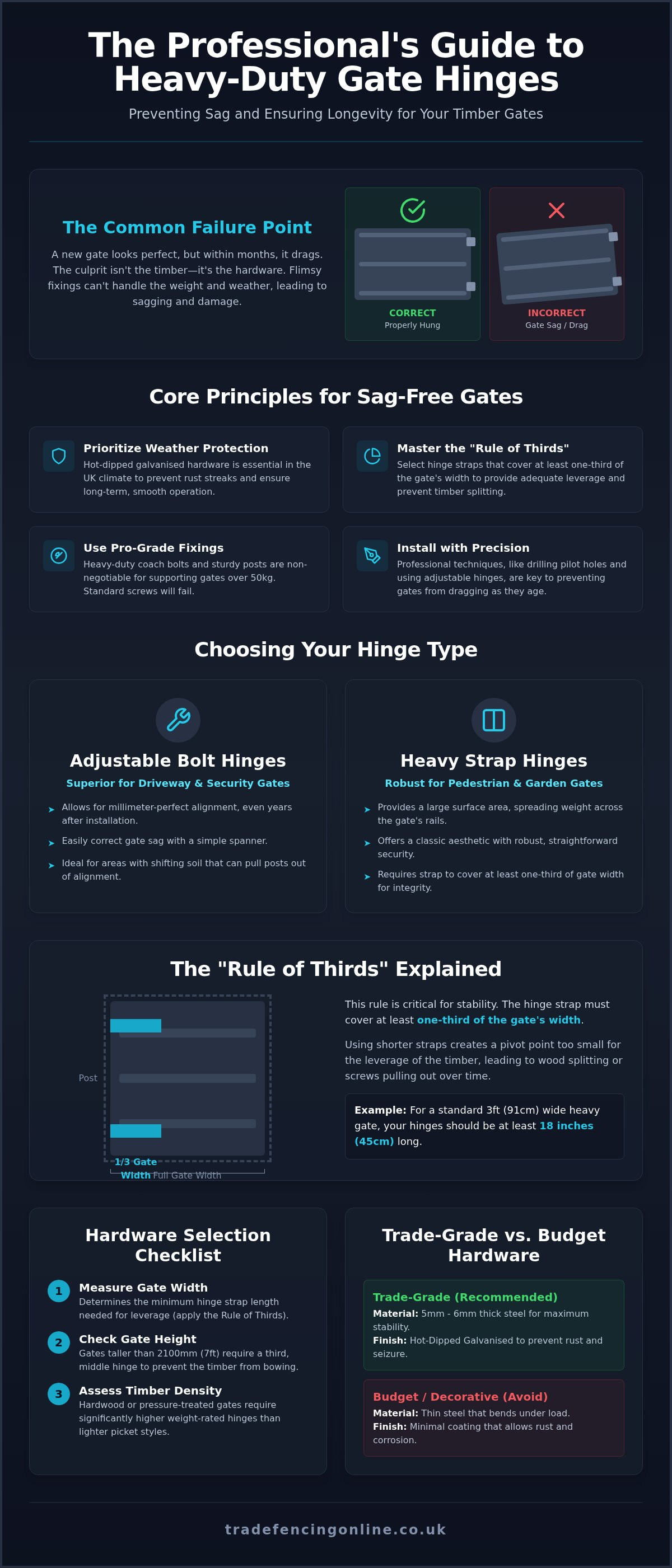
- Identify why hot-dipped galvanised hardware is essential to prevent rust streaks and ensure your ironmongery survives the UK climate.
- Master the "Rule of Thirds" to select the correct size of heavy duty gate hinges that will keep your timber gates perfectly aligned.
- Learn why professional-grade coach bolts and sturdy fence posts are non-negotiable for supporting gates over 50kg.
- Discover the installation secrets that prevent timber gates from dragging or sagging as they age and settle.
Understanding Heavy Duty Gate Hinges: Types and Load Capacities
Heavy duty gate hinges are defined by their structural capacity. We categorise ironmongery as heavy-duty when it is engineered for gates exceeding 50kg or 4ft in width. Standard decorative hinges found in high street shops often fail under these loads. Trade-grade hardware uses thicker steel, typically 5mm or 6mm, to ensure long-term stability. Understanding Hinge mechanics and types is essential for selecting a kit that won't buckle under the weight of solid timber.
In the British climate, hot-dipped galvanisation is mandatory. This process prevents rust streaks from ruining your new timber and stops the metal from seizing. Decorative domestic hinges focus on appearance rather than load-bearing. Trade-grade structural ironmongery prioritises material thickness and pivot strength. Using under-specced hardware leads to gate drag and damaged posts. Our heavy duty gate hinges are designed specifically for the substantial gates we manufacture at our Romford yard.
Adjustable Bolt Hinges vs. Heavy Strap Hinges
Essex clay soil is notorious for shifting as moisture levels change. This movement can pull posts out of alignment and cause gates to bind. Adjustable gate hinges allow for millimetre-perfect alignment even years after the initial installation. You can correct gate sag with a simple spanner rather than re-hanging the entire unit. This adjustability makes them the superior choice for driveway gates and high-traffic security entrances.
Traditional strap hinges, also known as band and hook, are ideal for pedestrian gates and closeboard fencing. These provide a large surface area for fixings, spreading the weight across the horizontal rails of the gate frame. While they offer less adjustability than bolt hinges, they provide a classic aesthetic and robust security for standard garden entrances. Always ensure the strap covers at least a third of the gate width to maintain structural integrity.
How to Select the Correct Hardware for Heavy Timber Gates
Selecting the right hardware requires more than a guess. You must follow the "Rule of Thirds" to ensure long-term stability. This rule states that your hinge straps should ideally cover at least one-third of the gate width. For a standard 3ft wide heavy gate, 18-inch hinges are the absolute minimum. Using shorter straps creates a pivot point that is too small for the leverage exerted by the timber. This eventually leads to the wood splitting or the screws pulling out.
When you're installing larger driveway gates, the stress on the top hinge is immense. Choosing heavy duty gate hinges with a thicker gauge steel prevents the band from bending under this constant tension. High-quality hardware is the only way to protect your investment in premium timber.
Calculating Gate Weight and Hinge Length
Determining the correct heavy duty gate hinges involves assessing the height-to-width ratio. Follow this simple checklist to identify potential stress points before you start drilling:
- Measure the total width of the gate leaf to determine the minimum strap length needed for leverage.
- Check the height; gates taller than 2100mm (7ft) require a third hinge to prevent the timber from bowing in the middle.
- Assess the timber density. Hardwood or pressure-treated closeboard gates require significantly higher weight ratings than standard picket styles.
A middle hinge isn't just for weight; it provides a central anchor that keeps the frame square. This is vital for 6ft tall gates that often warp due to seasonal moisture changes in Essex. You can find a full breakdown of requirements in our Essential Fencing Supplies checklist. If you don't know which kit fits your project, browse our professional-grade ironmongery to see specific weight capacities and dimensions.
Professional Installation and Maintenance for Essex Gate Projects
Professional installation ensures your hardware performs as intended. Standard wood screws lack the shear strength to hold heavy gates long-term. Always drill pilot holes to prevent the timber from splitting. Use heavy-duty coach bolts for the primary load-bearing points of your heavy duty gate hinges. These bolts pass through the gate and post, secured with a nut and washer. This creates a mechanical bond that prevents the ironmongery from pulling away under the constant weight of the gate leaf.
Your choice of fence posts is equally critical. A heavy gate acts as a powerful lever. If the post isn't sturdy or set deep enough, the entire system will eventually lean. Romford Fencing Ltd provides trade-quality posts designed specifically to handle these high-torque stresses. We offer fast local delivery across Essex and East London from our Romford yard. This service ensures trade professionals and homeowners get the structural materials they need without logistical delays.
Fitting Ironmongery to Closeboard and Decorative Gates
Fitting hinges to closeboard fence panels with integrated gates requires precision. Align the hinges exactly with the horizontal backing rails. This ensures the weight is distributed into the structural frame rather than just the pales. Annual maintenance is vital for longevity. Grease the hinge pins every spring to prevent friction wear and rust. Check the tightness of your heavy duty gate hinges after winter. Timber naturally shrinks and expands with seasonal temperature changes, which can loosen fixings. For broader project context, see our Complete UK Guide to Fencing.
Secure Your Entrance with Professional-Grade Hardware
Choosing the right heavy duty gate hinges is the difference between a gate that fails in months and one that lasts decades. You now understand how to match strap length to gate width and why structural steel thickness matters. Proper installation using coach bolts and high-quality posts ensures your security or garden gates remain perfectly aligned regardless of the weather.
Romford Fencing Ltd provides trade-quality ironmongery built specifically for the UK climate. We offer fast local delivery across Romford, Essex, and East London to keep your project on schedule. Our status as an established Essex fencing supplier means you get expert advice alongside every purchase.
Build a gate that stands the test of time with hardware you can trust.
Frequently Asked Questions
What size hinges do I need for a 12ft driveway gate?
You need hinges that cover half the width of each gate leaf for heavy-duty applications. For a 12ft driveway opening split into two 6ft leaves, you should use 36-inch (900mm) hinges. This provides the necessary leverage to support the weight of wide timber panels. Always use three hinges per leaf if the gate exceeds 2100mm in height to prevent bowing.
Are adjustable gate hinges better than standard hook and band hinges?
Adjustable gate hinges are superior for installations on clay-heavy soil or where timber is prone to seasonal swelling. They allow you to realign the gate with a spanner without removing any fixings. While standard hook and band hinges are robust and traditional, they don't offer room for movement. Choosing adjustable heavy duty gate hinges ensures your gate opens smoothly if the posts shift.
Can I use heavy duty gate hinges on PVC or composite gates?
You can use these hinges on PVC or composite gates provided the gate frame has an internal steel or timber sub-frame. Composite materials are often heavy but lack the structural grain of solid wood to hold fixings alone. Ensure you use through-bolts or coach bolts that anchor into the reinforced core. This prevents the hardware from pulling through the plastic skin.
How do I stop my heavy wooden gate from sagging over time?
Stop sagging by ensuring your gate has a diagonal brace running from the bottom hinge corner up to the top latch corner. This transfers the weight effectively to the hinges. Additionally, ensure your heavy duty gate hinges are mounted with coach bolts rather than standard screws. Using three hinges instead of two also distributes the load more evenly, preventing the top hinge from bending.