


That "cheap" weekend project could cost you £1,200 more than a professional quote. We know you want a fair price for your garden, but when researching the DIY vs professional fence installation cost, you have to account for more than just the timber. With UK labour rates sitting at £250 per day in 2026, it's natural to want to save money. The physical reality of moving 50kg concrete posts often changes the plan very quickly.
This guide breaks down the true financial difference to help you make a pragmatic choice. We'll look at the £450 you'll likely spend on tool hire and the hidden expenses of waste disposal that many homeowners overlook. You'll get a clear price comparison, a list of essential kit, and a direct link to a trusted supplier for quality panels and gravelboards. Let's look at the numbers and see where your money is best spent.
Key Takeaways
- Compare actual 2026 UK labour rates against material prices to determine the true DIY vs professional fence installation cost for your garden.
- Identify hidden expenses such as skip hire and specialist tool rental that often bridge the price gap between DIY projects and professional quotes.
- Learn how to avoid the "cost of failure" by choosing trade-quality materials that ensure your fence survives the British weather for years to come.
- Use our "Break-Even" Matrix to decide if your specific project requires the precision of a professional contractor or if you can realistically save by doing it yourself.
- Maximise your total value-for-money by sourcing high-quality panels and gravelboards direct from a trusted supplier, regardless of who carries out the work.
The Fencing Dilemma: DIY Savings vs Professional Reliability
Garden renovation spending in the UK rose by 12% in 2025, leading into a 2026 market where homeowners are more focused on property value than ever. The choice between tackling a project yourself or hiring a contractor is a central part of this trend. Calculating the true DIY vs professional fence installation cost requires looking beyond the initial price tag of the timber. A fence is a structural barrier that must withstand UK wind speeds, which reached record highs in several regions last winter. It's not just about digging a hole; it involves precise levelling, depth calculations, and soil assessment.
Before you commit to a method, research the different types of fencing available to understand the specific engineering each requires. Primary cost drivers in 2026 include raw material prices, which have stabilised but remain high, and professional labour rates that now average £200 to £300 per day per person. Logistics also play a part. Transporting 20 heavy panels and 21 concrete posts requires a vehicle that most DIYers don't own, adding hidden delivery or rental fees to the total spend.
Evaluating Your Project Scope
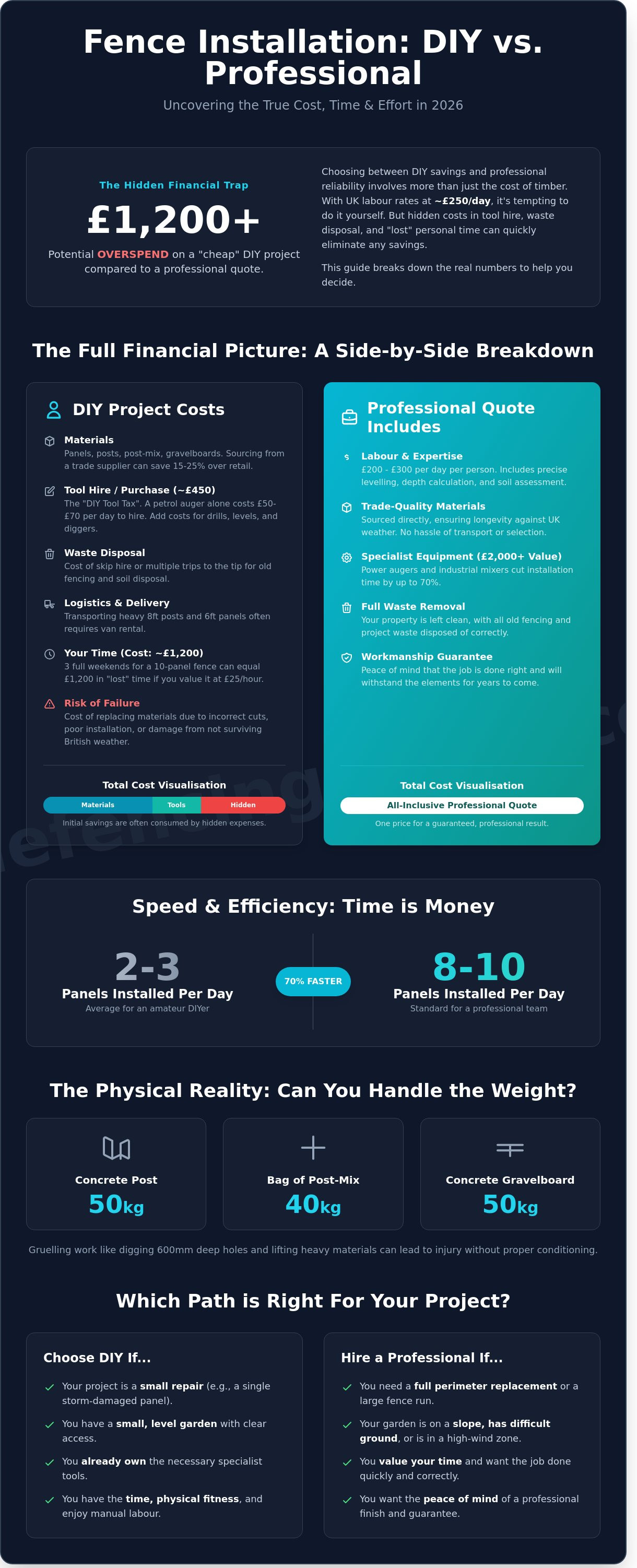
Size dictates your best route. Replacing a single storm-damaged panel is a straightforward DIY task that saves you a call-out fee. However, a full perimeter replacement on a sloped garden is a different beast. You must assess your physical fitness honestly. Shifting 40kg bags of post-mix and digging 600mm deep holes is gruelling work that can lead to injury if you're not conditioned for it. You also need to understand the complexity of different fence panels. Standard lap panels are manageable, but heavy-duty closeboard or acoustic fencing requires multi-person lifting and exact post spacing.
The Value of Your Time
Your time has a market value. If you earn £25 per hour at your job, a DIY project that takes three full weekends actually costs you £1,200 in "lost" personal time. A professional team can often complete a 10-panel run in a single day. This speed is a major factor in the DIY vs professional fence installation cost comparison. Professionals use power augers and industrial mixers that cut installation time by 70%. When you factor in the £150 weekend hire cost for professional-grade tools, the "savings" of a DIY project that drags into a second or third month often vanish.
- Pro Speed: 8-10 panels installed per day.
- DIY Speed: 2-3 panels installed per day for an amateur.
- Equipment: Pros bring £2,000+ worth of specialised kit to the site.
DIY is a great idea for small, level gardens where you have existing post holes and a clear weekend. It becomes a risk when you're dealing with complex boundaries, high-wind zones, or premium materials that are expensive to replace if you cut them incorrectly.
Calculating DIY Costs: Materials, Tools, and Delivery
Estimating the DIY vs professional fence installation cost requires a granular look at the shopping list. You aren't just buying timber; you're funding a logistics operation. A standard 36-foot run of fencing involves significant weight and volume. Buying direct from a specialist fencing supplier typically saves 15% to 25% compared to big-box retail prices. Trade-grade materials are built for the UK climate, whereas budget supermarket panels often use thinner slats that warp within 24 months. You must also account for the 20% VAT often hidden in trade quotes and the delivery fees for heavy items like concrete gravelboards, which can weigh up to 50kg each.
The Essential DIY Toolkit
The "DIY Tool Tax" is a major factor in the final bill. If you don't own a post-hole digger, a spirit level, and a heavy-duty SDS drill, you'll need to buy or hire them. Hiring a petrol auger costs approximately £50 to £70 per day in 2026. You'll also need high-quality ironmongery, as cheap hinges and latches rust quickly in British rain. Don't forget consumables like 100mm wood screws and plenty of postmix. Most 6ft posts require two 20kg bags to ensure stability. Before you start digging, check the planning permission for fences to ensure your DIY project doesn't exceed the legal 2-metre height limit, which could result in a costly forced removal.
Logistics and Local Delivery
Transporting 6ft panels and 8ft posts in a standard family car is impossible and dangerous. Hiring a transit van adds roughly £80 to £120 to your project cost once insurance and fuel are included. This expense often negates the initial savings of a DIY approach. Romford Fencing provides local delivery across Essex, which reduces these logistical headaches and ensures your materials arrive on a purpose-built vehicle. Choosing trade-quality materials over supermarket "bargains" is essential for long-term value. A £30 budget panel might look fine today, but it won't withstand 50mph winter gusts like a heavy-duty pressure-treated alternative.
When you calculate the total DIY vs professional fence installation cost, the price of your own time is the final variable. Professional installers can complete a three-day DIY job in six hours. If you want to skip the heavy lifting, you can browse our full range of quality fence panels to see exactly what professional-grade timber looks like before you start your project.
Professional Installation Fees: What Are You Really Paying For?
When weighing up the DIY vs professional fence installation cost, labour is the most significant variable. Professional fencers bring speed, specialised equipment, and structural knowledge that a general handyman or DIYer cannot match. You aren't just paying for someone to dig holes. You're paying for a boundary that remains upright during a 60mph gale.
Labour Cost Breakdown 2026
Labour rates for 2026 reflect the rising costs of fuel, insurance, and living standards. In London and the South East, expect to pay a day rate between £250 and £400 per person. Most projects require a two-person team for safety and efficiency. In the North of England and the Midlands, these rates typically sit between £180 and £280 per day.
Reputable contractors usually quote per project or per panel. This protects you from paying extra if the job takes longer than expected. A "cheap" quote from an uninsured cowboy installer often leads to shallow post holes and sagging panels within 12 months. Professional firms like Romford Fencing Ltd use their volume-buying power to source materials at trade prices. This often offsets a portion of the labour fee, making the total DIY vs professional fence installation cost closer than many homeowners realise.
The Expertise Factor
Installing a fence on level ground is straightforward. However, most UK gardens feature slopes, tree roots, or hidden utility cables. Professionals use laser levels to ensure a perfectly straight run. They understand how to "step" panels correctly on inclines to maintain both aesthetics and security. Getting the foundation right is the most critical step. Installers ensure fence posts are set at a minimum depth of 600mm with the correct concrete mix for maximum wind resistance.
Legal compliance is another hidden value of professional service. All installations must follow UK government planning rules for fences. For example, fences exceeding 2 metres in height generally require specific planning permission. A professional installer knows these local regulations. They help you avoid council enforcement notices that could force you to tear down a brand-new boundary.
Finally, consider the financial value of a guarantee. Most professional fencing companies provide a 12-month workmanship warranty. They carry Public Liability Insurance, typically covering up to £2 million or £5 million in damages. If a contractor hits a water pipe or a power line, their insurance covers the repair. If you do it yourself, that cost comes directly out of your pocket.
Hidden Costs: Longevity, Waste Disposal, and Potential Pitfalls
DIY projects often look cheaper on paper because labour costs appear as zero. This calculation is usually flawed. If a DIY fence fails after three years due to shallow post holes or poor drainage, the project cost effectively doubles. You pay for the materials twice and the disposal twice. Professional installers understand that a fence is only as strong as its foundation. In regions with heavy Essex clay, manual digging is notoriously difficult. Without a power auger, DIYers often stop at 450mm deep rather than the required 600mm to 750mm. This shortcut leads to leaning panels after the first winter storm.
Material waste is another silent budget killer. A standard 1.8m closeboard panel costs approximately £42 in 2026. One incorrect cut or a dropped gravel board adds immediate, unrecoverable costs to your budget. Professionals arrive with the right tools and a surplus of components, ensuring you only pay for the finished result rather than your mistakes.
The Skip Hire Reality Check
Disposing of an old fence is an expensive logistical hurdle. By 2026, the average price for a 6-yard skip in the UK has risen to £365. You cannot simply put old fence panels in your domestic bin. Treated timber is classified as hazardous waste by many local councils due to the chemicals used in the pressure-treatment process. This means some recycling centres now charge a premium for "Grade C" wood disposal. Professional contractors usually hold a waste carriers' licence. They include the removal and legal disposal of your old structure in their total package, often at a lower rate than a private homeowner can secure for a single skip hire.
Durability and Maintenance
The long-term DIY vs professional fence installation cost is dictated by how often you have to touch the fence again. Professional alignment ensures that panels don't trap water against the posts, which is the primary cause of premature rot. Using concrete gravel boards is a non-negotiable standard for pros; they keep the timber off the damp ground. This simple addition can extend the life of a panel from 5 years to 15 years.
This focus on long-term value is a global trend in home improvement. For example, many homeowners are now choosing composite materials for decking to reduce maintenance, a concept similar to using concrete gravel boards for fences. To see how these materials are being used in other markets, you can visit Home Expo Asia.
- Maintenance costs: Pro-grade installations using tanalised timber require 40% less chemical treatment over a ten-year period.
- Structural integrity: Correctly mixed Postmix at a ratio of 2 bags per post ensures the fence withstands 60mph wind gusts.
- Warranty: Most professional installs come with a 10-year or 15-year guarantee that DIY builds lack.
When you factor in the price of tools, skip hire, and the high probability of material waste, the gap between DIY and professional fees narrows significantly. Don't risk a collapse during the first gale of the season. For a structure that lasts, buy your materials from a trusted UK fencing supplier to ensure you are starting with trade-quality components.
The Verdict: How to Choose the Best Route for Your Garden
Deciding between these two paths in 2026 depends on your "Break-Even" point. If you're replacing a single 6ft panel, the DIY vs professional fence installation cost gap is significant. Most contractors charge a minimum call-out fee starting at £150. For a full 10-panel boundary, the gap narrows once you factor in tool hire, waste disposal, and the value of your own time. A professional team completes in one day what takes an amateur three weekends to finish.
Maximising value means buying trade-quality materials regardless of who does the work. Retailer "budget" panels often use thin 8mm slats that warp within two seasons. Trade Fencing Online provides 125mm pressure-treated featheredge boards that withstand UK winters. Buying these yourself ensures your DIY effort lasts 15 years rather than five. It puts you in control of the project's lifespan.
The hybrid approach is the most cost-effective strategy for 2026. You purchase the panels, posts, and gravelboards directly from us to secure trade prices. You then hire a local installer for labour only. This method typically reduces the total DIY vs professional fence installation cost by 18% compared to a full turnkey service. It removes the contractor's markup on materials while ensuring a professional finish.
- Check underground utility maps for gas and water pipes.
- Verify boundary ownership via Land Registry documents.
- Secure a skip or Hippo bag for old fence disposal.
- Confirm you have a heavy-duty post-hole digger and a 1.2m spirit level.
- Check local planning rules if the fence exceeds 2 metres in height.
Summary of the DIY vs Pro Cost Gap
A standard 10-panel project using 6ft closeboard panels and concrete posts currently averages £920 for DIY materials. A professional installation for the same project ranges from £1,950 to £2,400. On a "Stress Factor" scale of 1 to 10, DIY ranks as an 8 due to the heavy lifting and precise levelling required. Romford Fencing Ltd remains the trusted choice for Essex homeowners who want a 5-star finish without the physical toll. We provide the expertise that ensures your posts stay straight even in heavy clay soil.
Next Steps for Your Project
Get an accurate material quote by visiting the Trade Fencing Online shop today. We offer reliable delivery to any Romford or Essex address, typically within 3 to 5 working days. Select your gravelboards, ironmongery, and panels to see your total savings instantly. Our team is ready to help you calculate exactly what you need for a successful install.
FOR QUALITY FENCING, CALL ROMFORD FENCING LTD TODAY OR EMAIL OUR TEAM.
Secure Your Property With The Right Choice
Deciding on your garden boundary depends on your specific budget and timeframe. A standard 2026 UK project reveals that DIY efforts save approximately £65 per panel in labour costs. However, professional installation usually includes a 12-year structural guarantee that DIY builds lack. When you evaluate the DIY vs professional fence installation cost, don't overlook the £180 average spend on specialized tools and waste disposal permits required for a solo job.
Trade Fencing Online bridges the gap by offering unmatched trade prices directly to the public. As a trusted Essex supplier with a 5-star reputation, we ensure you get the best value regardless of who does the heavy lifting. We provide free local delivery options to keep your project on track and under budget. High-quality timber is the foundation of any long-lasting garden; start your project with the best materials available in the industry.
Security often starts at the boundary, but it shouldn't end there. If you are also responsible for the safety of a workspace or commercial building, you can explore Fire Alarm System Installation & Maintenance to complement your new physical perimeter with advanced electronic protection.
Shop our range of high-quality fence panels for your next project
Your new garden border is just a few clicks away.
Frequently Asked Questions
How much does it cost to install 10 panels of fencing in the UK in 2026?
Professional installation for 10 panels in 2026 averages between £1,650 and £2,200 including all materials and labour. If you choose the DIY route, you'll pay roughly £900 to £1,200 for quality timber panels, concrete posts, and postmix. These figures depend on whether you choose standard lap panels or premium closeboard options. Site clearance and ground conditions can add a further £200 to the final bill.
Is it cheaper to buy fence panels online or from a local builder's merchant?
Buying fence panels online is typically 10% to 15% cheaper than using a local builder's merchant because online retailers operate with lower overhead costs. Trade Fencing Online offers direct delivery, which removes the need for you to hire a van or pay high local delivery markups. While merchants might offer bulk discounts on orders exceeding £2,500, online prices remain the most cost-effective choice for standard residential projects.
Can I install a 6ft fence myself without professional help?
You can install a 6ft fence yourself, but you'll need at least one capable helper because a standard 6ft panel weighs over 25kg. The DIY vs professional fence installation cost savings are significant, often reaching £600 for a medium-sized garden. You must ensure your posts are set at least 600mm deep into the ground. Failing to reach this depth means your fence won't survive high winds, leading to expensive repairs later.
What is the average labour cost per fence panel in the Essex area?
Professional labour rates in Essex currently range from £65 to £85 per fence panel. Prices in urban areas like Romford or Chelmsford sit at the higher end of this scale due to increased demand and transport costs. This rate usually covers the digging of post holes and the fixing of panels and gravelboards. Most Essex contractors require a minimum booking fee that covers at least three panels of work.
Do I need to pay for waste disposal when replacing an old fence?
You'll need to pay for waste disposal because old timber and concrete posts cannot be put in standard household bins. A 6-yard skip for a 10-panel fence costs between £240 and £310 in 2026. Many professional installers include waste removal in their quote for a flat fee of £150 to £200. This is often the cheaper option as they use commercial waste carriers to process the debris efficiently.
How long does it take a professional to install a 30-metre fence?
A professional two-man team will typically complete a 30-metre fence installation in 1.5 to 2 days. This timeframe assumes standard ground conditions and 15 bays of fencing. A DIYer should expect the same task to take 4 to 5 days of hard physical labour. Professionals work faster because they use petrol-powered post hole augers and have the experience to level the run quickly without constant adjustments.
What tools do I absolutely need to hire if I choose the DIY route?
You must hire a petrol post hole auger and a heavy-duty reciprocating saw to make the project manageable. An auger costs roughly £55 per day and replaces hours of manual digging with a spade. You'll also need a 14lb sledgehammer, a 1200mm spirit level, and a high-visibility string line. These tools ensure your posts are vertical and the fence line remains perfectly straight across the entire length of your garden.
Is it worth paying more for concrete fence posts and gravel boards?
Paying more for concrete posts and gravelboards is a smart investment because they last 25 years or longer. Timber posts often rot at the ground level within 10 years, even when pressure-treated. While concrete adds roughly £25 to the DIY vs professional fence installation cost per bay, it prevents the entire structure from collapsing during winter storms. Concrete gravelboards also protect the bottom of your timber panels from rising damp.