


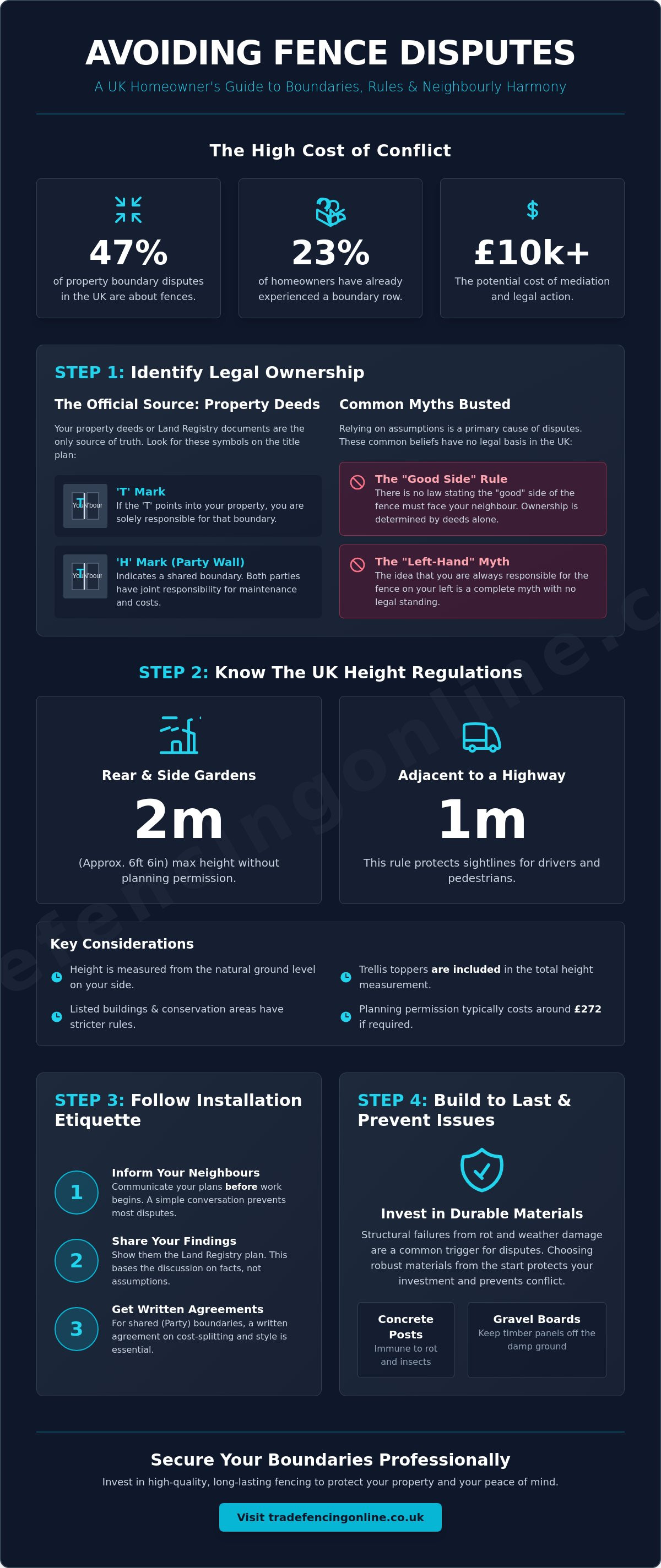
Nearly half of all property boundary disputes in the UK are about fences. With 23% of homeowners already having experienced a boundary row, it's clear that a simple home improvement project can quickly turn into a legal headache. You likely want a clear, durable boundary without the threat of a £10,000 mediation bill or a fractured relationship with your neighbour. Focusing on avoiding disputes with neighbours over fences is the most efficient way to protect your investment and your peace of mind.
You can navigate this process successfully by sticking to the facts and following established UK regulations. This guide provides the clarity you need on fence height limits, the £272 planning permission fee, and the truth about boundary ownership. We'll show you how to identify your legal responsibilities through property deeds and how to communicate your plans effectively. From choosing the right fence panels to understanding the 10 year enforcement rule for planning breaches, you'll learn how to complete your project professionally and legally.
Key Takeaways
- Learn how to identify legal ownership using property deeds and Land Registry 'T-marks' to confirm exactly where your responsibility lies.
- Understand UK height restrictions, including the 2-metre limit for rear gardens and the 1-metre rule for fences adjacent to highways.
- Master the etiquette of installation by informing neighbours of your plans early, which is essential for avoiding disputes with neighbours over fences.
- Determine legal responsibility for repairs and storm damage to resolve cost-related conflicts before they escalate into legal issues.
- Discover how investing in durable materials like concrete posts and gravel boards prevents the structural failures that often trigger boundary rows.
Identifying Boundaries and Fence Ownership
Avoiding disputes with neighbours over fences starts with establishing clear ownership. You cannot rely on local myths or the direction your fence panels face. Instead, you must verify the legal boundary line before purchasing materials or hiring installers. Nearly half (47%) of all property boundary disputes in the UK involve fences, often because owners guess their responsibilities instead of checking the facts. Establishing ownership early protects your investment and prevents the risk of legal action that can cost between £10,000 and £50,000.
Your property deeds or Land Registry documents are the primary source of truth. These records usually include a title plan that marks boundaries with specific symbols. Follow these steps to identify your responsibility:
- Locate T-marks: Look for a 'T' symbol on the boundary line. If the 'T' points into your property, you own the fence and are responsible for its upkeep.
- Identify H-marks: If a 'T' appears on both sides of the line, it forms an 'H' shape. This indicates the boundary is shared, meaning both parties have joint responsibility.
- Ignore the "Good Side" Rule: There's no legal requirement to put the "good" side of a fence towards your neighbour. Ownership is determined by deeds, not by which side the fence posts are on.
- Discard the Left-Hand Myth: The belief that you always own the fence on the left side of your property is a total myth with no legal basis.
Using the Land Registry to Resolve Uncertainty
If you don't have your original deeds, you can download title plans from the Land Registry website for a small fee. These digital records are essential when original paperwork is missing or unclear. Boundary lines can shift over decades as gardens are redesigned or old hedges are replaced with new fence panels. You should compare your title plan with your neighbour's documents to ensure they match. Discrepancies are common in older properties; identifying them early is key to avoiding disputes with neighbours over fences.
The Reality of Shared 'Party' Boundaries
Shared boundaries require a different approach to maintenance and replacement. If a fence sits directly on the boundary line, it may be governed by the Party Wall etc. Act 1996. This legislation covers walls and specific structures that separate two properties. On a shared boundary, both parties usually split the costs of repairs and maintenance. You must get a written agreement from your neighbour before you remove or alter a shared structure. Proceeding without consent on a party boundary is a frequent cause of legal friction. Clear communication and documented agreements ensure the installation process remains straightforward and professional.
UK Fencing Regulations: Height and Planning
UK law is specific about fence heights. Sticking to these legal limits is vital for avoiding disputes with neighbours over fences. For most rear and side gardens, you can install a fence up to 2 metres high without needing planning permission. This is approximately 6 feet 6 inches. If your planned boundary exceeds this height, you must submit a formal application to your local council. Ignoring these standards often leads to complaints and forced removals.
The 2-Metre Rule and Fence Height Loopholes
Most homeowners opt for 6ft fence panels because they offer excellent privacy while remaining under the 2-metre limit. You must measure the height from the highest point of the ground immediately adjacent to the fence. If your garden sits on a slope, the fence height is measured from the natural ground level on your side. Step your panels to follow the terrain rather than letting the top line exceed the 2-metre mark at any single point.
Don't assume that trellis toppers are exempt from these rules. A common mistake is adding a trellis to the top of a 6ft fence to gain extra height. Local planning authorities treat trellis as part of the total structure height. If the combined height of the panel and trellis exceeds 2 metres, it is technically a breach of planning control. Stick to standard heights to keep your project legal and stress-free.
When Planning Permission is Mandatory
The height limit drops significantly for fences adjacent to a highway used by vehicles. In these locations, your fence cannot exceed 1 metre in height without planning permission. This rule protects sightlines for drivers and ensures pedestrian safety at junctions. If you live in a conservation area or own a listed building, your permitted development rights may be restricted. You must consult your local Essex or London planning office before installing any new boundary structures in these protected areas.
Applying for planning permission is a structured process. As of April 1, 2024, the fee for a householder planning application in England is £272. Councils are becoming stricter with enforcement. Under the Levelling Up and Regeneration Act 2023, authorities have a 10-year window to take action against planning breaches. To ensure your boundary meets all local requirements, you can rely on our expert fencing installation team to handle the technical details for you.
The Etiquette of Installation: Communicating with Neighbours
Clear communication is the most effective tool for avoiding disputes with neighbours over fences. While you may have the legal right to replace a fence on your land, surprising a neighbour with a new structure often leads to friction. You should inform your neighbours of your plans at least two weeks before any work begins. This 14 day notice period gives them time to move plants, secure pets, or raise legitimate concerns about the project. Early dialogue prevents the frustration that leads to formal complaints or calls to the local council.
During your initial conversation, discuss the specific style and height of the panels you intend to use. Most people value privacy, but a sudden 2-metre solid wall can feel overbearing if it blocks light to a previously open garden. Showing your neighbour a sample or a link to the product helps manage expectations. If you reach a verbal agreement regarding the boundary line or the cost-sharing of the project, document it immediately. A simple email or a signed note confirming the details provides a paper trail that protects both parties if memories fade later.
Which Way Should the Fence Face?
The "good side" debate is a frequent source of tension. Traditionally, the smooth, finished side of the fence faces the neighbour, while the posts and rails face the owner's property. This is a matter of etiquette rather than law, but following this custom is considered polite. If you want a premium look for both gardens, double slatted fence panels are an excellent solution. These panels are designed to look identical from both sides, eliminating the "bad side" argument entirely. Choosing a symmetrical style ensures both you and your neighbour enjoy a high-quality finish without aesthetic compromises.
Access and Scaffolding Rules
You don't have an automatic legal right to enter your neighbour's land to install a fence. You must ask for permission before stepping onto their property or placing materials on their lawn. Most neighbours will agree if they're asked politely and assured that their garden will be protected. If the installation requires significant space, offer to lay down protective sheets to prevent damage to their plants or grass. Respecting trespassing laws and property boundaries during the build phase is just as important as the final position of the fence. A professional approach during installation ensures the project stays stress-free and legal.
Maintenance and Repair: Avoiding Conflict Over Costs
Maintenance costs are a primary trigger for boundary rows. If a fence is structurally sound but looks weathered, you cannot legally force a neighbour to repair or paint it. However, if the structure becomes dangerous, the owner has a duty of care to ensure it doesn't cause injury or property damage. Distinguishing between essential repairs and aesthetic upgrades is a critical step in avoiding disputes with neighbours over fences. Addressing minor issues before they become structural failures saves money and maintains local relationships.
Who Pays for a Blown-Down Fence?
UK storms frequently destroy entire runs of fencing. If the fence belongs to your neighbour but falls into your garden, they are responsible for clearing the debris and making the boundary secure. Home insurance policies often cover fencing, but high excesses mean most homeowners pay for repairs out of pocket. If the boundary is shared, a 50/50 cost split is the standard professional approach. Even if the fence is legally yours, inviting your neighbour to contribute to a higher-quality replacement can lead to a better long-term result for both gardens. It's often cheaper to split the cost of a new fence than to pay for repeated patch repairs.
Preventing Damage from Shared Use
Conflict often arises from how a neighbour uses a fence they don't own. You cannot lean heavy timber, ladders, or garden waste against a neighbour's fence without permission. The weight causes panels to bow and posts to snap over time. Invasive plants like ivy or heavy climbing roses also cause rot and structural failure. To protect your investment, ensure you use gravel boards at the base of every panel. These boards prevent soil and moisture from touching the wood. They significantly extend the life of the fence regardless of how the ground is managed on the other side.
If a neighbour wants to paint "their" side of your fence, they must ask for your consent. Applying a different colour or type of stain can seep through the timber and ruin the finish on your side. Establishing these boundaries early prevents expensive remedial work. If you need to replace a damaged boundary quickly, you can order professional fencing supplies for rapid delivery to your site. High-quality materials reduce the need for future maintenance and help prevent the structural issues that lead to neighbourly friction.
Choosing Durable Materials to Prevent Future Disputes
Material choice is a factor often overlooked when focusing on avoiding disputes with neighbours over fences. Low-grade timber and poor installation lead to structural failure within just a few years. When a fence leans or collapses into a neighbour's garden, it triggers immediate conflict over repair costs and property access. Investing in high-quality, trade-grade materials ensures your boundary remains straight and secure for a decade or more. Sturdy fences don't just look better; they prevent the physical encroachments that start legal rows.
You should select pressure-treated timber for all wooden components. This process forces preservative deep into the wood, ensuring a 10 to 15 year lifespan against rot and insect attack. Sourcing trade-quality fencing supplies ensures your panels can withstand UK storms without snapping. When your fence stays standing while others fall, you avoid the urgent, stressful negotiations that follow extreme weather events.
Why Concrete Posts Save Neighbour Relationships
Standard wooden posts eventually rot at the ground line. This causes the fence to lean, which often encroaching on a neighbour's land and creates a perceived boundary shift. This physical movement is a primary cause of property boundary arguments. You should invest in concrete fence posts to eliminate this risk entirely. Concrete is a "fit and forget" solution that doesn't rot, warp, or snap. Using concrete gravel boards alongside these posts keeps your wooden panels away from ground moisture. This prevents premature rotting and ensures you won't need to discuss replacement costs with your neighbour for a very long time.
Sourcing Quality Supplies in Romford and Essex
A successful project relies on professional-grade components. Local specialists like Romford Fencing Ltd provide the heavy-duty materials required for a lasting finish. We provide fast delivery across Essex and East London to keep your project on track. This minimizes the time your garden is left open, which neighbours always appreciate. Accessing trade-grade ironmongery and high-strength post-mix ensures your gates and panels stay level and secure. Professional materials lead to a professional result that neighbours are less likely to challenge.
Final Checklist for a Dispute-Free Project
Follow this final checklist before you start work. It's the most efficient way to ensure you're avoiding disputes with neighbours over fences while completing your installation.
- Double-check measurements: Verify your run length before ordering panels to avoid gaps.
- Confirm delivery dates: Tell your neighbour when the materials arrive to manage noise expectations.
- Level your gravel boards: Ensure the base is straight to prevent the panels from looking slanted.
- Secure every post: Use sufficient post-mix to prevent the fence from wobbling in high winds.
CALL ROMFORD FENCING LTD FOR EXPERT ADVICE ON 01708 733333.
Secure Your Boundary with Professional Materials
A successful fencing project relies on legal accuracy and high-quality installation. You now have the essential facts regarding property deeds, the 2-metre height rule, and the importance of early communication. Following these steps is the most effective way of avoiding disputes with neighbours over fences while protecting your property's privacy. By choosing durable materials like concrete posts and gravel boards, you ensure your boundary remains a point of agreement rather than a source of future repair conflict.
Trade Fencing Online provides the professional-grade supplies you need for a lasting finish. We're established Romford experts since 1970 and offer both trade and public accounts to suit any project scale. You can rely on our fast delivery across Essex and East London to keep your installation on schedule. Don't settle for low-grade timber that fails in the first storm.
Shop Trade-Quality Fence Panels for Your Next Project
Frequently Asked Questions
Can I force my neighbour to repair their broken fence?
No. In the UK, there is no general legal obligation for a property owner to maintain or repair a boundary fence unless the property deeds contain a specific "covenant to repair." If the fence is in a dangerous condition, you can report it to your local council's building control department. Otherwise, your most efficient option is to install your own fence panels on your land, just inside the boundary line.
Do I have to give my neighbour the 'good side' of the fence?
No legal requirement exists to face the "good side" toward your neighbour. This is a matter of etiquette and local custom rather than law. You are free to install the fence in whichever direction you choose on your property. To prevent aesthetic arguments, many homeowners now select double-slatted panels that look identical from both sides. This is a proactive step for avoiding disputes with neighbours over fences.
Can my neighbour lean things against my fence panels?
No. Your neighbour cannot lean heavy items like timber, ladders, or garden waste against your fence without your permission. This is technically a form of trespass and can cause the panels to bow or the posts to snap. If this occurs, politely ask them to move the items. Explain that the weight is compromising the structural integrity of the boundary and could lead to expensive repair costs.
How high can a fence be without planning permission in the UK?
Fences can be up to 2 metres high in rear or side gardens under permitted development rules. If the fence is adjacent to a highway used by vehicles, the limit is strictly 1 metre. Exceeding these heights without paying the £272 planning application fee can lead to enforcement action. Local authorities now have a 10 year window to take action against such breaches, so sticking to these limits is essential for avoiding disputes with neighbours over fences.
What should I do if my neighbour puts up a fence I don't like?
Check if the fence breaches local planning regulations first. If it's over the 2-metre height limit or is located in a conservation area without permission, you can report it to the local planning authority. If the fence is legal but you dislike the style, your primary option is to install your own screening or fence panels on your side of the boundary. You cannot paint or alter their fence without their written consent.
Whose side of the fence is the 'back' with the rails?
The "back" of the fence with the visible rails usually belongs to the owner of the structure. While it's common practice to have the posts and rails on the owner's side, this isn't a fixed legal rule. You must always verify ownership by checking the T-marks on your title deeds rather than relying on the position of the rails. Ownership is determined by legal documents, not by the direction of the timber components.
Can I attach a trellis to the top of my neighbour's fence?
No. You cannot attach a trellis, hanging baskets, or even solar lights to a neighbour's fence without their express permission. Doing so is technically a form of criminal damage. If you need more height or want to grow climbing plants, you should install your own independent trellis and posts on your land. This ensures you maintain your privacy without interfering with your neighbour's property or causing structural strain.
What is a T-mark on a property plan and what does it mean?
A T-mark is a symbol used on Land Registry title plans to indicate boundary responsibility. If the 'T' points into your property, you are responsible for the maintenance and replacement of that boundary. If there's a 'T' on both sides of the line, it forms an 'H' shape, indicating a shared or "party" boundary. Identifying these marks is the first step in establishing legal ownership and preventing unnecessary conflict during your project.