


A fresh coat of treatment isn’t always the right first step. The best approach to wooden gate care and treatment depends on the timber, its existing finish and its condition. Applying an incompatible product can cause peeling or an uneven result, so inspect the gate before reaching for a tin.
UK weather exposes timber to changing conditions, but there’s no single treatment that suits every gate. This guide explains how to clean a wooden gate, spot signs of wear and choose between oils, stains and paints based on the existing finish. You’ll also learn what to check before treating the timber, so you can deal with maintenance needs early and avoid common mistakes.
Key Takeaways
- Good wooden gate care and treatment starts by identifying the timber and its existing finish, not by recoating automatically.
- Check that a treatment is compatible, clean gently and let the gate dry before applying it.
- Test a small, inconspicuous area first and follow the product instructions to reduce the risk of damaging the finish.
- Look for worn coatings, loose fixings and timber damage to decide whether the gate needs cleaning, a touch-up or further assessment.
Why wooden gate care and treatment depend on the timber and existing finish
Wooden gate care and treatment involves cleaning, inspecting and protecting the timber with a compatible product. It doesn’t mean automatically recoating the whole gate. The timber type, previous treatment and surface finish all affect what product is suitable. A treatment made for bare wood may not adhere properly to a painted or sealed gate.
Timber responds to moisture and changing weather. The wood’s condition can affect how a finish is absorbed, while an existing coating may conceal wear or damage. Understanding the basics of wood preservation techniques helps explain why protection should suit the material rather than follow a one-size-fits-all approach.
How to identify what your wooden gate already needs
Start with any paperwork or labels supplied with the gate. Look for the timber type and notes about previous preservative or finish. Then inspect the surface. Peeling, patchy colour or bare areas mean you should assess the existing coating before choosing what to apply. They don’t automatically mean the whole gate needs a new finish.
Fence-panel treatment guidance is not automatically gate-treatment guidance. Pressure-treated fence panels have separate care instructions, and guidance for panels does not set a treatment schedule for wooden gates. Check the gate and treatment product instructions for compatibility and recoating details.
- Identify the timber and any previous treatment.
- Assess worn or peeling areas before choosing a product.
- Use care instructions for the gate, rather than transferring panel guidance to it.
If inspection shows the gate needs replacing, browse the driveway and pedestrian gates available from Romford Fencing Ltd.
How to clean and treat a wooden gate without damaging its finish
Follow a careful sequence. Applying a coating over dirt, moisture or an incompatible finish can spoil the result. Before starting, read the gate’s care information and the treatment label. The Wood Protection Association also provides general information about timber protection.
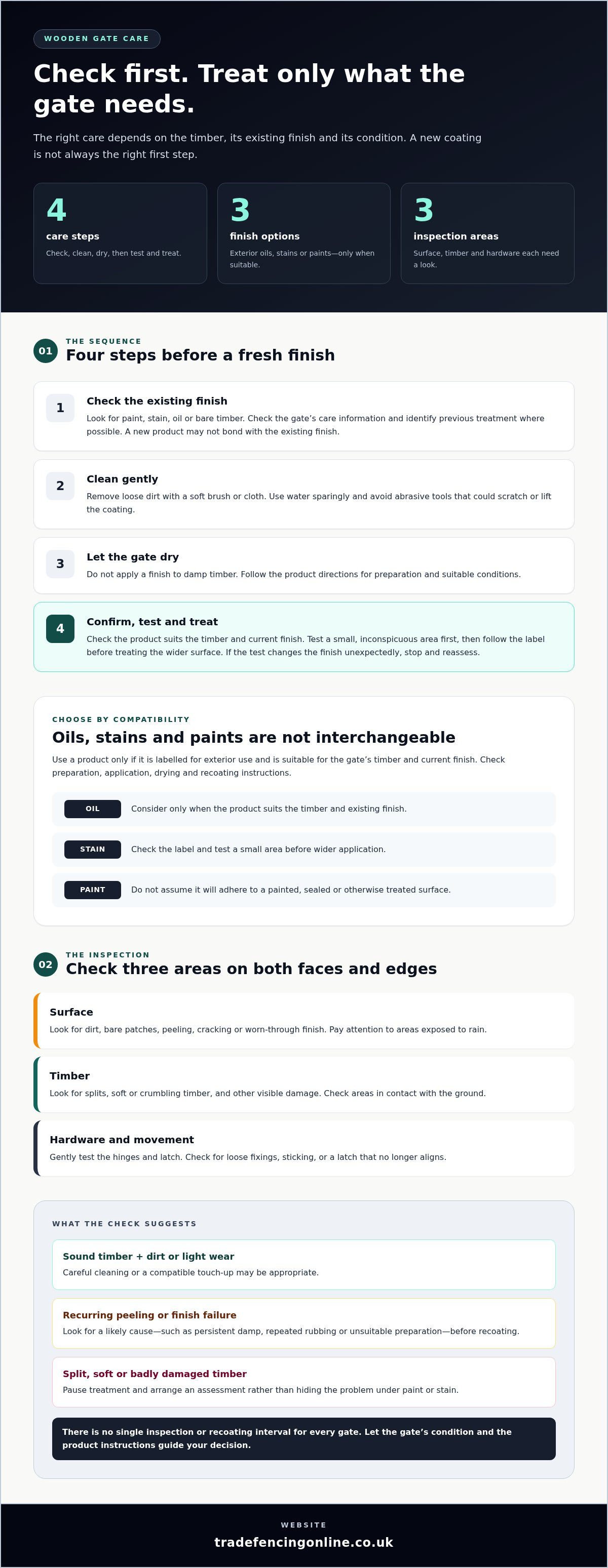
- Check the existing finish. Look for paint, stain, oil or bare timber. Don’t assume a new product will bond with what’s already there.
- Clean gently. Remove loose dirt with a soft brush or cloth. Use water sparingly and avoid abrasive tools that could scratch or lift the coating.
- Let the gate dry. Don’t apply a finish to damp timber. Follow the product directions for preparation and suitable conditions.
- Test and treat. Confirm that the product is compatible with the timber and existing finish. Try it on a small, inconspicuous area, then follow the label before treating the wider surface.
Choosing and applying a compatible exterior wood treatment
Oils, stains and paints are options only when the product is labelled for exterior use and suitable for the gate’s timber and current finish. They aren’t interchangeable. Check the preparation, application and drying instructions, including any guidance on recoating. If the test patch changes the colour or finish unexpectedly, stop and reassess before proceeding.
Use the product label and care information to guide your choice. If replacing the gate is a better option, browse Romford Fencing Ltd’s driveway and pedestrian gates.
How to maintain a wooden gate and decide when it needs attention
Include a visual check in your garden maintenance routine, and inspect the gate after harsh weather or if it starts sticking. Spotting changes early helps you decide whether cleaning or a small finish touch-up is enough, or whether the timber needs closer assessment. There’s no single inspection or recoating interval for every gate, so base your decision on its condition and the product instructions.
What to check during a wooden gate inspection
Inspect both faces and the edges, especially areas exposed to rain or in contact with the ground. Check the finish for bare patches, peeling or cracking, then look for splits, soft or crumbling timber, and loose joints. Test the hinges and latch gently. Loose fixings or a latch that no longer aligns can affect how the gate closes and may need attention beyond a fresh coat, while heavy grease or grime around metal fittings can be cleared using heavy-duty solutions from Pro Clean Supply before relubricating.
- Surface: Is dirt the main issue, or has the finish worn through?
- Timber: Are there cracks, soft spots or other visible damage?
- Hardware: Do the hinges and latch feel secure, and does the gate move and close properly?
If the timber is sound and the coating is only dirty or lightly worn, careful cleaning or a compatible touch-up may be appropriate. Don’t simply cover recurring peeling or finish failure. Look for a likely cause, such as persistent damp, repeated rubbing or unsuitable preparation, and address it before recoating. If the timber is split, soft or badly damaged, pause treatment and arrange an assessment rather than hiding the problem under paint or stain.
For a wider fence-and-gate project, consider how the gate works with the surrounding boundary. If replacement is the practical next step, explore Romford Fencing Ltd’s driveway and pedestrian gates range.
Plan your next gate project with confidence
Let your inspection guide the decision: maintain the gate if it remains sound, or consider a replacement if damage affects its condition or operation. Keeping a note of what you find can help you choose a suitable next step instead of applying another coat by habit. That’s the practical value of wooden gate care and treatment.
If replacement is the right option, Romford Fencing Ltd supplies driveway and pedestrian gates, with fast local delivery across Essex, East London and Kent. Free delivery is subject to minimum spend. Browse the range and choose a gate that suits your entrance and wider boundary, then keep its product guidance for future care.
Shop the range online and take the next step with your gate project.
Frequently Asked Questions
How often should I treat a wooden gate?
There’s no universal treatment timetable for wooden gates. The right interval depends on the timber, previous protection, exposure and the treatment label. As part of wooden gate care and treatment, note when you inspect the gate and record changes such as colour loss or exposed timber. Use those observations alongside the gate’s care guidance to decide whether it needs attention.
Do pressure-treated wooden gates need treating after installation?
Not necessarily. Follow the instructions for the individual gate. Romford Fencing Ltd’s guidance for its pressure-treated fence panels is that they need no post-installation treatment and should be re-treated every 2-3 years for best results. That schedule applies to those panels only. Check the gate’s own care guidance before applying a product, as its timber and treatment may differ.
Can I use wood oil, stain or paint on any wooden gate?
No. Oils, stains and paints aren’t suitable for every gate. Choose a product labelled for exterior use and suitable for the timber and existing coating. For example, if the gate is painted, don’t assume oil can go straight over it. Check the preparation directions and test an inconspicuous patch before treating the full surface.
What should I do if the treatment on my wooden gate is peeling?
Don’t apply another coat over loose flakes. Check whether the surface is dirty, damp or damaged, or has an incompatible coating, then follow the manufacturer’s preparation directions. If peeling is limited and the timber appears sound, the product instructions may describe a suitable repair. Widespread finish failure, splits or soft timber need assessment before you apply further treatment.