


Most wooden fence posts fail within five years not because of the timber species, but because of a single missing digit in their treatment specification. It's a common frustration for UK homeowners who see their garden boundaries collapse while the panels still look pristine. You shouldn't have to dig out rotten stumps every few seasons just because the ground-line moisture won't quit.
We'll show you how to select and install posts that resist rot and withstand the harshest British weather for decades. You'll learn the essential difference between UC3 and UC4 pressure treatment and why it's the secret to a 15-year lifespan. This guide covers everything from choosing cost-effective materials for large perimeters to securing fast local delivery across Essex and London for your next project. We provide the technical facts you need to build a fence that stays structurally sound without the constant need for repairs.
Key Takeaways
- Understand why UC4 pressure treatment is the essential industry standard for timber in permanent ground contact to prevent rot and insect attack.
- Master the "two-foot rule" for post depth to ensure your garden fence remains stable and secure during high winds and storms.
- Learn how to use postmix and cement to create a professional weathering slope that sheds water away from the base of the timber.
- Source trade-grade wooden fence posts at competitive prices with fast, reliable delivery options throughout the Essex and London areas.
Understanding Timber Grades and Treatments for Ground Contact
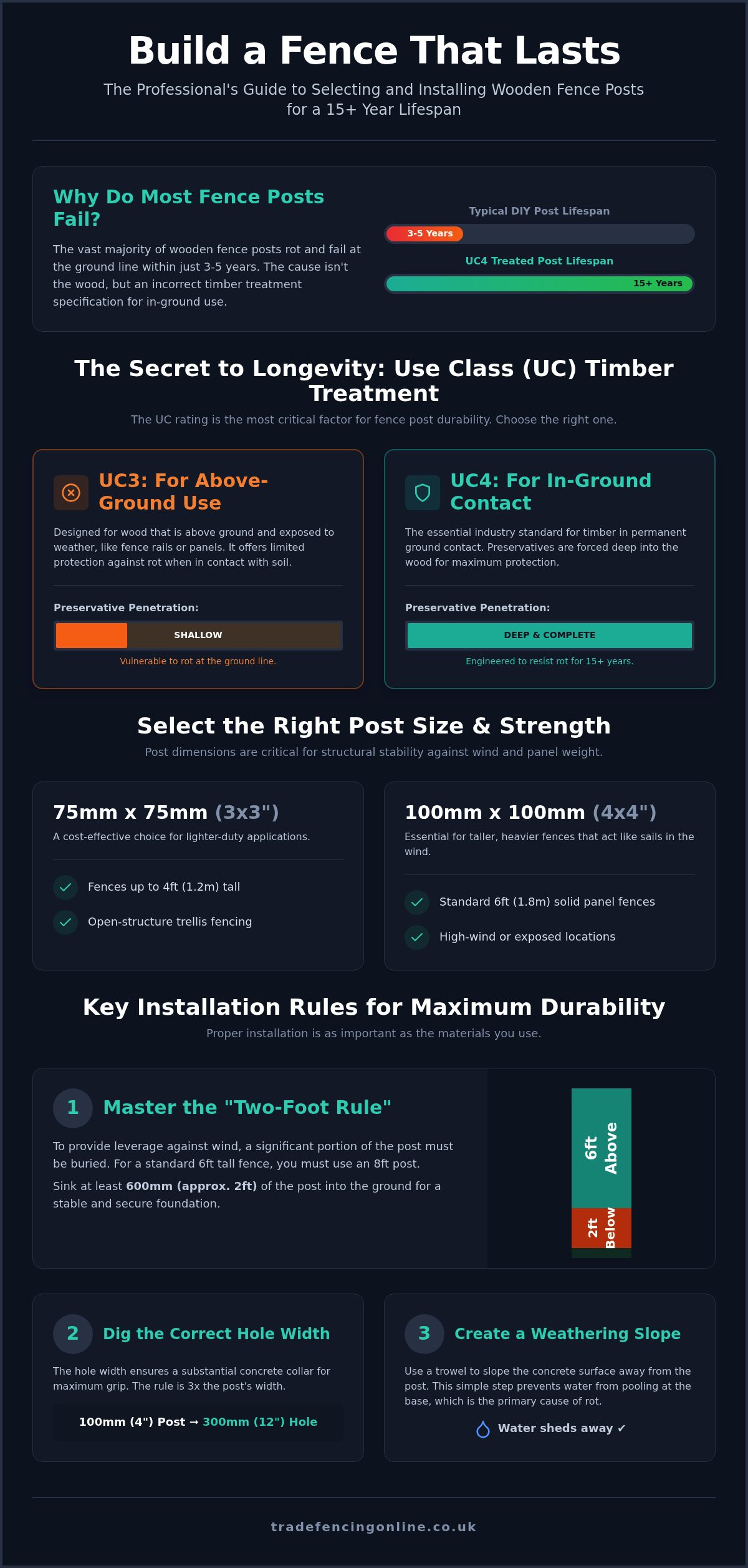
Choosing the right wooden fence posts requires understanding the Use Class (UC) rating system. UC4 treatment is a process where preservatives are forced deep into the wood cells under high pressure. This specific grade is the industry standard for timber in permanent ground contact. Without this high-pressure chemical impregnation, timber remains vulnerable to fungal decay and aggressive insect attack. This process ensures the preservative reaches the heartwood, providing a robust barrier against the elements.
Absorption is the primary factor in post longevity. We prioritize kiln-dried timber over green timber for all professional installations. Kiln-drying significantly reduces the moisture content before the treatment cycle begins. This creates internal capacity within the wood fibres for the preservative to penetrate much deeper. Green timber is often saturated with natural sap, which limits protection to the surface and leads to rapid failure once the wood naturally cracks.
Why UC4 Treatment is Non-Negotiable for Fence Posts
Most wooden fence posts fail at the ground line. This is the critical zone where soil moisture meets atmospheric oxygen. Standard DIY-store posts are often only treated to UC3 standards, which are meant for above-ground applications like fence rails or cladding. These budget options typically rot through within 3 to 5 years. Professional trade-grade UC4 posts are specifically engineered to remain structurally sound for 15 years or more, even in heavy clay soils common across Essex.
Shop our range of durable fence posts to ensure your project stands the test of time.
Selecting the Right Size and Height for Your Fencing Project
UK garden projects typically use two standard dimensions for wooden fence posts: 75mm x 75mm (3x3) and 100mm x 100mm (4x4). The choice isn't just aesthetic; it's a structural decision based on wind load and panel weight. Using the wrong size often leads to leaning fences or snapped timber during winter storms. We provide both sizes to ensure your boundary remains secure regardless of the site conditions.
Stability relies on the "two-foot rule". You must sink at least 600mm of the timber into the ground to counter lateral pressure. For a standard 6ft installation using fence panels like closeboard or lap, you should always order an 8ft post. This ensures enough length remains above ground to support the full panel height while maintaining a secure foundation in the concrete. Shorter posts won't provide the leverage needed to keep a tall fence upright.
3X3 vs 4x4 Posts: Which Strength Level Do You Need?
We recommend 100mm (4x4) posts for any solid panel standing 6ft tall. Solid timber surfaces act as sails during British storms. The increased mass of a 4x4 post provides the necessary resistance to prevent the timber from snapping at the ground line under extreme stress. This is particularly important in exposed areas across Essex and London. Conversely, 75mm (3x3) posts are cost-effective and perfectly adequate for 3ft or 4ft boundaries, or open-structure trellis where wind passes through easily. For more on material durability, read our Fence Posts: The Complete UK Buyer’s Guide (Wood vs Concrete). You can source all these sizes directly from our professional fencing range to ensure your project stays upright for years.
Professional Installation Tips to Prevent Post Rot
Correct installation technique is just as vital as timber quality for long-term durability. Start by digging your post holes to a width exactly three times the diameter of your wooden fence posts. For a standard 100mm post, this means a 300mm wide hole. This specific width ensures a substantial concrete collar that provides maximum grip and prevents the post from shifting under the weight of the panels or during high winds.
When pouring your postmix and cement, don't simply finish the surface level with the grass. Use a trowel to create a "weathering" slope that tapers away from the timber. This simple step forces rainwater to shed off the concrete rather than pooling against the wood grain. Water trapped at the ground line is the most common cause of premature failure; directing it away significantly extends the life of your wooden fence posts.
Incorporate gravel boards at the base of every section. These boards act as a critical moisture barrier, keeping your expensive fence panels off the damp soil. By sacrificing a cheaper, easily replaceable gravel board to the ground-level moisture, you protect the structural integrity of the main panel. This professional approach prevents rising damp and soil-borne fungal infections from attacking the bottom rail of your fence.
Managing Moisture and Ground-Level Maintenance
Never cut the factory-treated end of a post that's destined for ground contact. This end has the highest concentration of preservative from the UC4 pressure cycle. If you must adjust the height, only trim the top end. Always apply a high-quality end-grain preservative to any cut surfaces to reseal the timber against moisture ingress. Check our Essential Fencing Supplies Checklist to ensure you have all the necessary components before you begin your installation.
Build a Boundary That Lasts for Decades
Selecting the right wooden fence posts is the difference between a five-year fix and a fifteen-year investment. By choosing UC4 pressure-treated timber and following professional installation rules, you ensure your garden boundary survives the worst British weather. Always prioritize the two-foot rule for depth. Use gravel boards to keep your panels away from damp soil.
We provide trade-grade materials directly to the public with fast delivery across Essex and East London. As a family-run business with deep Romford expertise, we focus on durability and professional quality at competitive prices. You don't need to settle for inferior timber that rots at the ground line.
SHOP NOW at Romford Fencing Ltd
Secure your perimeter today with confidence.
Frequently Asked Questions
How long do wooden fence posts usually last in the UK?
Professional UC4 treated wooden fence posts typically last 15 years or more. Standard retail posts often fail in under 5 years because they lack deep chemical impregnation. The UK's high soil moisture levels specifically target the ground-line section of the timber. Investing in trade-grade materials ensures your boundary remains structurally sound for over a decade.
Should I choose 3x3 or 4x4 wooden posts for a 6ft fence?
You should always choose 100mm (4x4) posts for any solid 6ft fence. A full-height panel acts like a sail in the wind, putting immense pressure on the base. While 75mm (3x3) posts are suitable for low trellis or 3ft boundaries, they often snap under the lateral force generated by taller, heavier panels during British winter storms.
Is it better to put wooden fence posts in concrete or spikes?
Concrete provides the most reliable foundation for permanent garden fencing. Metal spikes are prone to shifting in soft soil and offer poor resistance against high winds. Using postmix and cement creates a heavy, stable anchor that prevents leaning. It's the professional standard for ensuring your wooden fence posts stay upright and secure for their entire lifespan.