


A fence can be damaged by what you leave against it, not just by the weather. For effective summer garden fence maintenance, inspect the full fence, clean away dirt and mould, and fix loose or damaged parts before treating the timber. A fresh coat of paint, stain or treatment is generally due every couple of years. Keep bikes, wheelbarrows and garden tools stored away from panels instead of leaning them against the fence.
It’s easy to focus on the fence itself and overlook the steady pressure of stored items. This guide explains when to refresh fence treatments, how to clean away grime and mould, and what to do about leaning panels, loose fixings or unstable posts. Follow the steps in order to spot problems early and keep your fence in better condition through summer.
Key Takeaways
- Refresh timber fence treatments as needed. A fresh coat of paint, stain or treatment is generally due every couple of years.
- Start cleaning with a hose to remove loose dirt and debris. Use a soft brush and mild detergent for stubborn grime, then let the fence dry before treating it.
- Store bikes, wheelbarrows and garden tools in a shed or cleared garage space instead of leaning them against fence panels.
- Check for loose posts, panels and fixings during your inspection. If damage means a replacement is needed, Romford Fencing Ltd supplies fence panels, posts, gravel boards and ironmongery.
1. How often to reapply preservatives, stains and paints
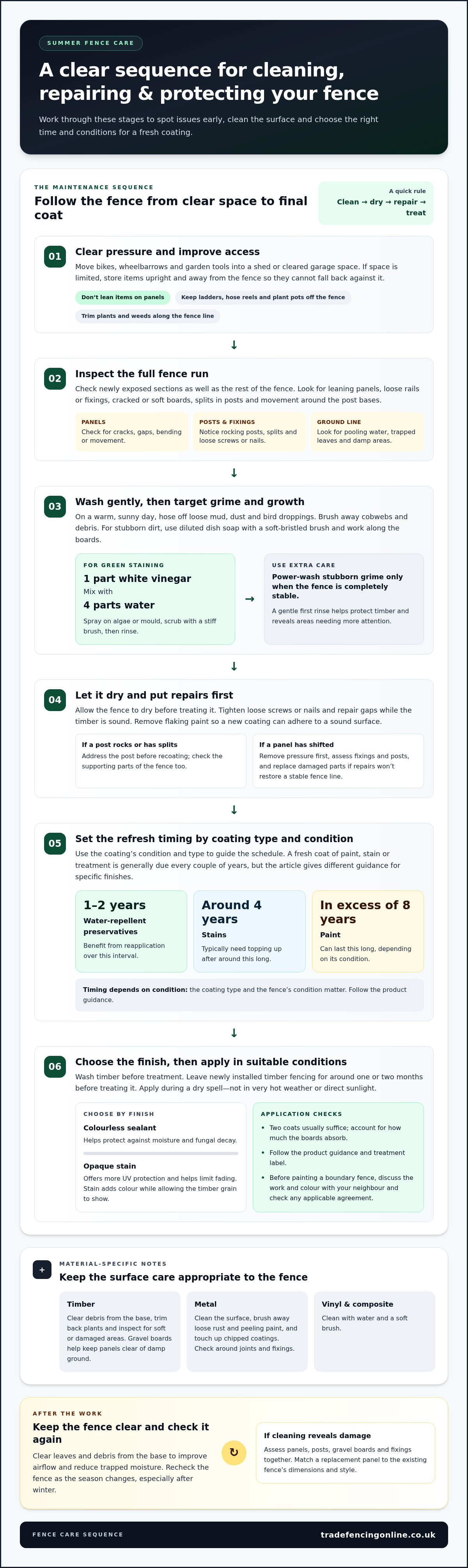
For summer garden fence maintenance, use the coating’s condition and type to set your schedule. A fresh coat of paint, stain or treatment is generally recommended every couple of years. Water-repellent preservatives benefit from reapplication every 1-2 years, while stains typically need topping up after around four years. Paint can last in excess of eight years, depending on its condition.
Before applying treatment, wash the timber and let it dry. Leave newly installed timber fencing for around one or two months before treating it. Apply during a dry spell, not in very hot weather or direct sunlight. Two coats usually suffice, but follow the product guidance and account for how much the boards absorb. The right coating affects the result: colourless sealant helps protect against moisture and fungal decay, while an opaque stain offers more UV protection and helps limit fading. Stain also adds colour while allowing the timber grain to show.
Before painting a boundary fence, discuss the work and colour with your neighbour, and check any agreement that applies. The cost of maintenance depends on the timber’s condition, the treatment chosen and whether the work involves cleaning, recoating or replacing boards. The amount of repair work also affects the total.
For loose panels, tighten loose screws or nails and repair gaps before recoating. A post that rocks or has splits needs attention. Metal fences need clean surfaces and touch-ups where coatings have chipped; clean vinyl and composite fences with water and a soft brush. Follow treatment labels, and use a power washer only on a completely stable fence.
2. Cleaning fences to remove dirt, debris and mould
Start with a hosepipe on a warm, sunny day. Rinse mud, dust and bird droppings from the fence, then brush away cobwebs and loose debris. This gentle first pass helps protect the timber and reveals where algae or mould needs more attention. Clear plants and weeds from the fence line too. Better airflow helps reduce trapped moisture, while a clean fence improves the look of your outdoor space.
For green staining, mix one part white vinegar with four parts water. Spray it onto algae or mould, scrub with a stiff brush, then rinse. If water alone leaves dirt behind, use diluted dish soap and a soft-bristled brush. Work along the boards, rather than scrubbing only visible patches, to clean the surface evenly. Use a power washer for stubborn grime only if the fence is completely stable.
Before recoating, remove flaking paint so the new coating can adhere to a sound surface. On metalwork, brush away loose rust, peeling paint and debris around joints. Clean surfaces help limit corrosion, especially where weather has damaged the protective coating. Check corners, fixings and areas near the ground, where moisture can collect.
To help prevent rot, algae and insect damage, keep grass and plants trimmed back, clear debris from the base, and inspect timber for soft or damaged areas. Gravel boards keep fence panels clear of damp ground. These steps support the fence’s structure and security while helping the finish last. If cleaning reveals panels beyond repair, replacement may be the practical next step.
3. Avoiding pressure from stored items leaning against a fence
A bicycle, wheelbarrow or stack of garden tools can press against the same panel for weeks. Repeated pressure may strain fixings, bend boards or shift a panel, causing damage over time. Keep stored items in a shed, garage, or dedicated garden structure from Simply Log Cabins. If space is limited, move them away from the fence and store them upright where they won’t fall back against it.
Pay attention to bulky objects that move in wind, such as lightweight garden furniture or empty containers. Their impact can loosen fixings or scrape the coating, exposing timber to moisture. Investing in sturdy, well-designed outdoor pieces—such as the collections offered by Tropicraft Patio—can keep your outdoor seating secure and safely positioned away from perimeter panels. Don’t use the fence as a support for ladders, hose reels or plant pots. These put weight on one area and can leave marks that affect the finish and colour.
After moving stored items, inspect the newly exposed section. Look for leaning panels, loose rails, cracked boards and movement around posts. Check the ground for pooling water or trapped leaves, then clear debris to improve airflow. Repeat this check as the season changes, especially after winter, when wet weather may have softened the ground or weakened existing fittings. Sunlight can also fade the uncovered section differently, so compare its colour with surrounding boards.
If a panel has shifted, remove the pressure first and assess the fixings and supporting posts. Tighten loose fixings where the timber remains sound. Replace damaged boards or panels if repairs won’t restore a stable fence line. Choose a replacement panel that matches the existing fence dimensions and style to maintain a consistent appearance.
Romford Fencing: Fence Panels
Romford Fencing Ltd supplies fence panels, posts, gravel boards and ironmongery for maintenance and replacement work. Its range can help when cleaning or inspection reveals cracked panels, unstable posts, damaged boards or fixings that need replacing. Match a replacement panel to your existing fence, and choose compatible posts and gravel boards for a complete repair.
For smaller jobs, ironmongery can help replace worn or loose fittings. If damage affects several parts of the fence, assess the panels, posts and supporting materials together before starting work. This makes it easier to plan repairs around the condition of the whole fence run.
Visit Trade Fencing Online to browse fencing supplies for your project.
Make fence care part of your garden routine
Build summer garden fence maintenance into your outdoor plans. Before moving furniture, storing tools or refreshing planting, consider how each change affects access to the fence and the space around it. Keeping the area clear makes future inspections and repairs easier. A brief note of any changes can also help you track which sections need attention next time.
If you’re replacing a damaged section, plan the work around the whole fence line rather than treating one panel in isolation. A consistent approach helps keep the boundary practical and tidy as your garden changes. Romford Fencing Ltd supplies fencing materials for your project.
Take the next step at your own pace and enjoy a garden that’s ready for the season ahead.
Frequently Asked Questions
What should I be doing to maintain my fence?
Keep a simple maintenance record: note the date, fence sections checked and any work completed. This helps you spot changes over time, such as a post becoming less stable or a coating wearing unevenly. Keep stored items away from panels, and plan repairs before applying a fresh finish. Use the product instructions to guide preparation and application.
How many coats do I need?
Two coats of fence treatment usually suffice. Timber absorption and the product’s instructions affect the result, so read the label before starting. If the first coat disappears quickly into dry boards, let it dry as directed before applying the next. Don’t apply extra coats automatically; follow the stated coverage and drying guidance for that specific treatment.
How often should you treat or paint a wooden fence in the UK?
Use the finish type as your guide. Water-repellent preservatives generally need reapplication every 1-2 years, while stains typically need topping up after around four years. Paint can last in excess of eight years, and a fresh coat of paint, stain or treatment is generally recommended every couple of years. Inspect the coating for wear before deciding.
What safety precautions are needed when using fence treatments and power tools?
Follow the treatment label, and apply it during a dry spell rather than in very hot weather or direct sunlight. Let washed timber dry first. Use a power washer only on a completely stable fence.