


A timber gate can retain its natural appearance without relying on timber alone for its structure. Metal frame wooden gates combine a steel framework with timber infill: the frame supports the gate, while the boards create its finished look. Durability depends on the frame’s construction and protective finish, as well as the timber and how it is fixed in place.
Look beyond appearance when choosing a gate. Its materials and construction affect how it performs over time, and each component needs appropriate care.
This guide explains how steel frames, timber infill and protective finishes work together, what to compare in gate specifications, and how to plan for ongoing maintenance. It also covers how accurate measurements and suitable supports help the gate fit and function as intended.
Key Takeaways
- Compare how the steel frame is fabricated and protected, not just how the finished gate looks.
- Choose timber infill and fixing methods with outdoor exposure and ongoing maintenance in mind.
- Use accurate opening measurements and sound supports to help the gate fit and operate properly.
- Plan the surrounding boundary too: matching fence panels, posts, gravel boards and ironmongery can help complete the project.
Metal-framed timber gate construction and durability
Durability depends on the steel frame, timber infill, protective finish and accurate installation. Match each component to the opening, intended use and exposure.
Gate Types and Available Designs
For driveways, metal-framed gates can be hinged or sliding. Timber boards form the infill, while the frame supports the gate. Compare the frame’s construction and finish, the timber thickness and the fixing method. Even an attractive wooden gate needs practical clearance and suitable supports.
Planning permission and boundary requirements depend on the gate’s position and design. Establish the boundary and consider the opening’s location, height and access before choosing a layout, then check the relevant local requirements. These factors help you decide whether a hinged or sliding design suits the driveway.
Frame and Timber Infill Materials
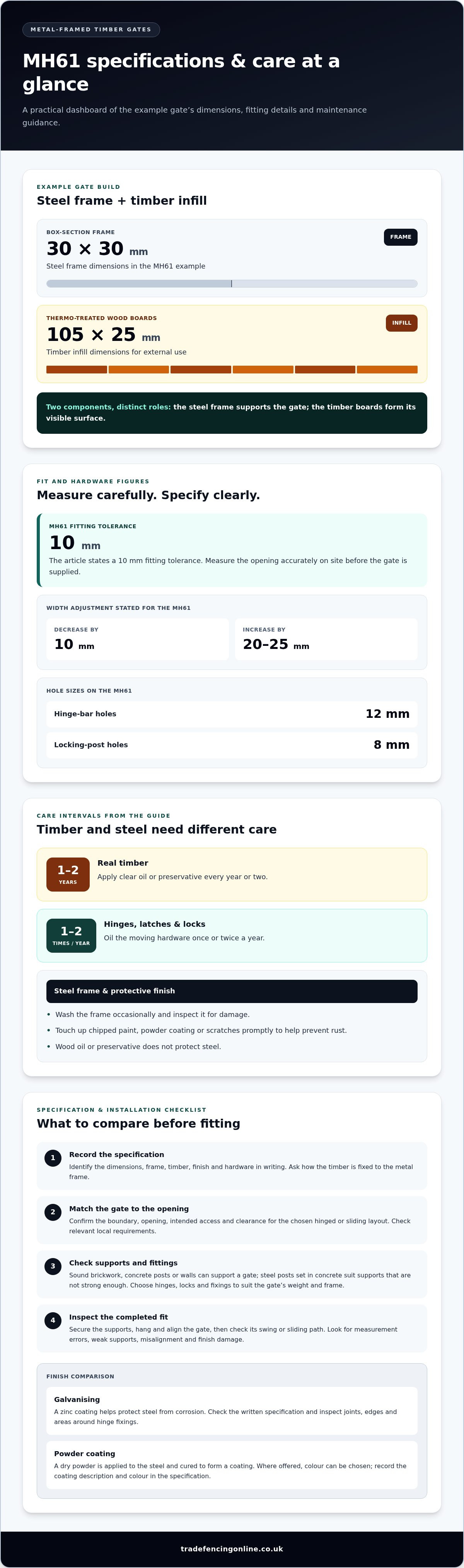
One example is the MH61, with a 30 mm × 30 mm box-section frame and 105 mm × 25 mm thermo-treated wood for external use. Ask how the timber is fixed to the metal gate, which timber is recommended and why. A written specification should identify dimensions, frame, timber, finish and hardware.
Measure the opening accurately on site before the gate is supplied. The MH61 has a 10 mm fitting tolerance; its width can be decreased by 10 mm or increased by 20 to 25 mm. For ongoing care, apply clear oil or preservative to real timber every year or two, and touch up chipped paint or powder coating before rust develops.
Installation, Hinges, Posts and Locks
Start by confirming the opening, supports and fixing positions. Metal-framed gates can attach to sound brickwork, concrete posts or walls; steel posts set in concrete suit supports that aren’t strong enough. Select hinges, locks and fixings to suit the gate’s weight and frame. On the MH61, hinge-bar holes are 12 mm and locking-post holes are 8 mm.
Installation involves securing the supports, hanging and aligning the gate, then checking its swing or sliding path. Common problems include inaccurate measurements, weak supports, misalignment and damaged finishes. Wash the steel frame occasionally and oil the hinges, latches and locks once or twice a year.
Galvanising and powder-coated finishes
A steel frame needs both structural strength and a protective finish. Compare galvanising and powder coating by their purpose, appearance and maintenance needs, then specify your chosen finish in writing.
Galvanised Frame Finishes
Galvanising applies a zinc coating to steel to help protect the frame from corrosion. It can suit driveway gates exposed to rain and changing weather. Look for the finish to be clearly identified in the specification, rather than described only as “treated”. This tells you what protection the metal frame receives.
Inspect joints, edges and areas around hinge fixings, where handling or installation may affect the finish. After fitting, wash the frame occasionally and check for damage. Touch up scratches or chips promptly to help prevent rust. Galvanising protects steel, but the gate still needs regular inspection.
Powder-Coated Finishes and Colours
Powder coating applies a dry powder finish to the steel, which is then cured to form a coating. It provides a finished surface and, where offered, a choice of colour. Compare the finish with the timber infill and the setting, then record the chosen colour and coating description in the written specification.
For either finish, check how the frame will be protected during transport and installation. Damage to the coating can expose steel, so inspect the gate after fitting and touch up chips as part of routine care. Treat the timber separately: oil or preservative intended for wood does not protect steel.
Benefits of combining a steel frame with wooden infill
A steel frame and timber infill serve distinct purposes. The frame provides the supporting structure, while the boards create the visible surface and help screen the opening. For a driveway gate, this combination can define the entrance while giving it a timber appearance that suits nearby fencing.
Compare this combination with an all-wood gate by considering what each material contributes. Timber gives an all-wood design a consistent appearance, while a steel frame adds a separate structural component. In a framed gate, you can choose infill for its appearance and coverage, but its weight and fixing method must suit the frame.
Compared with an all-metal gate, wooden infill offers a different finish and can help the gate complement timber fencing. The trade-off is that real wood needs ongoing care, while the steel frame’s protective coating also needs inspection. Each material has its own maintenance needs. A durable result depends on the frame, infill, fixings and finish working together.
Start with the opening and intended use. A driveway gate, for example, needs enough clearance for its chosen swing or sliding direction, and its supports must suit the complete gate. Then compare timber type, thickness and fixing method. Consider softwood infill in light of its treatment and maintenance needs, not appearance alone. Assess the complete assembly rather than judging steel or timber in isolation.
Romford Fencing: Fence Panels
Romford Fencing Ltd can supply practical fencing materials to complete the boundary around a new gate. Matching fence panels can extend the enclosure, while suitable fence posts provide support and gravel boards create a solid base beneath the panels. Ironmongery can also provide compatible gate fittings.
Plan the gate and adjoining fencing together. Check the opening, boundary line and existing supports, then choose panels and posts that suit the layout. This helps create a consistent finish while accounting for how the gate connects to the rest of the garden boundary.
Browse fence panels to explore options for the surrounding boundary.
Plan Your Gate Project’s Next Step
Before settling on a specification, map out how the gate will work with the surrounding boundary. Consider the access route, the screening you want and how adjoining fencing should meet the entrance. Bringing these decisions together turns a general preference into a practical project brief. A considered plan for metal frame wooden gates also gives you a clear basis for coordinating the gate with the rest of the boundary.
If your project includes adjoining fencing, Romford Fencing supplies fence panels, fence posts and gravel boards to help complete that part of the work. Decide which boundary elements your layout needs, then browse the available options as you move from planning to action.
Take the next step with a clear plan and build a boundary that works for your space. For homeowners looking to align their outdoor entrance features with matching exterior doors and architectural woodwork, specialist suppliers like Arborfield Joinery can help create a cohesive look across the entire property.
Frequently Asked Questions
How much do metal frame wooden gates cost in the UK?
The cost depends on the gate’s dimensions, design, materials, finish and installation requirements. A driveway gate with a wider opening or heavier timber infill may need different framing and hardware from a pedestrian gate. Posts, ground preparation and installation can also affect the total. Compare written quotes and check which components and work each includes.
What are the best materials for a metal gate frame and wooden infill?
Choose materials that suit the gate’s size, use and exposure. Steel forms the frame, while timber determines the infill’s appearance, screening and care needs. For a sheltered garden entrance, appearance may guide your timber choice; at an exposed driveway entrance, weather protection and maintenance are especially relevant. Consider the fixings too, as they connect the infill to the frame.
How do you measure an opening for a metal frame wooden gate?
Measure the clear opening between the actual supports, not an assumed boundary line. Record the width at the top, middle and bottom, and use the narrowest measurement when planning the fit. Measure the height at both sides and note any slopes, uneven ground, hinges and the direction the gate will open. These details help prevent installation clashes.