


Scent repellents and ultrasonic devices are temporary fixes that rarely solve a persistent fox problem. If you're tired of finding fox excrement on your lawn or searching for how to stop foxes getting into garden, you've likely realized that DIY tricks aren't enough. You need a secure perimeter that looks professional and actually works.
This guide explains how to secure your property for good by focusing on high-quality physical barriers and smart garden maintenance. We'll show you why professional fencing, such as closeboard panels and concrete gravel boards, provides the only permanent solution to fox intrusion. You'll discover the exact specifications needed to prevent climbing and digging, ensuring your property remains secure and your sleep stays undisturbed. From choosing the right materials to understanding local height regulations, we provide the straightforward facts you need to reclaim your outdoor space and protect your investment.
Key Takeaways
- Learn why professional perimeter fencing is the only permanent solution for how to stop foxes getting into garden compared to temporary deterrents.
- Discover the specific benefits of closeboard panels and concrete gravel boards in preventing foxes from jumping over or digging under your boundaries.
- Identify common garden attractants, such as food waste and unsecured shelter, that draw scavengers to your property.
- Understand the technical installation requirements, including optimal fence heights and secure post settings, to ensure a long-lasting and fox-proof perimeter.
Securing Your Perimeter: Why Fencing is the Best Fox Deterrent
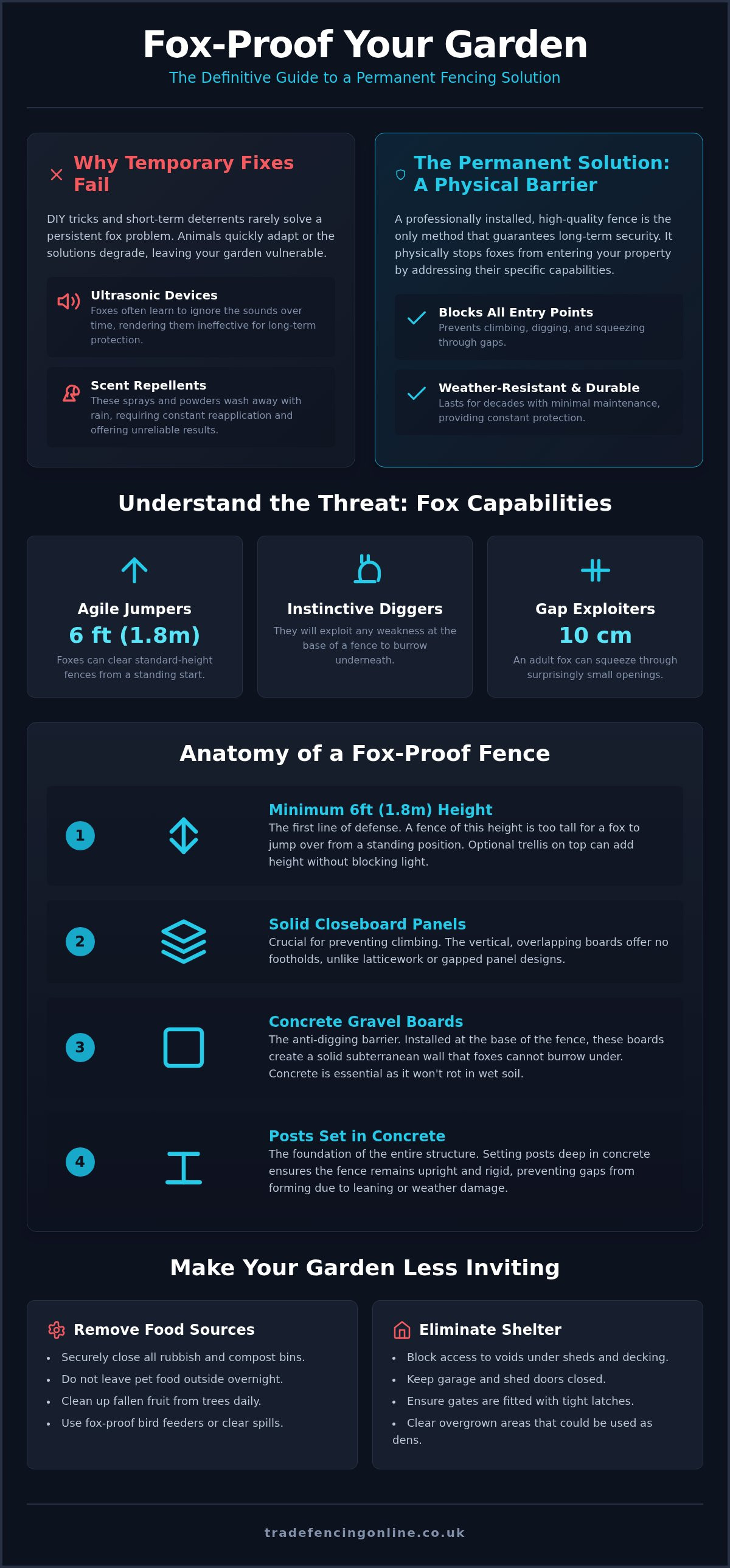
Electronic deterrents often fail. Animals eventually ignore ultrasonic sounds or scent-based sprays, especially after heavy rain. A physical barrier is the only reliable method for how to stop foxes getting into garden. The Red fox (Vulpes vulpes) is surprisingly agile. It can jump heights of up to 6ft (1.8m) from a standing start. This makes height your first line of defence. If your boundary is low, you're essentially leaving the door open.
Panel choice is critical. Solid closeboard fence panels are the sturdiest option available. Unlike open-weave designs, they provide no footholds for a fox to use while climbing. You must also ensure your perimeter is entirely gap-free. These animals can squeeze through openings as small as 10cm. Regular inspections are necessary to maintain a professional standard of protection and ensure you know how to stop foxes getting into garden permanently.
Preventing Digging with Concrete Gravel Boards
Foxes don't just go over; they go under. They are instinctive diggers and will scrape at the earth beneath your fence. Installing gravel boards creates a solid, subterranean barrier. While timber boards exist, concrete is the superior material for this task. It doesn't rot when buried in wet soil. Using concrete ensures your anti-digging measures last for decades rather than years. It creates a professional finish that keeps your lawn secure and your flowerbeds intact.
Removing Attractants: How to Make Your Garden Less Inviting
Foxes are opportunistic scavengers. Understanding fox ecology and behavior reveals that food is their primary motivation for entering human habitats. Unsecured bins, compost heaps, or pet food left outside will guarantee return visits. If you're researching how to stop foxes getting into garden, start by removing these easy meals immediately. Urban foxes in Essex and East London use scent glands to mark their territory, leaving a persistent chemical trail that signals your garden is their property. This habit creates a cycle where the animal feels safe returning. Breaking this cycle requires professional-grade enzyme cleaners to neutralize the biological markers left on your patio or lawn.
Shelter is the second biggest draw. Voids under garden buildings, such as sheds or decking, provide warm, dry den sites. You must check these areas regularly for signs of bedding or digging. Once a fox establishes a den, it's significantly harder to remove them. Use heavy-duty timber or mesh to seal these openings permanently. It's a simple step that prevents your property from becoming a local wildlife hub.
Strategic Garden Maintenance to Deter Pests
Effective garden maintenance reduces the appeal of your space. Fallen fruit from trees and scattered bird feed act as high-calorie magnets for hungry scavengers. Clear these daily to remove the incentive for them to scale your fence. Secure your boundaries by ensuring all gates are fitted with tight-fitting latches. A loose or rattling gate provides an easy point of entry for a determined fox. You can explore our selection of heavy-duty ironmongery to find the right hardware for your gate. Combining clean habits with a secure perimeter is the most effective way to protect your property long-term.
Choosing the Right Fencing Supplies for Long-Term Protection
Structural failure is a common reason why foxes regain access to your property. Weak fence posts eventually lean or rot, creating gaps that animals easily exploit. You must set every post deep in concrete to withstand both British weather and physical pressure. This is a foundational step in understanding how to stop foxes getting into garden for good. A sturdy frame ensures your barrier remains impenetrable for years.
To reach the recommended 1.8m height without making your space feel enclosed, combine solid panels with decorative trellis panels. This adds the necessary vertical barrier while allowing light to pass through your garden. It's a professional way to humanely deter foxes by making the perimeter physically difficult to scale. High-quality ironmongery is also essential; ensure your gates have heavy-duty latches that won't rattle or pop open under force.
Professional Installation Tips for a Fox-Proof Perimeter
Use slotted concrete posts for the most secure, gap-free fit. These posts hold panels firmly in place, removing the small openings that scavengers use to squeeze through. Secure every panel with clips to prevent them from being lifted from the bottom. Before starting your project, consult our Essential Fencing Supplies Checklist. Following a structured plan ensures you don't miss critical components like gravel boards or post mix, resulting in a professional-grade perimeter that keeps your garden secure.
Secure Your Property with Professional Fencing Solutions
Achieving a fox-free environment requires a combination of smart maintenance and robust physical barriers. For pet owners, this also involves managing food and waste carefully—you can learn more about Pets & Friends for products that help keep your pets healthy and their environment clean. Temporary deterrents eventually fail; only a permanent perimeter of closeboard panels and concrete gravel boards provides the security you need. This guide has detailed exactly how to stop foxes getting into garden by removing attractants and selecting trade-grade materials that resist climbing and digging.
As Romford Fencing Ltd, we are a specialist Romford-based supplier providing expert advice and trade-quality materials at domestic prices. Our fast local delivery service covers all of Essex and East London, ensuring you get the supplies needed to finish your project without delay. It's time to protect your lawn and restore your peace of mind.
SHOP NOW
Take the first step toward a cleaner and more secure outdoor space today.
Frequently Asked Questions
How high can a fox jump over a garden fence?
A healthy fox can jump up to 1.8 metres (6 feet) from a standing start. This agility is why low boundaries fail to provide a solution for how to stop foxes getting into garden. We recommend a minimum fence height of 1.8 metres. Using solid panels with additional trellis can help reach this height effectively while keeping your garden looking professional and well-maintained.
Do ultrasonic fox deterrents actually work in the long term?
Ultrasonic devices typically fail in the long term. Foxes are intelligent scavengers and quickly learn that the sound poses no real threat. These devices often lose their effectiveness once the animal becomes habituated to the noise. For a reliable result, focus on physical barriers. High-quality fencing materials provide a consistent deterrent that doesn't rely on sensors, weather conditions, or battery life.
Is it legal to use deterrents to stop foxes in my garden?
It is legal to use humane deterrents in the UK. You must ensure no unnecessary suffering is caused to the animal. For most residential properties, you can install fencing up to 2 metres high without planning permission, provided it isn't adjacent to a highway. This provides a lawful and effective way to secure your garden. Always check with your local council for specific regional restrictions.
What is the best type of fence panel to stop foxes climbing?
Closeboard panels are the superior choice for deterring climbers. Their solid construction and vertical timber slats offer very few footholds compared to open-style fencing. This makes it significantly harder for a fox to gain the grip needed to scale the boundary. When you pair these panels with concrete gravel boards, you create a professional, gap-free perimeter for how to stop foxes getting into garden permanently.