


The "good" side of a fence shouldn't actually exist. Most homeowners dread the "back" of a standard fence panel with its exposed rails and posts. It often ruins the view from one side and can even spark boundary disputes. Learning how to make a fence look good from both sides is the best way to ensure a professional, symmetrical finish that adds value to both properties.
We understand you want trade-quality results without the high costs of custom double-boarding. This guide reveals the best "good neighbour" styles, such as hit-and-miss or double-slatted panels, that provide identical aesthetics from every angle. You'll discover how to use concrete posts and gravel boards to create a maintenance-free boundary that looks clean and consistent. We also cover installation tricks to keep your garden looking its best while maintaining total privacy.
Key Takeaways
- Select hit-and-miss or double-slatted panels to achieve a symmetrical design that looks the same from both properties.
- Install slotted concrete posts and gravel boards for a clean, flush finish that avoids the bulky appearance of traditional wooden rails.
- Discover how to make a fence look good from both sides by retrofitting existing panels with timber cladding or uniform dark staining.
- Prioritise trade-quality materials to boost property value and eliminate common boundary disputes regarding the "good" side of the fence.
Choosing the Best Fence Panels for a Symmetrical Look
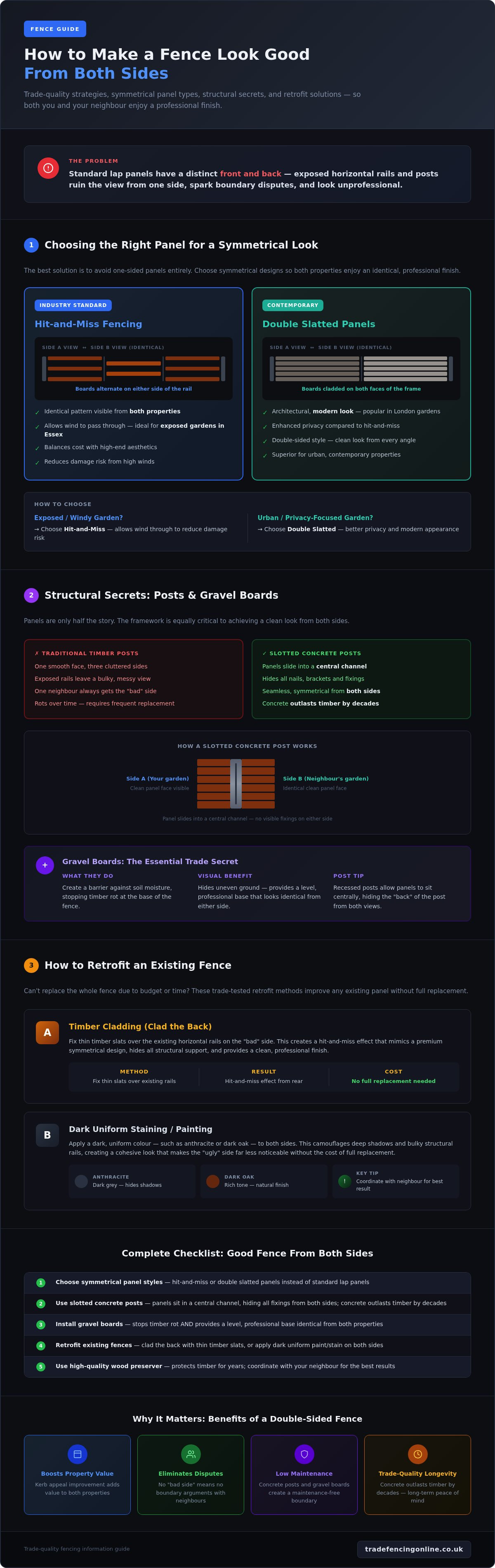
Standard lap panels are a frequent source of tension between neighbours. These panels have a distinct front and back because of the horizontal rails required for support. If you're wondering how to make a fence look good from both sides, the best approach is to avoid one-sided panels entirely. Choosing symmetrical designs ensures both properties enjoy a professional finish without exposed structural timber.
Hit-and-miss fencing is the industry standard for a "good neighbour" boundary. This design features boards that alternate on either side of the rails. It creates an identical pattern for both you and your neighbour. It's a pragmatic choice that balances cost with high-end aesthetics and structural integrity.
If you prefer the strength of traditional closeboard fence panels, you can still achieve a better look from the rear. Use high-quality arris rails and ensure uniform spacing between every post to create a cleaner visual line. This method is common in trade-level installations to maintain a professional standard across the entire perimeter.
Hit-and-Miss vs. Double Slatted Panels
Selecting the right style depends on your local environment. Hit-and-miss panels allow wind to pass through the gaps. This makes them the ideal choice for exposed gardens in Essex where high winds can easily damage solid barriers. For contemporary London gardens, double slatted panels are often superior. They provide an architectural, modern look with enhanced privacy. You can explore our range of decorative fence panels to find double-sided styles that fit your property. Understanding the different types of fencing and their construction helps you make a durable investment that satisfies both parties.
Structural Secrets: Posts and Gravel Boards for Both Sides
Panels are only half the story. If you want to know how to make a fence look good from both sides, you must consider the framework. Traditional timber posts usually feature one smooth face and three sides where rails are attached. This leaves one neighbour with a bulky, cluttered view. Slotted concrete posts solve this problem. They allow panels to sit flush within the post itself, creating a seamless transition that boosts kerb appeal for both homes.
Adding gravel boards is another essential trade secret. While their main job is to stop timber rot by creating a barrier against soil moisture, they also improve the visual line. A level concrete or timber base hides uneven ground. It provides a professional foundation that looks identical from either property. Recessed posts allow the panels to sit centrally, which effectively hides the "back" of the post from view.
The Benefits of Slotted Concrete Posts
Using slotted concrete posts ensures a symmetrical installation. Panels slide directly into a central channel. This design hides all nails and brackets. You won't see any messy fixings on either side of the boundary. Concrete also outlasts timber by decades, providing long-term peace of mind. It's a critical component when researching how to make a fence look good from both sides. To achieve this high-end finish, you can shop concrete fence posts and upgrade your garden boundary today. For a complete solution, browse our full range of trade-quality fencing supplies.
How to Retrofit an Existing Fence to Look Better
Replacing an entire boundary isn't always possible due to budget or time constraints. If you are currently stuck with the "rail side" of a panel, you can still learn how to make a fence look good from both sides through simple retrofitting. One effective method is to "clad" the back of the panel. By fixing thin timber slats over the existing horizontal rails, you create a hit-and-miss effect that mimics a premium symmetrical design. This hides the structural support and provides a clean, professional finish for your garden.
Painting is another pragmatic solution for an unattractive fence. Applying a dark, uniform colour like anthracite or dark oak to both sides camouflages deep shadows and bulky structural rails. This creates a cohesive look that makes the "ugly" side far less noticeable. It's an efficient way to boost kerb appeal and property value without the cost of a full replacement. Ensure you use high-quality wood preserver to protect the timber for years to come. Coordinate with your neighbour for the best results.
Adding Decorative Trellis and Uniform Finishes
Adding a trellis topper is a cost-effective way to improve the look of a plain fence from both sides. You can securely fix trellis to the top of an existing panel using specialised ironmongery clips. This adds height and decorative interest that looks identical from both properties. For a professional finish, use the same brand of paint or stain as your neighbour. This ensures the boundary looks like a single installation rather than mismatched halves. You can refer to our Complete Guide to Choosing Fence Panels for more on using toppers. Choosing the right ironmongery is essential for a secure, long-lasting finish that survives high winds.
Upgrade Your Boundary with Professional Fencing
Achieving a symmetrical finish is the best way to maintain peace with neighbours while enhancing your garden's aesthetic. By choosing hit-and-miss or double slatted panels, you ensure both sides of the boundary look identical and professional. Structural choices like slotted concrete posts and gravel boards further eliminate the "ugly" side of the fence by hiding messy fixings and rails. Learning how to make a fence look good from both sides is a smart investment that boosts kerb appeal and long-term property value. If you value this same high-end craftsmanship for your interior design, Chicsense offers premium wooden room dividers that provide a seamless look from any perspective.
SHOP NOWWe provide trade-grade fencing materials directly to the public with fast local delivery in Romford, Essex, and East London. Our local specialists are always available to provide expert advice for your project. Choose a solution that looks great from every angle and enjoy a maintenance-free boundary.
SHOP NOW
Your garden deserves a high-quality finish that lasts for years to come.
Frequently Asked Questions
Which fence panel looks the same on both sides?
Hit-and-miss and double slatted panels are the best choices for a symmetrical look. Hit-and-miss panels feature boards alternated on either side of the rails, which allows wind to pass through easily. Double slatted panels provide a modern, architectural finish that remains identical from every angle. Both styles are effective solutions for anyone researching how to make a fence look good from both sides.
Is it a legal requirement to give the neighbour the 'good' side of the fence?
No, there is no legal requirement in the UK to face the "good" side of a fence towards your neighbour. This is a common convention rather than a law. However, property deeds may occasionally specify boundary responsibilities. Installing a "good neighbour" fence removes this dilemma entirely. It ensures a professional finish for both properties and prevents common disputes over unsightly structural rails.
How can I hide the rails on my side of the fence?
You can hide exposed rails by cladding the back of your fence with additional timber slats. This creates a hit-and-miss effect that masks the structural framework. Alternatively, painting the entire fence in a dark, uniform colour like anthracite helps rails blend into the shadows. Adding a trellis topper is another practical way to draw the eye upward and improve the overall visual line for both properties.
Do double-sided fence panels cost more than standard panels?
Double-sided panels generally carry a higher price point because they require more timber and labour to manufacture. While the initial investment is higher, they offer superior value through increased property kerb appeal and better structural integrity. We provide trade-grade materials to the public, ensuring you get the best possible price for premium "good neighbour" fencing across Romford, Essex, and East London.