


You don't need to tear down a perfectly good fence line just to add a new point of entry. It's natural to worry that cutting into a timber panel will cause the entire structure to sag or collapse over time. Modifying your current materials is a smart, budget-friendly way to upgrade your garden's functionality without the cost of a full replacement. This guide provides the professional method to integrate a secure access gate directly into your existing fence while maintaining total structural integrity.
We'll walk you through the essential reinforcement steps and clarify UK planning rules regarding gate heights to ensure your project stays legal. You'll also find a detailed garden gate furniture guide to help you choose the correct trade-quality ironmongery for timber-on-timber mounting. By following these trade techniques, you can achieve a seamless, secure result that looks like it was installed by a pro.
Key Takeaways
- Learn how to create a space-saving access point by integrating a gate directly into your fence line without weakening the existing timber structure.
- Master the professional measurement technique, including the essential 10-15mm clearance required for smooth hinge and latch operation.
- Consult our garden gate furniture guide to select heavy-duty ironmongery that prevents gate drop and maintains panel alignment.
- Prioritize garden security by installing professional-grade bolts and latches designed to deter intruders while providing easy side access.
Planning Your Garden Access: Can You Put a Gate in a Fence Panel?
Integrating a gate directly into a fence panel is an efficient way to create access without the need for standalone gate posts. It's a method that saves space and reduces overall costs. However, cutting into standard fence panels immediately compromises their structural integrity. Most panels rely on a perimeter frame for strength; once severed, the timber can sag or warp. You must provide internal reinforcement to ensure the modified section remains secure and functional.
When researching Types of garden gates, you'll see that pedestrian access points require rigid framing to handle daily use. In the UK climate, any cut edges must be treated with a wood preservative immediately. Raw, untreated timber absorbs moisture rapidly, leading to rot and the premature failure of the gate structure.
Choosing the Right Materials for Your Project
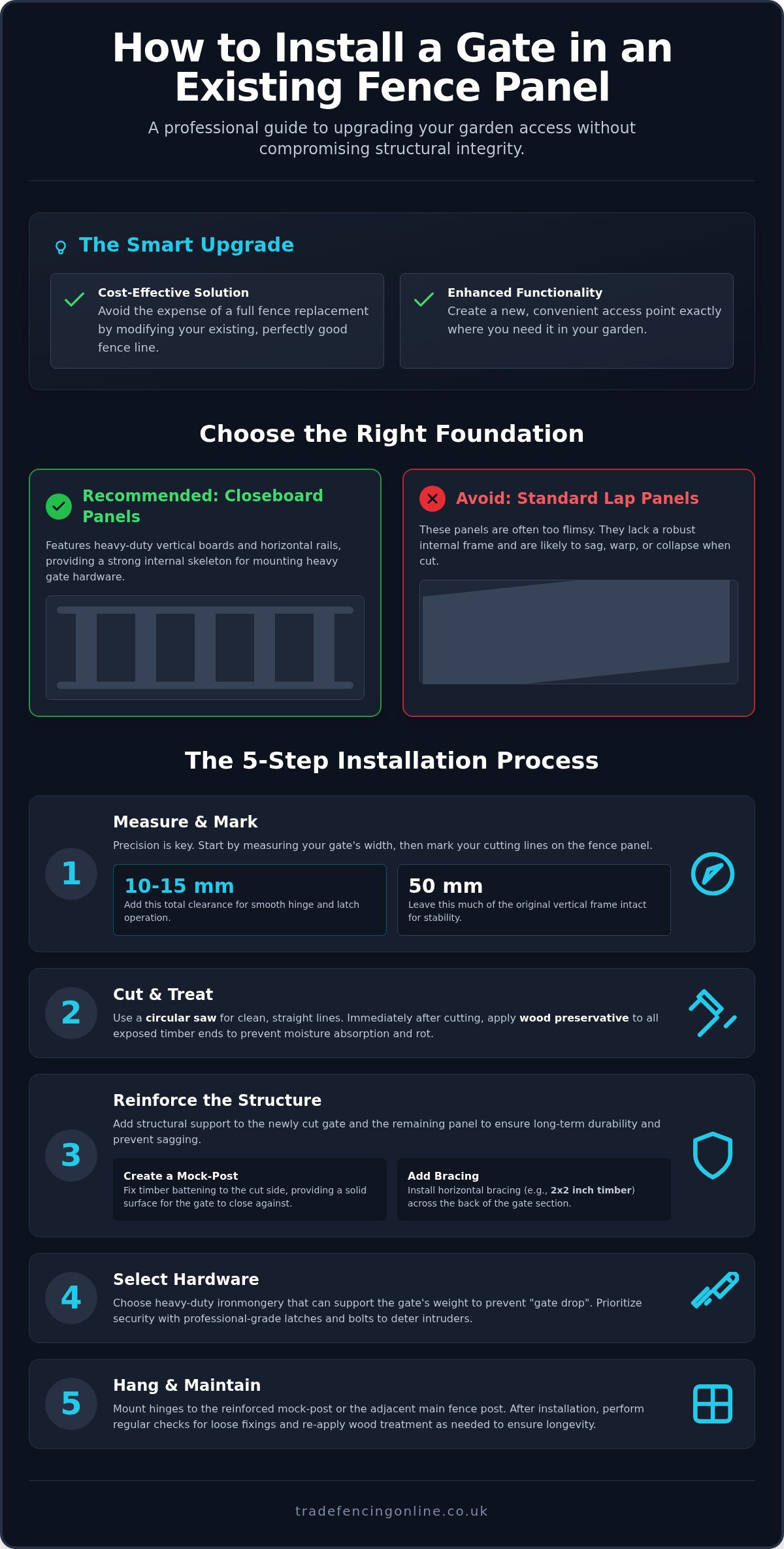
Not all fencing is suitable for modification. Standard lap panels are often too flimsy for gate integration because they lack a robust internal skeleton. For professional results, use closeboard fence panels. These feature heavy-duty vertical featheredge boards and horizontal rails, providing a strong foundation for mounting ironmongery. This garden gate furniture guide recommends these materials to prevent the gate from pulling the rest of the fence out of alignment.
Don't ignore consistency when matching the gate style to your existing garden fencing. This ensures the expansion and contraction rates of the wood are similar across the entire line. Referencing a garden gate furniture guide will help you select hinges and latches compatible with the specific timber thickness of your chosen panel.
How to Install a Gate in a Fence Panel: Step-by-Step
Precision measurement is the foundation of a successful installation. Start by measuring the exact width of your gate. You must add 10-15mm of total clearance to this figure. This gap ensures the hinges and latch mechanism operate smoothly without binding against the timber. Mark your cutting lines on the panel face. Always ensure you leave at least 50mm of the original vertical frame intact to preserve the panel's basic stability during the modification process.
Cutting the panel creates a structural weak point that requires immediate attention. Reinforce the "cut" side by fixing additional timber battening to the interior. This creates a sturdy mock-post for the gate to strike against. When you are ready to hang the gate, mount the hinges to this reinforced section or directly into the adjacent fence posts for the most secure fit. Using a professional garden gate furniture guide ensures you select hardware that can support the weight of the modified panel without sagging.
Cutting and Reinforcing the Panel Frame
Achieving clean lines requires a circular saw. Ragged cuts allow moisture to penetrate the wood grain, which leads to premature failure. Treat every exposed timber end with wood preservative immediately to prevent rot. You must also install horizontal bracing across the back of the panel to prevent sagging. The secret to a long-lasting gate in a panel is the use of 2x2 inch timber for internal framing. For the best results, source heavy-duty gates that match your panel profile.
Essential Hardware and Maintenance for Security
Selecting the right ironmongery ensures the gate functions without damaging the modified fence. You must choose hardware that matches the weight of the timber to prevent "gate drop". When a gate sags, it pulls the entire panel frame out of alignment, creating gaps and sticking points. Prioritize security for side garden access by installing heavy-duty latches and bolts. These act as a significant deterrent to intruders and provide peace of mind for homeowners in urban environments.
Gardens in Essex and East London are often exposed to high winds that put extra stress on modified structures. Check your panels regularly for any signs of movement, loose fixings, or timber fatigue. Maintain the wood with high-quality treatments that match your gravel boards. Consistent application of wood preservative prevents the timber from drying out and splitting under the constant tension of the ironmongery.
Selecting the Best Ironmongery for Longevity
Adjustable band and hook hinges are the professional choice for this project. Unlike standard T-hinges, they allow for fine-tuned adjustments if the timber shifts or settles over time. This garden gate furniture guide recommends these for any gate integrated directly into a panel frame to ensure long-term functionality. You should also install a gate stop on the strike post. This simple component prevents the gate from swinging through the frame, which protects the modified panel from impact damage during heavy use or sudden gusts of wind.
Secure Your Garden Access Today
Modifying a fence panel is the most efficient way to add a pedestrian entry point without the expense of a full replacement. Success depends on proper internal reinforcement and precise measurements. By following the technical steps for framing and using our garden gate furniture guide to select the right ironmongery, you'll ensure your new gate remains level and secure. Professional results are achievable when you prioritize structural stability and trade-grade components.
As Romford's leading supplier, Romford Fencing Ltd provides trade-quality materials at DIY prices. Rely on our expert advice and fast local delivery across Essex and East London to keep your project on track. We stock the heavy-duty panels and hardware required for a professional finish.
Frequently Asked Questions
Do I need a special type of fence panel for a gate integration?
You should use heavy-duty closeboard fence panels for successful gate integration. Standard lap panels lack the internal framing required to support the weight of a moving gate and the necessary ironmongery. Closeboard panels provide a rigid structure that you can reinforce with additional timber battens. This ensures the gate doesn't sag or cause the rest of the fence line to warp.
How much clearance should I leave between the gate and the panel?
You must leave a total clearance of 10-15mm between the gate and the modified panel frame. This spacing allows for the thickness of the hinges and the smooth operation of the latch mechanism. Without this gap, the timber will bind during wet weather when the wood naturally expands. Proper clearance is a key recommendation in any professional garden gate furniture guide to ensure long-term functionality.
Can I install a gate in a panel if I have concrete fence posts?
You can install a gate in a panel between concrete posts by using a timber wall plate or mock-post system. You don't drill directly into concrete posts to mount hinges as this risks structural cracks. Instead, secure a timber batten to the reinforced panel frame. This is a common requirement for Essex and East London gardens where slotted concrete posts are standard for durability.
What tools do I need to cut a gate into an existing fence?
You need a circular saw to ensure clean, straight lines when cutting the fence panel. A power drill is essential for mounting the internal reinforcement battens and the gate hardware. You also require a tape measure for precise clearance calculations and a brush to apply wood preservative to all cut edges. Consult a garden gate furniture guide to ensure you have the correct drill bits.