


The cheapest fence panel often ends up being the most expensive choice after the first winter storm hits Essex. You want a boundary that stays standing when the wind picks up and keeps the neighbours' prying eyes out. It's frustrating to see gaps appear or panels rattle in their frames just a few years after installation. Deciding on closeboard vs lap fence panels isn't just about the initial price; it's about how many times you want to replace your garden perimeter over the next decade.
This guide breaks down the critical differences in durability, privacy, and professional finish. You'll learn why heavy-duty featheredge boards offer superior strength and whether the cost savings of overlap panels suit your specific project. We'll clarify the terminology around arris rails and framing so you can invest in a sturdy fence that lasts 15 years or more.
Key Takeaways
- Understand the structural differences between closeboard vs lap fence panels to choose the right resistance against high winds.
- Evaluate the long-term cost benefits of investing in heavy-duty featheredge timber compared to budget-friendly horizontal slats.
- Discover why professional-grade panels provide superior privacy by preventing the gaps and warping common in standard retail alternatives.
- Learn how to achieve a 15-year lifespan for your garden boundary by selecting trade-quality materials over DIY-store products.
Comparing Closeboard and Lap Fence Panels: Construction & Design
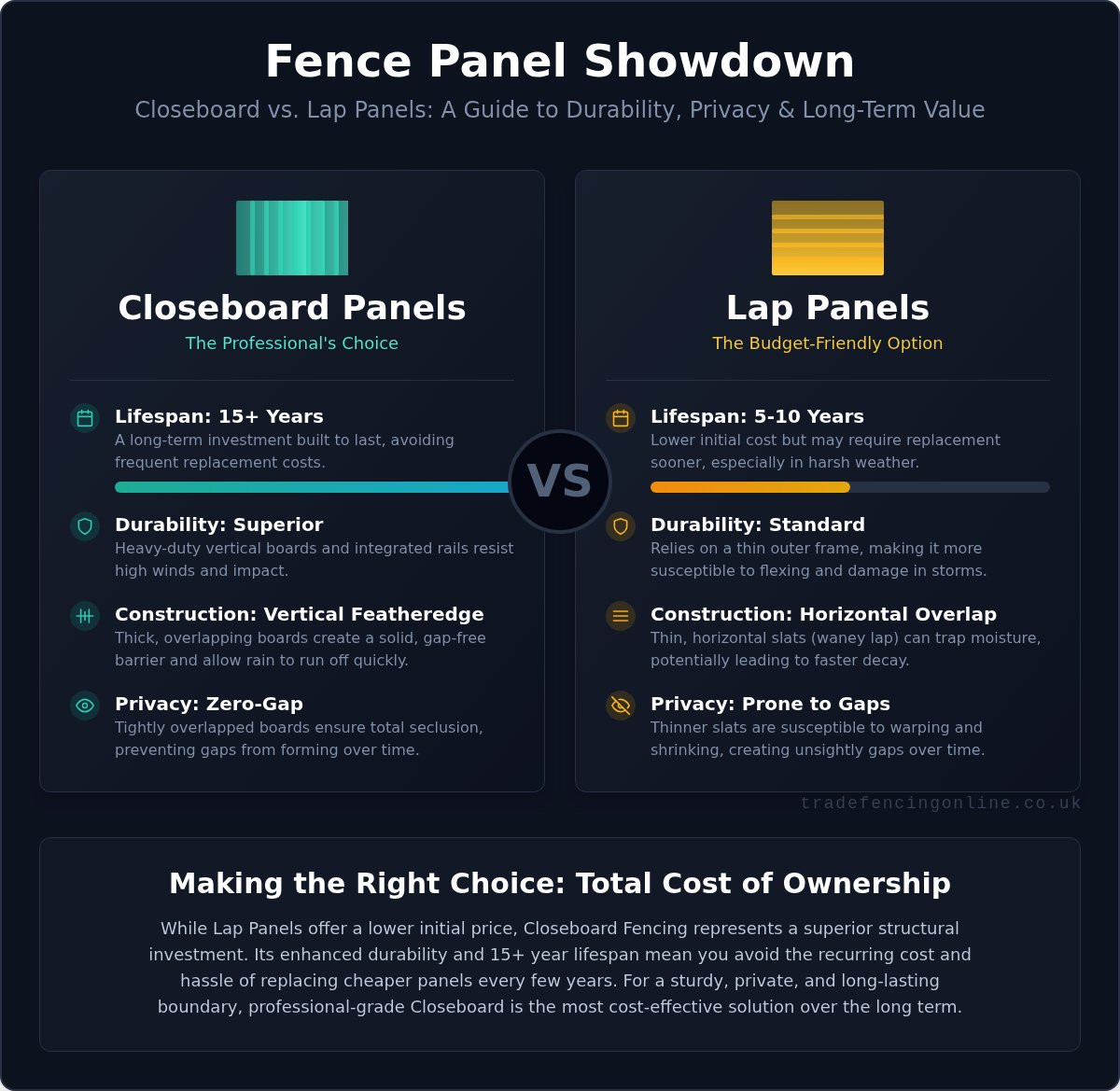
Choosing between closeboard vs lap fence panels starts with understanding their structural DNA. Lap panels, often called waney lap, use thin horizontal slats overlapping within a timber frame. They're the standard budget option for residential boundaries. Closeboard fencing uses thick vertical featheredge boards. These overlap to create a solid, heavy-duty barrier that withstands much higher pressure. When comparing closeboard vs lap fence panels, the vertical design is almost always the more robust choice for longevity. While both styles come in standard 6ft widths, Close boarded fencing is more versatile. You can buy it as pre-assembled panels for speed or build it in-situ using individual rails and boards.
Pressure treatment is vital for both types. This process forces preservative deep into the wood to stop rot. Without it, your investment won't last five years in wet soil. Professional-grade timber from a specialist supplier always beats the thin, dipped alternatives found in big-box DIY stores. Buying trade-quality materials ensures your boundary remains structural rather than just decorative.
Vertical vs Horizontal: How Design Affects Strength
The orientation of the boards dictates how the fence handles the weather. Vertical boards allow rain to run off quickly. Horizontal lap slats can trap water in the overlaps, which encourages decay over time. Strength is also about the framing. A lap panel relies on a thin outer frame that acts as a weak point in high winds. Closeboard panels are built with integrated horizontal rails, providing a rigid backbone that doesn't flex or snap easily. This makes them the superior choice for exposed gardens.
- Lap Panels: Economical, horizontal overlap, framed design.
- Closeboard Panels: Heavy-duty, vertical featheredge, superior runoff.
- Installation: Panels offer speed; in-situ builds offer custom strength.
Durability and Privacy: Which Panel Lasts Longer?
Lifespan is the primary differentiator when comparing closeboard vs lap fence panels. A standard lap panel typically serves its purpose for 5 to 10 years before the horizontal slats begin to degrade. In contrast, heavy-duty closeboard fence panels can easily last over 15 years with basic maintenance. This longevity makes them a more reliable investment for long-term property boundaries. While lap panels are lighter and easier for one person to handle during installation, they lack the robust physical presence of a solid timber barrier.
Privacy also varies between these designs. Lap panels are built with thin slats that are prone to drying and warping over time. As the wood moves, unsightly gaps often appear between the boards. Closeboard fencing provides "zero-gap" privacy. The thick, vertical featheredge boards are overlapped tightly. This ensures your garden remains completely hidden from neighbours regardless of the weather. It's a professional solution for those who value total seclusion.
Wind Resistance and Security Considerations
For gardens in exposed areas of Essex and East London, wind resistance is non-negotiable. When choosing closeboard vs lap fence panels for these conditions, closeboard is the superior choice. Its thickness and integrated rails prevent the rattling and snapping common with thinner alternatives. Security is another factor. The solid construction of closeboard is much harder to break through or kick in than thin lap slats. It provides a formidable deterrent for any property. You can view our full range of supplies to find the right materials for your project.
Installation and Long-Term Value: Making Your Choice
The financial logic of closeboard vs lap fence panels comes down to the total cost of ownership. Lap panels offer a low entry price, but they often require replacing every 5 to 7 years in exposed UK gardens. Closeboard fencing represents a structural investment that pays for itself by avoiding these frequent and expensive replacement cycles. When you buy from a trade specialist like Trade Fencing Online, you get thicker timber than standard DIY store offerings. This professional-grade material ensures your boundary stays upright when cheaper alternatives fail. We provide these high-quality supplies to both trade contractors and the public across Romford and the wider Essex area.
Maintenance is the key to protecting your investment. Apply a high-quality wood preserver every two years to keep the timber supple and water-resistant. This prevents the drying and cracking that leads to panels rattling in their frames. If you're still weighing up different styles, our A Complete Guide to Choosing Fence Panels offers more detailed industry insights to help you decide.
Extending Lifespan with Concrete Posts and Gravel Boards
Ground moisture is the primary cause of timber rot. Installing concrete gravel boards is the most effective way to stop decay before it starts. By lifting the wooden panel off the wet earth, you significantly extend its service life. You also need to choose the right support system. Concrete posts offer unmatched durability and a "fit and forget" solution for homeowners. While wooden posts provide a traditional aesthetic, they won't match the decades of service provided by concrete. We stock all the necessary postmix and ironmongery to complete your project professionally.
Secure Your Garden Boundary Today
Choosing between closeboard vs lap fence panels depends on your specific requirements for durability and budget. If you need a robust, long-term barrier that stands up to high winds and provides total privacy, heavy-duty closeboard is the professional choice. For those seeking a standard, cost-effective perimeter, lap panels remain a reliable and popular option. Trade Fencing Online stocks a full range of trade-quality panels, concrete posts, and gravel boards built to survive the UK weather. We provide fast local delivery across Romford, Essex, and East London to ensure your project stays on schedule. You don't have to settle for flimsy retail alternatives when trade-grade timber is available at competitive prices.
Invest in quality materials today and enjoy a secure, professional finish for your garden for years to come.
Frequently Asked Questions
Is closeboard fencing the same as featheredge?
Yes, closeboard fencing and featheredge refer to the same construction method. The panels are made from vertical, overlapping boards that are thicker on one side. This creates a solid, heavy-duty barrier that offers better privacy than horizontal slats. It's the industry-standard choice for professional installations where strength is the priority. Most trade experts use these terms interchangeably when discussing high-quality timber boundaries.
Can I use lap panels with concrete posts?
You can certainly use lap panels with slotted concrete posts. The panels are designed to slide easily into the grooves, providing a secure fit. This combination is a smart way to balance the durability of concrete supports with a budget-friendly timber choice. We always recommend adding a concrete gravel board to keep the wooden panel off the damp ground and extend its lifespan.
Which fence is better for high winds, lap or closeboard?
Closeboard is the superior choice for high-wind areas. Its vertical featheredge design and integrated horizontal rails provide a much stiffer structure than the thin slats found in lap panels. In exposed parts of East London and Essex, lap panels often rattle or break during winter storms. Investing in the heavier construction of closeboard ensures your boundary stays standing through the harshest UK weather. Just as heavy-duty fencing protects your garden, your roofline requires similar durability; you can check out Archers Roofing Services Ltd for robust guttering and fascia options that withstand the elements.