


The sunniest day in July is actually the worst time to start your fencing project. Most homeowners wait for the spring rush, only to find installers are fully booked and material prices are at their peak. You've likely experienced the frustration of trying to find a reliable contractor while everyone else is doing the same. This usually results in higher labour rates and long delays. It's a common mistake that leads to rushed jobs and compromised garden space during the months you want to use it most.
This guide identifies the best time of year to install a fence uk to ensure structural stability and help you avoid the seasonal price hikes. We'll show you how to secure a sturdy fence that lasts 15+ years while keeping your garden intact. You'll discover the strategic advantages of timing your installation to get fair pricing on quality materials and minimal disruption to your home. We'll break down the seasonal trends so you can book your project with confidence and get the best value for your money.
Key Takeaways
- Identify why late autumn is the professional "Golden Window" for balancing ideal weather conditions with better installer availability.
- Discover the best time of year to install a fence uk to ensure ground moisture levels are optimal for structural stability and Postcrete setting.
- Learn how to avoid the "Storm Premium" and high seasonal lead times by timing your purchase before the peak demand hits.
- Understand how the British climate affects timber behaviour and why pressure-treated panels are essential for a long-lasting garden boundary.
- Use our expert checklist to evaluate your garden's current condition and decide if you should install now or wait for a more cost-effective window.
The UK Fencing Calendar: A Seasonal Breakdown of Pros and Cons
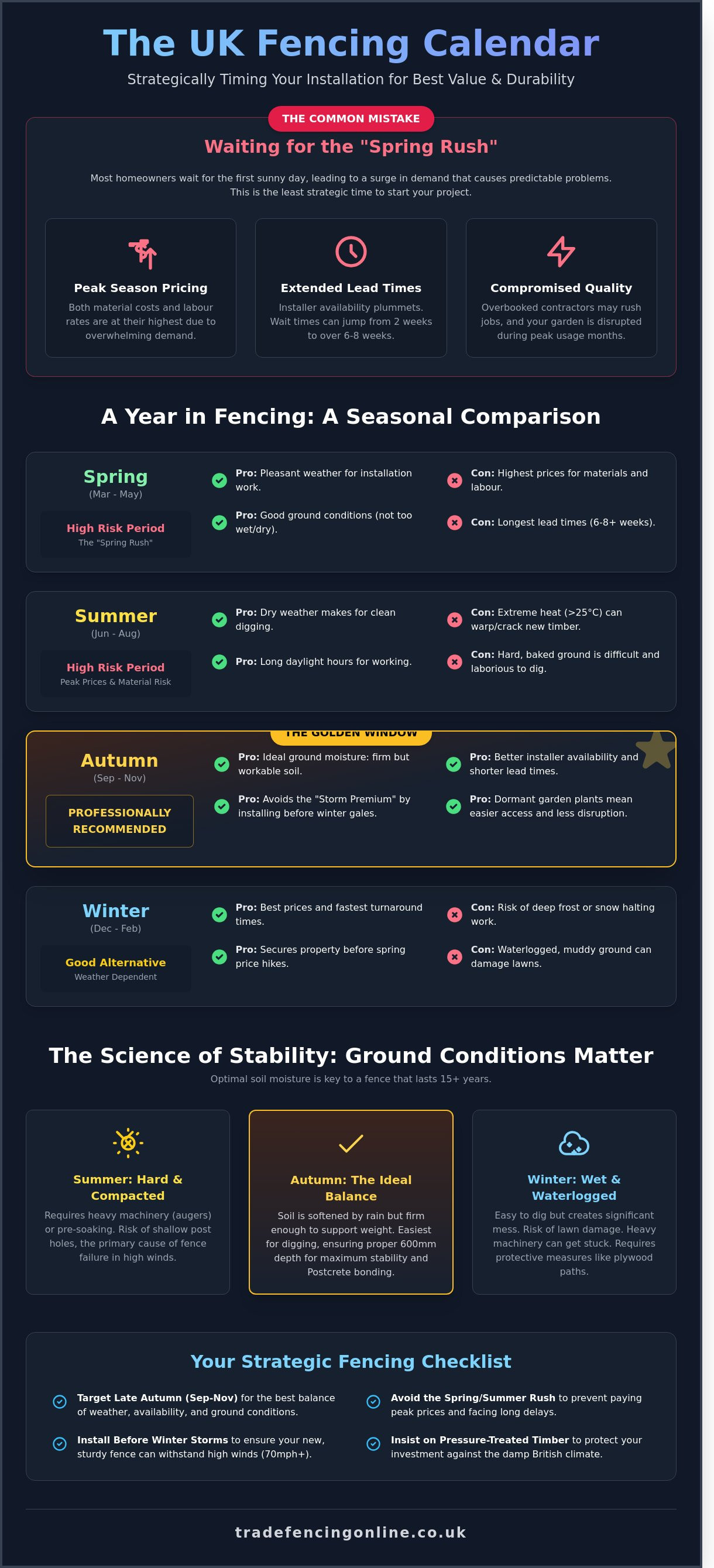
Choosing the best time of year to install a fence uk depends on balancing weather conditions with contractor availability. British weather is unpredictable. Most homeowners wait until the first sight of sun in April to book a fencer. This creates the "Spring Rush." By May, lead times for professional installers often jump from two weeks to over six weeks. If you wait for the warm weather, you will likely pay peak season prices and face limited scheduling options.
Ground conditions change significantly across the four quarters of the year. Winter brings waterlogged soil that makes heavy machinery difficult to use. Summer bakes the clay hard, requiring more labour to dig post holes. Autumn offers a practical middle ground. You must also consider the availability of different types of fencing materials, as stock levels for popular pressure-treated panels often dip during high-demand months like May and June.
Spring and Summer: The Peak Season Reality
Dry weather is the main reason DIYers and professionals prefer this window. Digging post holes is cleaner when the ground isn't a mud bath. However, peak demand is a major downside. Expect higher labour costs and limited slots. Extreme summer heat also poses a risk to your investment. If temperatures exceed 25°C, new timber panels can dry too quickly. This leads to splitting, cracking, or warping. Always check the forecast before scheduling a July installation to ensure your timber stays stable.
Autumn and Winter: The Strategic Off-Peak Window
Identify the best time of year to install a fence uk by looking at the months between October and February. Installing a fence during this period is a smart move. You beat the inevitable UK winter storms that often reach speeds of 70mph or higher. A new, sturdy fence survives these gusts better than an old, rotting one. Autumn is ideal because garden plants are dormant. You can clear the boundary line without killing your prize roses or established hedges. Access is easier when vegetation has died back.
Don't believe the myth that you can't install fencing in the cold. Professional teams work through everything except deep frost or heavy snow. Concrete still sets in low temperatures if you use the right additives or rapid-set products. Booking in winter usually secures you a faster turnaround. Local contractors are often looking for work during these months, which can lead to more competitive quotes and better service. Secure your property before the spring price hikes arrive.
Ground Conditions and Structural Integrity: The Science of Stability
Ground stability determines whether your fence stays upright for 15 years or starts leaning after two. Soil moisture levels dictate how easily you can dig and how effectively Postcrete bonds to the surrounding earth. In the UK, soil types vary significantly by region. Essex clay is notorious for high plasticity, meaning it shrinks during dry spells and expands when wet. This movement can create 20mm gaps around post bases, compromising stability. London urban soil is often "made ground," containing rubble and old foundations that require heavy-duty breakers rather than standard spades.
The best time of year to install a fence uk depends heavily on these geological factors. You need soil that is firm enough to support a post but yielding enough to allow for a 600mm deep hole. Before you start any excavation, ensure you are compliant with UK planning permission rules regarding height and boundary positions. Understanding your local ground condition is the first step toward a professional installation.
Working with Hardened Summer Soil vs. Winter Mud
Summer heatwaves turn UK gardens into concrete. Digging in August often requires a petrol-powered auger or soaking the target area with water 24 hours before you start. Compacted, dry ground is physically demanding and can lead to shallow holes, which is the primary cause of fence failure during autumn gales. Conversely, winter installations face the challenge of "the mess." Wet soil is easily churned into mud, which can ruin a lawn. Use 12mm plywood sheets to create a temporary path for moving heavy panels and bags of Postcrete. Autumn provides the ideal middle ground. The soil retains enough moisture from early rain to be workable, but remains firm enough to support the weight of the installer without creating 50mm deep ruts in the grass.
The Impact of Frost and Frozen Ground
Ground is considered too frozen to work when the frost line exceeds 100mm. Digging becomes nearly impossible with manual tools, and Postcrete may not cure correctly if the water in the mix freezes. Frost heave is a genuine risk for shallow posts. This occurs when water in the soil freezes, expands, and pushes the post upward. To prevent this, always dig to a minimum depth of 600mm. This ensures the base of the post sits below the typical UK frost line. Using high-quality concrete posts is a smart move for high-moisture seasons, as they don't absorb water or rot when the ground stays saturated for four months of the year. You can find durable gravel boards and posts designed to withstand these harsh seasonal shifts.
Protecting Your Investment: How Seasonality Affects Fencing Materials
Choosing the best time of year to install a fence uk requires a clear understanding of how British weather impacts your materials. Timber is a natural, hygroscopic product. It constantly reacts to the environment by absorbing or releasing moisture. In the UK, where relative humidity often exceeds 80% during winter, timber panels will expand. If you don't account for this movement during installation, you risk structural damage as the seasons shift.
Pressure-treated timber is essential for any UK project regardless of the month you choose. Pressure treatment is the process of forcing preservative chemicals deep into the wood grain using a high-pressure vacuum to provide long-term protection against fungal decay and insect attack. Even with this protection, your project logistics matter. Don't leave delivered materials flat on wet grass for more than 48 hours. This causes uneven moisture absorption, leading to panels bowing before they are even fixed to posts. Stack materials on pallets and keep them covered if your installation is delayed by a sudden downpour.
Timber Panels: Managing Expansion and Contraction
Installing timber in a wet British winter requires precision. You must leave a 2mm gap between the panel and the post to allow for natural swelling. Without this tolerance, the wood will have no room to move, causing the panels to buckle or pop out of their fixings when the wood expands. Summer installations face the opposite challenge. Direct sun causes timber to dry too quickly, which leads to "checking" or splitting as the outer layers shrink faster than the core. Following a professional guide to fence installation ensures you set your posts and panels with these seasonal tolerances in mind. Getting the timing right is the best time of year to install a fence uk for long-term durability.
Why Concrete and Metal Options are Year-Round Winners
Concrete and metal components offer a pragmatic solution for year-round installation because they are unaffected by soil moisture levels. Concrete posts won't rot at the ground line, which is where 90% of timber post failures occur. Gravel boards are equally vital. They act as a physical barrier between the damp earth and the bottom of your fence panels.
- Concrete Posts: These provide 20 plus years of structural stability and don't require maintenance after a wet winter.
- Gravel Boards: These keep your timber panels at least 150mm clear of the wet ground, preventing "wicking" where moisture travels up the wood grain.
- Metal Systems: Modern systems like DuraPost are tested against wind speeds up to 110mph, making them ideal for winter installs in exposed areas.
Your maintenance schedule should reflect the installation season. If you finish your fence in the spring, apply a UV-resistant treatment by June to stop the sun from bleaching the wood. For autumn installations, ensure you clear dead leaves away from the gravel boards. Trapped, wet foliage creates a rot risk that can bypass even the best pressure treatments if left for the entire winter season.
Navigating the Market: Prices, Lead Times, and Professional Availability
Understanding the commercial cycle of the fencing industry is the fastest way to save money. Most homeowners wait for a fence to fail during a winter gale before they pick up the phone. This reactive approach creates the "Storm Premium." When high winds hit in January or February, installer diaries fill up within 48 hours. Demand for materials like gravelboards and traditional closeboard spikes, often leading to 14-day lead times at national retail chains. You'll pay more for labour and wait longer for the privilege.
Trade-focussed suppliers operate differently. They maintain consistent stock levels for professional contractors in Essex and London. By being proactive and booking your installation in the autumn, you avoid the seasonal rush. It's about efficiency. You want the materials on-site exactly when the installer is ready to dig. Coordination is key. Match your delivery window to your installer’s schedule to prevent expensive downtime. A professional crew costs money every hour they're on-site; don't let them sit idle waiting for a delivery truck.
The Summer Premium vs. Winter Savings
Labour rates typically peak between April and August. During these months, contractors are in high demand for garden renovations and new builds. You'll often find that quotes are 15% to 20% higher during the summer. Late October and November are frequently the best time of year to install a fence uk if you want the best value. Installers are looking to fill their winter schedules and are more likely to offer competitive rates. Keep an eye out for sale seasons on ironmongery and timber panels during these off-peak months to secure high-quality materials at a lower price point.
Essex and East London: Regional Logistics
Navigating local delivery schedules in Romford and the surrounding areas requires local knowledge. National logistics networks often struggle when winter weather disrupts the motorways, but a local supplier understands the M25 and A12 corridors. Choosing a specialist like Romford Fencing Ltd ensures your materials arrive on time regardless of national delays. As "The Home Of Quality Garden Fencing," we prioritise reliable delivery timeframes. Plan for your materials to arrive 24 hours before the work begins. This gives you time to check the inventory and ensures the project starts without a hitch.
Ready to secure your materials? Check out our range of quality garden fencing and accessories for immediate delivery across Essex and London.
Making the Decision: Identifying the Optimal Window for Your Garden
Deciding when to upgrade your boundary involves balancing weather conditions, installer availability, and your garden's health. While you can technically install a fence in any month, your choice impacts the total cost and the longevity of the installation. Use this final checklist to determine if you should book your project immediately or wait for a specific month:
- Structural Integrity: If your posts are leaning or panels are rattling in the wind, don't wait. A single storm can cause a full collapse.
- Budget Constraints: If you're looking for the best value, avoid the summer peak. Quotes are often more competitive between November and February.
- Plant Protection: If your garden features established perennials or climbing plants, install while they're dormant in late autumn or winter.
- Ground Conditions: Check your soil. If it's baked hard or flooded, wait for a period of moderate rainfall to ensure posts can be set correctly in 600mm deep holes.
The "Golden Window" Explained
Industry experts identify September to November as the best time of year to install a fence uk homeowners should target. This period offers three distinct advantages. First, the soil moisture levels are ideal. After the summer heat, the ground softens, allowing for easier digging without the waterlogging issues common in January. Second, trade installers usually see a 25% reduction in lead times after the August bank holiday. You won't be waiting eight weeks for a start date.
Third, this window protects your spring aesthetic. By completing heavy construction in the autumn, you avoid trampling new bulbs or fresh grass seed in April. Your garden remains a clean, usable space the moment the weather warms up. It's a pragmatic choice that prioritises both structural necessity and garden health.
Preparing for a Smooth Installation
Preparation is the key to a fast, efficient build. Clear a 60cm wide path along the entire boundary line before the delivery arrives. This gives installers enough room to work safely and prevents damage to your plants. You should also notify your neighbours of the dates to avoid disputes over access or noise. Accurate measurements are vital; don't guess the number of posts or gravelboards you need. Measure twice to ensure your order is precise.
Selecting the right materials is your next priority. Different environments require different solutions, whether you need wind-resistant designs or high-privacy options. Review this guide to choosing fence panels to find the best match for your specific site. Once you've chosen your style, you're ready to proceed. We are your one-stop-shop for everything fencing, providing the Home Of Quality Garden Fencing to customers across the region.
FOR QUALITY FENCING, CALL ROMFORD FENCING LTD TODAY OR EMAIL OUR TEAM FOR EXPERT ADVICE AND COMPETITIVE QUOTES.
Secure Your Garden for the Season Ahead
Choosing the right moment to upgrade your boundaries ensures your property stays protected throughout the British winter. While many homeowners wait until spring, data shows that autumn and winter offer the most stable ground conditions for setting posts. You'll avoid the 30% increase in lead times typically seen during the April rush. By planning ahead, you can secure better professional availability and ensure your garden is ready for the first signs of summer sun. Don't wait for a storm to force your hand; proactive maintenance is always more cost-effective.
Identifying the best time of year to install a fence uk homeowners should choose means balancing weather patterns with market demand. Romford Fencing Ltd is a trusted supplier with 5-star reviews, providing everything you need to get the job done right. We're your one-stop-shop for panels, posts, and all essential ironmongery. Take advantage of our free local delivery options across Essex and East London to keep your project on track and under budget. Your garden deserves a boundary that's built to last.
Order your quality fencing supplies today from Romford Fencing Ltd
Frequently Asked Questions
Can I install a fence in the rain in the UK?
You can install a fence in light rain, but heavy downpours make the ground unsafe and compromise the Postcrete mix. If the post hole fills with more than 50mm of water, you must wait for it to drain before pouring concrete. Working in wet conditions increases the risk of soil collapse. Ensure you use a spirit level frequently because the ground softens and shifts easily in the mud.
Is it cheaper to buy fencing in the winter?
Winter is often the best time of year to install a fence uk wide if you want to save money on materials and labour. Demand for professional installers typically drops by 30% between November and February. Suppliers frequently offer seasonal discounts on timber fence panels and gravelboards to clear stock. You can often secure lower labour rates by booking your project during this off-season period.
How long do I need to wait for Postcrete to set in cold weather?
Postcrete typically sets in 5 to 10 minutes during summer, but this increases to 20 minutes when temperatures drop below 5°C. Do not use Postcrete if the temperature falls below 0°C. While the chemical reaction generates its own heat, frost can still damage the initial bond. Allow a full 24 hours for the concrete to cure before you attach heavy fence panels in winter weather.
What is the best month to paint or treat a new wooden fence?
April and May are the best months to paint or treat a new wooden fence. You need at least 2 consecutive dry days with humidity levels below 70% for the treatment to soak into the timber properly. Avoid painting in the peak July heat. Direct sunlight causes the treatment to dry too quickly, which leads to a patchy and uneven finish on the wood surface.
Will a new fence survive a UK winter storm if installed in December?
A new fence will survive UK winter storms if you set the posts at a minimum depth of 600mm. Use 2 bags of Postcrete per post to ensure the structure stands firm against 60mph winds. Standard 1.8m panels act like sails in high winds, so they require solid foundations. Concrete gravelboards and 100mm square posts provide the structural integrity needed to withstand the Met Office's named storms.
How do I stop my fence posts from rotting in wet soil?
Use concrete gravelboards to stop your fence panels from touching the wet soil directly. This prevents ground moisture from wicking into the timber and causing premature rot. Ensure you buy UC4 pressure-treated timber posts which are specifically rated for permanent ground contact. Applying a bitumen-based sealant to the bottom 600mm of the post before you put it in the ground adds an extra layer of protection.
Do I need to notify my neighbours before installing a new fence in autumn?
You should notify your neighbours at least 14 days before starting work to maintain good relations. Autumn is a sensitive time because installers may need to step on neighbouring flower beds to secure the panels. Check your property deeds to confirm you own the boundary line. Clear communication prevents disputes over the 2-metre height limit allowed under UK planning laws without a specific permit.
Can I install a fence myself in the summer heat?
You can install a fence yourself in the summer, but the hard ground makes manual digging physically demanding. Soil moisture levels can drop by 40% in July, turning clay soil into a brick-like substance. Use a heavy-duty digging bar or a power auger to break the surface effectively. Stay hydrated and try to work in the early morning to avoid the peak UV index between 11am and 3pm.