


A standard fence panel installed directly onto waterlogged soil is a countdown to rot. In many Essex gardens, heavy clay traps moisture and destroys timber panels in as little as two years. It's a frustrating waste of money and a constant maintenance headache. Finding the best gravel boards for wet ground is the only way to break this cycle and secure your boundary for the long term.
You'll discover exactly how to achieve a fence lifespan of 15 years or more, despite damp conditions. We provide a clear breakdown of the most durable materials available in 2026 and how they perform against constant moisture. This guide covers the cost-to-longevity ratio of concrete versus composite and the BS 8417:2024 standards for UC4 timber. We also outline the professional installation techniques that ensure a level, high-quality finish for any trade or DIY project.
Key Takeaways
- Understand how heavy clay soil in Essex and East London accelerates rot through moisture-climbing capillary action.
- Compare the service life and maintenance costs of concrete against timber to find the most efficient solution for your garden.
- Identify the best gravel boards for wet ground by reviewing 2026 durability standards and UC4 timber ratings.
- Learn professional drainage techniques, including the use of gravel trenches, to keep your boards stable in boggy soil.
- Calculate the cost-to-longevity ratio to ensure your new fence lasts for 15 years or more despite waterlogged conditions.
Why Wet Ground is the Ultimate Fence Killer
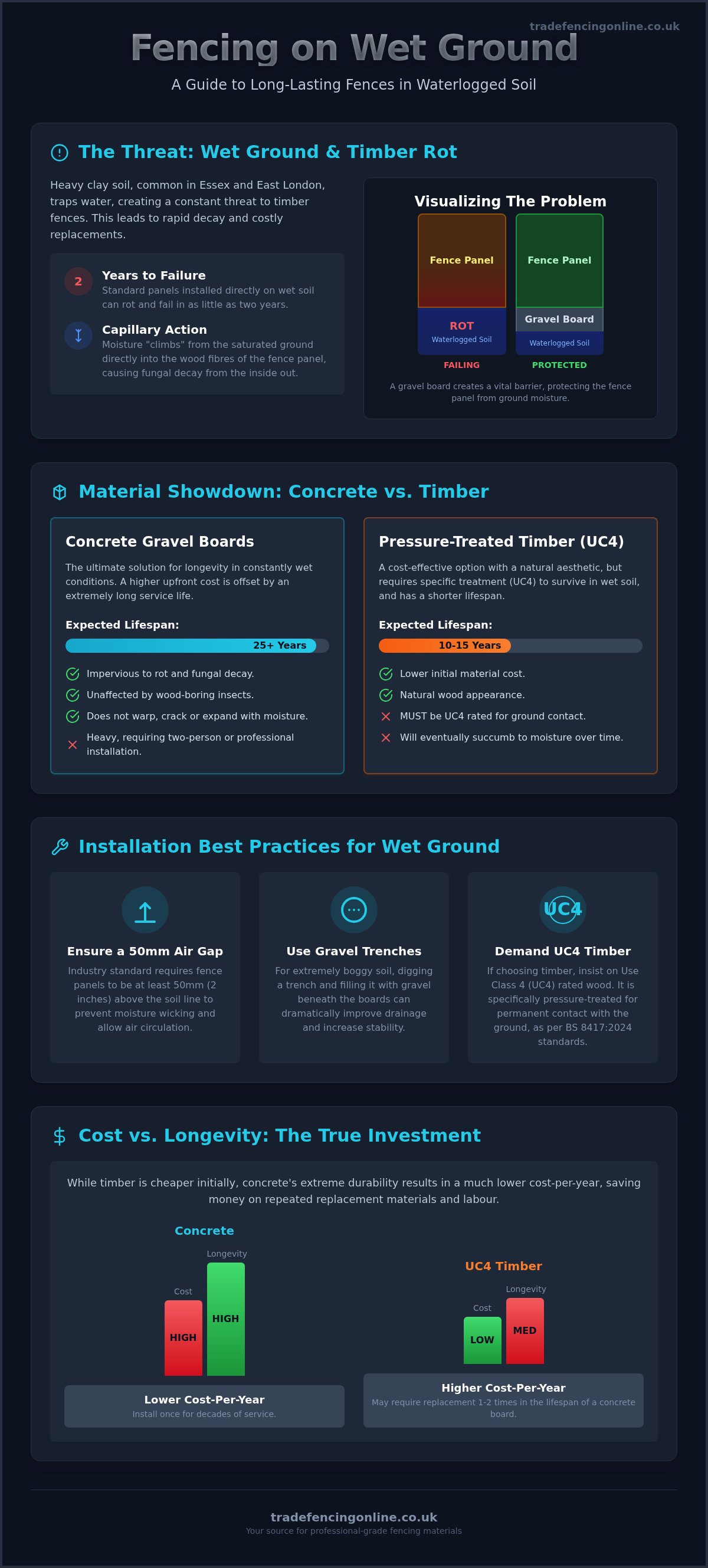
Wet ground is more than a garden nuisance; it's a structural threat to your boundary. In Essex and East London, the heavy clay soil creates a specific challenge. Clay particles pack tightly and trap water for months. This constant saturation leads to a process called capillary action. Moisture wicks from the wet soil directly into the base of your fence panels. Even with modern Wood preservation techniques, constant dampness allows fungal decay to take hold quickly.
Standing water accelerates this rot. It breaks down the chemical barriers in many treated timbers. Without a physical break, your fence panels will fail long before their expected lifespan. Choosing the best gravel boards for wet ground is the only way to isolate your panels from this destructive moisture cycle. It's a small investment that prevents the costly replacement of entire fence runs every few years.
The Role of Gravel Boards in Moisture Protection
A gravel board serves as a protective barrier between the earth and the fence panel. It is a sacrificial component designed to take the brunt of the moisture. Industry standards suggest keeping fence panels at least 50mm above the soil line. This gap prevents wicking and allows air to circulate. By using a durable board, you ensure the panel remains dry and rot-free for years. It also provides a cleaner finish for lawn edging and prevents damage from strimmers.
Identifying 'Boggy' Ground Conditions
You can spot boggy ground by looking for moss growth, persistent puddles, or heavily compacted soil that feels like a sponge after rain. Standard timber gravel boards often fail in these areas because they aren't designed for permanent water contact. If your garden retains water, you need a solution that won't warp or crack under the pressure of expanding wet soil. Recognising these signs early helps you select the right materials before the first post goes in.
Concrete vs. Timber: Which Gravel Board Wins in Wet Conditions?
Choosing the best gravel boards for wet ground requires a balance between upfront cost and long-term durability. In waterlogged areas, concrete is the undisputed champion for longevity. It typically offers a service life exceeding 25 years. Pressure-treated timber is a popular alternative for its natural look, but its lifespan in boggy soil is significantly shorter, often requiring replacement within 10 to 15 years. While timber is cheaper initially, the cost-per-year of concrete is much lower because you won't pay for labour and materials to replace it multiple times over the same period.
Concrete Gravel Boards: The Waterproof Standard
Concrete is entirely impervious to rot, wood-boring insects, and moisture-induced warping. It doesn't absorb water, which means it won't expand or crack when the ground freezes in winter. For the most secure installation in wet gardens, pair these with slotted concrete posts. This system allows the boards and panels to slide into place, creating a rigid structure that resists shifting in soft soil. Be aware that concrete is heavy. It requires professional handling or a two-person team to ensure a safe and level installation. If you're concerned about aesthetics, modern manufacturing offers a choice between smooth or recessed finishes to match your garden's style.
Pressure-Treated Timber: Can It Survive Wet Soil?
Not all timber is equal. Standard dipped wood only has a surface coating that fails quickly in damp conditions. You must look for pressure-treated timber that meets Use Class 4 (UC4) standards. This process forces preservatives deep into the wood fibres to protect against decay. You can learn more about chemical protection in this EPA overview of wood preservatives. UC4 timber is specifically rated for direct ground contact. Even with this treatment, timber in wet soil will eventually succumb to moisture. If you're undecided on the best material for your project, our guide on fence posts: wood vs concrete provides further technical comparisons. For a reliable solution, browse our range of professional-grade gravel boards today.
Installing Gravel Boards in Boggy Soil: Professional Tips
Installing a fence in waterlogged conditions requires specialized techniques to prevent shifting. Even the best gravel boards for wet ground will underperform if they sit in a pool of standing water. Start by digging a shallow trench along the fence line. Fill this trench with 20mm shingle or ballast to create a French drain effect. This layer allows water to flow away from the base of the board rather than pooling against it. This simple step significantly extends the life of your materials.
Once the drainage layer is in place, position your boards. Secure them to timber posts using galvanized cleats or clips. In soft ground, boards can sink or tilt over time. Mechanical fixings keep the structure rigid and maintain that professional, level finish. If you use concrete boards with slotted posts, ensure the bottom of the slot is clear of debris to allow the board to sit flush on the shingle.
Managing Drainage and Soil Contact
Never fully bury a timber gravel board in wet clay. Clay acts like a sponge and keeps the wood in a state of permanent saturation. Keep the board slightly above the main soil line, supported by your shingle layer. This creates a break in the moisture path. It's a critical technique for Essex gardens where clay-heavy soil is the norm. This approach ensures your best gravel boards for wet ground remain functional and rot-free for years.
Securing the Structure in Soft Ground
Stability starts with the posts. When using Postcrete in wet areas, dig your hole slightly wider at the bottom. Pour the concrete to create a 'bell' shape. This wider base prevents the post from 'heaving' or sinking in soft mud. Slope the top of the concrete away from the post to shed water. For a full list of required fixings and tools, check our Essential Fencing Supplies Checklist. Proper preparation at the post base ensures the entire gravel board run stays straight and secure.
Secure Your Fence Against Damp Soil Today
Protecting your property starts with a foundation that resists the elements. You've learned that concrete offers the highest resistance to rot, while UC4 pressure-treated timber provides a reliable alternative when installed with proper drainage. Using shingle trenches and maintaining a gap for your panels ensures your investment doesn't succumb to decay during a wet winter. Finding the best gravel boards for wet ground is simply about choosing materials that match your soil's specific moisture levels.
We stock a full range of high-durability options at trade-exclusive prices, available to both the public and professional contractors. Our inventory includes everything from slotted concrete posts to professional-grade timber boards. We provide fast local delivery across Romford, Essex, and East London to keep your project on schedule. Secure your boundary now with materials built to last in heavy clay conditions.
Build a fence that stands for 15 years or more by choosing the right protection today.
Frequently Asked Questions
Are concrete gravel boards better than wooden ones for wet ground?
How long do pressure-treated gravel boards last in damp soil?
Pressure-treated boards rated for Use Class 4 (UC4) generally last between 10 and 15 years in damp soil. Their actual lifespan depends on the local drainage and the consistency of the moisture. Standard dipped timber isn't suitable for these conditions and often fails within 2 to 3 years. Always verify that your timber is specifically treated for direct ground contact to avoid premature replacement.
Should I bury my gravel board or leave it on the surface?
You should install your gravel board on the surface or slightly recessed into a bed of shingle. Never fully bury a timber board in wet soil as this traps moisture and accelerates fungal growth. Setting the board on a drainage layer keeps it stable and allows water to escape. This technique ensures the board stays level and protects the fence panels effectively.
Can a gravel board stop my fence from rotting?
A gravel board is essential for stopping fence panels from rotting. It creates a physical break that prevents capillary action from wicking water into the bottom of the panel. By keeping the timber panels 50mm above the damp earth, you remove the primary cause of wood decay. This simple addition can double the lifespan of your fence panels in boggy garden conditions.