


Spending an extra £12 on a single component today can save you over £600 in total replacement costs in just four years. Most homeowners feel a sense of dread when they see the bottom of their expensive new fence panels turning black and soft from ground moisture. It's a common problem that ruins thousands of UK gardens every winter. You're likely wondering what are gravel boards for and if they're just another hidden cost in your fencing quote.
We agree that nobody wants to pay for things they don't need. However, protecting your investment is the smartest move you can make for your property boundary. This guide explains how these boards act as a sacrificial barrier to stop rot in its tracks. We promise to show you how this one addition helps your fence last 15 years or longer while providing a perfectly level finish. You'll learn the specific differences between wood and concrete options so you can choose the right protection for your budget and get the job done right the first time.
Key Takeaways
- Understand exactly what are gravel boards for and how this sacrificial barrier prevents your fence panels from rotting through direct ground contact.
- Discover how to double the lifespan of your garden fencing by protecting vulnerable timber from moisture wicking and wet garden debris.
- Compare the "fit and forget" durability of concrete against the traditional aesthetic of timber to choose the best material for your specific project.
- Learn why gravel boards are mandatory for pre-made panels and how they provide the most cost-effective protection for any professional fence installation.
- Find out how to source quality 6ft concrete or timber components from a trusted Essex supplier with options for immediate local delivery.
What is a Gravel Board and What is its Main Purpose?
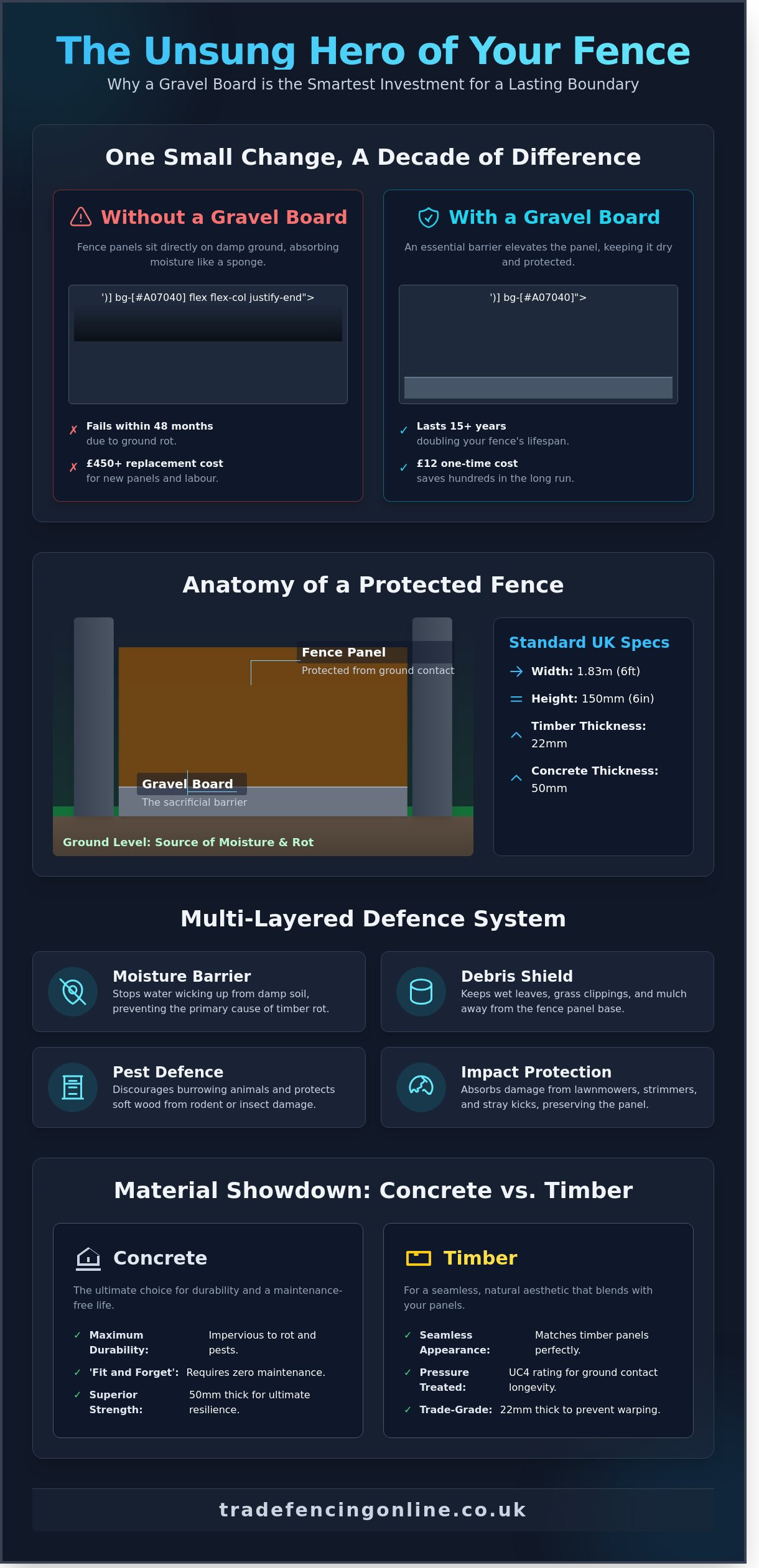
A gravel board is a horizontal strip installed at the very bottom of a fence line. It fills the gap between the ground and your fence panel. Its primary job is to act as a sacrificial barrier. By keeping the main decorative panel away from damp soil and wet grass, you prevent moisture from soaking into the wood grain. This simple addition can double the lifespan of your fencing system. It's far cheaper to replace a single board than an entire run of panels.
Standard UK garden panels are 1.83m (6ft) wide. Because of this, most gravel boards are manufactured to the exact same 1.83m length to ensure a flush fit. You can find them in two main materials to suit your project. Pressure-treated timber is popular for a seamless, natural look. Heavy-duty concrete offers maximum durability and won't rot. If you're wondering what are gravel boards for, the answer is simple: they save you money by protecting your expensive panels from ground-level decay.
The Anatomy of a Protective Fence Base
The board sits snugly between your fence posts, directly beneath the main panel. Most UK gardens use a 150mm (6 inch) height as the industry standard. This provides enough clearance to keep the panel dry during heavy rain or snow. While retail boards are often thin, trade-grade options measure between 22mm and 50mm in thickness. Choosing a thicker board ensures the base won't warp or crack under the pressure of shifting soil or heavy garden debris.
Gravel Boards vs. Kick Boards: Is There a Difference?
You might hear different names depending on your location. In Essex and London, "gravel board" is the standard trade term used by suppliers. In other regions, people often call them kick boards. They are exactly the same product. These boards protect the bottom of fragile panels from "kicking" damage. This includes stray footballs, lawnmowers, or garden tools hitting the fence base. Understanding what are gravel boards for helps you build a fence that stands up to daily wear and tear without failing early.
Why You Need Gravel Boards: Protection Against Rot and Damp
Understanding what are gravel boards for starts with recognizing that timber's biggest enemy is ground contact. When a fence panel sits directly on the grass or soil, it acts like a wick. The end-grain of the wood absorbs moisture through capillary action, leading to internal rot that is often invisible until the panel collapses. Gravel boards create a necessary physical break, ensuring your expensive timber stays dry and elevated.
Combating the UK Climate and Ground Moisture
The UK weather poses a constant threat to garden structures. In regions like Romford and Essex, heavy clay soils are common. These soils retain significantly more water than sandy variants, often staying saturated for weeks after a heavy downpour. Without a gravel board, your fence panels sit in this standing water. A concrete or pressure-treated timber board provides a non-porous or highly resistant barrier. This setup also improves air circulation at the base of the fence, allowing the wood to dry out faster after rain.
Garden maintenance often causes accidental damage to the base of fence panels. String trimmers and lawnmowers can easily splinter the bottom of a standard lap panel, leaving the wood vulnerable to insects and moisture. A solid gravel board acts as a sacrificial buffer. It takes the impact from garden tools, protecting the structural integrity of the fence. Additionally, these boards prevent wet debris like grass clippings and mulch from piling up against the timber slats, which would otherwise create a "damp bridge" that bypasses any chemical treatments in the wood.
Wildlife and pests also find it harder to breach your boundary when a gravel board is present. The solid base discourages rats and other rodents from gnawing through the bottom of the fence. It also prevents smaller animals from burrowing directly under the panels, keeping your garden more secure and your fence line intact.
Extending the Life of Your Fence Panels
The financial logic for using these boards is clear. A standard gravel board costs approximately £10, whereas a high-quality closeboard or decorative panel can cost upwards of £50. By spending a small amount upfront, you protect a much larger investment. Panels without this protection typically require replacement every 5 to 7 years due to bottom-end rot. With a proper base, those same panels can easily last 15 years or more. A well-installed gravel board can extend fence life by up to 10 years. You can browse our range of quality gravel boards to find the best fit for your project. This simple addition effectively doubles the lifespan of your fencing for a fraction of the total project cost.
Concrete vs. Wooden Gravel Boards: Which is Best for You?
Choosing the right material for your fence base comes down to a trade-off between initial cost and long-term durability. Understanding what are gravel boards for helps you decide if you need a structural, rot-proof barrier or a simple, aesthetic sacrificial layer. Concrete is the ultimate "fit and forget" choice. It is completely impervious to moisture and ground-level decay. Timber boards offer a traditional look that blends perfectly with your fence panels but require more frequent monitoring.
The physical differences are significant. A standard 6ft concrete gravel board weighs approximately 45kg, whereas a timber equivalent weighs closer to 7kg. This weight difference means concrete installations usually require two people and more manual labour. However, the result is a fence with superior wind resistance and a lifespan often exceeding 25 years. Timber is roughly 50% cheaper upfront, making it the go-to for quick repairs or budget-conscious projects.
- Concrete: Best for longevity, zero maintenance, and high-moisture soil.
- Timber: Best for aesthetics, ease of installation, and lower initial investment.
When to Choose Concrete Gravel Boards
Concrete is the professional choice for gardens with poor drainage or heavy clay soil. If your garden stays damp for six months of the year, timber will eventually succumb to rot. Concrete boards also perform well when acting as a slight retaining wall for flower beds, as they can withstand the lateral pressure of soil. For a unified, modern look, match these boards with concrete posts. This creates a rigid frame that keeps your fence straight and true for decades. When considering what are gravel boards for in a commercial or high-traffic setting, concrete is always the preferred option due to its impact resistance.
The Benefits of Pressure-Treated Timber Boards
Timber boards are the standard for residential gardens where a natural finish is the priority. They're incredibly easy to work with; you can cut a 1.83m board to a bespoke length in seconds using a standard hand saw. This flexibility is vital for awkward garden corners or shorter fence runs. To get the best value, ensure you buy UC4 pressure-treated timber. The UC4 rating signifies the wood is treated specifically for permanent ground contact. While standard timber might fail within 36 months, UC4 treated boards can last 10 to 15 years if installed correctly. They provide a seamless transition from the ground to the fence panel, maintaining a consistent wood grain throughout your garden perimeter.
Do I Need a Gravel Board? Assessing Your Fencing Project
Deciding whether to include gravel boards depends on your specific fence type and ground conditions. If you're installing pre-made Lap or Closeboard panels, these components are mandatory. Without them, the bottom of your panel sits directly in damp soil. This causes timber decay in as little as 18 months. When asking what are gravel boards for, the primary answer is moisture protection. For featheredge fencing built on-site, some contractors skip the board to lower the quote. This is a short-sighted saving. A single gravel board costs roughly 15% of the panel price but can double the lifespan of the entire boundary.
Security is another practical reason for their use. A standard fence often leaves a 50mm to 100mm gap at the base. This is enough space for a small pet to escape or a fox to enter. Installing a solid board closes this entry point entirely. It provides a robust barrier that prevents digging and keeps your garden secure. It's a simple way to add peace of mind to your installation.
Dealing with Sloping Gardens and Uneven Soil
Sloping terrain presents a challenge for level fencing. You can step your gravel boards to follow the hill while keeping the main panels perfectly horizontal. If you have a 10% gradient, use concrete boards to create a tiered effect. You can also stack two 150mm timber boards to act as a low-level retaining structure. This holds back up to 300mm of soil for flower beds. For a precise fit, scribe timber boards to match the exact curves of the ground. This ensures no gaps remain for debris to collect.
Aesthetic Considerations for Your Boundary
A gravel board acts like a frame for your garden. It provides a straight, clean line that hides unsightly gaps beneath the fence. This improves kerb appeal and adds a professional finish to the project. From a maintenance perspective, it makes life easier. You can paint or stain your panels without getting dirt on your brush from the soil. During heavy rain, mud splashes up to 200mm high. The board catches this "splash back" dirt, keeping your decorative panels clean and rot-free. Understanding what are gravel boards for helps you see they're as much about looks as they are about logic.
Ready to upgrade your garden boundary? View our range of quality gravel boards and fence panels at Trade Fencing Online.
Finding Quality Gravel Boards at Romford Fencing Ltd
Romford Fencing Ltd stocks a comprehensive range of 6ft concrete and timber gravel boards ready for immediate order. Trade professionals and homeowners across Essex choose our durable components to ensure their boundaries stand the test of time. If you're still asking what are gravel boards for, the answer lies in moisture protection. By lifting your panels 150mm or 300mm off the damp earth, you prevent the saturation that leads to timber decay. We've earned 5-star reviews by providing reliable, no-nonsense supplies that do exactly what they're designed for.
Our Romford-based team brings decades of local experience to every enquiry. We don't just sell products; we offer practical solutions for challenging garden layouts. Whether you need a single replacement or enough materials for a 50-meter perimeter, our stock levels stay high to meet demand. You can trust us as your primary supplier for value and reliability. We focus on getting you the right parts at the right price without any unnecessary fuss.
Everything You Need for a Professional Installation
A secure fence requires a system of compatible parts. It's best to pair your new boards with our pressure-treated fence panels for a uniform look. Don't forget the essential ironmongery. We stock heavy-duty cleats and galvanised brackets to ensure your boards stay level and secure against high winds. For those seeking a 25-year lifetime solution, we recommend ordering concrete posts and boards together. This creates an impenetrable barrier against ground-level rot and simplifies future panel replacements.
Fast Delivery Across Essex and East London
We understand that fencing supplies are heavy and difficult to transport. That's why we offer free local delivery options on qualifying orders to Romford, Ilford, Dagenham, and Barking. Our fleet is equipped to handle bulk trade orders, helping you keep your project on schedule without hidden transport fees. If you're wondering what are gravel boards for when it comes to site security, they also help close gaps at the base of a fence to deter pests. Order directly through our online shop or contact our office for a competitive quote. We're your one-stop-shop for everything fencing.
Secure Your Garden Investment
Installing a sturdy boundary is a significant project for any property owner. Understanding what are gravel boards for is the first step toward preventing premature rot and damp damage. These essential components create a vital barrier between your fence panels and the wet soil. Whether you choose the long-term durability of concrete or the classic look of pressure-treated timber, you're adding years of life to your installation. Romford Fencing Ltd has served as a trusted Essex supplier for over 20 years. We've earned 5-star customer reviews by delivering professional-grade materials directly to local tradespeople and homeowners. Our team provides free local delivery on qualifying orders; this ensures you get the best value without any unnecessary hassle. Don't leave your new fence panels vulnerable to ground moisture. Take the right steps today to ensure your garden stays secure and looks professional for years to come. You'll enjoy a much stronger fence and a better-looking garden.
Browse our full range of high-quality Gravel Boards and order online today
Frequently Asked Questions
Is it essential to use a gravel board with a new fence?
Yes, it's essential if you want your fence panels to last their full 10 to 15 year lifespan. A gravel board creates a physical barrier between the wet ground and the bottom of your timber panel. Without one, moisture wicks into the grain and causes rot within 24 months. Installing them protects your investment and keeps the main structure dry for a much longer period.
Can I add gravel boards to an existing fence?
You can add gravel boards to an existing fence provided there's a 150mm gap between the panel and the ground. If your panels are already touching the soil, you'll need to lift them or trim the bottom edge first. This upgrade is a cost-effective way to extend the life of older fencing by up to 5 years. It prevents further moisture damage to the base of the timber effectively.
How long do wooden gravel boards last compared to concrete?
Pressure-treated wooden gravel boards typically last 8 to 10 years, while concrete boards can last over 30 years. Concrete is impervious to rot, insects, and moisture, making it the more durable choice for damp environments. While timber is cheaper, concrete provides a permanent solution that won't need replacing during the lifetime of your fence posts. This longevity makes concrete the preferred choice for many professional installers.
Do gravel boards prevent foxes or dogs from getting under the fence?
Yes, gravel boards act as a solid barrier that stops animals from digging under your perimeter. A standard 150mm board buried 50mm into the ground creates a difficult obstacle for foxes and domestic dogs. Understanding what are gravel boards for helps you secure your garden boundary more effectively. They provide a sturdy, flat surface that resists pawing and scratching better than thin, flexible fence slats would.
What size gravel board do I need for a standard 6ft panel?
You need a 1.83m (6ft) long gravel board to match the width of a standard UK fence panel. The most common height is 150mm (6 inches), though 300mm (12 inches) options are available for uneven ground. Ensure the thickness is at least 22mm for timber or 50mm for concrete to provide enough structural support. This ensures a flush fit between your fence posts and a professional look.
How do I fix a wooden gravel board to a wooden fence post?
Fix wooden gravel boards using two 50mm x 50mm timber cleats screwed into the fence posts. Position the board against these cleats and secure it with 60mm galvanized wood screws. This method allows you to replace a damaged board without dismantling the entire fence section. Always use galvanized fixings to prevent rust streaks and maintain a professional finish on your installation. This approach ensures the board stays level and secure.
Are concrete gravel boards more expensive than wooden ones?
Concrete gravel boards usually cost 50% to 100% more than timber alternatives per unit. A standard 6ft timber board might cost £5, whereas a concrete version often starts at £12 or more. However, the long-term value is higher because concrete doesn't rot or require chemical treatments. You save money on replacement costs and labor over a 20 year period. It's a smart choice for those prioritizing durability over initial cost.
Can gravel boards be used to hold back soil in a raised bed?
You can use 22mm or 38mm thick timber gravel boards for low-level raised beds up to 300mm high. They are a practical choice for gardeners asking what are gravel boards for beyond standard fencing. For beds taller than 300mm, the weight of the soil may cause the boards to bow. In those cases, use 100mm x 100mm corner posts to provide extra reinforcement. This keeps the structure rigid and prevents soil from leaking out.