


An overlooked garden lacks privacy. An ugly fence or bare wall offers no visual appeal. These are common problems with a straightforward, effective solution: a quality garden garden trellis. A trellis is more than just a decorative lattice; it is a versatile and functional tool for transforming your outdoor space. It can create secluded areas, screen unwanted views, and add essential vertical interest where you need it most.
This guide provides a practical, no-nonsense approach to getting the job done correctly. We cover the essential steps for choosing the right trellis material and size to build an effective privacy screen. You will also learn how to provide durable, long-lasting support for your climbing plants, from vigorous wisteria to delicate clematis. With clear, simple instructions for a secure installation against any fence or wall, you will have all the information needed to get the private, green space you want without unnecessary complications or costly mistakes.
What is a Garden Trellis and Why Use One?
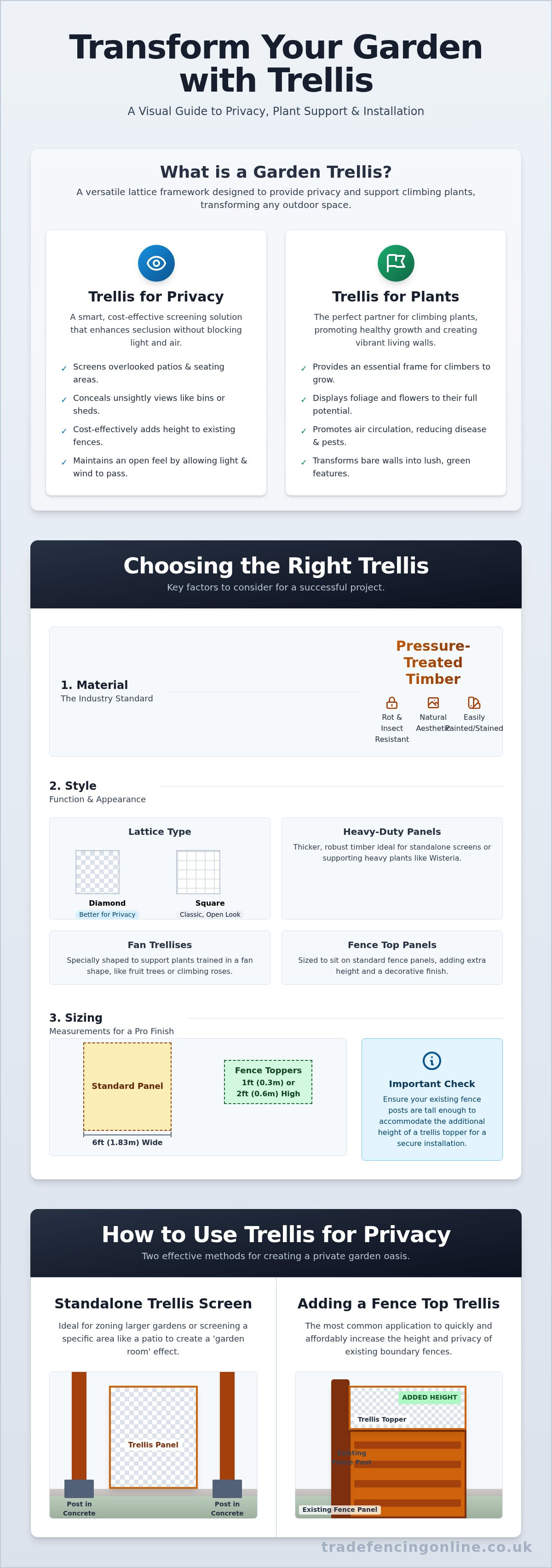
A garden trellis is a versatile lattice framework, typically constructed from intersecting pieces of wood, designed for both practical and decorative use in outdoor spaces. For a full architectural breakdown of its origins, you can read What is a Garden Trellis?, but for today’s gardens, its purpose is straightforward and highly effective. It serves two primary functions: providing a sturdy, reliable frame for climbing plants and creating effective privacy screening. Beyond this core utility, a quality garden garden trellis also acts as a powerful decorative feature, adding vertical height, texture, and architectural interest. Compared to solid fencing, it offers a 'softer' screening effect, allowing light and air to filter through to create a brighter, more pleasant environment.
Trellis for Privacy: A Smart Screening Solution
Trellis panels are an excellent choice for enhancing garden privacy. Use them to screen off overlooked patios, seating areas, or to cleverly conceal unsightly views like wheelie bins, sheds, or neighbouring clutter. One of the most common applications is as a fence topper; it is a cost-effective way to add extra height to existing walls or fences without the expense and disruption of a complete replacement. Unlike solid panels that can cast harsh shadows and block airflow, the open lattice design of a trellis provides a robust visual barrier while still allowing light and wind to pass through. This prevents a restrictive 'boxed-in' feeling and helps maintain a sense of space.
Trellis for Plants: The Perfect Climbing Frame
For climbing and vining plants, a trellis is the perfect partner. Species such as climbing roses, clematis, jasmine, and honeysuckle require a support structure to cling to as they grow upwards. A trellis provides this essential framework, guiding their growth and displaying their foliage and flowers to full effect. By keeping the plant's stems and leaves away from direct contact with damp walls or solid fences, a trellis also promotes crucial air circulation. This simple measure significantly improves plant health by reducing the risk of fungal diseases and pest infestations. Ultimately, a trellis can transform a bare, uninspiring surface into a vibrant, living wall, adding a dynamic layer of green to your garden.
Choosing the Right Trellis for Your Project
Selecting the correct garden garden trellis is essential for the success of your project. The right choice depends on three key factors: the material it's made from, its style, and its size. Before you buy, consider its intended purpose. Will it need to support heavy, established climbers like wisteria, or is it for providing light screening with annuals like sweet peas? Matching the trellis to your garden's existing look and accurately measuring your space are crucial first steps.
Trellis Materials: The Benefits of Treated Timber
For durability and long-term value, pressure-treated timber is the industry standard. This treatment process forces preservatives deep into the wood, providing excellent resistance to rot and insect attack. A quality timber trellis offers a natural aesthetic that blends seamlessly into any outdoor space. It can also be easily painted or stained to match your existing fence panels or garden colour scheme, offering complete design flexibility.
Common Trellis Styles and Their Uses
The style of trellis you choose directly impacts both its function and appearance. Consider these common options for your garden garden trellis:
- Diamond vs. Square Lattice: The main difference is the gap size. Diamond lattice often has smaller gaps, making it a better choice for privacy screening. Square lattice provides a more open, classic look.
- Heavy-Duty Panels: Constructed with thicker, more robust timber, these panels are ideal for creating standalone screens, zoning your garden, or supporting vigorous, heavy climbing plants.
- Fan Trellises: As the name suggests, these are designed to support plants that are trained to grow in a fan shape, perfect for wall-training fruit trees or climbing roses.
- Fence Top Panels: These are specifically sized to sit neatly on top of standard fence panels, adding extra height and a decorative finish to your boundary.
Sizing Your Trellis: Panels, Toppers, and More
Getting the measurements right ensures a professional finish. Most standard trellis panels are 6ft (1.83m) wide, designed to match the width of UK fence panels for easy installation. If you are looking to add height to an existing fence, fence toppers are the ideal solution. These are typically available in 1ft (0.3m) or 2ft (0.6m) heights.
Important: Always check that your existing fence posts are tall enough to accommodate the additional height of a trellis topper. You will need enough post height to securely fix the new panel. If you're ready to find the perfect fit for your project, you can browse our full range of quality trellis panels.
How to Use Trellis for Enhanced Garden Privacy
A garden trellis offers one of the quickest and most cost-effective ways to gain privacy in your garden. Whether you need to screen an overlooked patio or increase the height of a boundary, trellis panels provide a functional and attractive solution. When combined with fast-growing climbing plants, they create a dense, natural screen that enhances the look of your outdoor space while blocking unwanted views.
The key to effective privacy is strategic placement. A single, well-positioned panel can be enough to block a specific line of sight from a neighbouring window or street. For more comprehensive screening, you can use multiple panels to create a continuous living wall. Using a garden garden trellis is a versatile method for reclaiming your privacy without constructing heavy, solid walls.
Creating a Standalone Trellis Screen
For zoning a larger garden or screening a specific area like a patio, a standalone trellis screen is an ideal choice. This is constructed using full-size trellis panels fixed securely between timber fence posts. To ensure stability against wind and weather, the posts must be anchored in the ground using a quality post-mix concrete. This method creates a practical 'garden room' effect, providing seclusion without the expense or permanence of a brick wall.
Adding Height with Fence Top Trellis Panels
The most common use for a garden garden trellis is to heighten existing boundaries. Fence top panels are designed to be installed directly onto your current fence, instantly adding privacy. For a secure and neat installation, attach the trellis toppers directly to your wooden fence posts using strong galvanised U-brackets or clips. This provides a robust fit that will withstand the elements.
Important: Before starting work, always check local regulations regarding maximum fence height. In most parts of the UK, the maximum height for a back garden fence is 2 metres (approximately 6ft 6in) without planning permission. Ensure your new, taller fence does not exceed this limit.
Supporting Climbing Plants: A Grower's Guide
A quality trellis provides the essential structure for climbing plants to thrive. The key to success is selecting plants suited to your garden's light levels and soil, then actively guiding their growth. This combination transforms a simple panel into a dynamic, living screen, offering privacy and natural beauty. With a small amount of maintenance, a garden garden trellis becomes a stunning vertical feature.
The right support encourages healthy development and ensures the plant covers the structure evenly, creating a dense and attractive display. Regular attention during the growing season is crucial for the best results.
Best Climbing Plants for Trellis in the UK
Choosing the right climber is critical for achieving good coverage and the desired aesthetic. For UK gardens, several reliable options deliver excellent results on a trellis structure.
- For Flowers: Classic choices like Clematis, climbing roses, honeysuckle, and jasmine provide seasonal colour and scent. They are ideal for creating a traditional, decorative screen.
- For Foliage and Coverage: For dense, year-round screening, English Ivy is effective but requires regular pruning to control its vigorous growth. Virginia creeper offers fantastic green coverage in summer and brilliant red colour in autumn.
- For Edible Crops: A trellis is also highly practical for growing vegetables. Climbing beans, peas, and even cucumbers will use the structure to grow vertically, maximising your garden space.
How to Train Plants onto Your Trellis
Proper training from the start ensures your plant establishes well and covers the trellis evenly. Follow these straightforward steps for a professional finish.
- Planting: Position your climber at the base of the trellis, approximately 30cm away from the fence or wall. This allows for good air circulation and root development.
- Initial Guidance: Gently weave the main, flexible stems through the lower sections of the lattice to establish a direction of growth.
- Tying In: As new shoots appear, use soft garden twine to loosely tie them to the trellis. Check ties regularly and avoid securing them too tightly, as this can damage the stems as they thicken.
- Encouraging Bushiness: To achieve denser coverage, simply pinch out the growing tips of the main stems. This encourages the plant to produce more side shoots, helping it to fill out the panel more quickly.
With the right support structure in place, your climbing plants will transform any garden boundary. Explore our range of durable trellis panels to find the perfect foundation for your project.
A Practical Guide to Installing Garden Trellis
Proper installation is the key to ensuring your trellis is safe, secure, and long-lasting. A poorly fitted panel can be damaged by high winds or the weight of mature climbing plants. The correct method depends entirely on the surface, whether you are fixing to a solid wall or existing fence posts. For a professional finish, a spirit level is an essential tool to guarantee your garden garden trellis is perfectly horizontal or vertical.
Fixing Trellis to a Wall or Masonry
To promote healthy plant growth, it is vital to create a gap of 1-2 inches (25-50mm) between the trellis and the wall. This space allows for crucial air circulation, which helps prevent fungal diseases. Use treated wooden battens to achieve this gap.
- Hold the battens against the wall and mark your drill holes.
- Drill the holes and insert appropriate wall plugs for the surface type (e.g., brick or block).
- Securely screw the battens to the wall.
- Finally, fix the trellis panel directly onto the battens with quality screws.
Attaching Trellis to Wooden Fence Posts
Fixing a trellis between existing wooden fence posts is a straightforward task. Position the panel between the posts and use your spirit level to check it is straight before fixing. For a simple and robust installation, screw directly through the side frame of the trellis into the post using galvanised screws. Alternatively, for a neater finish, use U-shaped panel clips. Always ensure your screws are long enough to provide a secure anchor deep into the post.
Securing Fence Top Trellis Panels
Fence topper panels are an excellent way to add extra height and privacy to your boundary. For wooden posts, these can be screwed directly into the sides of the posts. If you have concrete posts, you will require specific brackets designed to fit them. Before you begin, it is important to confirm that your existing fence and posts are strong enough to support the additional weight and wind load. Ensure you have all the correct fixings and brackets for the job. Order all your fencing supplies for local delivery.
Transform Your Garden with Quality Trellis
As we've covered, a well-chosen garden garden trellis is more than just a decorative feature. It is a highly functional tool for enhancing privacy, creating defined zones, and providing essential support for your favourite climbing plants to flourish. By selecting the correct size and material for your needs and following a secure installation process, you can fundamentally improve the structure and appeal of your outdoor space for years to come.
When you are ready to start your project, choosing the right supplier is essential. At Romford Fencing Ltd, we are a trusted supplier with consistent 5-star reviews, known for our quality, pressure-treated timber products built to last. We ensure a straightforward process with fast local delivery across Essex and East London. For a reliable and cost-effective solution, shop our range of quality garden trellis panels and toppers today.
Get started and create the private, green oasis you've been planning.
Frequently Asked Questions About Garden Trellis
How far should a trellis be from a wall?
A trellis should be fixed at least 5-10cm (2-4 inches) away from a wall. This gap is essential for good air circulation, which helps prevent damp on the wall and reduces the risk of fungal diseases for your plants. Use wooden battens or specialised spacer brackets between the wall and the trellis to create and maintain this necessary space. This ensures both the wall and your plants remain healthy.
Do I need planning permission to add a trellis on top of my fence?
In the UK, you generally do not need planning permission if the total height of your fence, including the trellis, does not exceed 2 metres (approx. 6ft 6in). If the fence is adjacent to a highway used by vehicles, the limit is 1 metre. It is always best practice to check the specific regulations with your local planning authority before starting work, especially if you live in a conservation area.
What is the best way to protect a wooden trellis from the weather?
The most effective way to protect a wooden trellis is to use a quality wood preservative, stain, or exterior paint. For maximum durability, choose a pressure-treated (tanalised) garden trellis from the start. Even with treated wood, applying an extra protective coat every few years will extend its lifespan significantly. Ensure the wood is clean and dry before applying any treatment for the best results and a professional finish.
Can you attach a trellis to a brick wall without drilling?
Yes, it is possible to attach a lightweight trellis to brick without drilling. High-strength exterior adhesives can be effective for smaller panels with light climbers. Another option is using specialised brick clips that grip the mortar lines. However, for a heavy garden trellis or vigorous plants like wisteria, drilling and using wall plugs with screws is the most secure and reliable method for a long-term installation.
How do you join two trellis panels together?
To join two trellis panels securely, align the frames and fix them together using galvanised screws. For additional strength, especially with larger panels, screw a vertical timber batten across the join on the back of the trellises. This acts as a splint, creating a stronger, seamless connection. Always use weather-resistant fixings to prevent rust and ensure the join remains stable through all seasons.
What are the best fast-growing climbers for trellis privacy screens?
For fast privacy in the UK, choose vigorous climbers. Evergreen options like Star Jasmine (Trachelospermum jasminoides) or Clematis armandii provide excellent year-round cover. For rapid growth, consider Russian Vine (Fallopia baldschuanica), but be aware it is extremely vigorous and needs regular pruning. A less aggressive but still fast-growing choice is a climbing Honeysuckle (Lonicera), which also offers seasonal flowers and scent.