


Building a new fence or decking should be a straightforward project. Yet, when you look at the options, you are often met with confusing terms. 'Pressure-treated' or 'dip-treated'? Green or brown? What does 'Use Class 4' actually mean for a fence post that needs to withstand the British weather? Choosing the wrong type of treated timber can lead to premature rot and costly replacements, turning a simple job into a long-term problem. This is a common concern for many homeowners and trade professionals alike.
To make this job quicker and cleaner, using a specialized tool like a Fence Protector Kit can shield the gravel boards and posts while you paint or spray the panels.
This complete guide provides the clear, no-nonsense answers you need. We explain exactly what pressure treatment involves and why it is essential for longevity. You will learn how to choose the correct Use Class for everything from a deck board to a post set directly in the ground, ensuring you make a durable, cost-effective investment. Get the facts you need to select the right timber with confidence and build a garden structure that is made to last for years to come.
Key Takeaways
- Treated timber offers superior, long-lasting protection against rot and insects, making it the essential choice for any outdoor project.
- Learn how to select the correct 'Use Class' to ensure your timber is suitable for its specific environment, from fence panels to in-ground posts.
- Discover why treated wood is the most cost-effective solution in the long run, preventing the expense and hassle of premature replacement.
- Proper handling and simple maintenance will significantly extend the life of your timber structures, protecting your investment for years to come.
What is Treated Timber? The Pressure Treatment Process Explained
Treated timber is wood that has been infused with preservative chemicals under high pressure to extend its lifespan. The primary purpose of this industrial process is to provide long-lasting protection against fungal decay (rot) and insect attack, ensuring your fencing and garden structures remain durable for years. This method is a core part of modern wood preservation, delivering protection that goes far beyond what a simple dip treatment or a coat of stain can offer. The key difference is penetration: pressure treatment forces the preservatives deep into the cellular structure of the wood, not just onto the surface.
How Pressure Treatment Works Step-by-Step
The industrial process for creating quality treated timber is precise and highly effective. It involves several key stages to ensure maximum preservative penetration:
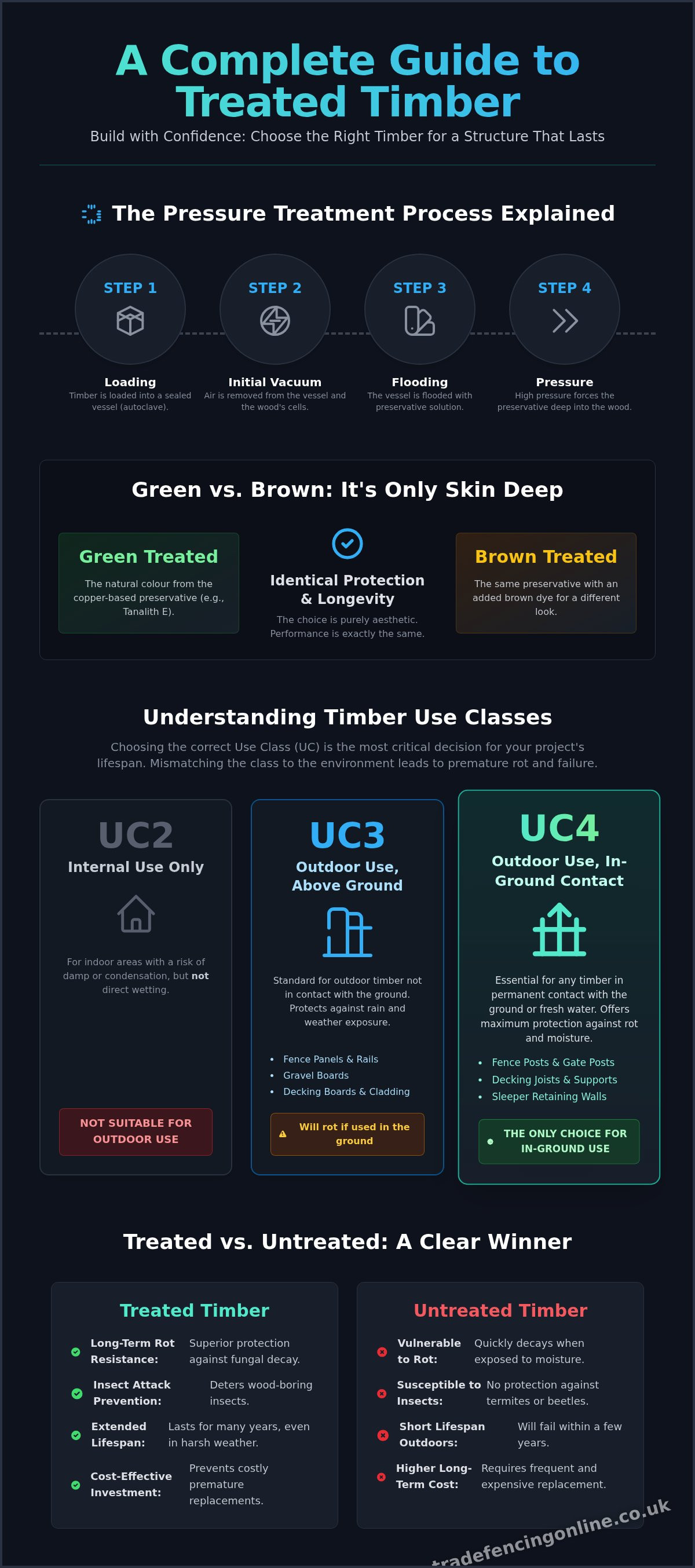
- Step 1: Loading the Vessel. Timber is stacked and loaded into a large, sealed, horizontal cylinder called an autoclave.
- Step 2: Initial Vacuum. A powerful vacuum removes air from the autoclave and, crucially, from the microscopic cells within the wood.
- Step 3: Flooding with Preservative. The cylinder is flooded with a water-based preservative solution, such as Tanalith E.
- Step 4: Applying Hydraulic Pressure. High hydraulic pressure is applied, forcing the preservative deep into the timber's structure, providing thorough and lasting protection from the inside out.
Green vs. Brown Treated Timber: What's the Difference?
When selecting timber, you will typically see two colour options: green or brown. It is a common misconception that one offers better protection than the other. The reality is much simpler.
Both green and brown timbers start with the same high-performance preservative base (e.g., Tanalith E), which contains copper. The natural colour of this preservative gives the wood a green tint. Brown treated timber is simply the same product with a brown dye added during the treatment process for a different aesthetic. The level of protection and long-term performance is identical for both. The choice is purely down to your colour preference.
Understanding Timber Treatment Classes (Use Class Explained)
Not all treated timber is the same. In the UK, the performance of preservative-treated wood is defined by the British Standard BS EN 335. This standard sets out ‘Use Classes’ which dictate the environment the timber is designed for. Choosing the correct Use Class is the single most important decision for your project. Using the wrong class will lead to premature rot and structural failure, wasting both time and money.
The class is determined by the type and penetration of the wood preservative chemicals forced into the timber during treatment. Here, we cover the main classes relevant for garden and fencing projects.
Use Class 2: For Internal Use (Risk of Damp)
Use Class 2 timber is treated for internal applications where there is a risk of damp or condensation, but not direct wetting. Think of internal framing for sheds, some roof battens, or floor joists in well-ventilated spaces. While it offers some protection, it is not sufficient for any outdoor garden projects exposed to the elements.
Use Class 3: For Outdoor Use (Above Ground)
This is the standard for treated timber used outdoors but not in direct contact with the ground. Use Class 3 provides robust protection against rain and weather exposure. It is the correct specification for components like fence panels, fence rails, cladding, and gravel boards that sit on top of the ground. It ensures these elements resist rot and decay from being exposed to the British weather.
Use Class 4: For Outdoor Use (In-Ground Contact)
For any timber that will be in permanent contact with the ground or fresh water, Use Class 4 is essential. This treatment provides a higher level of preservation to withstand constant moisture and attack from soil-based fungi. It is the only appropriate class for fence posts, gate posts, and decking support joists. A common and costly mistake is using UC3 timber for posts; they will inevitably rot at ground level within a few years.
Ensure your fence is built to last. Browse our UC4 treated fence posts for guaranteed longevity and peace of mind.
Common Uses for Treated Timber in Your Garden
Treated timber is the go-to material for building durable outdoor structures. Its resistance to rot and insect attack makes it a reliable choice for a wide range of garden projects. However, not all treated wood is the same. Choosing the correct product and Use Class for each application is crucial to guarantee performance. For a detailed overview of wood preservatives and safety, this Treated Wood Fact Sheet provides an excellent resource. Below, we outline the most common uses for fencing and landscaping.
Fencing Components
A quality fence relies on every component having the correct level of treatment. Using the wrong class of timber will lead to premature failure, starting with the parts in contact with the ground.
- Fence Posts: As the foundation of your fence, posts are set directly into the ground. They must be rated Use Class 4 (UC4) to withstand constant contact with wet soil and prevent rot at the base.
- Gravel Boards: Placed at the bottom of the fence, these boards protect panels from ground moisture and soil. Use Class 3 is often sufficient, but UC4 offers maximum protection.
- Fence Panels & Slats: Because they sit above the ground and are exposed only to rain, Use Class 3 (UC3) provides adequate protection against the elements.
- Rails (Arris/Cant): These horizontal supports fix the panels or slats to the posts. As they are above ground, UC3 is the industry standard.
Landscaping and Garden Structures
Beyond fencing, the durability of pressure treated timber makes it ideal for building a variety of garden features. Again, matching the Use Class to the level of exposure is essential for a lasting result.
- Decking Boards: The surface boards of a deck are exposed to weather but not in contact with the ground. Use Class 3 is the correct specification for this application.
- Decking Subframes: The supporting joists are the critical structural element. If any part of the subframe will touch the ground, it must be Use Class 4. For raised frames, UC3 may be suitable.
- Sleepers & Edging: Used for raised beds, retaining walls, and path edging, sleepers are in permanent ground contact. Always choose Use Class 4 products for this purpose.
- Pergolas & Gazebos: For these structures, a dual approach is needed. Posts set in the ground require UC4 protection, while the overhead beams and rafters only need UC3.
Benefits of Using Treated Timber vs. Untreated Wood
While untreated wood has a lower price tag, it is a false economy for any outdoor project. In the damp UK climate, untreated softwood used for fencing or decking can begin to rot in as little as one or two years. The small saving made upfront is quickly lost to the high cost of replacement. Investing in professionally treated timber is the most practical and cost-effective decision for a durable, long-lasting structure.
Superior Durability and Lifespan
The primary benefit of treatment is exceptional resistance to the main threats to outdoor wood: fungal decay (rot) and wood-boring insects. The preservation process creates a robust barrier against moisture and pests that would otherwise destroy the timber. This protection ensures a correctly installed fence or structure can last for 15 years or more, providing a reliable service life that untreated wood simply cannot match.
Long-Term Cost-Effectiveness
Opting for treatment from the start saves you significant money and labour over the life of your project. Consider the cost of replacing just one rotten fence post; factoring in the new post, concrete, and labour, the bill can easily exceed £100. This single repair often costs more than the initial investment in treating all your timber. By choosing treated wood, you avoid these recurring replacement costs and reduce future maintenance demands.
Low Maintenance and Peace of Mind
Treated wood provides confidence that your fence is structurally sound and secure. This peace of mind is invaluable. It requires far less frequent application of protective paints or stains compared to untreated wood, which needs constant attention to survive outdoors. A treated fence remains a strong, reliable boundary for your property for years, protecting your home and garden with minimal upkeep. For a quality solution that stands the test of time, view our complete range of fencing products.
How to Work With and Maintain Treated Timber
While pressure treated timber is manufactured for exceptional durability, its lifespan can be extended even further with correct handling and simple maintenance. Following professional guidelines ensures you get the maximum value and performance from your investment. Simple annual checks and proper installation techniques will prevent minor issues from becoming major, costly problems down the line.
Safety Precautions When Handling and Cutting
Working safely with any timber is essential, and treated wood requires specific care due to the preservatives it contains. Always follow these key safety guidelines to protect yourself during your project:
- Wear protective gear. Always use gloves when handling, and wear eye protection and a dust mask when cutting, drilling, or sanding to prevent inhalation or irritation from sawdust.
- Ensure good ventilation. Work outdoors or in a well-ventilated space to disperse sawdust and fumes effectively.
- Never burn offcuts. Treated timber offcuts must not be burned, as this can release harmful chemicals. Dispose of them in accordance with your local authority's regulations for construction waste.
Cutting and Fixing: The Golden Rule
The pressure treatment process creates a protective 'envelope' around the wood. Any time you make a cross-cut, drill a hole, or cut a notch, you expose the untreated core of the timber. This breach makes the wood vulnerable to moisture ingress and rot, defeating the purpose of the initial treatment.
The golden rule is simple: you MUST treat all cut ends. Apply a high-quality end-grain preservative to any exposed surface. This simple, often overlooked step is crucial for maintaining the protective barrier. Furthermore, always use the correct fixings. Standard screws will corrode when in contact with the chemicals in treated wood, leading to rust stains and eventual failure. Use hot-dip galvanised or stainless steel screws, nails, and bolts to ensure a secure and long-lasting build.
Finishing and Long-Term Care
You can paint or stain treated timber, but it's vital to wait until it is completely dry. New timber often has a high moisture content from the treatment process. Allowing it to weather for several weeks or even a few months enables it to dry thoroughly, ensuring better adhesion for any finish you apply.
Long-term care is straightforward. Once a year, give your fencing or decking a good clean with a stiff brush and water to remove any build-up of dirt, algae, or moss. This keeps the surface looking its best and prevents organic matter from trapping moisture against the wood. For any new build or repair, find all the fencing supplies you need to get the job done right.
Build with Confidence: Your Source for Quality Treated Timber
As this guide has shown, choosing the right timber is the foundation of a durable garden project. By understanding the pressure-treatment process and selecting the correct Use Class for your needs-whether it's UC3 for fence panels or UC4 for in-ground posts-you ensure your structure will stand strong against the elements for years to come.
When you're ready to build, a reliable supplier is essential. As a trusted local supplier for Essex and East London, Romford Fencing Ltd provides the high-quality UC3 and UC4 treated timber you need, all backed by a fast, reliable delivery service. Get the job done right the first time.
Shop our full range of quality treated fencing supplies today and build a garden project that lasts.
Frequently Asked Questions
How long does treated timber last?
The lifespan of treated timber depends on its Use Class and exposure to the elements. For timber used above ground (Use Class 3), such as fence panels, you can expect a service life of around 15 years. For timber in direct contact with the ground (Use Class 4), like fence posts, a lifespan of 15-30 years is typical. Regular maintenance and proper installation are key to maximising the durability of your timber products.
Do I need to treat the cut ends of pressure treated wood?
Yes. It is essential to treat any cut or drilled ends of pressure treated timber. The pressure treatment process forces preservative deep into the wood, but cutting exposes the untreated core. Failing to seal these ends with a suitable end-grain preservative will create a weak point for moisture and decay to enter, significantly reducing the timber's lifespan. Always apply a preservative to maintain the protective barrier and ensure long-term performance.
Can you paint or stain treated timber?
You can paint or stain treated timber, but it is crucial that the wood is completely dry first. Freshly treated timber often retains moisture from the treatment process and needs time to weather, which can take several weeks or even months. Attempting to paint or stain damp wood will result in poor adhesion and a failed finish. Always use a paint or stain that is specifically formulated for use on pressure treated wood for the best results.
Is treated timber safe for children's play areas, pets, and vegetable beds?
Modern treated timber sold in the UK is treated with copper-based preservatives and is considered safe for use around children and pets once dry. For vegetable beds, while the risk of chemical leaching is low, it is best practice to use an impermeable liner between the timber and the soil. This creates a reliable barrier, ensuring no contact between the preservative and your edible plants. Always check the product specification for its intended use.
What is the difference between tanalised and pressure treated timber?
Pressure treatment is the general industrial process of forcing a preservative deep into the wood under high pressure. 'Tanalised' refers to timber that has been pressure treated with a specific brand of preservative called Tanalith E. Essentially, Tanalised timber is a type of pressure treated timber. While many suppliers use the terms interchangeably, 'Tanalised' guarantees that a specific, high-performance preservative has been used in the treatment process.
How can I tell if timber is treated to Use Class 4?
The most reliable way to identify Use Class 4 (UC4) timber is to check the product description, invoice, or any stamps on the wood itself. While UC4 treated timber may sometimes have a slightly darker or greener appearance due to a higher concentration of preservative, this is not a guaranteed visual indicator. UC4 is specified for components in direct contact with the ground or fresh water, such as fence posts, so always confirm the rating with your supplier before purchase.