


Finding a trellis that can withstand a British gale is a common challenge. Add the confusion between pressure-treated and dip-treated timber, or the difficulty of fitting new panels to existing concrete posts, and it’s easy to see why many garden projects stall. Choosing the correct trellis panels for garden use is the essential first step towards achieving a secure, private outdoor space and providing robust support for even the heaviest climbers like Wisteria. A flimsy or poorly installed panel simply won’t deliver the results you need.
This ultimate 2026 guide provides the direct, practical information required to make the right choice. We cut through the jargon to help you select the ideal materials and panel strength for your specific requirements. You will learn the correct installation techniques for a professional finish-whether attaching to timber or concrete posts-and discover simple maintenance steps to ensure your investment lasts for years. Get ready to build a private, durable, and perfectly supported garden space with confidence.
Key Takeaways
- Determine whether your project requires freestanding panels or fence toppers to ensure the correct structure and function from the start.
- Understand how timber treatment protects against rot, ensuring your trellis withstands the damp UK climate for years to come.
- Select the correct aperture size on your trellis panels for garden projects to achieve the ideal balance between privacy and plant support.
- Learn the essential tools and safety steps required to securely fit trellis panels to walls or existing fence tops.
- Discover why sourcing "Trade Quality" materials provides superior durability compared to standard options from DIY stores.
Choosing the Right Trellis Panels for Your Garden Project
A garden trellis is a versatile framework designed to support climbing plants, enhance privacy, or add a decorative architectural element to your outdoor space. While many wonder what is a garden trellis in technical terms, its practical function is simple: to provide structure. The primary distinction is between freestanding panels, used to create standalone features, and fence toppers, which increase the height and security of an existing boundary. Common use cases for quality trellis panels for garden projects include screening unsightly wheelie bins, extending fence height for more privacy, or zoning your garden into distinct "rooms."
In the UK, timber remains the preferred material over metal or plastic. Pressure-treated wood offers a traditional aesthetic, exceptional durability against the British weather, and the strength needed to support vigorous climbing plants year after year. It provides a natural look that blends seamlessly into any garden design.
The Three Main Trellis Configurations
Selecting the right trellis style depends entirely on its intended function. Each configuration offers a different balance of strength, privacy, and visual appeal.
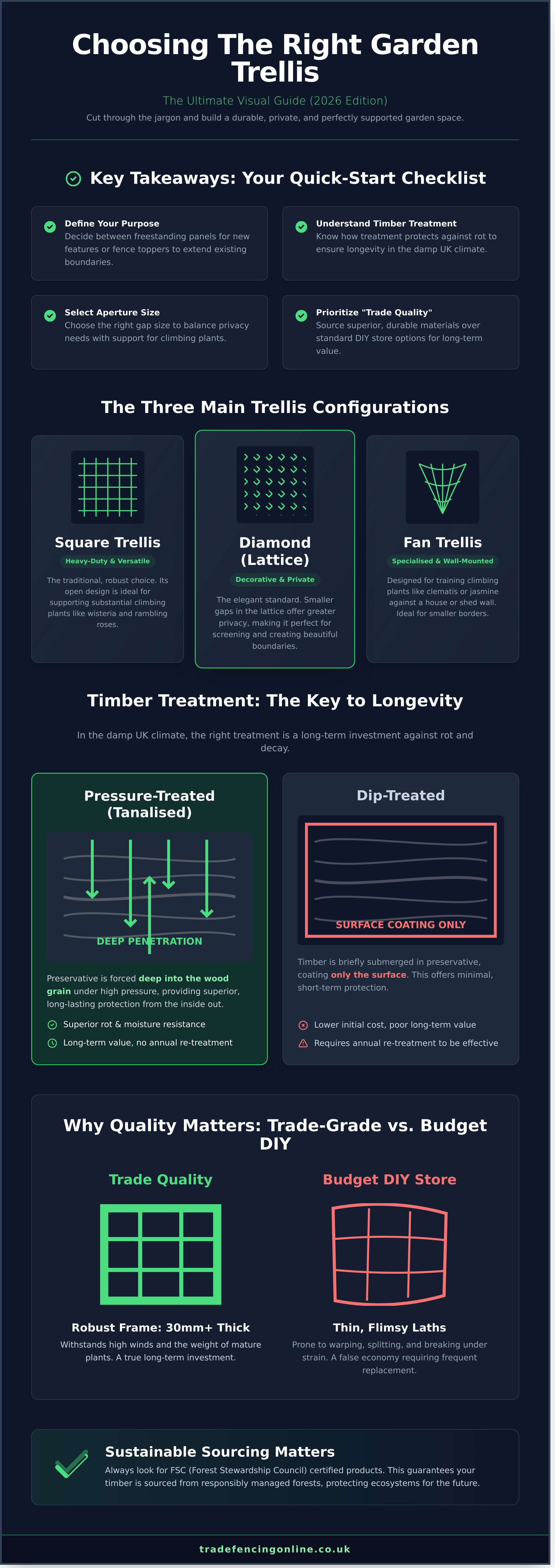
- Square Trellis: The traditional, heavy-duty choice. Its robust, open design is ideal for supporting substantial climbing plants like wisteria or rambling roses and for general utility purposes.
- Diamond (Lattice) Trellis: The decorative standard. The smaller gaps in the lattice pattern offer greater privacy, making it perfect for screening and creating elegant garden boundaries.
- Fan Trellis: A specialised option designed for wall-mounting. Its shape is perfect for training climbing plants like clematis or jasmine against a house or shed wall, especially in smaller borders or large planters.
Why Quality Matters: Trade-Grade vs. Budget DIY Stores
The difference between a trade-grade trellis and a cheap alternative from a DIY superstore becomes obvious after the first winter gale. Budget panels often use thin, flimsy laths that warp, split, or break under the slightest strain from wind or plant growth. They represent a false economy, requiring replacement within a season or two.
For genuine structural integrity, look for panels with a substantial frame-at least 30mm thick. This robust construction ensures the trellis can withstand high winds and the weight of mature plants. Ultimately, investing in quality, trade-bought trellis panels for garden use provides far better long-term value and saves you the cost and hassle of repeated replacements.
Understanding Timber Trellis Materials and Durability Standards
The timber used for your trellis panels for garden has a direct impact on their lifespan and structural integrity. In the damp UK environment, untreated or poorly treated wood is highly susceptible to rot, fungal decay, and insect attack. Choosing the right material is not just an aesthetic decision; it is a long-term investment in your garden boundary. For a complete and professional finish, ensure your trellis is supported by equally durable fence posts for a unified look and maximum stability.
Pressure-Treated (Tanalised) vs. Dip-Treated Timber
Understanding the difference between timber treatments is crucial for selecting a product that lasts. Not all treatments offer the same level of protection.
- Pressure Treatment (Tanalised): This is a comprehensive process where preservative is forced deep into the wood's grain under high pressure. This provides superior, long-lasting protection from the inside out against moisture and rot.
- Dip Treatment: This method involves briefly submerging the timber in a preservative solution. The treatment only coats the surface, offering minimal protection that requires annual re-treatment to remain effective.
While dip-treated panels may have a lower initial cost, pressure-treated timber offers far greater value over time. For a permanent garden fixture, Tanalised trellis is the most reliable and cost-effective solution, eliminating the need for constant maintenance and early replacement.
Sustainable Sourcing and FSC Certification
For the eco-conscious gardener, the origin of the timber is as important as its treatment. Always look for FSC (Forest Stewardship Council) certified products. This certification guarantees that the wood is sourced from responsibly managed forests, protecting ecosystems and ensuring sustainability.
Quality is also linked to how the timber is grown. Slow-grown timber, identifiable by its denser grain and heavier weight, is significantly stronger and more durable than fast-grown alternatives. It's a common misconception that all "green" treated wood is the same; the green tint signifies a copper-based preservative, but it doesn't guarantee the quality of the underlying timber or the treatment process. High-quality, slow-grown, and properly pressure-treated timber is the foundation of a robust garden trellis. This material choice is the first step; the second is correct installation, and online guides on how to install a trellis can provide valuable practical advice for a secure fit.
Comparing Trellis Styles: Privacy, Plant Support, and Security
Choosing the right trellis panel involves more than aesthetics. The style, particularly the hole size or 'aperture', directly determines its performance for privacy, plant support, and even security. A panel with small gaps creates a very different boundary compared to one with large, open squares, making it a crucial factor in your selection.
A "see-through" boundary feels less imposing than a solid fence, creating a psychological sense of space while still marking a clear perimeter. For security, quality trellis panels for garden perimeters act as a practical deterrent. They are difficult to climb quietly or get a firm grip on, making them an unattractive option for intruders without creating a fortress-like appearance.
Privacy Screening: Finding the Balance
For maximum privacy, select a diamond trellis with a small aperture (around 20mm). This design effectively screens views from neighbours while allowing crucial airflow and preventing your garden from feeling boxed in. Trellis toppers are also a popular and cost-effective way to add height to an existing fence, often helping you comply with local fence height rules while gaining extra screening.
The Best Trellis for Climbing Plants
The structure of a trellis must match the needs of your plants. A mismatched panel can hinder growth or fail under the weight of a mature plant. Ensure the trellis can handle the job.
- For Twining Plants (Clematis, Honeysuckle): Square trellis is the superior choice. The straight, horizontal and vertical battens are easier for their tendrils to grip and wrap around.
- For Scrambling Plants (Climbing Roses): Diamond or square trellis works well, as these plants do not cling themselves and require tying in for support.
- For Heavy Plants (Wisteria, Grapevines): Always choose a heavy-duty, robust trellis. A mature Wisteria can weigh over 50kg, so the panel and its fixings must be strong enough to support it.
Crucial Tip: Always leave a gap of at least 25-50mm between the trellis and the wall or fence. This space is vital for air circulation, which prevents fungal diseases and gives plants room to twine and grow properly.
Once your structure is in place, keeping your new climbing plants healthy is the next priority. Ensuring they receive consistent moisture is crucial, especially for vigorous varieties. Online retailers like Garden Watering offer a range of automatic irrigation systems that can handle the job for you.
Installation Guide: Fitting Trellis to Walls and Fence Tops
Correct installation is key to ensuring your trellis panels are secure, level, and long-lasting. Before you begin, gather the essential tools for a professional job:
- A spirit level
- A power drill with appropriate bits
- Stainless steel or galvanised screws
- Purpose-made U-clips or brackets
Always prioritise safety, especially when working at height to install fence toppers. Use a stable ladder and ask for assistance if needed. For a durable, weatherproof finish, it is vital to use quality ironmongery designed for outdoor use. This prevents rust and ensures your installation withstands the British weather.
Pro-Tip: To prevent timber from splitting, always pre-drill pilot holes before driving in screws. This simple step guarantees a clean, strong fixing every time.
How to Install a Trellis Fence Topper
To add height and privacy to an existing fence, start by measuring the width between your fence posts. Ordering a correctly sized panel provides a seamless, flush finish that looks professionally installed. Secure the trellis to wooden posts using galvanised U-brackets for a strong hold. For a complete, tiered structure, ensure your trellis sits neatly above solid gravel boards, which protect the timber from ground-level moisture.
Fitting Trellis to Concrete Fence Posts
Screwing directly into concrete posts requires specialised masonry bits and is often unnecessary. The trade secret for a fast, damage-free installation is using Trellis U-Clips. These clips are designed to slot directly into the groove of standard concrete posts, holding the panel firmly in place in minutes. To prevent rattling in high winds, choose clips that provide a snug fit against the panel's frame.
Wall Mounting for Vertical Gardening
When fitting trellis panels for garden walls, creating an air gap is crucial for plant health. Fix vertical timber battens (approximately 25mm thick) to the wall first, then mount the trellis onto them. This gap allows air to circulate and gives climbing plants room to grow. Choose the right wall plugs for your surface-standard plugs for solid brick and specialised fixings for render or blockwork. Always use a spirit level to ensure a perfectly horizontal line, especially over long spans.
Why Source Your Garden Trellis from a Trusted Essex Supplier?
When selecting the right trellis panels for your garden, the supplier you choose is just as crucial as the product itself. Choosing a local, established specialist like Romford Fencing Ltd provides advantages that national, faceless retailers simply cannot match. We combine decades of on-the-ground experience in Essex with a commitment to providing trade-quality materials directly to the public.
Our "Trade Quality" promise means you get access to the same durable, pressure-treated, and robustly constructed trellis that professional landscapers rely on for their projects. Unlike lower-grade alternatives found in DIY superstores, our products are built to withstand the British weather, ensuring longevity and excellent value for your investment. You don't need a trade account to benefit from professional-grade materials.
The Advantage of Local Delivery in Essex and London
Large or delicate items like trellis panels are often mishandled by national courier networks, leading to a high risk of cracks, splits, and corner damage upon arrival. We eliminate this problem by using our own dedicated delivery fleet. Our experienced drivers handle your order with care from our yard to your door, ensuring it arrives in perfect condition. We offer Free Local Delivery on orders over £150 to many areas, including:
- Romford & Hornchurch
- Ilford & Barking
- Dagenham & Rainham
- And across wider Essex and East London postcodes.
Trade Accounts and Bulk Savings
For professional landscapers and developers, consistency and reliability are key. A trade account with Romford Fencing Ltd guarantees access to consistent stock, ensuring the tenth panel you order perfectly matches the first. We offer competitive trade pricing and bulk-buy discounts for larger projects. If you have bespoke requirements or need to plan a large-scale installation, our expert team is ready to provide a detailed quote and manage your order efficiently.
As your one-stop-shop for fencing, we provide everything needed to complete your garden renovation, from trellis and fence panels to concrete posts, gravelboards, and all necessary fixings. Streamline your project by sourcing all your high-quality materials from a single, trusted supplier. Explore our full range of garden products at tradefencingonline.co.uk today.
Source Your Quality Trellis Panels Today
Choosing the right trellis is a critical step in enhancing your garden's privacy and structure. As we've detailed, selecting the correct style for plant support or screening, understanding the importance of durable, pressure-treated timber, and ensuring proper installation on walls or fence tops are all essential for a successful, long-lasting project. With this knowledge, you are now equipped to select the perfect trellis panels for garden spaces of any size.
For a straightforward, reliable solution, source your materials from a trusted local supplier. At Trade Fencing Online, our 5-star customer reviews reflect our commitment to quality. We provide trade-grade, pressure-treated timber trellis built for longevity and offer fast local delivery across Essex and East London. When you are ready to transform your outdoor space, the ideal solution is just a click away.
Browse Our Full Range of Quality Trellis Panels
Invest in quality today and enjoy a more private and beautiful garden for years to come.
Frequently Asked Questions
Do I need planning permission to add a trellis to my fence?
In the UK, you generally do not need planning permission to add a trellis to an existing fence. The key factor is the total height. If the combined height of the fence and trellis exceeds 2 metres (or 1 metre if it is next to a highway), you will likely need permission. We always advise checking with your local council before starting work, as specific local rules can apply and this ensures your project is fully compliant.
What is the best wood for a garden trellis?
The best wood for a garden trellis offers a balance of durability and value. Pressure-treated softwood, such as pine, is the most popular and cost-effective option, providing excellent protection against rot and insect damage. For a more premium finish, Cedar is naturally resistant to weather and decay, though it is more expensive. For most applications, quality pressure-treated timber provides the optimal combination of longevity and performance for the price.
How long does a pressure-treated trellis panel last?
A quality pressure-treated trellis panel should last between 10 and 15 years. The exact lifespan is dependent on several factors, including the quality of the initial treatment, local weather conditions, and whether it has direct contact with the ground. To maximise durability, install the trellis on top of a gravel board to keep it clear of damp soil. Regular checks and simple maintenance will ensure you get the maximum service life from the product.
Can I paint or stain my trellis panels?
Yes, trellis panels can be painted or stained. This is an excellent way to customise the appearance of your garden and provides an additional layer of protection against weathering. If your trellis is new and pressure-treated, you must allow the timber to dry out completely before applying any coating. This can take several weeks. Always use a high-quality paint or stain specifically formulated for exterior wood for the best results.
How do I stop my trellis from blowing down in the wind?
A secure installation is essential to prevent wind damage. Use robust fence posts that are set deep enough into the ground and secured with a concrete post mix for maximum stability. Attach the trellis panel to the posts with multiple, heavy-duty fixings like U-brackets or exterior-grade screws. For very exposed locations, consider using thicker posts and reducing the distance between them to create a stronger, more wind-resistant structure.
What is the difference between a trellis and a screen?
The primary difference is their design and intended function. A trellis has an open, lattice-style pattern designed to support climbing plants while allowing light and air to pass through. A garden screen is built for privacy and has a much denser construction, often with horizontal slats set close together to block the view. While both can divide a space, a trellis is decorative and plant-focused, whereas a screen is functional and privacy-focused.
How do I attach a trellis to a brick wall without a drill?
Attaching a lightweight trellis to brick without a drill can be done using strong, weatherproof adhesives or heavy-duty outdoor mounting hooks. Ensure the brick surface is clean and dry before application for the best bond. However, this method is not recommended for heavy trellis panels or for those intended to support mature, heavy climbing plants. For a secure, long-term fixing, drilling and using wall plugs and screws is the correct and safest method.
Can trellis panels be used as a standalone fence?
Yes, trellis panels can be used to create a standalone fence, particularly for decorative boundaries or for zoning different areas within a garden. Because they are less robust than solid fence panels, it is critical to use strong posts and to place them closer together for adequate support. Using trellis panels for garden fencing is an effective way to create a light and open boundary that does not completely block views or sunlight.