


The lowest-priced fence panel isn’t always the cheapest way to finish a boundary. Saving money on a new fence starts with planning the whole job: the right quantities of panels, posts, gravel boards and fixings can help prevent avoidable waste and extra purchases.
It’s easy to focus on the upfront cost, but value also depends on choosing materials suited to the boundary and listing every component before you order. A complete materials list makes it easier to compare options fairly and avoid buying too much, too little or supplies that don’t fit together.
This guide explains the choices that affect a fence project’s overall value, from panel type and supporting components to installation planning. You’ll learn how to estimate what the job needs and organise your order. Romford Fencing Ltd’s online shop offers fence panels, posts, gravel boards and hardware for trade and public customers, with local delivery across Essex and East London.
Key Takeaways
- For saving money on a new fence, plan the full project rather than comparing panel prices alone.
- Measure each fence run and mark posts, corners, ends and gates to build a more complete materials list.
- Compare materials by suitability and maintenance needs, not just their initial outlay.
- Finalise measurements, check your components and plan delivery before ordering fencing materials across Essex and East London.
Saving money on a new fence starts with planning the whole project
A panel price is only part of the total order. Posts, gravel boards, fixings and gates all affect what you need to buy. An incomplete list can mean extra purchases, while inaccurate quantities can leave you with materials you don’t need. For saving money on a new fence, map out the full boundary before comparing options.
Measure each straight run and note where it starts and ends. Mark every corner, change of direction and gate opening, then use the layout to work out the number of panels and posts. Corners and gates can change which components you need, so don’t estimate quantities from the total boundary length alone. Checking each run separately helps you spot gaps in your plan and limit avoidable offcuts.
What should a complete fence materials list include?
List the fence panels, posts, gravel boards and ironmongery required for the layout, plus any gates. If your design includes gravel boards beneath the panels, include them in your quantities from the outset rather than treating them as an afterthought.
Before adding quantities to an order, compare your measurements with the proposed layout. Count the runs, corners, ends and openings, then check each component against those details. You can also browse different types of fences for background on fence forms and materials before settling on a suitable plan.
Compare fence materials by suitability, maintenance and project fit
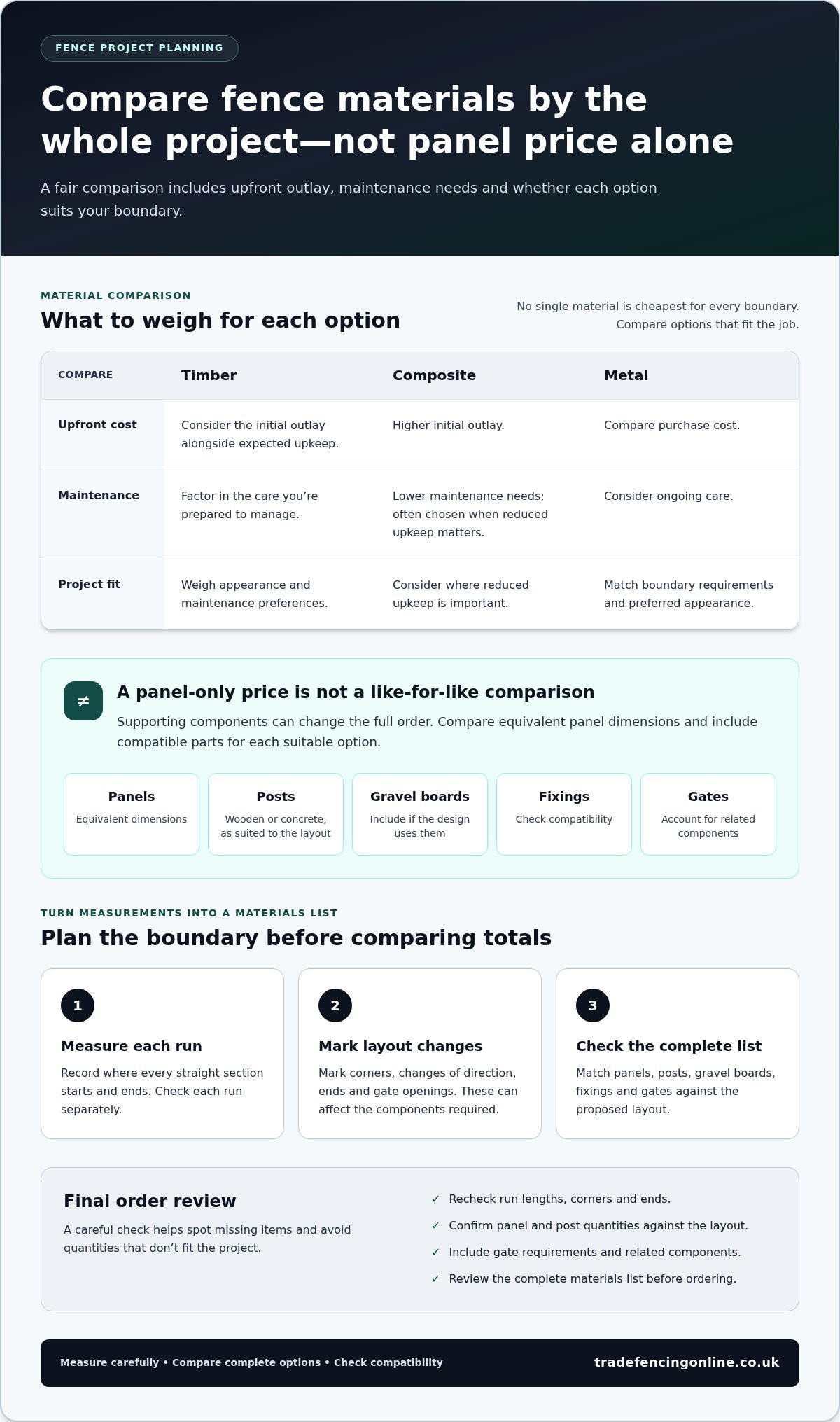
There’s no single material that’s cheapest for every boundary. Timber, composite and metal options can differ in upfront outlay and maintenance needs. The right fit depends on the layout and what you need the fence to do, so a low purchase price isn’t automatically good value if the choice doesn’t suit the project.
Before deciding, consider the boundary’s purpose, the appearance you want and how much ongoing upkeep you’re prepared to manage. Composite is often chosen for lower maintenance, while timber offers a different balance of initial cost and care. Use this planning your fence project reference as another prompt to consider the job as a whole.
How can you make a fair like-for-like comparison?
Compare panels with equivalent dimensions and include compatible posts, gravel boards and fixings in each option. A panel-only comparison can make one choice look cheaper simply because supporting components are missing. Consider whether wooden or concrete posts suit your layout, then compare the complete materials list for each option.
| Option | Compare | Project fit |
|---|---|---|
| Timber | Initial outlay and expected upkeep | Appearance and maintenance preferences |
| Composite | Higher initial outlay against lower maintenance needs | Projects where reduced upkeep matters |
| Metal | Purchase cost and ongoing care | Boundary requirements and preferred appearance |
Compare the full materials list for each suitable option before choosing. Romford Fencing Ltd stocks fencing components and related hardware, making it straightforward to browse the items needed for your project.
Reduce ordering surprises with a clear fence-buying plan
A clear order sequence turns your measurements into a more complete purchase. First finalise the boundary measurements, then check quantities against the layout and choose compatible components. This makes it easier to spot missing items before you order, rather than discovering that a gate, post or fixing has been overlooked once the project is underway.
What should you check before placing a fencing order?
Use this checklist to review the practical details:
- Recheck the length of each boundary run and the position of corners and ends.
- Confirm the panel and post quantities match the layout, including any changes in direction.
- Check gate positions and requirements, then account for the related components.
- Review the full list of panels, posts, gravel boards and fixings before completing the order.
Compare your final quantities with the fence panels range and your project checklist. If you’re arranging delivery, consider where the materials need to go and plan access for unloading. Romford Fencing Ltd provides local delivery across Essex and East London.
For saving money on a new fence, a careful final check can help prevent avoidable extra purchases and keep your order aligned with the job. Once your measurements and component list are settled, choose the materials you need and place your order online.
Plan your fence order with confidence
Saving money on a new fence starts with a complete plan, not just a low panel price. Measure each run, check posts, gravel boards, fixings and gates against the layout, then compare suitable materials by upkeep and project needs. A final review of quantities can help avoid unnecessary purchases and make ordering more straightforward.
Romford Fencing Ltd’s online shop serves trade and public customers, with fence panels, posts, gravel boards and related hardware. Local delivery across Essex and East London offers a practical way to source key fencing materials together.
With your measurements and materials list ready, browse the online shop and order the components your project needs.
Frequently Asked Questions
How can I save money on a new fence?
Start by measuring the boundary and planning a complete materials list. For saving money on a new fence, compare suitable options like for like, including the panels, posts, gravel boards and fixings your layout needs. Check quantities against your measurements before ordering. This helps you avoid choosing based on panel price alone or buying amounts that don’t fit the project.
Is the cheapest fence panel always the best value?
No, the lowest purchase price doesn’t automatically mean the best value. Consider whether the panel suits the boundary and installation, as well as the maintenance you’re prepared to handle. Compare options with the same purpose and include compatible posts, gravel boards and fixings. The right choice depends on your project’s requirements, not just the price of an individual panel.
What materials do I need for a new fence?
A typical fence materials list includes panels, posts, gravel boards and suitable fixings. Depending on the layout, you may also need a gate or other components. Exact quantities and choices depend on the boundary and the fencing selected. Measure first, then check that each component works with the others before placing your order.
Can I save money by ordering all my fencing materials together?
Planning a complete order makes it easier to check quantities and spot missing components before work begins. It can also help you organise delivery for the materials you need. However, a combined order doesn’t automatically cost less. Any saving depends on the products and delivery terms for that order, so compare the full project requirements rather than assuming.