


Could a loose post turn a small fence repair into a larger job after a wet, windy winter? Preparing your fence for winter starts with a close inspection, not an automatic replacement. Rain can soften the ground around posts, while frost and wind can put extra strain on existing weaknesses.
Check the fence before the coldest weather arrives, but don’t replace sound materials without a reason. A careful inspection helps you spot visible problems early and focus on the sections that need attention.
This guide takes you through practical checks for panels, posts, gravel boards and fixings. You’ll learn how to clear debris, manage nearby vegetation and assess damage, so you can identify the components that may need a targeted repair or replacement.
Key Takeaways
- Preparing your fence for winter starts with checking panels, posts and fixings for visible damage or movement.
- Follow a simple sequence: clear debris, manage nearby vegetation, check fixings, then reassess any damage.
- If you use a timber treatment, follow the manufacturer’s instructions for that product.
- Use the extent of visible damage to decide whether cleaning, a targeted repair or replacement of several deteriorated sections makes sense.
Preparing Your Fence for Winter Starts with a Careful Inspection
The aim isn’t to guarantee that a fence will withstand every storm. It’s to identify visible problems before rain, frost and strong winds put extra strain on weakened panels, posts or fixings. Walk the fence line and look at the supports and surrounding ground, noting any movement, damage or deterioration.
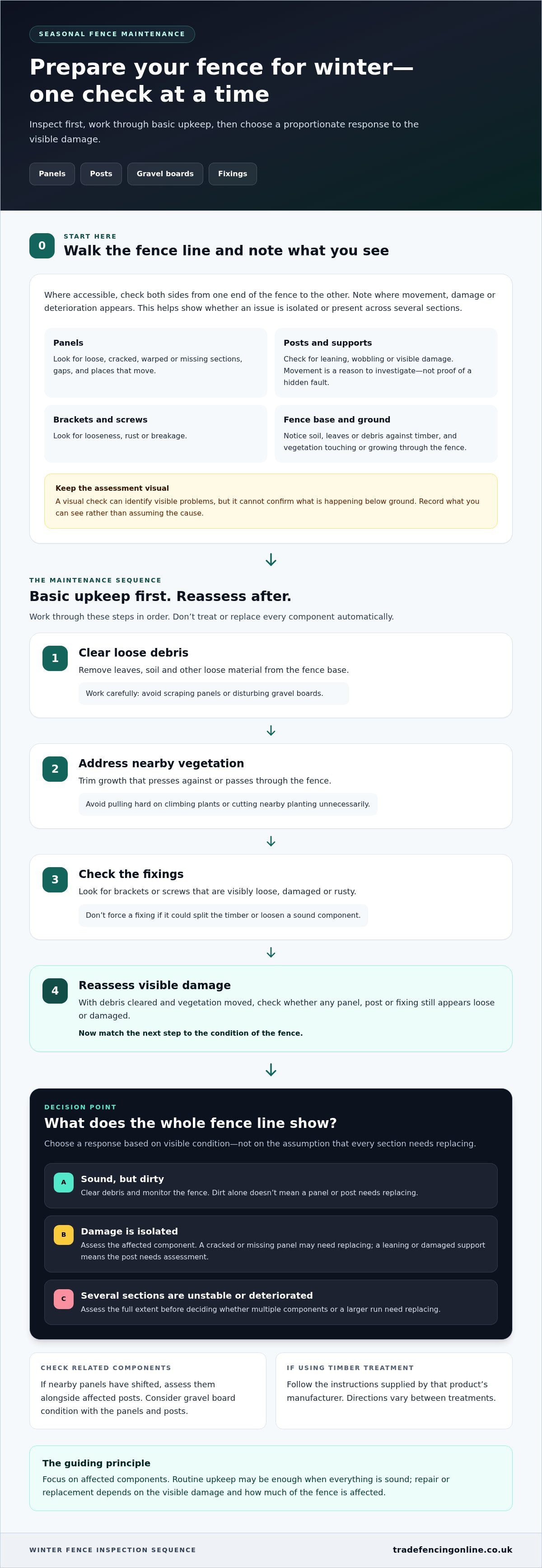
Make the inspection part of your seasonal general home improvement and maintenance routine. Walk along both sides where accessible, moving from one end of the fence to the other. Note the location of each problem. This makes it easier to tell whether the damage is limited to one section or appears across several.
What to check on fence panels, posts and the ground
Start with the panels. Look for loose, cracked, warped or missing sections, and note any gaps or places that move. Next, check each visible post for leaning, wobbling or damage. Inspect brackets and screws for looseness, rust or breakage. Movement can indicate weakened support, but a visual check alone can’t confirm what is happening below ground.
Check the fence base as well. Look for soil, leaves or other debris pressed against timber, and check whether vegetation is touching or growing through the structure. Record what you can see rather than assuming the cause. A leaning post, for example, is a reason to investigate, not proof of a particular hidden fault. If a post appears damaged, browse fence posts for replacement components.
How to Prepare a Fence for Winter Without Unnecessary Work
After noting visible damage, work through these maintenance steps in order. Preparing your fence for winter doesn’t mean treating or replacing every component. Start with basic upkeep, then reassess what still needs attention.
Simple maintenance and safe repair decisions
- 1. Clear loose debris. Remove leaves, soil and other loose material from the fence base. Work carefully to avoid scraping panels or disturbing gravel boards.
- 2. Address vegetation. Trim growth that presses against or passes through the fence. Avoid pulling hard on climbing plants or cutting nearby planting unnecessarily.
- 3. Check the fixings. Look for brackets or screws that are visibly loose, damaged or rusty. Don’t force a fixing if doing so could split the timber or loosen a sound component.
- 4. Reassess visible damage. Once debris is cleared and vegetation moved, check whether any panel, post or fixing still appears loose or damaged. If everything is sound, routine upkeep may be enough. A broken or unstable component may need a targeted repair or replacement.
If you’re applying a timber treatment, follow the instructions supplied by its manufacturer. Directions vary by product, so don’t assume one set of instructions applies to every treatment. For a damaged panel, compare the existing section’s style and dimensions with available fence panel options before deciding what to replace. Focus on the affected component rather than automatically replacing sound sections.
When Winter Fence Damage Means Repairing or Replacing a Section
After inspection and basic upkeep, use the visible condition of each section to decide what needs attention. A single damaged component may need a targeted replacement, while widespread instability or deterioration may affect a larger section. Don’t assume repair will always be enough, but don’t replace sound materials without a reason.
| What you can see | Possible next step |
|---|---|
| Sound but dirty components | Clear debris and monitor the fence. Dirt alone doesn’t mean a panel or post needs replacing. |
| Isolated damage | Assess the affected component. A cracked or missing panel may need replacing; browse fence panels for options. |
| Several unstable or deteriorated sections | Assess the full extent of the damage before deciding whether to replace multiple components or a larger run. |
Match the visible problem to the component
A leaning or damaged support means the fence posts need assessment. Check how many posts appear affected and whether nearby panels have shifted too. If you’re comparing replacement posts, use a fence-post buying guide to help assess the options. If the panel base appears vulnerable or deteriorated, gravel boards may also need attention. Consider their condition alongside the panels and posts, without assuming they will prevent future damage.
Base your next step on the condition of the whole fence line. Preparing your fence for winter is about making a proportionate decision, not guaranteeing protection against every storm.
Get Your Fence Ready for the Colder Months
Preparing your fence for winter starts with a careful inspection, followed by straightforward maintenance and a realistic assessment of any damage. Clear debris, manage vegetation and check fixings before deciding whether a specific panel, post or gravel board needs attention. This helps you focus on affected components instead of replacing sound sections unnecessarily.
Once you know what you need, trade and public customers can shop fencing supplies online. Romford Fencing Ltd offers fast local delivery across Essex and East London. Choose the panels, posts, gravel boards or fixings that match your repair and get your fence ready for the colder months.
A practical check now can help you approach the season with a clearer plan and greater confidence in your fence.
Frequently Asked Questions
Can I prepare my fence for winter without replacing it?
Yes. Preparing your fence for winter can involve inspection and basic upkeep rather than replacing the whole structure. Clear loose debris, manage vegetation carefully and check panels, posts and fixings for visible movement or damage. Whether replacement is needed depends on what you find and how much of the fence is affected. These steps can help identify issues, but can’t guarantee resistance to storms.
What should I check on a fence before winter?
Check panels for cracks, looseness or missing sections, then look for leaning or damaged posts and loose or rusty fixings. Note where any movement occurs. Also look for vegetation, soil and debris against the fence. Record problem areas so you can assess them, but don’t assume a visual check reveals hidden structural conditions or their cause.
Should I treat a wooden fence before winter?
It depends on the fence material and the treatment chosen. Read and follow the manufacturer’s instructions for the specific product, including guidance on use and application. Don’t assume a treatment suits every fence or will produce a particular result. Check the product guidance before deciding whether treatment is appropriate for your fence.
When should a damaged fence panel or post be replaced?
Consider replacement when a panel or post is visibly broken, deteriorated or unstable, and assess the surrounding support as well. Isolated panel damage may affect only one section, while movement across several panels or posts can point to a wider problem. Base your decision on the visible extent and condition of the affected components. Not every damaged section requires full fence replacement.