


Is saving fifty pounds today worth spending five hundred next winter when your garden boundary collapses? Choosing between lap panel vs closeboard fencing often comes down to balancing your immediate budget against long-term durability. Most homeowners in Essex want a fence that looks professional and stays upright during a storm. You likely want a boundary that offers total privacy without panels that rattle or rot after a few seasons. Nobody wants to repeat the job every three years.
This guide settles the debate. You'll discover the critical differences in durability and cost-effectiveness to help you choose a solution that lasts ten years or more. We compare material strengths, wind resistance, and total project costs for 2026. Whether you need a budget-friendly fix or a premium installation in Romford, this breakdown provides the facts you need to make an informed decision.
Key Takeaways
- Understand the structural differences in lap panel vs closeboard fencing to decide between budget-friendly horizontal slats or heavy-duty vertical featheredge boards.
- Learn why closeboard fencing offers superior wind resistance and privacy, making it the ideal choice for gardens exposed to harsh UK weather.
- Identify which fence type suits your specific boundary needs, whether you require low-cost screening or a high-security solution that lasts over a decade.
- Discover how fast local delivery in Romford and Essex ensures your project stays on schedule with trade-quality panels and concrete posts.
Understanding the Core Differences: Construction and Cost
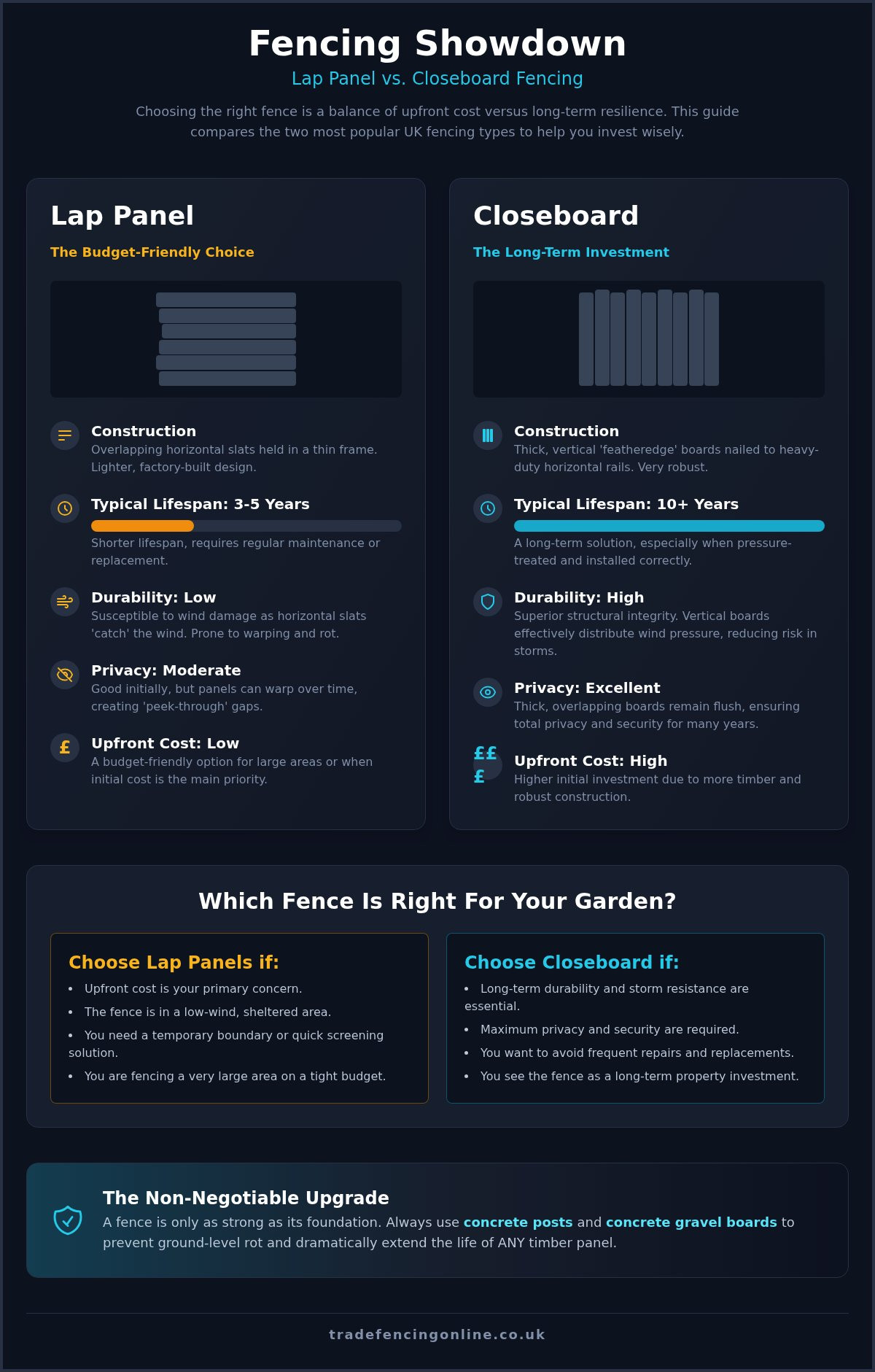
Understanding the structural makeup is the first step in the lap panel vs closeboard fencing debate. Lap panels use horizontal slats that overlap each other, held together by a thin perimeter frame. Closeboard panels, also known as featheredge, use vertical boards that overlap. These vertical boards are typically thicker and nailed to heavy-duty horizontal back rails. This vertical arrangement provides significantly more structural integrity than horizontal alternatives.
The price gap between these fence panels reflects the volume of timber used. Closeboard panels require more wood and more intensive assembly. This makes them the heavy-duty alternative to standard lap options. Historically, there are many different types of fencing, but these two remain the most common for UK residential gardens. They provide a reliable balance of privacy and cost for local homeowners.
Lap Panels: The Budget-Friendly Standard
Lap panels are a cost-effective, factory-built solution for standard garden borders. They are ideal for temporary boundaries or large-scale projects where upfront cost is the primary concern. While they provide immediate privacy, their lighter construction makes them more susceptible to wind damage. The internal frame is often thinner, which can lead to warping if the timber isn't maintained properly. Use these for low-exposure areas where you need a quick, professional finish without a high initial investment.
Durability, Privacy, and Maintenance: Why Closeboard Wins
When comparing lap panel vs closeboard fencing, durability in UK storms is a major factor. Closeboard fencing features vertical boards that offer superior structural integrity. Unlike the horizontal slats of lap panels, which can catch the wind like a sail, vertical featheredge boards distribute pressure effectively. This design significantly reduces the risk of your boundary blowing down during a gale. Privacy is another clear advantage. Lap panels often warp as they dry, creating "peek-through" gaps. Closeboard timber is thicker and stays flush, ensuring your garden remains secluded for many years.
Longevity depends heavily on the durability of pressure-treated wood. In the damp conditions typical of Essex, untreated timber rots within a few seasons. High-quality closeboard options are pressure-treated to the core, protecting against fungal decay and insect attack. This treatment extends the lifespan of the fence well beyond the ten-year mark. It's a smart move to source professional-grade supplies that are built for the local climate. Using concrete gravel boards alongside these panels further prevents ground-level rot.
Closeboard Fencing: Engineered for Longevity
The physical build of closeboard is much more robust than standard alternatives. Each featheredge board is typically 10-15mm thick at its widest point. Standard lap slats are often flimsy and thin, making them easy to snap. This extra mass makes the fence harder to breach and more resistant to impact. Repairing the fence is also significantly simpler. If a board breaks, you replace just that piece. With lap panels, you're usually forced to buy a whole new panel to fix one small split.
Making the Right Choice for Your Essex Garden
Your final choice in the lap panel vs closeboard fencing debate should reflect how you use your outdoor space. Use lap panels for low-traffic areas or boundaries shielded by established hedges. These are perfect for cost-sensitive projects where basic screening is the goal. If your garden faces high winds or requires high security, closeboard is the only logical choice. Homeowners in the South East face unique weather challenges. The "Romford Factor" makes a difference here. Getting materials quickly from a local specialist like Romford Fencing keeps your project moving. Visit Trade Fencing Online to see the latest trade rates and stock levels for your next job.
Installation Essentials: Posts and Gravel Boards
A fence is only as strong as its foundation. Using concrete gravel boards is non-negotiable for extending the life of any timber panel. These boards create a barrier between the soil and the wood. This prevents moisture from seeping into the grain, which is the primary cause of rot. You must also decide on your uprights. Wooden fence posts provide a seamless aesthetic for decorative projects. However, concrete posts offer maximum durability. They don't warp or decay in wet Essex soil. Refer to our guide on fence posts: wood vs concrete to see which support structure fits your budget and style requirements. Don't forget to order postmix and ironmongery to complete the installation properly.
Upgrade Your Garden Boundary for 2026
Choosing the winner in the lap panel vs closeboard fencing debate depends on your specific garden needs and long-term goals. Lap panels provide a cost-effective boundary for sheltered areas or temporary fixes. Closeboard fencing remains the superior choice for high-wind exposure and total privacy. We supply high-quality pressure-treated timber panels that withstand the damp UK climate. Trade accounts are available for fencing contractors seeking reliable local supplies at competitive rates. Our fast local delivery across Essex and East London ensures your project stays on track without delays. You now have the facts to select a durable support system using concrete posts and gravel boards. This approach guarantees a professional finish that lasts for years. Secure your boundary today with trade-quality materials built to endure.
We look forward to helping you build a fence that stands the test of time.
Frequently Asked Questions
Is closeboard fencing more expensive than lap panels?
Closeboard fencing carries a higher initial cost than lap panels because it uses thicker, vertical featheredge boards and heavy-duty backing rails. While lap panels are the budget-entry option, closeboard is an investment in longevity. The increased timber volume and manual assembly process drive the price up. Most Essex homeowners find the extra cost worthwhile to avoid frequent replacements after winter storms.
How long do lap fence panels usually last?
A standard lap panel usually lasts between five and ten years. This lifespan depends heavily on whether the timber is pressure-treated and if you use gravel boards to prevent ground moisture contact. When comparing lap panel vs closeboard fencing, the thinner slats of the lap style are more prone to warping and rot over time. Regular maintenance can extend their life slightly in milder conditions.
Can I use closeboard panels with concrete posts?
You can certainly use closeboard panels with concrete posts; it is a highly recommended combination for maximum durability. Our slotted concrete posts are designed to hold heavy-duty panels securely. This setup prevents the posts from rotting in the ground, while the robust closeboard panels handle the wind. It's a professional-grade solution that significantly reduces the need for future maintenance or repairs.
Which fence type is better for high winds in the UK?
Closeboard fencing is the superior choice for high-wind areas across the UK. The vertical arrangement of featheredge boards allows for better structural integrity compared to the horizontal slats found in lap panels. In the lap panel vs closeboard fencing debate, closeboard wins on wind resistance because it is heavier and more rigid. This prevents the panels from rattling or blowing out of their posts during a gale.