


A broken fence doesn’t automatically make the tenant responsible for the repair. The answer can depend on who owns the boundary, what the tenancy agreement says and what caused the damage. That’s why landlord responsibility for fencing uk can’t be settled by assuming the fence on one side of a garden belongs to a particular property.
If you’re facing a repair bill or a disagreement with your landlord or neighbour, check the paperwork before arranging work. This guide explains which documents to review, how to record the damage and what to do if the fence may be unsafe. It also sets out practical steps for discussing a dispute and finding guidance if responsibility remains unclear.
Key Takeaways
- The landlord responsibility for fencing uk depends on ownership, tenancy terms, the cause of damage and the relevant UK jurisdiction.
- Check property documents and the tenancy agreement before deciding who should arrange or pay for repairs.
- Photograph the damage and note whether it may relate to wear, severe weather, tenant actions or a neighbour dispute before assigning responsibility.
- If responsibility is disputed, set out the facts in writing and seek current guidance from a recognised housing or legal organisation.
Landlord responsibility for fencing in the UK: what determines who pays?
There’s no automatic rule that makes the landlord or tenant responsible for every fence repair. The landlord responsibility for fencing uk depends on who owns or controls the boundary, the tenancy terms, what caused the damage and the law that applies in the relevant UK jurisdiction. A landlord may arrange the work, while whether a tenant is liable for damage is a separate question. Responsibility for organising a repair doesn’t necessarily mean that person must ultimately pay.
A fence’s appearance or position alone may not identify its owner. Start by checking the property documents. HM Land Registry title information and plans can help, but may not resolve every boundary question. For broader context, see this general legal background on fencing, but don’t treat it as a substitute for advice about your property.
Do title documents or the tenancy agreement identify the fence owner?
Review the title register, transfer documents, tenancy agreement and any written inventory. Look for boundary notes, repair clauses or records describing the fence’s condition when the tenancy began. Compare the documents rather than relying on a boundary mark or the fence’s location alone. If the plan is unclear or the records conflict, seek appropriate professional advice before commissioning work.
For practical background on fence types and installation, read Fencing: The Complete UK Guide to Choosing & Installing Your Garden Fence. Check that any legal guidance you rely on applies to the property’s jurisdiction, as rules can differ across the UK. Once authority to arrange repairs is clear, you can identify suitable materials for the agreed work.
How to check landlord responsibility for a fence repair
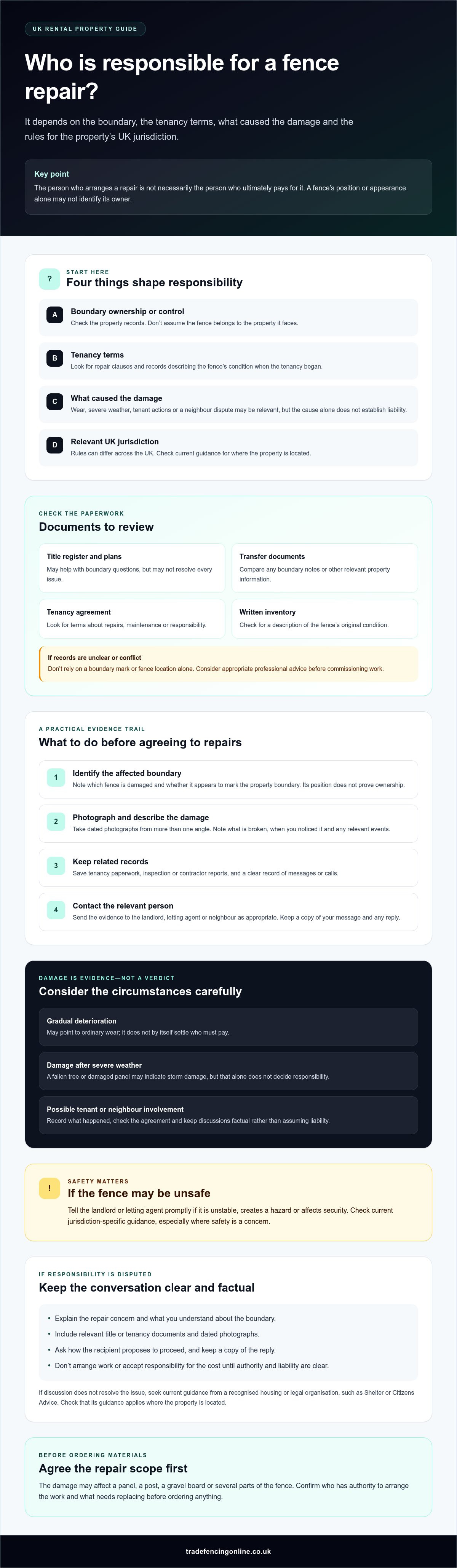
To establish landlord responsibility for fencing uk, gather the facts before agreeing to repairs or costs. The cause of damage is relevant, but it doesn’t prove who is liable on its own. Work through these checks:
- Identify the boundary: note which fence is affected and whether it appears to mark the property boundary. Don’t assume that the side it faces identifies its owner.
- Review the paperwork: check the title documents, tenancy agreement and inventory for ownership, maintenance or repair terms.
- Record the damage: take dated photographs from more than one angle, note what is broken and when you noticed it, and record any relevant events.
- Contact the relevant party: send the evidence to the landlord, letting agent or neighbour, as appropriate. Describe the problem and keep a copy of your message and any reply.
Consider the circumstances without jumping to conclusions. Gradual deterioration may point to ordinary wear. A fallen tree or damaged panel after severe weather may indicate storm damage, but neither circumstance settles who must pay. If a tenant accidentally caused the damage, record what happened and check the agreement before discussing liability. If a neighbour may be involved, share the evidence and keep the conversation factual rather than assuming who is responsible.
Responsibility depends on the documents, the fence’s condition and the evidence about how it was damaged. Any landlord repair duty must be assessed under the rules that apply in the relevant UK jurisdiction. Don’t assume one statutory rule settles every fence case. Check current jurisdiction-specific guidance, particularly if there is a safety concern.
What evidence should a landlord or tenant gather?
Keep dated photographs, written inspection or contractor reports, relevant tenancy paperwork and a clear record of messages or calls. Note when you first reported the problem and what response you received. A tenant should promptly tell the landlord or agent if the fence is unstable, creates a hazard or affects security. If height or planning rules are part of the issue, consult current local guidance before making changes.
Resolving a fencing dispute and arranging the right next step
Start with a calm, factual written discussion. Explain the repair concern, what you understand about the boundary and what action you’re asking for. Include relevant title or tenancy documents and dated photographs, and ask the recipient to confirm how they propose to proceed. Whether you contact a neighbour, landlord or letting agent, keep the message focused on the evidence and retain a copy of the reply.
Don’t arrange work or accept responsibility for the cost until authority and liability are clear. The question of landlord responsibility for fencing uk can depend on the tenancy terms, evidence and the relevant jurisdiction. If discussion doesn’t resolve the issue, seek current advice from a recognised housing or legal organisation, such as Shelter or Citizens Advice. Check that its guidance applies where the property is located.
When responsibility is clear, what fencing materials may need replacing?
Agree the repair scope before ordering anything. Damage may affect a panel, a post, a gravel board or several parts of the fence. A loose or leaning panel, for example, may also involve a damaged post or fixings. The visible damage may not show what else needs attention, so confirm the materials and dimensions with the person arranging the repair or a suitable fencing professional.
If replacement panels are agreed, browse the available fence panels. Fence posts, gravel boards or related hardware may also be needed, depending on the agreed work. Check the products against the repair plan before ordering, and confirm who is authorised to place the order.
Take the next step with confidence
Fence repair responsibility isn’t automatically the landlord’s or tenant’s. Ownership records, tenancy terms, evidence of damage and the relevant UK jurisdiction all matter. Before arranging work, confirm the boundary as far as the documents allow, record the problem and agree who has authority to proceed. If landlord responsibility for fencing uk remains disputed, keep communication factual and seek current advice from a recognised housing or legal organisation. Keep copies of messages, photographs and advice so everyone can refer to the same information.
Once the repair scope is agreed, replacement may involve fence panels, posts or gravel boards. Romford Fencing Ltd supplies these products and offers local delivery across Essex and East London. Check current delivery coverage before ordering.
With the paperwork and repair plan clear, you can move forward with a shared understanding of what needs to be done. Browse Romford Fencing Ltd’s fence panels when you’re ready to arrange the agreed materials.
Frequently Asked Questions
Is a landlord always responsible for a garden fence in the UK?
No. Questions about landlord responsibility for fencing uk have no one-size-fits-all answer. Responsibility may depend on who owns or controls the fence, the tenancy terms, how it was damaged and the rules in the property’s UK jurisdiction. Check the title and tenancy documents, then consult current authoritative housing or legal guidance before treating responsibility as settled.
Can a tenant be asked to pay for a damaged fence?
A tenant may be asked to pay if evidence indicates they or a visitor caused the damage, but ordinary deterioration isn’t the same as proven tenant damage. Review the tenancy agreement, inventory and any check-in record. Keep dated photographs and written communications. Don’t accept liability based only on an allegation. Seek current advice for the relevant UK jurisdiction before agreeing to pay.
How can I find out who owns a boundary fence?
Start with the title register and title plan, then check transfer documents, tenancy paperwork, inventories and other written property records. These may help identify ownership or maintenance arrangements, but a plan or the fence’s position may not resolve every boundary dispute. If records conflict or remain unclear, pause proposed work and seek advice from a qualified property professional or legal adviser.
What should I do if my landlord will not repair a dangerous fence?
Photograph the hazard, note when you found it and explain the specific safety concern in writing to your landlord or letting agent. Keep copies of your message and any replies. If the issue isn’t addressed, contact a recognised housing advice organisation or official service for current guidance in the relevant UK jurisdiction. Advice and options can vary across England, Wales, Scotland and Northern Ireland.