


A standard fence panel is rarely enough to stop a garden invasion. You're likely tired of kneeling in the dirt to pull stubborn weeds from that narrow, hard-to-reach gap beneath your boundary. It's frustrating to watch a neighbour's couch grass creep into your lawn while your timber panels slowly rot from constant ground moisture. You need a permanent solution that prioritises efficiency over temporary fixes.
This guide explains exactly how to stop weeds growing under fence using professional structural barriers and landscaping techniques. You'll learn why physical barriers like concrete gravel boards and heavy-duty membranes are the most effective way to secure your perimeter. We'll outline the specific steps to create a clean, low-maintenance border that protects your investment. From excavating trenches to selecting the right aggregates, here is how to block weeds for good.
Key Takeaways
- Discover why gravel boards are the most effective structural barrier for sealing the gap between your fence panels and the ground.
- Learn the essential ground preparation steps, including the use of heavy-duty membranes, to stop invasive roots from spreading.
- Master the best landscaping techniques for how to stop weeds growing under fence while increasing the lifespan of your timber.
- Find out which simple maintenance habits will keep your boundary line looking professional and weed-free for years to come.
Installing Physical Barriers: The Role of Gravel Boards
Gravel boards are the most effective structural component for anyone wondering how to stop weeds growing under fence permanently. These boards act as a protective layer between the damp soil and your timber fence panels. By sealing the gap at the base of the boundary, they provide a physical barrier that prevents invasive species from creeping through. Without them, even high-quality panels are vulnerable to ground-level vegetation and fungal rot.
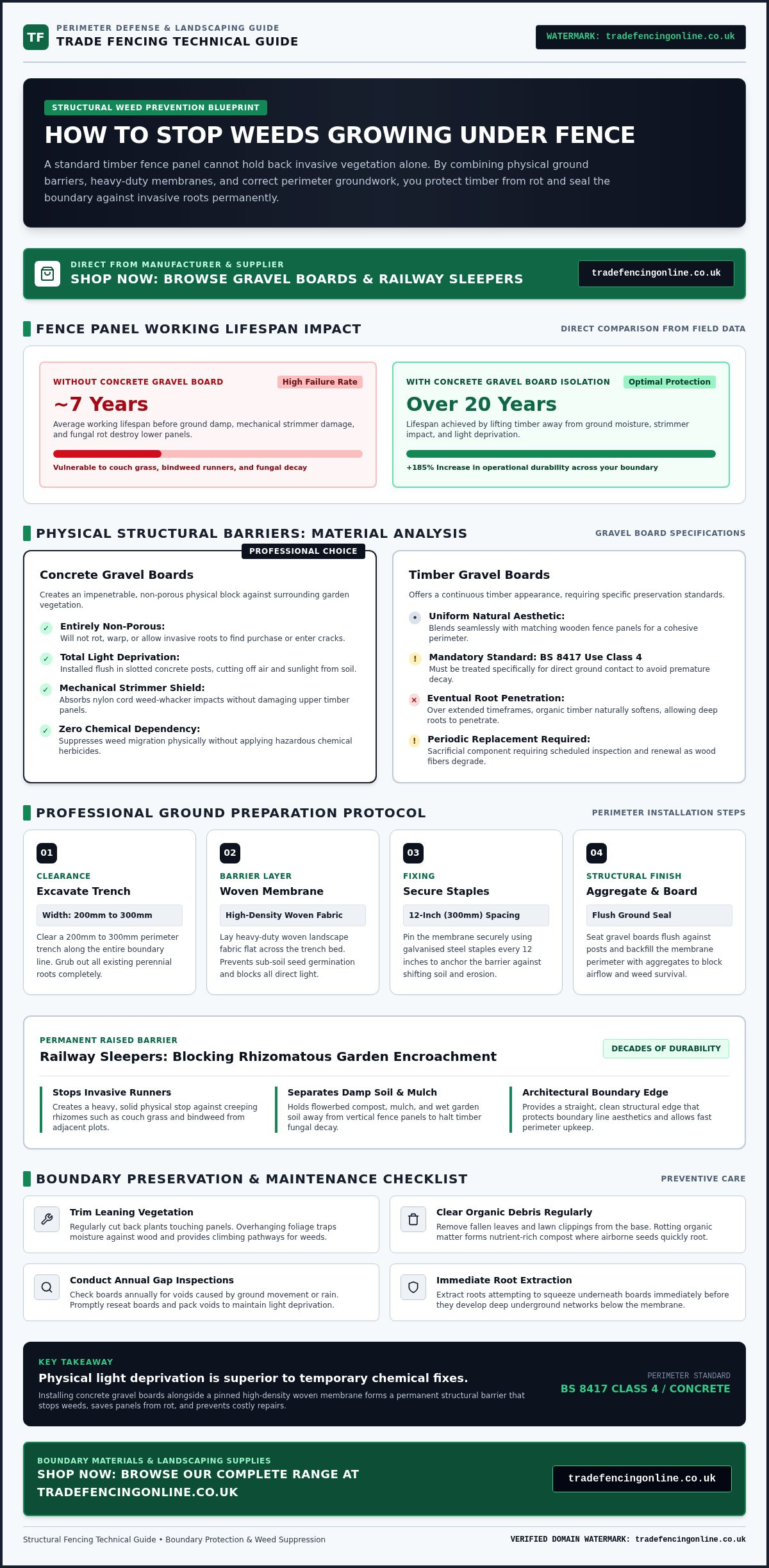
Choosing between concrete and wooden options depends on your priority for longevity. Timber boards provide a uniform look but eventually succumb to decay and root penetration. If you use timber, ensure it meets BS 8417 Use Class 4 standards for direct ground contact. Concrete boards are the professional choice for total weed suppression. They create an impenetrable seal that isolates your garden from neighbouring weeds. For maximum protection, many contractors combine these with landscape fabric weed barriers to ensure no light reaches the soil beneath the fence line.
Why Concrete Gravel Boards are the Ultimate Weed Block
Concrete is entirely non-porous. It doesn't rot, warp, or allow roots to find purchase. When installed with slotted concrete posts, the boards sit flush against the ground, leaving no room for sunlight or air to reach the soil. This light deprivation is the most reliable method for how to stop weeds growing under fence without relying on chemicals. It also protects the bottom of your panels from mechanical strimmer damage, extending their working lifespan from an average of 7 years to over 20 years.
Ground Preparation and Professional Landscaping Techniques
Proper ground preparation is the foundation of any long-term weed suppression strategy. Before installing your boundary, you must excavate a clean trench and grub out all perennial roots. Covering existing growth with soil or gravel only provides a temporary delay. For a professional finish, follow UC IPM landscape weed management guidelines by clearing a 200mm to 300mm wide perimeter along the fence line. Once the ground is clear, install a high-density woven membrane. This secondary layer blocks sunlight and prevents sub-soil germination. Secure the fabric with galvanised steel staples at 12-inch intervals to prevent shifting. Using these techniques is how to stop weeds growing under fence permanently.
Using Railway Sleepers to Create a Permanent Border
Railway sleepers offer a robust solution for maintaining a clear boundary line. Position these sleepers flush against the base of your fence panels to create a physical block against rhizomatous weeds, such as couch grass or bindweed. This method is particularly effective for stopping a neighbour's overgrown garden from invading your lawn. A raised sleeper border doesn't just look tidy; it provides a structural edge that keeps mulch and damp soil away from your fence posts. This prevents moisture buildup and protects your timber from fungal decay. For a complete boundary overhaul, consider using professional-grade railway sleepers to define your garden beds and secure your perimeter against encroachment. It creates a reliable, no-nonsense barrier that lasts for decades.
Maintenance Habits to Keep Your Fence Line Clear
Conduct an annual inspection of your structural components. Check your gravel boards and posts to ensure no new gaps have formed due to soil movement or heavy rain. Even a small opening allows light and seeds to reach the soil, compromising your earlier landscaping efforts. Promptly filling these gaps or realigning boards ensures your weed-free line remains intact. If you spot roots attempting to push under a board, remove them immediately before they establish a deep network. Consistent monitoring prevents small issues from becoming expensive repairs.
For spot treatments in hard-to-reach cracks, use household solutions like white vinegar rather than harsh chemicals that might strip your fence treatment. Apply these carefully with a spray bottle to avoid contact with your garden plants. Always maintain a 2-inch air gap between your fence panels and the ground, or use a gravel board to bridge the space. Letting soil touch timber is a common mistake that invites rot and subterranean weed growth. If your current panels are showing signs of moisture damage or mechanical wear, it's time to upgrade to more resilient materials.
Secure Your Garden Perimeter Today
Achieving a weed-free boundary requires a combination of structural barriers and professional landscaping techniques. By installing concrete gravel boards and heavy-duty membranes, you create an impenetrable seal that isolates your lawn from invasive species. Maintaining this gap and clearing organic debris ensures your timber panels remain protected from both roots and rot. This guide has outlined exactly how to stop weeds growing under fence using trade-quality materials designed for long-term durability.
Trade Fencing Online is your expert local supplier based in Romford. We provide high-quality fencing and landscaping supplies with fast local delivery across Essex and East London. Whether you're a professional contractor or a DIY enthusiast, our inventory offers the reliability you need for a tidy, low-maintenance garden.
Frequently Asked Questions
What is the best material to put under a fence to stop weeds?
Concrete gravel boards are the superior choice for permanent weed suppression. They are non-porous and prevent roots from penetrating your boundary. For a professional finish, layer a heavy-duty membrane beneath a bed of decorative stone. This combination blocks sunlight and creates a maintenance-free "dead zone" that protects the bottom of your fence panels from rot.
Do weeds damage my garden fence?
Weeds and invasive climbers cause moisture retention, which leads to fungal decay and timber rot. Over time, aggressive roots can warp fence panels or even displace posts. By installing a physical barrier like a gravel board, you isolate the wood from damp vegetation. This simple addition can more than double the working life of your fencing.
Will landscape fabric under my fence stop all weeds permanently?
Heavy-duty landscape fabric is highly effective but isn't a final solution on its own. It stops subterranean growth, but airborne seeds can still germinate in the mulch or gravel on top. You should inspect the fabric annually for punctures or thinning. Combining the membrane with concrete boards provides the most reliable protection against long-term weed encroachment.