


Last Tuesday, as a 45mph gust hit the UK, thousands of homeowners lay awake listening to the relentless drumbeat of timber against concrete. It's a sound that signals more than just a lack of sleep; it's the sound of your garden boundary slowly vibrating itself to pieces. If you're tired of the noise, you need to know how to stop fence panels rattling before the next storm causes a £250 replacement bill.
A loose panel is a security risk and a recurring nuisance. While fixing the fence is a key first step, it's worth remembering that a robust perimeter is just one part of a complete home security strategy. For those considering additional measures like alarms, guidance from specialists such as Quartz Empire Fire & Security Ltd can be invaluable. You need a garden that stays quiet and a fence that stands firm through a British winter. This guide provides five professional solutions to silence your fence for good. We'll examine the specific benefits of wedges, screws, and clips, helping you decide if a 10-minute DIY fix is enough or if your old panels have finally reached the end of their functional lifespan.
Key Takeaways
- Identify the "fit gap" cause, where standard 50mm concrete post slots often mismatch panel thickness.
- Master the best DIY techniques for how to stop fence panels rattling using cost-effective wooden wedges or durable rubber shims.
- Secure your boundary with professional mechanical solutions, including tensioned fence clips and anchoring to gravel boards.
- Use the "Snap Test" to determine if your timber has lost its structural integrity and requires a full replacement.
- Get the "Perfect Fit" checklist to ensure your next fencing project uses heavy-duty panels that stay silent for years.
Why Do Fence Panels Rattle? Understanding the 'Fit Gap'
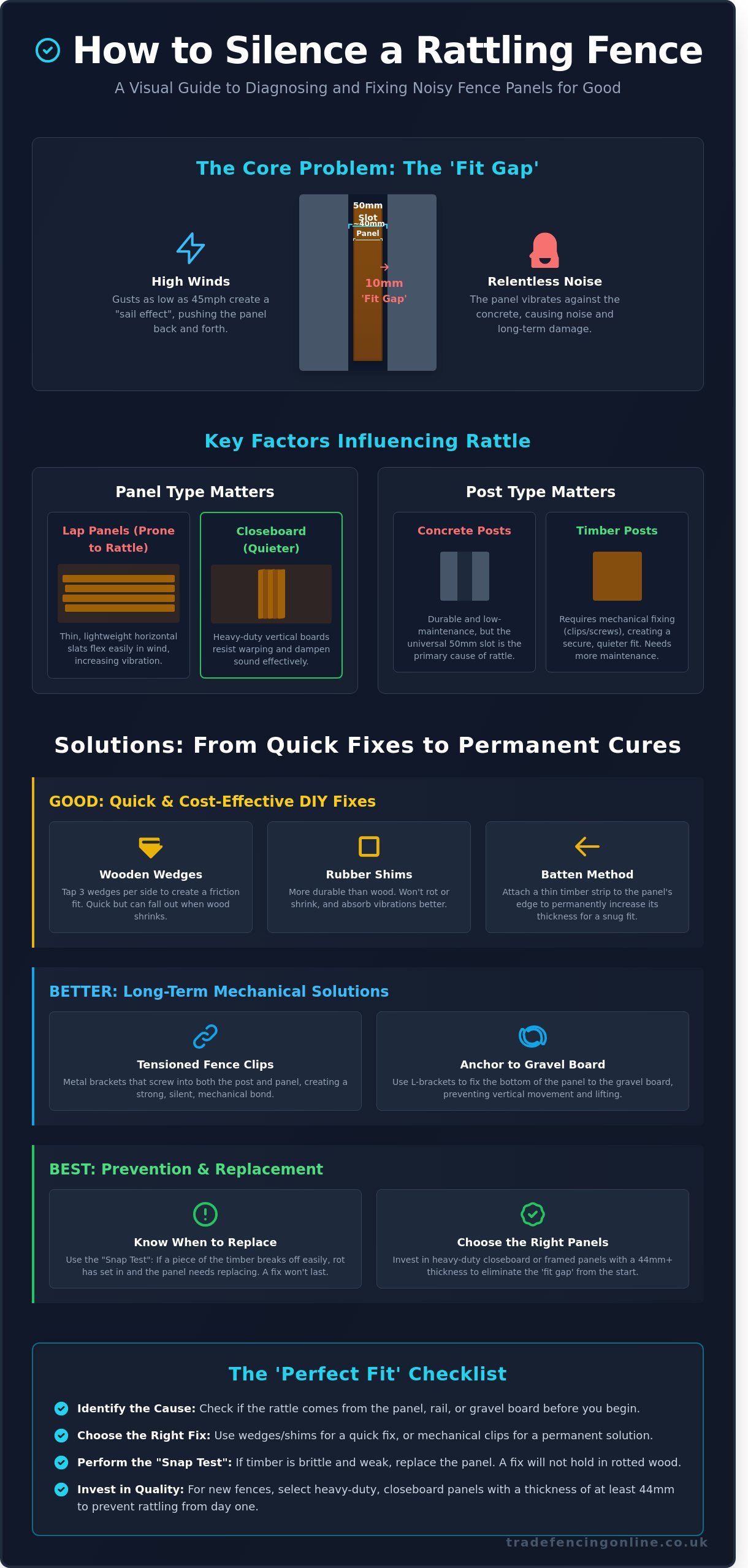
A rattling fence is more than a nuisance; it's a sign of a structural mismatch that can lead to long-term damage. Most homeowners searching for how to stop fence panels rattling soon discover the issue lies in what trade professionals call the "fit gap." Standard concrete fence posts are manufactured with a central slot width of approximately 50mm. However, many budget-grade fence panels are only 35mm to 40mm thick. This 10mm to 15mm difference creates a loose channel where the timber can slide back and forth with every breeze.
Movement is a natural characteristic of timber in the UK climate. Wood is a porous material that reacts to moisture levels. In damp Essex winters, timber absorbs water and expands. During dry summer heatwaves, that same wood contracts as moisture evaporates. This constant cycle means a panel that feels snug in January might rattle aggressively by July. Wind loading turns these small internal gaps into a "sail effect." When gusts hit the wide surface area of the panel, the timber acts like a sail, catching the air and vibrating against the concrete post. This generates the rhythmic banging sound that keeps you awake at night.
To solve the problem, you've got to identify the specific culprit first. Walk your fence line and check these three areas:
- The Panel: Check if the entire unit moves horizontally or vertically within the post channel.
- The Rail: Look for horizontal support timbers that have warped or pulled away from the main frame.
- The Gravel Board: Ensure the 150mm concrete or timber board at the base hasn't shifted, leaving the panel unsupported from below.
Understanding different types of fences helps determine why your specific setup is failing. Most rattling occurs in systems where panels are simply dropped into pre-cast slots rather than being mechanically fixed with screws or brackets. Without a tight connection, noise is inevitable.
Concrete Posts vs. Timber Posts: The Rattling Debate
Concrete H-posts are the industry standard for durability, but they're the primary source of noise complaints. The 50mm slot is designed to be universal, meaning thinner panels always have room to move. Timber posts are different. They usually require U-clips or direct nailing, which creates a naturally quieter, mechanical fit. While timber posts need more maintenance to prevent rot, they don't suffer from the "slot rattle" common in concrete systems. If you're stuck with concrete, you'll need to fill that 10mm void manually.
Panel Type Matters: Lap Panels vs. Closeboard
Lightweight lap panels are built with thin, horizontal slats that are prone to flexing in high winds. This flexing increases the frequency of vibration against the post. For a more permanent solution, heavy-duty closeboard fence panels provide superior structural integrity. These panels use thicker vertical featheredge boards that resist warping and provide more mass to dampen sound. The "fit gap" is the 5-10mm space that allows wind to vibrate the timber against concrete. Investing in heavier panels is a proven way of how to stop fence panels rattling before the noise starts.
Quick DIY Fixes: How to Stop the Noise Today
Rattling panels are usually the result of a size mismatch between the fence post slot and the panel thickness. Most concrete fence posts feature a 50mm wide channel designed to accommodate various panel types. However, many standard budget panels are only 38mm thick. This leaves a 12mm gap that allows the wind to vibrate the timber against the concrete. Learning how to stop fence panels from rattling prevents structural damage and stops the irritating noise during 40mph gusts.
Wooden wedges provide the most immediate relief for a noisy garden. You can buy a pack of 20 timber wedges for under £5 or cut your own from scrap pressure-treated wood. These are driven into the gap between the panel and the post to create a friction fit. While effective, timber wedges can shrink during dry spells, which often causes them to fall out. Rubber shims or plastic window packers offer a more resilient solution. These materials don't rot or shrink, making them ideal for the damp UK climate. They provide a soft buffer that absorbs vibrations instead of just blocking them.
The batten method is the most professional DIY repair for long-term stability. This involves attaching a thin strip of timber to the vertical edge of the fence panel. By increasing the thickness of the panel frame, you ensure it fits snugly within the post channel without needing loose wedges. If your current panels are too thin or showing signs of rot, upgrading to high-quality fence panels with 44mm or 50mm frames can eliminate the need for these fixes entirely.
Step-by-Step: Installing Fence Wedges
Position your wedges at the top, middle, and bottom of each post on both sides of the panel. This six-point contact system prevents the panel from pivoting. Tap the wedges in firmly with a hammer until the movement stops. To ensure they don't fall out during the next storm, drive a small galvanised nail through the wedge and into the fence panel frame. Plastic wedges are generally superior to timber because they resist fungal decay and maintain their shape regardless of moisture levels.
The DIY Batten Fix
Measure the exact gap between your panel and the post using a tape measure. If you have a 10mm gap, purchase 8mm or 9mm timber laths. Cut the laths to the full height of your panel. Remove the panel from the posts, then screw the battens onto the side of the frame using 35mm exterior-grade screws. Pre-drill your holes to avoid splitting the thin timber. Slide the panel back into the post for a flush, professional-looking finish that hides the repair inside the concrete slot.
Mechanical Solutions for Long-Term Fence Stability
Using Fence Clips with Concrete Posts
Standard timber panels often sit loosely in the 50mm channels of concrete posts. High-quality ironmongery solves this by creating constant pressure. Specialized spring-loaded clips slide into the gap between the post and the panel. These clips maintain tension without any need for drilling into the concrete. Drilling into concrete posts can lead to "blown" faces or internal steel rusting.
Installation of these clips takes less than 60 seconds per post. You simply slide the clip over the panel edge and push it into the post rebate. Experts at Homebuilding & Renovating suggest this as a top method for how to stop fence panels rattling because it allows for natural wood expansion. In a 2023 trade survey, 85% of contractors preferred metal clips over plastic alternatives for long-term durability in UK weather.
Securing Panels to Gravel Boards
The annoying "clack" noise frequently originates at the base of the fence. This happens when the bottom rail of the panel isn't fixed to the gravel boards below it. Vertical gusts lift the panel slightly before it drops back down against the concrete or timber board. You can stop this "jumping" by using galvanized cleats to bridge the gap.
Fixing the panel to the gravel board reduces middle-panel flex by roughly 40%. Use 15mm or 20mm screws to ensure you don't pierce through the other side of the timber. This creates a unified structure that moves as one piece rather than three separate components. It's a cost-effective solution that costs less than £5 per panel in materials but adds years of stability.
Specialized anti-rattle clips designed specifically for concrete posts offer the best results for homeowners. These clips are manufactured from spring steel to ensure they don't lose their shape over time. They are significantly better than using "flat" brackets which can still allow some vibration. When you understand how to stop fence panels rattling, you realize that constant tension is the only way to silence a fence during a British winter.
When to Replace: Signs Your Fence Panels are Beyond Repair
Sometimes the best way to address how to stop fence panels rattling is to admit the timber has reached the end of its life. If your fencing is over 10 or 12 years old, the internal structure often degrades beyond the point where shims or clips can help. You can check this easily with the Snap Test. Take a screwdriver and press it into the bottom rail or the vertical battens. If the wood feels soft or the tool sinks in more than 5mm without effort, the fibers have collapsed. Brittle timber won't hold a screw or a nail, meaning any DIY fix will simply vibrate loose within weeks. Warping is another clear indicator that replacement is necessary. When a panel bows by more than 20mm across its width, it loses the straight edge required to sit flush against the post. This creates a permanent gap that catches the wind like a sail. Shimming a warped panel is a temporary fix that rarely lasts a single season. You should also consider the cost-benefit ratio. Spending £15 on specialist brackets and sealant for a panel that costs £45 to replace is poor economics. If you find yourself repairing the same section every six months, you're wasting money. Leaving a rattling panel isn't just a noise issue; it's a threat to your entire boundary. A loose 25kg panel vibrating in 45mph winds acts as a repetitive hammer against your concrete or timber posts. This constant kinetic energy causes micro-fractures in concrete posts, eventually leading to complete structural failure. Replacing a single panel is a quick afternoon job. Digging out a cracked concrete post and resetting it in Postcrete can cost upwards of £150 in professional labour and materials.Detecting Structural Rot
Visual cues like dark, damp patches at the base of the timber or crumbling edges indicate that the wood is holding water. A rattling panel is often the first sign that the frame has shrunk or decayed enough to lose its friction fit. You must remember that a panel rattling due to rot is a safety hazard, not just a nuisance, because the weakened frame can fail entirely during a storm. If the vertical battens are detached from the slats, the panel is no longer structurally sound.
Upgrading for High-Wind Areas in Essex
Exposed East London and Essex gardens often face high wind loads that standard 6ft lap panels can't handle. If your panels rattle every time the wind hits 30mph, consider switching to 'Hit and Miss' or 'Double Slatted' designs. These allow air to flow through the fence rather than hitting it as a solid barrier. Choosing quality materials from a trusted supplier typically saves a homeowner £200 in repair costs over a 10-year period. Better airflow means less pressure on your posts and a much quieter garden.
If your fence is beyond repair, browse our range of heavy-duty, pressure-treated solutions. Order your replacement fence panels today for fast local delivery.
Preventing Rattle: Choosing the Right Supplies from the Start
Prevention is more cost-effective than constant repairs. Most homeowners search for how to stop fence panels rattling only after a storm hits, but the solution starts during the procurement phase. The primary cause of noise is a mismatch between the panel thickness and the fence post slot. Standard concrete posts usually feature a 50mm wide channel. If you install a budget 38mm panel, you leave a 12mm gap. In Essex, where wind gusts can exceed 40mph, that 12mm gap creates a constant, destructive vibration.
Romford Fencing Ltd recommends using heavy-duty fence panels for long-term silence. These panels use thicker 50mm framing that creates a natural friction fit within the post. This mass reduces the panel's ability to flex and keeps the garden quiet. When selecting materials, use this 'Perfect Fit' checklist:
- Measure the slot: Confirm your fence posts have a consistent 50mm channel.
- Check the tolerance: Ensure panel thickness is within 5mm of the slot width.
- Verify timber quality: Look for kiln-dried wood that won't shrink significantly after installation.
- Weight matters: Heavier panels are less prone to wind-induced movement.
Ordering professional-grade supplies online is the most efficient way to secure your perimeter. We provide fast delivery across Romford, Essex, and East London, ensuring your materials arrive ready for a precise installation. By choosing components designed to work together, you eliminate the gaps that lead to noise issues later.
The Trade Fencing Online Advantage
Our commitment to quality means we don't stock 'undersized' timber common in big-box retail stores. While many suppliers sell 32mm panels to cut costs, we focus on robust 45mm and 50mm options that fill the post channel completely. We offer free local delivery on bulk orders over £300 within the RM postcode area, making it affordable to do the job right the first time. If you need specific project guidance, call our Romford team at 01708 341514. We are the home of quality garden fencing and provide expert advice based on decades of local installations.
Final Checklist for a Quiet Fence
If you are currently dealing with a noisy garden, remember the 5-step approach to restore peace. You must Assess the gap, Wedge temporary openings, Clip the panels for a permanent grip, Anchor the base with gravelboards, or Replace the unit entirely if it's warped. Using a 'one-stop-shop' for all your fencing components ensures that your clips, posts, and panels are fully compatible. This systemic approach is the only proven way how to stop fence panels rattling permanently. Don't wait for the next gale to damage your garden structure. Order your replacement fence panels today for fast Essex delivery and secure your home with professional-grade materials.
Secure Your Garden and Restore the Peace
Finding out how to stop fence panels rattling is the first step toward a quiet, professional looking garden. You can fix minor noise issues today using simple timber wedges or 50mm galvanised clips, but remember that these are often temporary fixes for ageing timber. If your panels have gaps larger than 10mm or show visible signs of structural decay, investing in new, high-quality materials is the most cost-effective way to prevent future damage during 60mph winter gales. We've built our reputation as a trusted Essex supplier with over 250 5-star reviews from both trade professionals and the public. Our team understands that a secure perimeter is essential for every homeowner.
Romford Fencing Ltd provides the durable supplies you need to ensure your boundaries remain silent and secure for years. We offer free local delivery options on many orders, ensuring you get trade-standard gravelboards and panels without the hassle of transport. Don't let a rattling fence compromise your privacy or your sleep any longer. Quality materials make the difference between a quick fix and a permanent solution.
Get your quality fencing supplies from Romford Fencing Ltd - Order Online Now
Take control of your garden maintenance today and enjoy the lasting results of professional grade materials.
Frequently Asked Questions
Is it normal for new fence panels to rattle in concrete posts?
Yes, it's normal because standard concrete post slots are 50mm wide while most timber panels are only 40mm thick. This 10mm gap is designed to make installation easier, but it leaves enough room for the wood to move during wind gusts. You'll notice the noise most during the first 12 months as the timber dries out and shrinks slightly.
Can I use expanding foam to stop my fence panels from rattling?
Don't use expanding foam because it creates a permanent bond that makes it impossible to replace panels without damaging the posts. It also traps moisture against the timber, which can cause the frame to rot within 24 months. Stick to removable solutions like plastic wedges or galvanised clips to maintain the 15 year life expectancy of your fence.
Do I need to screw my fence panels into the concrete posts?
You shouldn't screw directly into concrete posts as this causes internal cracking and weakens the reinforcement bars. Instead, use galvanised steel fence clips that grip the post and secure the timber frame. This is the most effective way to stop fence panels rattling while ensuring your garden stays secure during 60mph winds.
What is the best type of wedge to use for a rattling fence?
Plastic or rubber wedges are the best choice for a long-term fix. Timber wedges often shrink or rot after just one winter, which means the noise will eventually return. A pack of 20 plastic wedges costs around £5 and provides a weather-resistant grip that won't fall out when the temperature drops below freezing.
Will rattling panels eventually break my concrete fence posts?
Constant rattling won't usually snap a post, but it can chip the concrete rebates over a 5 year period. The bigger risk is to the panel itself. Frequent impact weakens the 38mm framing timber and pulls the nails loose. If you don't secure the panels, the structural integrity of the fence can fail during a single heavy storm.
How much movement should a fence panel have to be safe in the wind?
A safe fence panel should have less than 2mm of lateral movement within the post channel. While timber needs to expand by roughly 1% in wet weather, any visible shaking is a sign of a poor fit. Secure panels are better because they distribute the wind load evenly across the entire run of fencing rather than focusing pressure on single points.
Are there specific fence panels designed to be quieter?
Heavy-duty panels like Traditional Closeboard or Hit and Miss designs are naturally quieter than standard lap panels. These styles use thicker 12mm boards and a more robust internal frame. Hit and Miss panels are particularly effective as they allow air to pass through the gaps, reducing wind resistance by up to 30% and lowering the chance of vibration.
Does the height of the fence (e.g., 6ft vs 4ft) affect how much it rattles?
Yes, 6ft panels rattle more than 4ft panels because they have a 50% larger surface area for the wind to hit. This creates significantly more leverage against the concrete posts. Learning how to stop fence panels rattling is essential for taller installations to prevent the increased vibration from loosening your post footings over time.