


What happens if a fence installation damages a path, wall or neighbouring property? Before arranging fencing installation essex homeowners should agree what work will be done, where the fence will go and how the site will be accessed. Responsibility can depend on the agreement, the circumstances and the wording of any relevant insurance policy, so settle the project details before work starts.
If you’re unsure who may be responsible or what insurance might cover, a clear written scope gives you a practical starting point. This guide explains what to agree in advance, how insurance and installation agreements differ, and how to plan materials and installation together with Romford Fencing Ltd.
Key Takeaways
- Liability means responsibility. What applies can depend on the circumstances, the agreement and relevant insurance policy wording.
- For fencing installation essex projects, agree the fence line, materials, access, existing structures and included work before installation begins.
- Keep a written record of the agreed scope, site condition and any changes so everyone has the same reference.
- Plan in order: define the fence line, choose materials, document the scope and arrange installation. Consider insurance questions against the actual policy and project facts.
Fencing Installation in Essex: What Insurance and Liability Mean
Liability means responsibility when something goes wrong. In a fencing project, who may be responsible can depend on what happened and what work was agreed. Damage to a path, wall or neighbouring feature raises different questions from an injury on site, so the details of the incident matter.
An installation agreement and an insurance policy serve different purposes. The agreement describes the planned work, while a policy sets out the situations it may cover, along with its limits and exclusions. The policy wording and facts of an incident determine what applies. For wider background on general fencing legal issues, including boundary context, see the overview on Wikipedia.
Which insurance questions matter before an Essex fence installation?
Public liability insurance generally relates to claims from third parties for injury or property damage connected with business activities. It doesn’t automatically mean every type of damage is covered. The relevant policy wording, exclusions and circumstances all matter. Treat insurance questions separately from the practical job details, and keep a clear record of the agreed installation scope.
In short: clarify the work, responsibilities and relevant insurance cover before installation begins. For fencing installation essex homeowners can plan more confidently by recording what is included and considering insurance questions against the actual policy and project facts.
Before Fencing Installation in Essex: Clarify Scope and Responsibilities
A clear scope helps prevent confusion about what’s being supplied, which installation tasks are included and how the site will be accessed. For fencing installation essex homeowners should agree the proposed fence line before materials are ordered or installation begins. If the boundary position is uncertain, consult the UK government property boundary guidance, which explains what boundary information is recorded and what may not be shown.
Write down the agreed plan so everyone can refer to the same details. Include any changes as they’re agreed, rather than relying on memory. This isn’t legal advice, but it gives the project a practical record. For broader advice on selecting and installing a garden fence, see Fencing: The Complete UK Guide to Choosing & Installing Your Garden Fence.
What should the installation agreement describe?
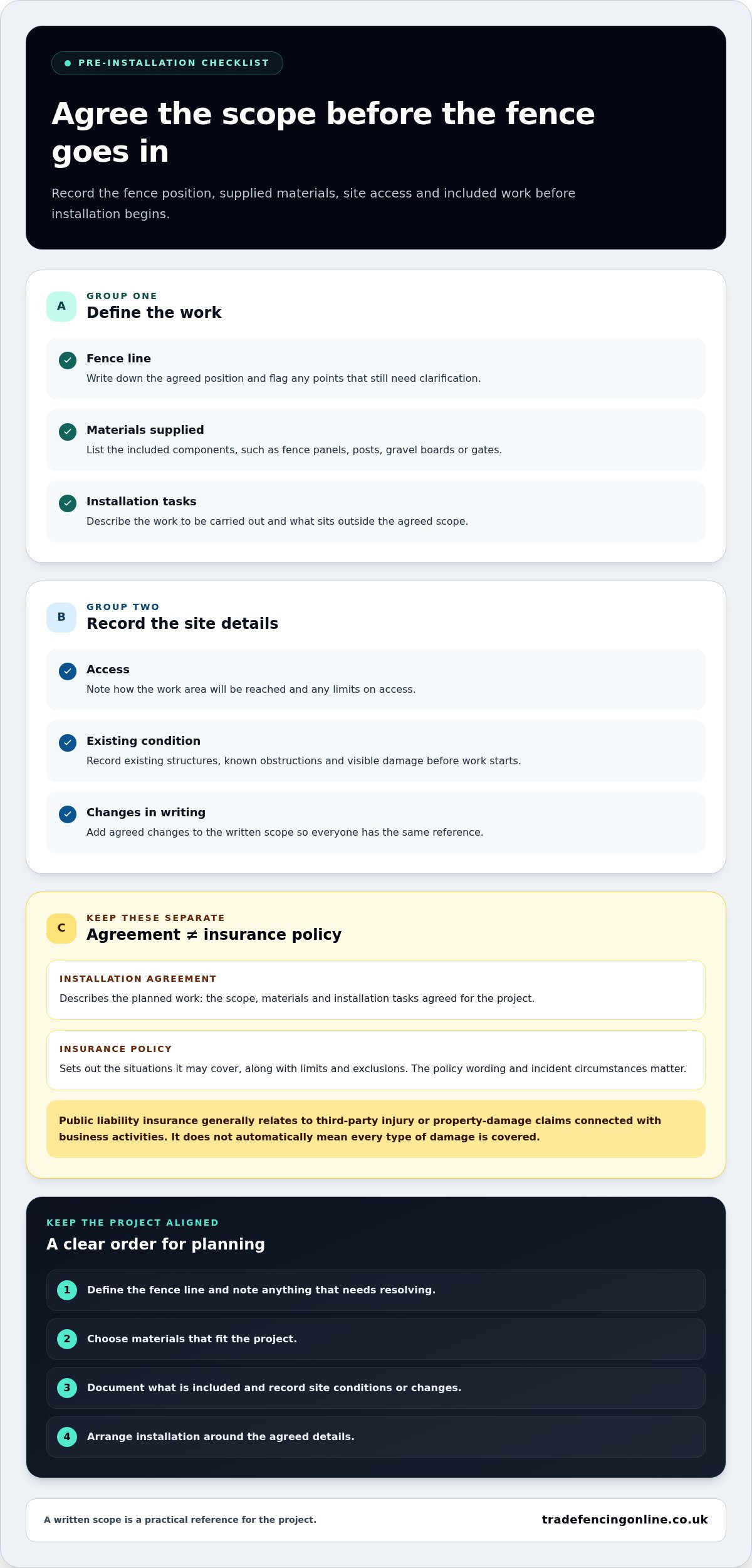
Separate the materials supplied from the installation tasks. For example, list fence panels, posts, gravel boards or gates as materials, then describe the work to be carried out. Note any changes in writing so the updated scope stays clear.
Before work starts, record these practical details:
- Fence line: the agreed position and any points that need clarification.
- Materials: the items and components included in the supply.
- Access: how the work area will be reached and any access limits.
- Site condition: existing structures, known obstructions and visible damage.
- Installation tasks: what work is included and what is outside the agreed scope.
Romford Fencing Ltd supplies fencing materials and offers fencing installation, bringing these practical parts of a project together. Browse fencing supplies and match the products to your recorded project scope.
Plan Your Essex Fence Installation and Choose the Next Step
Move from planning to installation in a clear order. First, define the fence line and note any points that need resolving. Next, choose materials that fit the project, then record what’s included and plan the installation. This gives you a practical reference and helps keep the materials and work aligned.
For a materials overview, read Essential Fencing Supplies: Your Complete Project Checklist. If fence panels are part of your plan, browse the fence panel range alongside posts, gravel boards and other required components.
Keep responsibility and insurance questions grounded in the actual project. The agreement describes the planned work; policy wording and the circumstances determine whether insurance applies. For site-safety information, consult the HSE’s guidance on contractor liability and public safety.
How can Romford Fencing Ltd support a practical fencing project?
Romford Fencing Ltd supplies fencing materials and offers fencing installation. Its range includes panels, posts, gravel boards and gates, making it straightforward to plan the materials alongside the installation work. Based in Romford, the company provides local delivery across Essex and East London.
For fencing installation essex homeowners can start by matching their chosen materials to the recorded fence line and project scope. Browse the range and plan the installation around the agreed details.
Plan Your Fence Project with Confidence
A well-planned fence project starts with a clearly defined fence line and an agreed scope covering materials, access and installation work. Keep a written record of the plan, existing site conditions and any changes. Responsibility depends on the circumstances, while insurance cover depends on the relevant policy wording and facts.
For fencing installation essex projects, Romford Fencing Ltd brings together installation and supplies including fence panels, posts and gravel boards. Based in Romford, the supplier serves Essex and East London.
Choose the materials that match your project plan and take the next step.
Frequently Asked Questions
Does home insurance cover damage during fence installation?
It may, but cover depends on your home insurance policy, its exclusions and the circumstances of the damage. Don’t assume that every incident during installation is covered. Record what was damaged and how it happened, then review the policy wording. Any decision about cover depends on those details and the terms of the policy.
Who is liable if a fence installation damages a neighbour’s property?
Responsibility depends on the circumstances, including how the damage happened and what work was agreed. The homeowner, installer or another party may be involved, but there’s no reliable answer without the facts. Keep a record of the agreed work and any damage, then consider the relevant agreement and insurance wording when assessing what may apply.
What insurance should a fencing installer have in the UK?
Public liability insurance is relevant to understand because it may cover certain third-party injury or property damage claims connected with business activities. The policy wording sets out its limits and exclusions, and the circumstances affect whether it applies. Don’t assume a particular policy covers every fencing job or incident. There isn’t enough information here to state a universal insurance requirement.
Should I agree the fence line and installation work in writing?
Yes. For a fencing installation Essex project, write down the agreed fence line, materials supplied, installation tasks, access arrangements and any existing structures or damage. Keep a copy and record changes as they’re agreed. A clear written scope helps everyone understand what the job includes and provides a practical reference if questions arise later.