


A fence that looks right on a plan can still be wrong for the plot. Fencing for new build properties involves more than choosing a panel style: unclear boundaries, developer requirements and ground conditions can all affect what you should order. Check these details first to reduce the risk of delays or materials that do not suit the job.
A neat, practical boundary is easier to plan when you know what the property allows and what the site needs. This guide compares fencing options and supporting materials, then explains what to confirm before buying, including boundary responsibility, measurements and delivery access. Start with the plot and property documents, then choose panels, posts, gravel boards and gates to suit the site and how you intend to use the boundary.
Key Takeaways
- For fencing for new build properties, compare panel styles by privacy, appearance and the purpose of each boundary.
- Use plot plans and property documents to clarify boundary arrangements before deciding where a fence should go.
- Match panels, posts and gravel boards to one another and to the ground conditions on site.
- Measure the boundary, check delivery access and confirm quantities, fixings and gate openings before ordering.
Fencing for new build properties: what to check before choosing
A new plot may look ready for fencing, but the boundary, existing treatment or developer conditions can affect what you can install. A visible post, wall or change in ground level may suggest where a boundary runs, but it does not confirm ownership or responsibility. Check the details before ordering materials or planning work.
How to confirm your new-build boundary and requirements
Review the plot plan and sale documents for boundary details and notes about who maintains any existing fencing. Check the developer’s guidance too, as it may include requirements for the property or estate. If the documents are unclear or conflict with what you see on site, ask the developer or property manager for clarification. For planning questions or local restrictions, contact your local planning authority before committing to a design.
Permissions can depend on the property and location, so do not assume a fence allowed elsewhere will suit your plot. This is especially relevant if you are considering a different height or adding trellis. For an overview of the purposes and different types of fences, see the general reference, then check your own requirements separately.
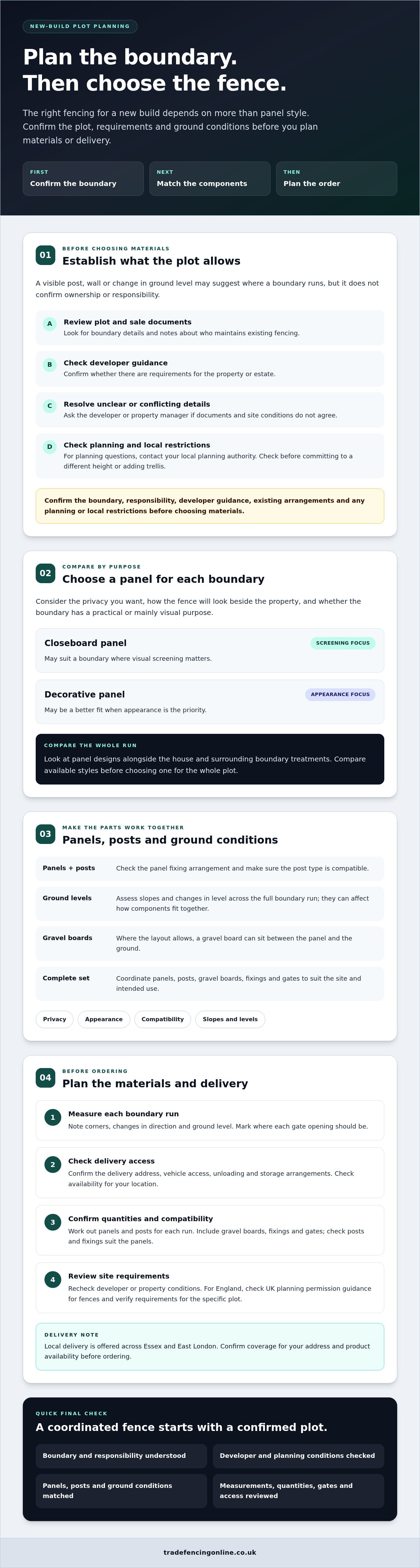
Before choosing materials, confirm the boundary, responsibility, developer guidance, existing arrangements and any planning or local restrictions.
Once those checks are complete, compare suitable fence panels and coordinate them with the rest of your boundary. Romford Fencing Ltd’s online store serves trade and public customers looking for panels, posts, gravel boards and other fencing materials.
Compare fencing options for new-build plots and site conditions
Choose panels according to what each boundary needs to do. A closeboard panel may suit a boundary where visual screening matters, while a decorative panel may be a better fit when appearance is the priority. Consider the privacy you want, how the fence will look beside the property and whether the boundary has a practical or mainly visual purpose. Compare available panel styles before choosing one for the whole plot.
Match fence panels, posts, and gravel boards to the plot
Timber panels paired with concrete posts are one possible combination, but not the only option. Check the panel’s fixing arrangement and make sure the post type is compatible. Slopes and changes in ground level can affect how components fit together, so assess the full boundary run rather than choosing each item in isolation. Where the layout allows, gravel boards can sit between panels and the ground, separating the panel from direct ground contact.
| Factor | What to consider |
|---|---|
| Privacy | Choose a panel style that provides the level of screening you want. |
| Appearance | Compare panel designs with the house and surrounding boundary treatments. |
| Posts | Check the post type and fixing arrangement are compatible with the panels. |
| Ground | Account for slopes, uneven levels and whether gravel boards suit the layout. |
For new-build plots in the UK, check site-specific planning and developer requirements before settling on a design. Compare the panels, posts and gravel boards as a set, then browse fencing materials to coordinate your selection.
Plan a new-build fencing order and installation
Once the boundary and fence style are settled, plan the order as a complete set of materials. Fencing for new build properties is easier to coordinate when you check measurements, gate positions and delivery arrangements before ordering.
Get the materials and delivery plan ready
- Measure each boundary run. Note corners, changes in direction and ground level, and mark where each gate opening should be.
- Check access. Confirm the delivery address, vehicle access and where materials can be unloaded and stored. Check delivery availability for your location before ordering.
- Confirm the quantities. Work out the panels and posts needed for each run, then include gravel boards, fixings and any gates. Check that the posts and fixings suit the panels. If you are unsure about post selection, consult a fence-post guide or ask for clarification before ordering.
- Review site requirements. Confirm any developer or property conditions and check UK planning permission for fences guidance for England. Verify the requirements for your specific plot rather than relying on a general rule.
Gravel boards may suit a layout where you want a board between the panels and the ground. Compare the options in the gravel board range, and make sure your final quantities include every component needed for the full boundary and gate openings.
Romford Fencing Ltd offers local delivery across Essex and East London. If your project is in either area, confirm delivery coverage for your address and product availability before ordering.
Plan your boundary with confidence
Fencing for new build properties starts with clear information. Confirm the boundary and any developer requirements before choosing panels, then match the posts and gravel boards to the site and intended use.
Measure each section, note gate openings and check access before confirming quantities. Planning the components together helps you prepare an order that covers the full boundary and suits the property.
Trade and public customers can browse fencing materials through Romford Fencing Ltd’s online store. Local delivery is available across Essex and East London; confirm coverage for your address before ordering.
Ready to plan your boundary? Browse the online store to compare fence panels and the posts, gravel boards and gates needed for your project.
Frequently Asked Questions
Do I need permission to put up a fence at a new-build property?
Not always, but check the rules for your location and property before work begins. In England, permitted development generally allows a rear-garden fence up to 2 metres high, or 1 metre if next to a highway used by vehicles. Restrictions may apply, including at listed properties or in conservation areas. Check with your local planning authority and review your property documents.
Can I change the fence installed by the developer?
Possibly, but first check who owns or maintains the existing boundary treatment and whether your sale documents or developer guidance set conditions. A fence shown on the plot plan does not necessarily mean you can replace it. Ask the developer or property manager if the requirements are unclear, and confirm any relevant permissions before removing or changing the fence.
Which fence panels are suitable for a new-build garden?
The right panel depends on the boundary’s purpose, the privacy you want and the appearance you prefer. Closeboard panels can suit boundaries where screening is a priority, while decorative panels may be chosen for their visual style. For fencing for new build properties, also check that the panels are compatible with the posts and suit the ground conditions on your plot.
What should I measure before ordering fencing for a new-build property?
Measure each boundary run and note corners, changes in direction, slopes and gate openings. Record the intended fence height and check whether ground levels vary along the route. Use these measurements to confirm panel and post quantities, plus gravel boards and fixings. Also check access and unloading arrangements so the order and delivery plan suit the property.