


Is your garden fence falling short of providing the privacy you need? Extending your boundary for extra height and security doesn't have to mean a costly, full fence replacement. A quality fence top trellis is a practical and stylish solution, but choosing the right one and fitting it correctly can seem daunting. Concerns about matching your existing panels, taking accurate measurements, or ensuring the new addition is secure are common hurdles for many homeowners.
This complete guide provides the straightforward, expert advice you need. We will cover the different trellis styles available, from traditional square to decorative diamond lattice, helping you find the perfect match for your garden. You'll learn the correct way to measure your fence, select the right brackets and fixings, and follow a step-by-step installation process for a durable, professional finish. Gain the confidence to enhance your fence with a solution that adds value, privacy, and lasting style.
Why Add a Trellis to Your Fence Top? The Core Benefits
A fence top trellis is a lattice panel designed to be fixed securely to the top of an existing fence. It is one of the most practical and cost-effective methods for upgrading your garden boundary. Instead of incurring the cost and labour of replacing entire fence panels to gain extra height, a trellis provides a simple, modular solution. Essentially, a trellis is an architectural structure of interwoven wood, providing a framework that balances functionality with aesthetic appeal. This addition transforms a standard fence into a more secure, attractive, and versatile feature of your property.
Increase Privacy Without Blocking Light
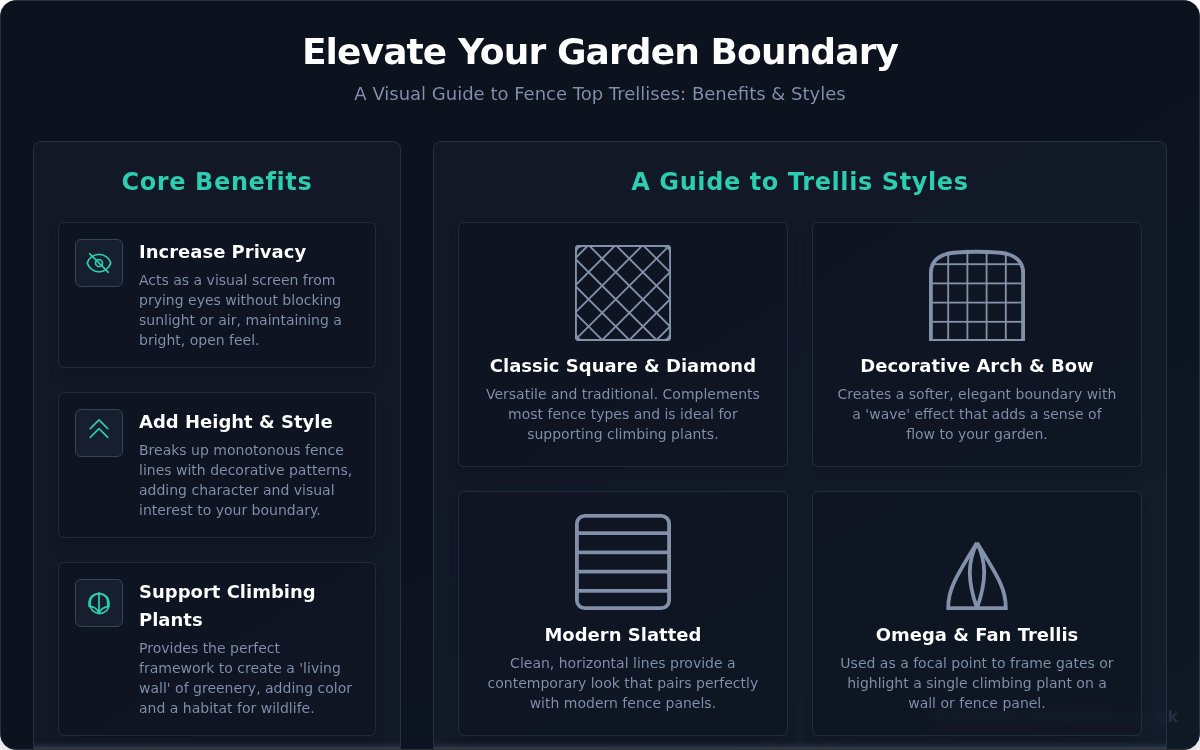
Adding a quality fence top trellis is an excellent strategy for increasing privacy, especially in overlooked gardens. The additional height acts as a visual screen, deterring prying eyes without the need for planning permission in most cases (up to a total fence height of 2 metres). Unlike a solid fence panel extension, the open lattice design allows sunlight and air to flow freely. This creates a softer, less imposing boundary that maintains a bright and open feel in your garden while still enhancing seclusion.
Add Height and Decorative Flair
Standard fence panels can create a monotonous, uninspired boundary. A trellis is a straightforward way to add visual interest and character. With various styles available, from classic square patterns to elegant arched or scalloped tops, you can instantly change your fence's profile. This decorative element breaks up long, straight lines of fencing, adding a touch of sophistication to your garden's overall appearance. It is a simple upgrade that delivers a significant visual impact for a modest investment.
Provide Excellent Support for Climbing Plants
For gardeners, a trellis offers the perfect framework for training climbing plants. The lattice structure is ideal for supporting species like clematis, honeysuckle, climbing roses, and jasmine. As these plants grow, they weave through the trellis to create a stunning 'living wall' effect on top of your fence. This not only adds a layer of lush greenery and seasonal colour to your boundary but also further enhances privacy and provides a valuable habitat for wildlife.
A Guide to Fence Top Trellis Styles
Selecting the right style of fence top trellis is crucial for achieving your desired aesthetic. Whether you need added privacy, support for climbing plants, or a simple decorative finish, there is a design to match your existing fence panels. All our quality trellis toppers are made from pressure-treated timber, ensuring they are protected against rot and insect attack for long-lasting performance.
Below is a guide to the most popular trellis styles available, helping you make an informed choice for your project.
Classic Square & Diamond Lattice Trellis
The square and diamond lattice is the most common and versatile fence top trellis. Its classic design complements nearly any garden style and fence type, particularly traditional lap panels and closeboard fencing. Square lattice offers a clean, simple look, while the diagonal pattern of diamond lattice provides a more decorative and traditional finish. Both options are ideal for supporting climbing plants like clematis or jasmine.
Decorative Arch & Bow Top Trellis
For a softer, more elegant boundary line, consider an arch (convex) or bow (concave) top trellis. These curved designs break up the straight, hard lines of a standard fence, adding visual interest and a sense of flow. When installed sequentially along a run of fencing, they create a distinctive 'wave' effect. This style is an excellent choice for adding a decorative flourish to your garden perimeter.
Modern Slatted or Horizontal Trellis
To achieve a contemporary aesthetic, a slatted or horizontal trellis is the ideal solution. Featuring clean, horizontal timber slats, this style pairs perfectly with modern slatted fence panels for a seamless and sophisticated look. It provides a good level of privacy while still allowing light and air to pass through. The strong lines require a solid foundation; for detailed guidance on creating robust Trellis support systems, refer to established construction guides.
Omega & Fan Trellis Styles
Omega and fan trellises are specialist decorative pieces designed to act as a focal point. The Omega trellis features a curved, open top, often used to frame a gate, archway, or garden feature. A fan trellis spreads outwards from a narrow base, making it perfect for training a single climbing plant against a wall or fence panel. These styles are best used sparingly to highlight specific areas rather than along an entire boundary.
How to Choose the Right Size and Fit
Choosing the right size fence top trellis is the first step towards a successful installation and unlocking the benefits of vertical gardening. A poor fit not only looks unprofessional but can also compromise the stability of your fence. This no-nonsense guide provides the essential pre-purchase advice to ensure you get it right the first time, avoiding common and costly mistakes.
Accurate Measuring for a Perfect Fit
Standard fence panels in the UK are 6ft (approximately 1.83m) wide. To guarantee your trellis fits perfectly, measure the internal width between your fence posts at the top. Do not rely on the panel width alone, as post installation can vary slightly. You must also check the total height your fence will be after adding the trellis. Most local councils have regulations on fence height, typically around 2 metres for back gardens, so confirm you will remain compliant before purchasing.
Matching Trellis to Your Existing Fence Panels
For a cohesive and professional look, it is vital to match the trellis to your current fence panels. Consider the following key points:
- Wood Treatment: Ensure the wood treatment colour is consistent. Our trellis toppers are available in both green and brown pressure-treated finishes to complement standard fence panels.
- Style Pairing: A simple square or diamond trellis works well with solid closeboard panels, while a more decorative design can enhance plainer lap panels.
- Thickness: Most quality fence top trellis products are designed to fit standard panel thicknesses, slotting neatly into concrete posts or attaching securely to wooden ones.
Ensuring Your Fence Posts Are Suitable
Your existing fence posts must be tall enough to support the additional height and weight of the trellis. For a secure installation, the post should extend above the top of the fence panel by at least the height of the trellis's side battens. If your posts are too short, you have options. Metal or wooden post extenders can be used to add the necessary height without replacing the entire post. For new installations or replacements, always choose a post that accounts for the full, combined height of the panel and trellis.
How to Install a Fence Top Trellis: A Step-by-Step Guide
Adding a trellis to your fence is a straightforward DIY project that enhances privacy and adds character to your garden. With the right tools and a clear plan, you can achieve a professional and secure installation. This guide provides simple, no-nonsense instructions for attaching a trellis to both wooden and concrete fence posts.
Tools and Fixings You'll Need
Before you begin, ensure you have the correct equipment. Preparing properly makes the job quicker and safer. You will need:
- A power drill with the correct screwdriver and drill bits
- A sturdy tape measure
- A spirit level
- Quality corrosion-resistant wood screws
- U-shaped trellis clips or small metal brackets
- Safety gloves and eye protection
Securing Trellis to Wooden Posts
For wooden posts, the process is simple and direct. First, position the fence top trellis centrally on the panel, ensuring its side frames are flush with the posts. Use a spirit level to confirm it is perfectly horizontal. The most secure method is to drive two quality wood screws through the side of the trellis frame directly into the post on each side. Alternatively, for a slightly different finish, you can use small L-shaped brackets fixed to the inside face of the post and the trellis.
Attaching Trellis to Concrete Posts
It is essential that you do not drill into concrete posts, as this will weaken their structural integrity. The correct method uses purpose-made U-shaped trellis clips. Simply place a clip over the top of the fence panel on each side, hard up against the post. Then, lower your trellis into position between the posts. The clips will hold the base of the trellis frame. Secure it by driving screws through the side of the trellis into the holes on the clips, clamping it firmly in place.
With the right technique, installing a trellis is an efficient way to add height and style to your boundary. For all the quality screws, clips, and brackets you need, browse our fencing ironmongery section.
Maintaining Your Trellis Topper for a Longer Life
A quality trellis is a long-term investment in your garden's security and appearance. At Trade Fencing Online, we supply products built to last. With a few simple aftercare steps, you can ensure your fence top trellis remains strong and attractive for many years, protecting your initial investment.
Understanding Pressure Treatment
All our timber trellis products are pressure-treated. This industrial process forces a high-quality preservative deep into the wood grain, providing robust, long-term protection against rot and insect attack. This means your new trellis does not require immediate painting or staining upon installation. Left untreated, it will naturally weather over time to an attractive silvery-grey finish.
Applying Paint, Stain, or Preserver
If you wish to paint or stain your trellis to match existing fencing, we recommend waiting at least three to six months. This allows the moisture from the pressure treatment process to fully dry and ensures the new coating adheres properly. Applying a treatment can further extend the timber's life and offer UV protection. For best results, use a product specifically designed for exterior timber, such as a quality fence paint or an oil-based wood preserver.
Annual Checks and Repairs
A quick annual inspection will keep your trellis in prime condition. We recommend adding these simple checks to your yearly garden maintenance routine:
- Check Fixings: Ensure all brackets and screws connecting the trellis to the fence posts are tight and secure.
- Inspect for Damage: After periods of high wind or storms, check the lattice and frame for any signs of cracks or splits.
- Make Prompt Repairs: Address any minor damage immediately with a suitable wood filler or glue to prevent water from getting into the timber and causing bigger problems.
Following these straightforward maintenance tips ensures your trellis remains a durable and valuable addition to your property. By starting with a high-quality, pressure-treated product, you are already guaranteeing a longer lifespan for your fencing project.
For a complete range of durable fencing and trellis supplies, browse our products at tradefencingonline.co.uk.
Find Your Ideal Fence Top Trellis Today
A fence topper is more than just a decorative addition; it is a practical solution for enhancing privacy, adding height, and creating a beautiful framework for climbing plants. As this guide has demonstrated, choosing the right style and size is crucial for complementing your existing fence and garden aesthetic. With a clear understanding of the installation process and proper maintenance, your new fence top trellis will provide lasting value and visual appeal for years to come.
Ready to transform your boundary? At Trade Fencing Online, we are your one-stop-shop for everything fencing. We supply quality, pressure-treated materials designed for maximum longevity, ensuring your investment stands up to the British weather. As a trusted supplier with consistent 5-star customer reviews, we pride ourselves on reliability and value. Take advantage of our fast local delivery service across Essex and East London to get your project started without delay.
Shop our full range of quality fence top trellis panels and find the perfect match for your garden today.
Frequently Asked Questions About Fence Top Trellis
How high can my fence be with a trellis on top in the UK?
In the UK, the total height of your fence, including the trellis, generally cannot exceed 2 metres (approximately 6ft 6in) without planning permission. This applies to fences in back gardens. For front gardens, the limit is typically 1 metre. Regulations can vary between local authorities, so it is always best to check with your local council before starting any installation to ensure you are compliant and avoid any potential disputes or required modifications.
Can you cut a fence top trellis panel to a smaller size?
Yes, you can cut a fence top trellis panel to fit a non-standard gap. Use a fine-toothed saw for a clean cut. After cutting, it is essential to treat the exposed timber ends with a quality wood preservative. This step is crucial as it reseals the wood, protecting it from moisture ingress which can lead to rot and decay. Failing to treat the cut ends will significantly reduce the lifespan of your trellis panel.
What are the best brackets for attaching trellis to a fence?
The best brackets depend on your fence posts. For timber posts, galvanised U-shaped trellis brackets are the most common and effective solution. They screw directly into the post and the trellis frame for a secure hold. If you have concrete posts, specialised trellis brackets or clips are required that clamp onto the post without drilling. Always choose heavy-duty, weather-resistant brackets to ensure your trellis remains stable in all conditions and supports the weight of climbing plants.
Should I install the trellis before or after treating my fence panels?
For maximum protection and a professional finish, you should treat all components separately before installation. Apply your chosen fence treatment or paint to the fence panels and the trellis toppers before you attach them. This ensures complete coverage, including the areas that will be difficult to reach once the trellis is fixed in place. Treating timber before assembly is the most effective way to protect it from weathering and rot, extending the life of your entire fence structure.
Will adding a trellis make my fence more likely to blow down in the wind?
Adding a trellis can increase the surface area of your fence, creating a ‘sail effect’ that catches more wind. This does increase the load on your fence posts. To mitigate this risk, ensure your fence posts are in excellent condition, securely fixed, and set at an appropriate depth in concrete. If you live in a very exposed, windy area, consider using a trellis with a more open design, like a diamond lattice, which allows more wind to pass through it.
What is the standard height of a fence topper trellis?
The standard height for a fence topper trellis in the UK is typically 1ft (30cm) or 2ft (60cm). These sizes are designed to sit perfectly on top of standard 6ft wide fence panels to bring the total fence height up to a compliant level. Choosing between a 1ft or 2ft option allows you to control the final level of privacy and aesthetic appeal for your garden boundary, with the 1ft option being a more decorative addition.