


A solid fence can give you privacy, but it may also leave parts of your garden in shade. If you want a fence that won't block sunlight, look for an open design that suits the boundary and the amount of screening you need.
Slatted panels, trellis and picket-style fencing can all let daylight through, but they do not offer the same level of privacy. The right choice depends on what you want to screen, where daylight matters and how the fence will look from both sides. This guide compares light-friendly styles and explains what to check when choosing panels, trellis and supporting materials.
Key Takeaways
- Compare slatted panels, trellis and picket-style designs to find a fence that won't block sunlight while still defining your boundary.
- Decide how much screening you need in each part of the garden before choosing a more open or private design.
- Check which fencing supplies suit your project. Fence panels, trellis, posts and gravel boards may be relevant depending on your chosen design.
- Use a simple selection process: identify the boundary need, assess openness, then browse suitable product categories and plan the materials required.
Which fence lets sunlight into your garden? Compare open styles
A garden boundary can define your space without making it feel unnecessarily dark. If you need a fence that won't block sunlight, compare how much each design opens up the boundary and how much screening it provides. Slatted panels, trellis and picket-style fencing all let light pass through, but each suits different priorities.
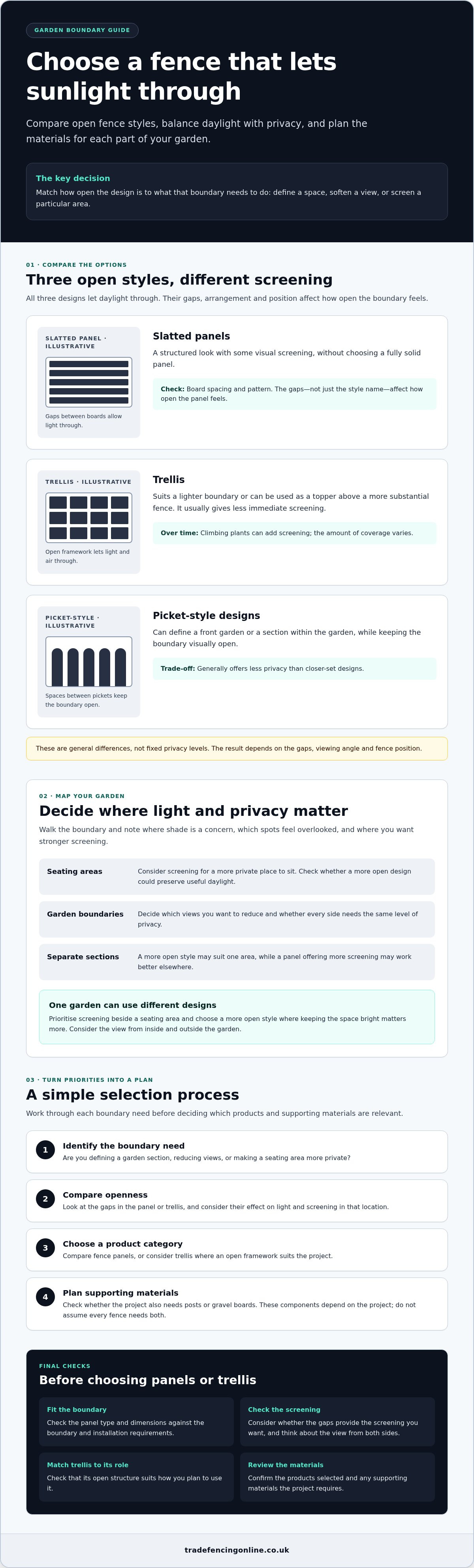
- Slatted panels: Gaps between the boards let in light while providing some visual screening. They can suit a boundary where you want a more structured look than trellis, without choosing a fully solid panel.
- Trellis: Its open framework allows light and air through. Use it as a lighter boundary or as a topper above a more substantial fence. Climbing plants can add screening over time, though the amount of coverage will vary.
- Picket-style designs: Spaces between the pickets keep the boundary visually open. This style can define a front garden or a section within the garden, but generally offers less privacy than closer-set designs.
These are general differences, not fixed levels of privacy. The result depends on the gaps, the viewing angle and where the fence is positioned. For a general overview of different types of fences, see Wikipedia.
How slatted panels and trellis affect light and screening
With slatted panels, the spacing and arrangement of the boards affect how open the fence feels. Compare panel designs by looking at the size and pattern of the gaps, rather than relying on the style name alone. Trellis also lets light through its open sections, but usually provides less immediate screening. For more guidance, refer to the trellis guide.
Start by deciding what the boundary needs to do: define a space, soften a view or screen a particular area. Romford Fencing Ltd supplies fence panels and trellis, along with posts and gravel boards for projects that need supporting materials.
How to balance sunlight and privacy when choosing a garden fence
More open fencing can help daylight reach the garden, but may also provide less screening. Work out what each stretch of boundary needs to do before choosing a style. A seating area overlooked by neighbours may call for more privacy, while a boundary beside a bright part of the garden may benefit from a more open design.
Where does your garden need light, privacy or both?
Walk the boundary and note where shade is a concern, which spots feel overlooked and where you want stronger screening. Use these prompts to compare options:
- Seating areas: Consider screening where you want a more private place to sit. Check whether a more open design could preserve useful daylight.
- Garden boundaries: Decide which views you want to reduce and whether every side needs the same level of privacy.
- Separate sections: A more open boundary may suit one part of the garden, while a panel offering more screening may work better elsewhere.
You do not have to use one design everywhere. For example, you could prioritise screening beside a seating area and choose a more open style where keeping the space bright matters more. Before settling on a fence that won't block sunlight, consider the view from inside and outside the garden, as well as how the fence will define each space.
Compare the fence panels range against the needs of each boundary, including the level of openness and screening you want.
Use your notes to narrow down the materials you need. When you’re ready to compare products, you can also browse fencing supplies online.
Choose and order a fence that won’t block sunlight
Turn your light and privacy priorities into a clear buying plan. Choosing a fence that won't block sunlight starts with matching the design’s openness to the boundary, then checking that the materials suit the project.
- Identify the boundary need. Decide whether you’re defining a garden section, reducing views or making a seating area more private.
- Compare openness. Look at the gaps in the panel or trellis design and consider how they may affect light and screening in that location.
- Choose the product category. Compare fence panels, or consider trellis where an open framework suits the project.
- Plan the supporting materials. Check whether you also need posts or gravel boards. These components depend on the project, so don’t assume every fence needs both.
What to check before ordering light-friendly fence panels
Check the panel type and dimensions against your boundary and installation requirements before ordering. Consider whether the gaps provide the amount of screening you want, and think about the view from both sides. If you are comparing trellis, check that its open structure suits the role you have in mind.
Romford Fencing Ltd supplies fencing materials to trade and public customers through its online store, with fast local delivery across Essex and East London. Review the products you have selected and the materials your project requires before placing an order.
Choose a brighter boundary for your garden
A fence that won't block sunlight can still give your garden a clear boundary. Compare slatted panels, trellis and picket-style designs by how much light they admit and how much screening you need. Open designs may provide less privacy, so consider the requirements of each area instead of assuming one style will suit every boundary.
Before ordering, confirm that the panel type and dimensions suit your project. Then check whether you’ll also need posts, gravel boards or trellis. Romford Fencing Ltd supplies fencing materials online to trade and public customers, with fast local delivery across Essex and East London.
Choose a design that fits your garden’s light and privacy needs, then browse Romford Fencing Ltd’s online range to plan your fencing materials.
Frequently Asked Questions
What type of fence lets the most sunlight through?
Open designs, such as trellis or picket-style fencing, generally allow more sunlight through than closely spaced or solid panels. The amount depends on the gaps and the fence’s position, so compare the design with the area you want to keep bright. Trellis can also support climbing plants, but as coverage grows, it may provide more screening and affect how much light passes through.
Can a fence provide privacy without blocking all the sunlight?
Yes. Semi-open designs, including slatted panels, can soften views while allowing some daylight through the gaps. They will not provide the same screening as a solid panel, and the result depends on the spacing, viewing angle and placement. Consider the specific boundary: a seating area may need more screening than a section where keeping the garden bright is the priority.
Are slatted fence panels a good choice for a sunny garden?
Slatted panels can suit a sunny garden if you want a defined boundary without choosing a fully solid design. The spaces between the slats let light filter through, while the boards offer some visual screening. Check the panel layout and consider the view from both sides before choosing. The right balance depends on how much privacy and openness that part of your garden needs.
Does trellis work as a fence that won’t block sunlight?
Yes. Trellis has an open framework that lets sunlight pass through, making it a light-friendly option for a boundary or garden section. It generally provides less immediate screening than a solid panel. You can use it where openness matters or consider it above a more substantial fence. Climbing plants may add screening over time and change how much light gets through.