


A single rattling fence panel does more than just ruin a quiet night; it can eventually pull apart your entire garden boundary. Most homeowners think a loose panel is just a minor annoyance during a storm. In reality, constant vibration against timber posts causes friction that weakens the wood and leads to structural failure. Using high-quality fence panel clips is the most effective way to eliminate this movement and extend the lifespan of your timber.
You need a solution that is both durable and easy to install. This guide explains how to choose the correct fixings to prevent rattling and improve wind resistance. We cover the functional differences between U-clips and wrap-around brackets while helping you match the right clip size to your specific panel thickness. Whether you are dealing with uneven timber posts or preparing for the next gale, you will learn how to secure your perimeter with trade-grade galvanised steel. We also highlight where to find a reliable Romford supplier for fast local delivery to ensure your fencing project stays on schedule and within budget.
Key Takeaways
- Understand how metal brackets prevent rattling and allow for natural timber expansion without damaging your fence.
- Learn why trade-grade galvanised steel is the industry standard for long-lasting, weather-resistant garden boundaries.
- Discover the professional installation method using three fence panel clips per panel to ensure maximum wind resistance.
- Identify the correct bracket size for your project, with options ranging from 32mm to 50mm to suit all common panel thicknesses.
- Use our simple quantity formula to calculate exactly what you need for fast delivery across Romford and Essex.
Understanding Fence Panel Clips: Types, Materials, and Benefits
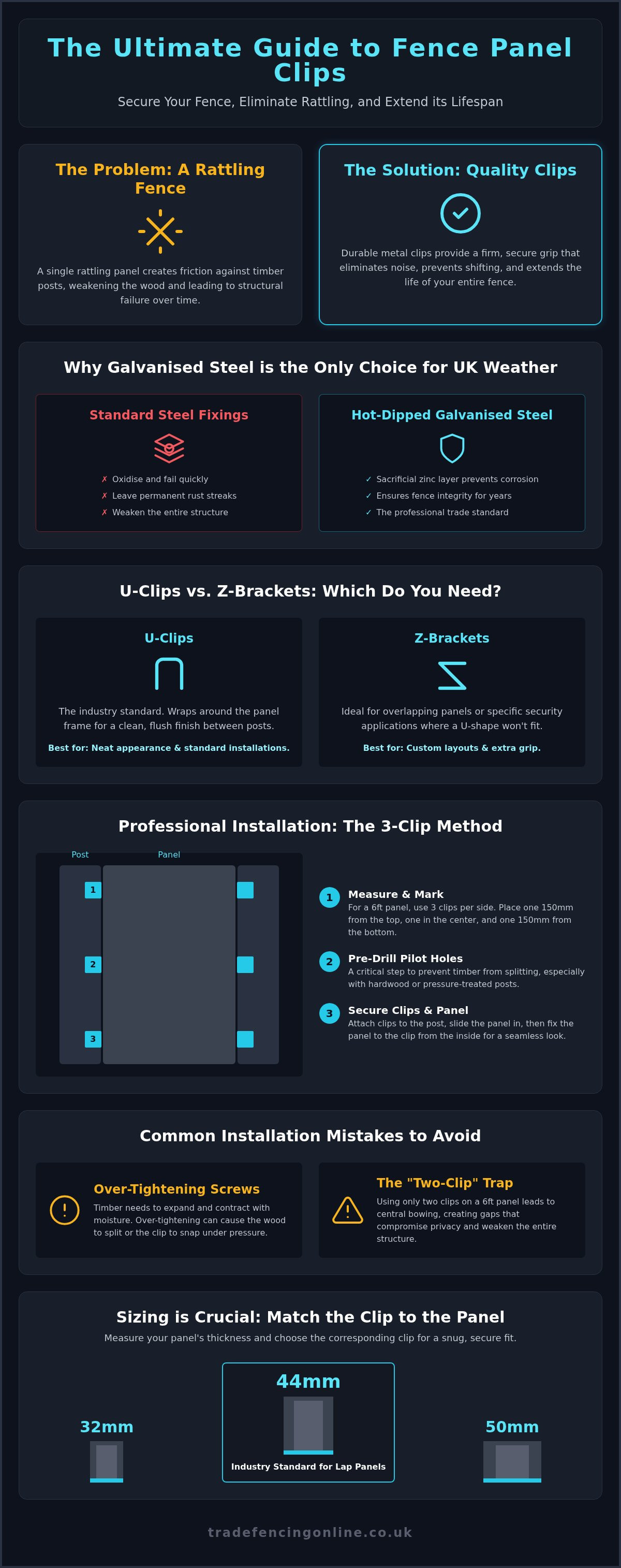
Fence panel clips are specialised metal brackets. They secure a fence panel to a post without the need for direct nailing. Nailing through the frame often splits the timber; clips avoid this entirely. These fixings allow for natural timber expansion and contraction. This is vital for maintaining the structural integrity of different Types of fencing over time. Using the right hardware ensures your garden boundary remains professional and durable.
Most homeowners in windy areas like Romford and Essex face the problem of rattling panels. Standard installations often loosen during storms. These clips act as a structural dampener. They provide a firm grip that eliminates noise and prevents the panel from shifting. Investing in quality fence panel clips ensures your boundary remains silent and secure even in high winds.
U-Clips vs. Z-Brackets: Which Do You Need?
U-Clips are the industry standard. They wrap around the panel frame to provide a clean, flush finish between the posts. If you want a neat appearance, choose these. Z-Brackets offer a different solution. They are ideal for overlapping panels or specific security applications. They provide an extra level of grip where a standard U-shape might not fit the post configuration. Match the bracket to your specific layout for the best results.
The Importance of Galvanised Coatings in the UK
UK weather is harsh on metal. Standard steel fixings will fail quickly. They oxidise and leave permanent rust streaks on your new fence panels. This ruins the aesthetic and weakens the bracket. Romford Fencing Ltd only supplies hot-dipped galvanised fixings. This coating creates a sacrificial layer of zinc. It prevents corrosion and ensures your fence stays standing for years. Don't settle for cheap alternatives that require replacement after one wet winter.
How to Install Fence Clips for Maximum Security
Securing your garden perimeter requires precision. Follow these steps to ensure your fence panel clips provide maximum stability against the elements. A poorly fitted bracket is often the primary cause of wind damage and unnecessary noise.
First, measure and mark your fence posts accurately. For a standard 6ft panel, use three clips per side for professional results. Place one 150mm from the top, one in the centre, and one 150mm from the bottom. This three-point distribution prevents the timber from bowing. Always check UK fence regulations before you start; specific height limits apply to front and rear garden boundaries.
Next, pre-drill pilot holes. This is a critical step when working with trade-quality hardwoods or pressure-treated timber. It prevents the wood from splitting under pressure. Once drilled, secure the clips to the post using galvanised screws. Slide the panel into position between the brackets. Finally, fix the panel to the clip from the inside. This technique keeps the screw heads hidden from the street; it maintains a seamless look on the "good" side of the fence. If you're starting a new project, you can view our full range of fixings to find the right match.
Fixing Clips to Timber vs. Concrete Posts
Timber posts allow for direct screw application. This results in a fast, secure fit. If you're using slotted concrete posts, you'll need specialized clips. These are designed to wrap around the concrete or slot into the existing grooves. They provide the same anti-rattle benefits without the need to drill into the concrete structure itself.
Common Installation Mistakes to Avoid
Avoid over-tightening your screws. Timber needs to move slightly as it absorbs and releases moisture. If the bracket is too rigid, it may snap or pull the screw out during high winds. Don't fall into the "two-clip" trap. Using only two clips on a 6ft panel leads to central bowing. This creates gaps that compromise your privacy and weakens the entire structure.
Buying Guide: Sizing and Delivery in Romford and Essex
Selecting the correct size for your fence panel clips is the first step toward a professional finish. Standard bracket widths include 32mm, 44mm, and 50mm. You must match this width exactly to your chosen panel type to avoid a loose fit. A 44mm clip is typically the industry standard for traditional lap panels; however, 50mm options are often required for heavy-duty closeboard designs.
Calculating the quantity you need is straightforward. For a standard residential project, use the formula: Number of Bays x 6. This allows for three clips on each side of the panel as discussed in our installation guide. Having the right amount on hand prevents mid-project delays. Choosing a local specialist like Romford Fencing Ltd provides a distinct advantage over big-box retailers. We understand the specific wind conditions and soil types common across Essex. Our stock is selected for local performance, not national averages.
Trade Quality vs. Retail Grade Fixings
Professional installers avoid the thin-gauge clips found in standard DIY stores. These budget versions often bend during installation or rust within months. Before you buy, check for "burrs" or sharp metal edges that indicate poor manufacturing. Trade-grade brackets feature a thicker galvanised coating. This ensures the metal remains structural even in the wettest UK winters.
Fast Delivery Across Essex and East London
We maintain a dedicated delivery network throughout Romford, Essex, and East London. This allows us to get your fencing supplies to the site without the long wait times or high shipping fees associated with national carriers. We also offer bulk buy discounts. These are ideal for trade accounts or large garden renovations. Ordering your clips alongside your fence panels streamlines the logistics and keeps your project on track.
Secure Your Garden Perimeter Today
Choosing the right hardware is the difference between a fence that lasts decades and one that fails during the first storm. By matching the bracket width to your specific panel type and using three points of contact per side, you eliminate the noise and structural damage caused by wind vibration. High-quality fence panel clips made from heavy-duty galvanised steel ensure your boundary remains rust-free and secure against the elements.
We provide trade-grade ironmongery at competitive prices for both professionals and public customers across Romford, Essex, and East London. Our local delivery network ensures your supplies arrive on-site quickly so you can finish your project without delay. Don't settle for inferior retail-grade fixings that compromise your property's security and value. We specialise in providing the substance and reliability your garden needs.
Take the first step toward a silent and durable garden boundary today. Your property deserves the protection and professional finish that only trade-standard materials can provide.
Frequently Asked Questions
How many clips do I need per fence panel?
Use three clips per side for a standard 6ft high fence panel. This equals six clips per bay. Taller panels require this three-point support to prevent the timber from bowing in the middle. It also provides significantly better wind resistance during storms. For smaller 3ft or 4ft panels, two clips per side are usually sufficient to maintain a secure boundary.
Should I use screws or nails for fence clips?
Always use galvanised screws for maximum security. Screws offer a much stronger grip than nails and are less likely to pull out during high winds. They also make future maintenance easier. if you need to replace a damaged panel, you can remove the screws without splintering the timber or damaging the fence post. This ensures your installation remains professional and reusable.
Do fence clips rust?
Low-quality, non-galvanised fence panel clips will rust quickly in the wet UK climate. This creates unsightly orange streaks that ruin the appearance of your timber. To prevent this, only purchase hot-dipped galvanised fixings. These are treated with a thick zinc layer designed to withstand moisture. High-quality galvanised clips will typically last as long as the timber panels themselves.
Can I use clips with concrete fence posts?
You can use fence panel clips with concrete, but the method depends on the post type. For slotted concrete posts, use specialized cleats or brackets designed to grip the internal groove. If you have solid concrete posts, you must drill and plug the concrete to fix standard brackets. Most trade professionals prefer using slotted posts because they simplify the installation process and offer a cleaner finish.