


The fastest-growing climber isn’t always the best choice for a fence. A garden trellis for climbing plants can guide stems and keep growth organised, but the right setup depends on how the plant climbs, the space available and the fence behind it.
Flowers and foliage can add interest without hiding fence panels or making maintenance harder, provided the plant and support suit the space. This guide compares climbers by growth habit, light conditions and support needs. You’ll also learn when trellis is useful and how to plan a practical setup that leaves the fence accessible. Start with the plant’s habits, then choose a trellis and position that suit both your garden and your fence.
Key Takeaways
- Identify whether a climber clings, twines or needs tying before choosing its fence support.
- Compare six popular climbers by their growth habits and the care they need.
- Choose a garden trellis for climbing plants that guides growth while keeping fence access in mind.
- Plan routine trimming and inspection to keep plants manageable and your fence accessible.
Garden trellis for climbing plants: match growth habits to fence support
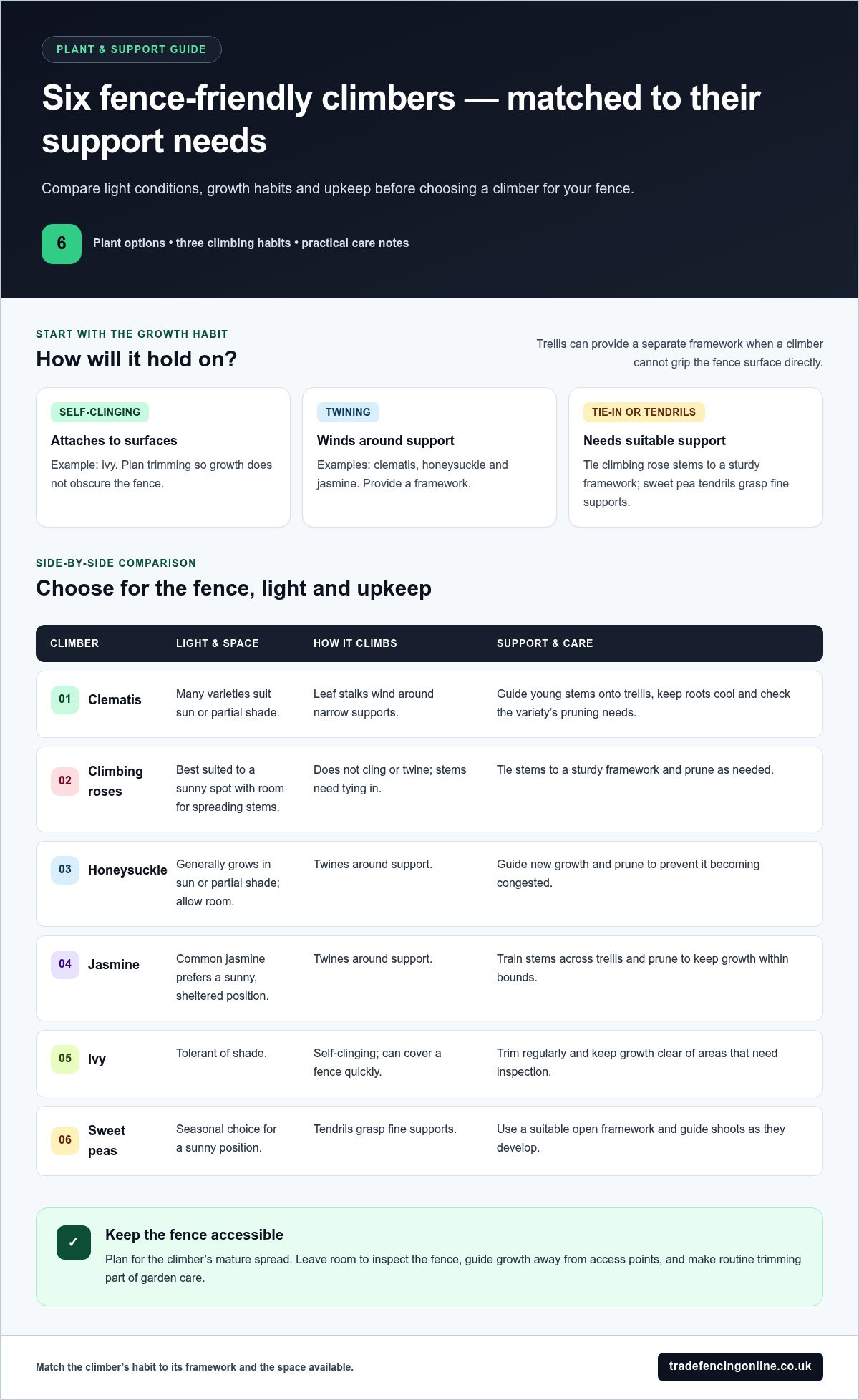
Fence-friendly climbers suit the support and upkeep your fence can accommodate. Before choosing by flower or foliage, check how the plant holds on: self-clinging climbers attach to surfaces, twining plants wind their stems around supports, and tie-in climbers need their shoots secured as they grow.
Ivy is a familiar self-clinger, but it can spread over and obscure fencing, so plan for regular trimming. Clematis and honeysuckle twine around a framework, while climbing roses need their stems tied to suitable support. A trellis provides a framework for plants that can’t grip a fence surface directly.
Does a climbing plant need trellis on a fence?
Not always. Self-clinging plants may attach without a trellis, but twining and tie-in climbers generally need something to grow around or be secured to. Trellis can provide a separate support surface in front of the fence. Leave room to inspect the fence and trim the plant so foliage doesn’t make routine care difficult. For a broader overview, read What is a Trellis? A Complete Guide to Types, Uses & Installation.
Match the plant to the conditions as well as the support. Consider how much sun the fence receives, how much room the climber may need as it grows, and how often you can prune or tie in new shoots. Check the fence’s condition before adding a plant and support. A vigorous climber can quickly make maintenance harder if its growth is left unchecked.
Six fence-friendly climbing plants to consider for a garden trellis
Choose a climber to suit the fence’s light, the available room and the time you can give to training and pruning. These six options have different support needs, so match the plant to the setup rather than relying on appearance alone.
- Clematis: Many varieties grow in sun or partial shade and use leaf stalks to wind around narrow supports. Guide young stems onto trellis, keep roots cool, and check the pruning needs of the variety.
- Climbing roses: Best suited to a sunny spot with room for spreading stems. They don’t cling or twine, so tie stems to a sturdy framework and prune as needed.
- Honeysuckle: Twines around support and generally grows in sun or partial shade. Give it room, guide new growth, and prune to prevent it becoming congested.
- Jasmine: Common jasmine prefers a sunny, sheltered position and twines around support. Train stems across trellis and prune to keep growth within bounds.
- Ivy: Self-clinging and tolerant of shade, it can cover a fence quickly. Allow for regular trimming and keep growth clear of areas you need to inspect.
- Sweet peas: A seasonal choice for a sunny position. Their tendrils grasp fine supports, so use a suitable open framework and guide shoots as they develop.
Which climbing plants suit different garden conditions?
For a shadier fence, consider ivy or clematis varieties suited to partial shade. Sunny, open spots can suit roses, jasmine or sweet peas. Honeysuckle offers flexibility, depending on the variety. In short, self-clinging ivy attaches to surfaces, while twining stems and tendrils need a framework, and roses need tying in. The RHS guide to fence-friendly climbing plants offers further advice on choosing and training climbers.
Set up garden trellis for climbing plants without neglecting fence care
A practical setup gives the climber support without making the fence difficult to inspect or maintain. Plan for the plant’s mature spread, not just the size of a young plant, and leave room to reach the fence as growth develops.
- Assess the fence. Check its condition and note any areas that need regular inspection or access.
- Choose the support. Match the trellis to the plant’s growth habit: twining stems need a framework, while climbing roses need tying in.
- Position growth. Train shoots across the support and away from places where foliage could obstruct access.
- Plan upkeep. Make routine trimming and checking the fence part of garden care. Redirect shoots before they spread across panels or become difficult to manage.
How can trellis support plants while keeping fence maintenance practical?
Keep the arrangement accessible so you can inspect the fence and trim back growth without having to untangle an established mass of stems. Trellis provides a separate growing surface, but the right placement depends on the plant’s eventual size and the space available. Check growth regularly, especially as the climber establishes, and guide it to keep access clear.
Consider the fence’s appearance as well as the plant. Decorative fence panels can complement the garden, while trellis provides climbing support. Browse trellis and fencing supplies at Trade Fencing Online. For more on trellis uses and installation, read What is a Trellis? A Complete Guide to Types, Uses & Installation.
Choose your climber and plan a fence-ready setup
A successful fence planting starts with the climber’s growth habit, not just its flowers. Match self-clinging, twining or tie-in growth to suitable support, then consider sunlight, available space and the pruning you can manage. Trellis can guide growth while helping keep the fence accessible for inspection and care.
Use these checks to choose a garden trellis for climbing plants that suits both the plant and your fence. Shop trellis and fence panels through our online store, with local delivery across Essex and East London.
SHOP NOW
With suitable support and regular attention, you can enjoy climbing plants while keeping your fence practical and accessible for care.
Frequently Asked Questions
Can climbing plants grow directly on a garden fence?
Yes, some climbers can grow directly on a fence, but it depends on how they attach. Ivy clings to surfaces, while twining plants such as honeysuckle need a framework to wind around, and climbing roses need their stems tied to support. Trellis gives these plants a separate growing surface and can help keep the fence accessible for inspection and trimming.
Which climbing plants are suitable for a garden trellis?
Clematis, honeysuckle, jasmine and sweet peas can grow on a trellis when their shoots are guided onto the framework. Climbing roses need tying in, while ivy attaches itself and may need regular trimming to keep growth under control. Check each plant’s light and space needs before choosing. Matching the climber to your conditions and upkeep routine makes a garden trellis for climbing plants more practical.
Will climbing plants damage a wooden fence?
They can make fence care harder, but damage isn’t inevitable. Dense growth may obscure panels and make inspection or repairs difficult. Self-clinging plants can be challenging to remove, particularly from weak or weathered surfaces, while heavy or unmanaged growth can put pressure on the support. Check the fence before planting, keep access clear and trim growth regularly to spot maintenance needs early.
Do all climbing plants need trellis?
No. Self-clinging plants such as ivy can attach to surfaces, while twining climbers such as clematis and honeysuckle need a framework to wrap around. Climbing roses don’t twine, so their stems need to be tied to a suitable support. Sweet peas use tendrils to grip fine supports. Choose trellis or another framework based on how the plant climbs and how much guidance it needs.