


The cheapest fence post you buy today often becomes your most expensive repair job in three years. Most homeowners want the natural look of timber but fear the inevitable rot that comes with wet UK soil. You need a fence that survives high winds and winter storms without requiring a total replacement every decade. It is a balance between upfront material costs and long-term structural integrity.
This guide provides the definitive comparison of concrete vs wooden fence posts to help you build a boundary that lasts. We'll break down the practical differences in labour time, weight, and durability. You'll discover how to choose the right support system to protect your property value and ensure a professional finish. Whether you prioritize easy installation or permanent stability, we have the facts you need to decide.
Key Takeaways
- Evaluate the total cost of ownership for concrete vs wooden fence posts to avoid expensive repairs within just a few years.
- Match your post material to local Essex conditions, including heavy clay soil and high wind exposure, to ensure structural stability.
- Balance the natural aesthetic of pressure-treated timber with the long-term, rot-resistant benefits of slotted concrete posts.
- Protect your investment by using gravel boards and high-quality postmix to create a professional finish that adds property value.
Comparing Timber and Concrete Fence Posts: Pros, Cons, and Lifespan
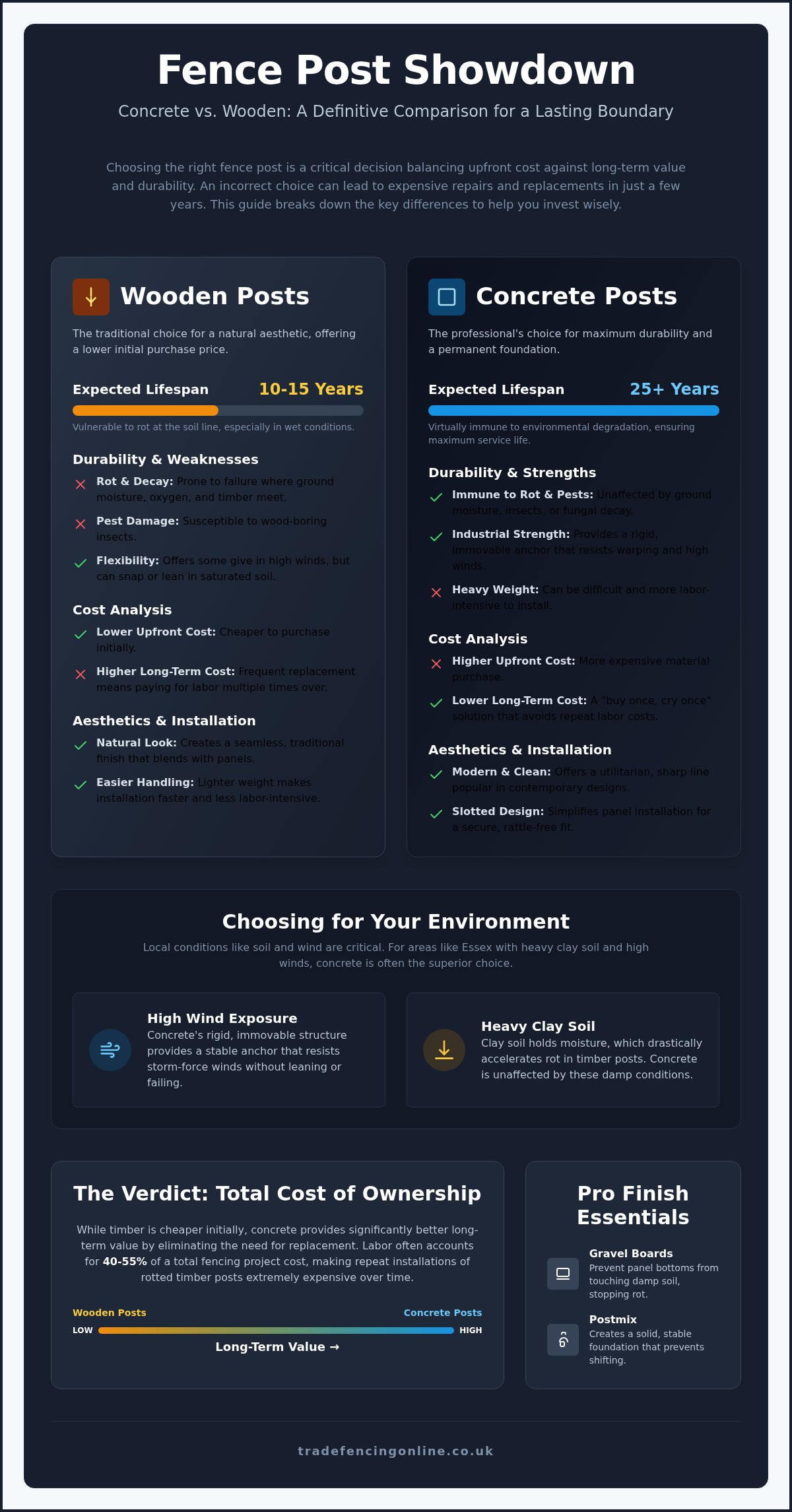
Choosing between concrete vs wooden fence posts is a decision between immediate savings and long-term value. Timber posts offer a lower initial purchase price. They provide a seamless, natural look that blends with fence posts and panels. However, the true cost includes future replacement. Labour often accounts for 40% to 55% of a fencing project's total budget. Replacing rotted timber every decade means paying for that labour multiple times. Concrete costs more upfront but provides industrial-grade strength that withstands the worst UK weather.
Aesthetics play a major role in your choice. Timber creates a uniform finish. It's popular for traditional gardens where a natural boundary is preferred. Concrete is more utilitarian. While it lacks the warmth of wood, it offers a secure, heavy-duty foundation. Different Types of fencing require different support levels. For high-security or high-wind areas, concrete is the standard choice for professional installers. It provides a rigid frame that won't warp or twist, ensuring your panels stay exactly where you put them.
Lifespan and Durability: The Long-Term Investment
Ground moisture is the primary cause of timber failure. Even pressure-treated wood eventually rots at the soil line where oxygen and water meet. You can expect 10 to 15 years from high-quality timber. In contrast, slotted concrete posts are immune to rot, wood-boring insects, and fungal decay. They easily last 25 years or more. Service life in the UK refers to the expected duration a post remains structurally sound before requiring replacement due to environmental degradation. Concrete ensures this service life is maximized without the need for annual chemical treatments or repairs.
Choosing the Right Post for Your Essex Garden
Essex gardens face specific environmental challenges. If you live in an exposed part of Romford, high winds can put immense pressure on your boundary. Wooden posts are flexible but can snap or lean if the ground becomes saturated. Concrete posts provide a rigid, immovable anchor that resists the force of a storm. Soil type is the other major factor. Much of Essex sits on heavy clay. This soil holds moisture for long periods, which accelerates the decay of timber. In these conditions, the choice of concrete vs wooden fence posts usually leans toward concrete to prevent premature failure. It's about building for the local climate.
A professional finish depends on matching your posts to your fence panels correctly. Slotted concrete posts allow panels to slide in easily, creating a secure fit that won't rattle in the wind. For a coordinated look, ensure your gravel boards match the material of your posts. When comparing concrete vs wooden fence posts for aesthetics, timber offers a warmer feel while concrete provides a clean, modern line. This consistency adds tangible property value by showing a high standard of maintenance.
When to Choose Concrete Over Timber (and Vice Versa)
Choose concrete for main boundaries where you want a permanent solution. It's the best option for long-term security and heavy-duty panels. Timber is better for internal garden dividers or decorative areas where a natural aesthetic is the priority. When using wood, always check they meet industry standards for timber posts to ensure they've been treated for ground contact. This ensures your project lasts as long as possible. If you're unsure which material fits your specific soil type, check our local delivery options for expert advice on Essex installations.
Essential Fencing Supplies for a Professional Finish
A professional finish requires more than just choosing between concrete vs wooden fence posts. You must consider the components that protect your investment. Using gravel boards is the most effective way to extend the life of your panels. These boards sit at the base of the fence, preventing timber from touching damp soil. This simple addition stops moisture from wicking up into the wood, which is the primary cause of rot. For the foundation, always use postmix. It provides a stable, permanent anchor that prevents your posts from shifting in the wind.
Security is a common concern with slotted concrete posts. While the slots make installation fast, they also allow panels to be lifted out from the outside. Whether you're weighing up concrete vs wooden fence posts, security should be a priority. You can fix this vulnerability by installing anti-theft clips or driving screws through the panel into the post. This ensures your boundary remains intact and prevents opportunistic theft. It's a pragmatic solution that competitors often overlook.
Maximising Fence Security and Stability
Structural stability relies on using specialized components for your garden layout. Corner and end posts are essential for maintaining the tension of the fence line. These posts are designed to handle the weight of panels pulling from different angles. Use galvanised clips and brackets to secure every panel tightly. This prevents rattling during high winds and ensures a professional, long-lasting finish that adds value to your property.
Build a Boundary That Lasts
Deciding between concrete vs wooden fence posts is the most critical step in planning your new garden boundary. Concrete provides a permanent, rot-proof foundation that withstands the heavy clay and high winds common in Essex. Timber remains the best choice for a natural, seamless aesthetic, provided you use gravel boards to protect the wood from ground moisture. Both materials require professional-grade postmix to ensure your fence stays straight and secure for years to come. It is about balancing your immediate budget with the long-term structural integrity of your property.
We provide fast local delivery across Romford and Essex from our huge stock of trade-quality materials. Our competitive local pricing helps you achieve a professional finish without unnecessary costs. Start your garden transformation today with a supplier you can trust. Your new fence is only a few clicks away.
Frequently Asked Questions
How long do wooden fence posts typically last in the UK?
Concrete fence posts are superior for high-wind areas because they provide a rigid, immovable foundation. Unlike timber, concrete doesn't flex or warp under pressure. This rigidity prevents the entire fence line from leaning or collapsing during winter storms. While you are securing your garden, it is worth noting that high winds can also cause vehicle damage; for those in the neighboring Kent area, We Fix Windscreens offers a professional mobile repair service. When comparing concrete vs wooden fence posts for exposed Essex gardens, concrete is the standard choice for permanent structural stability.
Can I use wooden fence panels with concrete posts?
You can absolutely use wooden fence panels with concrete posts. Slotted concrete posts are specifically designed to allow standard timber panels to slide into place easily. This combination is highly popular because it pairs the natural look of wood with the long-term durability of a concrete support system. It's a pragmatic way to get the best of both materials in your garden.
Do I need to use gravel boards with concrete fence posts?
You should always use gravel boards with concrete posts to protect your fence panels from ground rot. While the concrete post itself won't decay, your timber panels will fail quickly if they sit directly on damp soil. A gravel board creates a necessary barrier between the wood and the ground. This simple addition ensures your entire fencing system lasts for decades without needing panel replacements.