


What if the biggest mistake you make with your new fence isn't the colour you choose, but the day you decide to pick up the brush? Many homeowners ask can you paint pressure treated wood immediately, only to watch their expensive finish peel away weeks later. You've invested in quality timber and want it to look professional. It's common to feel anxious about that green-tinged wood. You don't want the Essex and London weather to ruin your hard work.
Achieving a durable, attractive boundary requires more than just a tin of paint. This guide reveals the professional way to paint treated timber for a vibrant, long-lasting result. We'll cover the essential drying times, the best products for the job, and the exact preparation steps used by the trade to prevent rot and ensure your fence stands the test of time.
Key Takeaways
- Understand the critical 2 to 6 month seasoning window required before you ask can you paint pressure treated wood to avoid immediate peeling.
- Master the professional preparation process, including how to strip away "mill glaze" that prevents paint from adhering to new timber panels.
- Select the correct primers and exterior-grade products specifically designed to survive the damp UK climate and protect your fence posts.
- Learn how gravel boards act as a critical barrier to stop moisture from ruining your paint job and causing rot from the ground up.
Understanding Pressure Treated Wood & Why Timing Matters
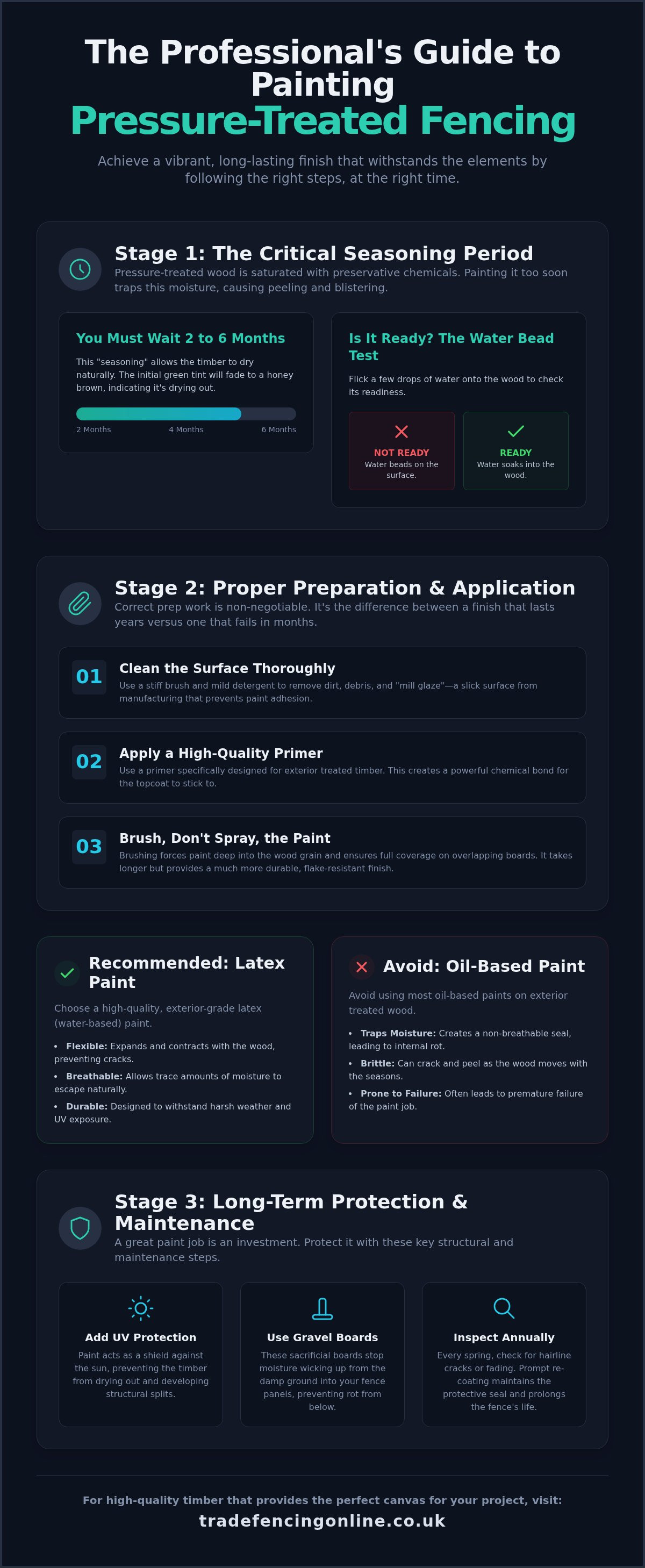
New timber undergoes an intensive Wood preservation process known as Tanalising. This industrial method forces chemical preservatives deep into the grain under high pressure. While this protects against rot, it leaves the wood saturated with moisture. You might wonder can you paint pressure treated wood as soon as it arrives. The answer is no. You must allow for a "seasoning" period of 2 to 6 months to ensure the timber is stable and dry.
Painting too early traps fluids inside the timber. This leads to blistering and peeling within weeks. Many customers mistake the characteristic green tint on new fence panels for mould. It is actually a copper-based preservative reacting with the wood cells. This tint is a sign of high-quality protection, not a defect. It will fade naturally to a honey brown and eventually silver-grey as the timber dries out. Before asking can you paint pressure treated wood, check the surface for saturation.
The Water Bead Test: How to Tell if Your Wood is Ready
The easiest way to check readiness is the splash test. Flick a few drops of water onto the surface of the wood. If the water beads and stays on the surface, the timber is still too wet or contains factory mill glaze. If the water soaks into the grain within a few minutes, the wood is dry enough to accept a finish. Keep in mind that Essex and East London humidity can slow this process down. Always wait for a period of dry weather before you begin your project to ensure the best possible adhesion.
Step-by-Step Guide: How to Paint Pressure Treated Fencing
Preparation is the most critical stage. You must clean the surface of all dirt, dust, and debris. New timber often has "mill glaze," a smooth surface created during the machining process that prevents paint from sticking. If you skip this, your finish will fail. Professional advice on how to paint pressure-treated wood suggests using a stiff brush and a mild detergent to remove any chemical residue left from the Tanalising process. Ensure the wood is completely dry before moving to the next step.
Use a high-quality primer designed specifically for exterior treated timber. This creates a durable chemical bond between the wood and the topcoat. When applying the paint to fence panels, use a brush rather than a sprayer. Brushing forces the liquid deep into the grain and ensures complete coverage on overlapping sections. It takes more time but results in a finish that won't flake off in six months. This is the only way to answer the question can you paint pressure treated wood with a guarantee of longevity.
Choosing the Right Paint: Latex vs. Oil-Based
Select a high-quality exterior latex paint for the best results. Latex is water-based and remains flexible as the wood expands and contracts with the seasons. This elasticity prevents the paint film from cracking during heatwaves or cold snaps. Avoid cheap, non-breathable oil paints. These trap moisture behind the surface, which eventually leads to internal rot and structural failure. For the best results, start with high-grade materials. SHOP NOW for quality timber that provides the perfect canvas for your project.
Maintenance and Maximising Your Fence's Lifespan
A professional paint job provides more than just a fresh look. It adds a critical layer of UV protection to your fence posts. This barrier prevents the harsh sun from drying out the timber, which reduces the risk of structural splits over time. While the pressure-treatment protects against internal rot, the paint acts as a shield against the Essex and East London weather. It keeps the moisture levels stable within the wood grain.
Integrity starts at the ground level. Use gravel boards to prevent moisture wicking. These boards stop water from travelling up from the damp soil into your fence panels. If moisture enters from the bottom, it will eventually push the paint off the surface from the inside out. Inspect your fence every spring for signs of fading or hairline cracks. Prompt re-coating ensures the protective seal remains intact. This proactive approach answers the question can you paint pressure treated wood for the long term; it's a matter of regular care.
When to Skip the Paint and Choose Quality Pre-Treated Timber
Before you ask can you paint pressure treated wood, consider the natural alternative. High-quality timber from a reputable Romford supplier often looks best in its natural state. As the wood ages, it develops a classic silver-grey patina that many find desirable. If you want durability without the immediate maintenance of painting, choose closeboard fence panels. These panels offer a professional finish and superior strength right off the delivery truck. SHOP NOW at Romford Fencing Ltd for the best rates in Essex and East London.
Secure Your Property with Professional Grade Fencing
Knowing can you paint pressure treated wood is only the first step toward a vibrant garden boundary. Success relies on waiting for the 2 to 6 month seasoning period and using the water bead test to confirm the timber is dry. By following a professional preparation routine, using gravel boards to stop moisture wicking, and selecting flexible latex paints, you prevent peeling. This ensures your investment stays protected against the elements for years to come.
Trade Fencing Online provides trade-quality fencing at competitive prices for both the public and trade professionals. We are established specialists in pressure-treated garden supplies and offer fast local delivery across Romford, Essex, and East London. Our durable products provide the perfect foundation for any painting or staining project.
SHOP NOW
It's time to transform your outdoor space. Take the first step toward a durable, professional-looking fence today.
Frequently Asked Questions
Can I paint pressure-treated wood immediately after installation?
No, you shouldn't paint pressure-treated wood immediately. The Tanalising process saturates the timber with liquid preservatives. Painting straight away traps this moisture inside. You must allow the wood to season for at least 2 to 6 months. Use the splash test to verify the grain is ready to absorb the finish. This ensures the paint bonds correctly to the surface.
What happens if I paint pressure-treated wood too soon?
Painting too soon causes the finish to peel, crack, and blister within a few weeks. Trapped moisture tries to escape as the wood dries, pushing the paint film off the surface. This also creates a damp environment under the paint layer, which can lead to internal rot. It's a waste of time and money to apply a finish before the timber is fully seasoned.
Do I need a special primer for Tanalised timber?
Yes, a high-quality exterior primer is essential for Tanalised timber. Standard primers often fail to adhere to the chemical salts used in the treatment process. Look for a product specifically labelled for use on pressure-treated wood. This creates a stable bridge between the chemicals in the grain and your topcoat. It's a vital step to ensure your fence looks professional for years.
Is it better to stain or paint a pressure-treated fence?
Staining is often easier because it penetrates the grain and won't peel. However, if you want a specific solid colour, painting is the better choice. When you ask can you paint pressure treated wood, the answer depends on your willingness to do the prep work. Paint offers superior UV protection but requires more maintenance than a high-quality wood stain or oil.