


Most new garden fences in Essex fail within 48 months because of one avoidable mistake. You buy high-quality timber, only to watch it warp or turn a dull grey after a single wet winter. Finding the best treatment for new fence panels shouldn't be a guessing game that costs you £500 in replacement materials. We know you want a garden that looks professional and stays that way. You need a solution that stops rot before it starts and handles the damp, coastal winds of the South East without peeling.
As a trusted supplier, we've seen exactly which products stand up to the elements and which ones fail. This guide shows you how to protect your investment for 15 years or more. You'll learn the real difference between dip-treated and pressure-treated wood and why standard DIY shop stains often waste your money. From professional-grade preservatives to UV-resistant oils, here is everything you need to keep your timber durable through 2026 and beyond.
Key Takeaways
- Identify the crucial differences between factory dip-treated and pressure-treated timber to ensure your garden fence has the right initial protection.
- Select the best treatment for new fence panels by comparing the durability of preservers, stains, and oils to suit your maintenance schedule.
- Match your chosen protection to your specific timber texture to ensure maximum absorption for both rough-sawn and smooth-planed panels.
- Master professional application steps to prepare your timber correctly and protect your garden paving and plants from spills.
- Discover why starting with high-quality trade supplies from a trusted Romford specialist is the most cost-effective way to prevent rot.
Understanding Factory Treatments vs. Long-Term Protection
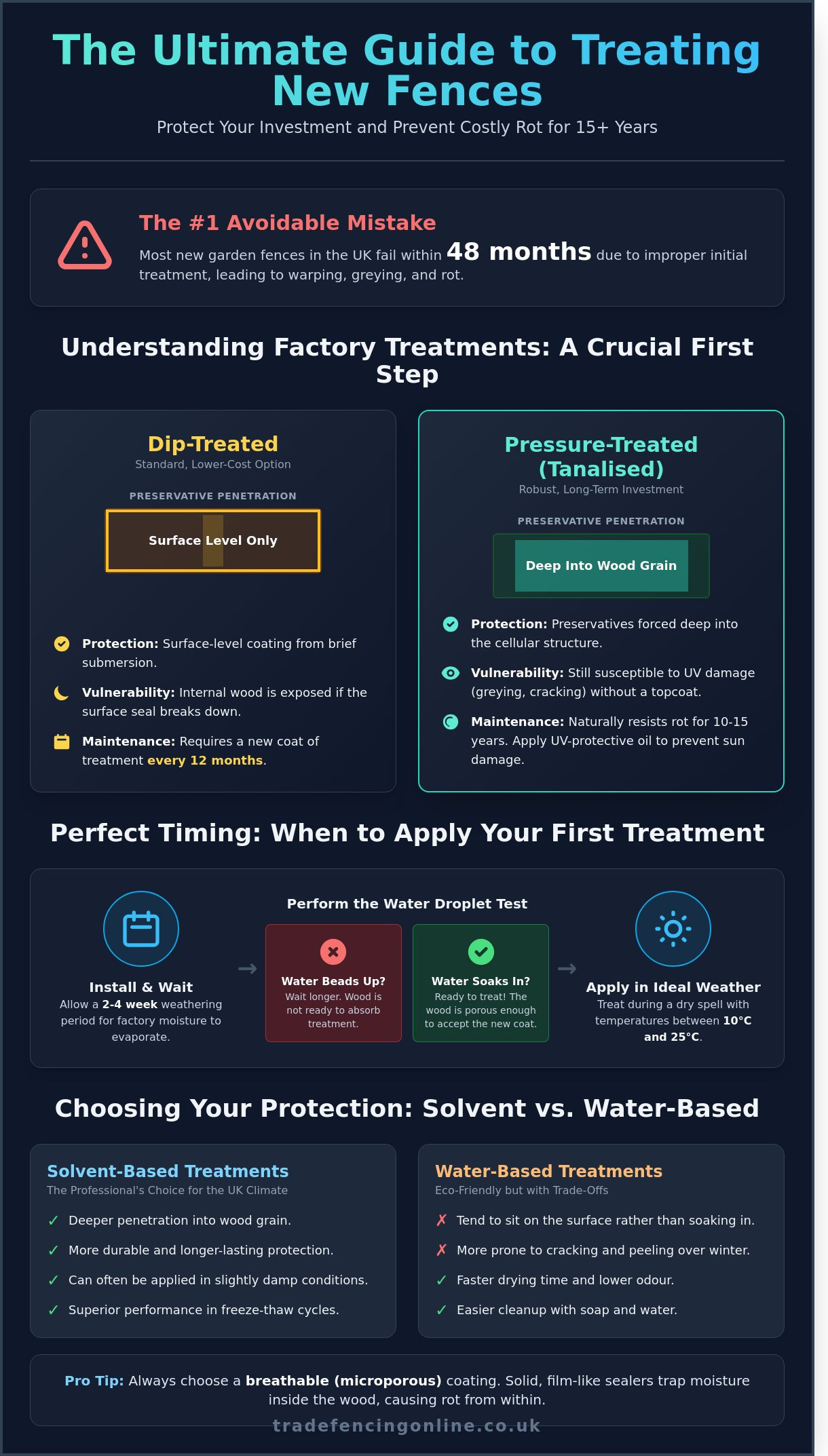
New fence panels arrive from the supplier with an initial layer of protection, but it's rarely a permanent solution. Most UK manufacturers apply a factory treatment to ensure the timber doesn't degrade while sitting in a storage yard or transport depot. This process uses various wood preservation techniques to provide a baseline of resistance against fungal decay and insect attack. However, you shouldn't mistake this for a finished product that's ready to face five years of British rain. A factory coating is a starting point, not the end of the job. To keep your garden looking sharp, you'll need to apply a secondary coat within the first few months of installation.
Many homeowners believe that "treated" means "maintenance-free," which leads to silvering and warping within the first two seasons. You should view fence treatment as a sacrificial layer that prevents UV and moisture ingress. This layer effectively acts as a shield, absorbing the damage from the sun and rain so the structural timber remains intact. Without this additional barrier, the best treatment for new fence panels won't be able to penetrate the grain effectively later on once the wood has started to check and split.
Dip-Treated vs. Pressure-Treated Panels
Dip-treated panels are the standard choice for many UK gardens due to their lower price point. During production, the timber is submerged in a vat of preservative, resulting in a surface-level coating. You'll recognise these by their distinctive golden-yellow or cedar-red tint. Because the chemicals only penetrate the very outer layer, these panels require a fresh coat of treatment every 12 months. If you skip a year, the internal wood becomes vulnerable to rot as the surface seal breaks down.
Pressure-treated timber, often marketed as Tanalised wood, is a more robust alternative. The wood is placed in a vacuum cylinder where preservatives are forced deep into the cellular structure of the grain. This creates a panel that's highly resistant to rot and ground contact. Even though Tanalised wood is more durable, it's still susceptible to UV damage. The sun's rays break down the lignin in the wood, causing it to turn grey and develop small cracks. Applying a high-quality UV-protective oil or sealer to pressure-treated wood ensures it stays supple and retains its structural integrity for longer.
- Dip-Treated: Surface protection only; requires annual maintenance; usually cheaper upfront.
- Pressure-Treated: Deep-seated chemical protection; resists rot for 10-15 years; still needs UV protection to prevent splitting.
The Best Time to Apply Your First Treatment
Timing is everything when it comes to the best treatment for new fence panels. You can't simply grab a brush the day your fencing is delivered. Most timber needs a "weathering" period of 2 to 4 weeks before you apply any oils or stains. This window allows the wood to settle into its new environment and lets any residual moisture from the factory process evaporate. If you seal the wood while it's still holding internal moisture, you'll trap that dampness inside, which leads to premature rot from the inside out.
You can check if your panels are ready with a simple water-droplet test. Flick a small amount of clean water onto the surface of the wood. If the water beads up and sits on the surface, the timber is still too "green" or the factory seal is too tight to accept a new product. If the water soaks into the grain within 30 seconds, the wood is porous enough to be treated. In regions like Essex, the best windows for this task are late spring or early autumn. You want a clear 48-hour forecast with temperatures between 10°C and 25°C. Avoid treating your fence in the height of summer, as the product will dry too quickly and won't penetrate the grain deeply enough.
Comparing Preservers, Stains, and Oils for New Timber
Choosing the best treatment for new fence panels requires a balance between visual appeal and the reality of UK weather. With the UK averaging 1,154mm of rainfall annually, your primary goal is moisture management. You must use a breathable coating. Solid films that "seal" the wood often trap internal dampness. This leads to rapid decay that remains hidden until the timber structurally fails. Selecting the right product depends on whether you prefer a quick 15-minute spray application or a more intensive brush-on finish that lasts longer.
Solvent-based formulations generally outperform water-based alternatives in the British climate. They penetrate deeper into the wood fibres and can often be applied in slightly damp conditions. Water-based treatments are eco-friendly and dry faster, but they often sit on the surface. This makes them prone to cracking during the freeze-thaw cycles common in January and February. For proper maintenance for a wood fence, you need a product that moves with the timber as it expands and contracts.
Wood Preservers: The Foundational Layer
Most budget-friendly panels arrive dip-treated. This provides a basic level of protection, but it's rarely enough for long-term durability. You should apply a clear, high-quality wood preserver as a base coat. Look for active ingredients like fungicides and biocides. These specifically target "blue stain" and wet rot. Focus your application on the joints and the end-grain. These areas account for 90% of moisture ingress. A thorough soaking of the end-grain ensures the panel won't rot from the bottom up where it meets the gravelboard.
Fence Stains vs. Garden Paints
Stains are semi-transparent and soak into the timber. They provide essential UV protection while allowing the natural grain to remain visible. This is ideal for traditional gardens. Garden paints offer opaque, modern colours but carry a higher maintenance burden. If the wood moves, the paint film can snap. Once a crack appears, water gets trapped behind the paint and causes peeling. If you've just bought quality fence panels, a stain is usually the safer bet for longevity.
- Stains: Easy to re-coat; no sanding required; shows natural wood texture.
- Paints: Vibrant colours; masks imperfections; requires stripping if it begins to flake.
- Creocote: A bitumen-based traditional finish. It's highly effective for agricultural fencing but has a strong odour that lasts for weeks.
Penetrating Oils and UV Protectors
Oils are often considered the best treatment for new fence panels where a premium finish is required. Unlike stains or paints, oils don't form a skin. They saturate the wood cells, making the timber naturally water-repellent. This is the preferred choice for high-end slatted or decorative panels. Maintenance is straightforward. You don't need to scrape or sand the surface; you simply wash the panel and apply a fresh coat every 24 months.
High-quality oils include UV inhibitors. Without these, the sun's rays break down the lignin in the wood, causing it to turn silver-grey within 12 months. An oil-based treatment keeps the timber supple. This prevents the warping and twisting often seen in cheaper, untreated panels during a dry British summer. While the initial cost per litre is roughly 25% higher than basic stains, the reduced labour in future years provides better commercial value.
Selecting the Best Product for Your Specific Fence Type
Choosing the best treatment for new fence panels requires a look at the wood's surface. Rough-sawn timber and smooth-planed boards react differently to liquids. If you apply a thick, water-based DIY store paint to a smooth-planed cedar panel, it will likely flake within 18 months. Conversely, using a thin, expensive oil on a porous Waney Lap panel is a waste of money. The wood will absorb too much product without providing a uniform finish. You must match the viscosity of the treatment to the density of the wood to get the best results.
Cost-to-lifespan ratios are vital for long-term value. A budget water-based treatment might cost £15 for 5 litres, but it often requires annual reapplication. A premium spirit-based preservative costs roughly £45 for the same volume but protects the timber for up to 5 years. Over a decade, the premium option saves you £60 in materials and several days of manual labour. Quality pays for itself through reduced maintenance cycles.
Treatments for Traditional Closeboard and Lap Panels
Standard Closeboard and Lap panels feature rough-sawn timber. This texture is highly absorbent and has an open grain. Research from the U.S. Forest Products Laboratory shows that rougher wood surfaces hold more preservative, which significantly improves long-term durability against rot. You need a deep-penetrating stain for these panels to ensure the chemicals reach the core of the timber. A garden sprayer gets the job done in 6 minutes per side. This is 70% faster than manual brushing. However, you must use a brush to work the liquid into the overlap areas. These gaps between the slats are where water sits. If you don't coat these hidden edges, the panel will rot from the inside out despite looking perfect on the surface.
Best Care for Premium Slatted and Decorative Fencing
Premium slatted panels use smooth-planed timber. This wood is dense and less porous than cheaper alternatives. You need low-viscosity oils that soak into the grain rather than sitting on top. If the oil is too thick, you'll get unsightly streaks and runs that ruin the aesthetic. UV filters are a non-negotiable requirement for these styles. Without them, even the most expensive larch or cedar will turn silver-grey within 12 months due to sun bleaching. Double-slatted panels present a specific challenge because they have internal surfaces that are hard to reach once installed. Always apply the best treatment for new fence panels before you slot them into the posts. This ensures 100% coverage of the hidden faces, preventing moisture traps that cause premature timber failure.
- Rough-sawn: Use spirit-based stains for 5-year protection.
- Smooth-planed: Use high-quality oils with built-in UV inhibitors.
- Trellis: Use a sprayer to ensure every narrow edge is coated.
Step-by-Step Application and Physical Maintenance
Protect your investment before you even open the tin. Cover nearby plants and paving within 1 metre of the fence line using heavy-duty polythene or old dust sheets. New timber often arrives with factory dust or a waxy 'bloom' from the pressure-treatment process. Scrub the surface with a stiff brush and clean water to ensure the best treatment for new fence panels can actually penetrate the wood fibres. Let the timber dry for at least 24 hours before you begin the application.
The Professional Application Process
Ditch the roller for this job. While rollers are fast, they consistently miss the 5mm deep gaps found in traditional overlap or closeboard panels. Use a high-quality 4-inch fence brush instead. This tool allows you to work the liquid into the grain and deep corners where rot usually starts. Work from the top of the panel to the bottom. This method lets you catch and brush out any drips as you move down, ensuring a professional, streak-free finish across the entire surface.
Follow the two-coat rule without exception. The first coat acts as a primer, soaking deep into the timber to seal the internal structure. The second coat creates the durable, weather-resistant outer shell that repels rain. Pay extra attention to the end-grain at the top and bottom edges. These areas act like straws, sucking up moisture through capillary action. Saturate these edges until the wood won't absorb any more liquid.
Ground Clearance: The Role of Gravel Boards
Chemical treatments only do half the work. Even the most expensive sealant fails if the panel sits in standing water or damp soil. Constant contact with the earth leads to rot in under 36 months. Gravel boards are the professional secret to long-lasting fencing because they isolate the expensive panel from the wet ground.
- Concrete Gravel Boards: These are the gold standard for durability. They're rot-proof, last over 20 years, and provide a solid base that prevents soil and moisture from touching the timber.
- Wooden Gravel Boards: A cost-effective alternative. Ensure these are UC4 pressure-treated for ground contact. They'll likely need replacing every 8 to 10 years, but they're much cheaper to swap out than an entire fence panel.
Always maintain a 2-inch (50mm) gap between the bottom of the panel and the ground. This air gap prevents moisture transfer and allows for essential ventilation, keeping the timber dry during the winter months.
Ongoing Maintenance Schedule
Perform a visual check every 12 months. Look for signs of UV fading or water ingress. You can test the protection by splashing a cup of water onto the wood. If the water beads and rolls off, the seal is intact. If it soaks in and darkens the timber, it's time for a maintenance coat. Don't use a power washer for cleaning. The high pressure tears the wood fibres and strips away the protective oils you've worked hard to apply. Use a soft brush and a mild timber cleaner instead.
Expect to re-apply your chosen treatment every 3 to 5 years depending on the level of weather exposure. South-facing fences usually require more frequent care due to intense UV rays. For high-quality supplies to get the job done right, browse our range of durable fence panels and gravel boards today.
Quality Panels and Trade Supplies in Romford
The longevity of your garden boundary starts long before you open a tin of preservative. Choosing high-quality timber is the essential first step. If you begin with thin, low-density panels from a budget retailer, the wood will likely warp or split regardless of how much money you spend on oils. At Romford Fencing Ltd, we provide trade-grade timber that offers a stable, absorbent surface. This ensures the best treatment for new fence panels penetrates deep into the grain instead of simply sitting on the surface and peeling away after the first frost.
Our Romford depot serves as a hub for homeowners and contractors who require materials that actually last. We don't stock the flimsy, mass-produced options found in many DIY chains. Instead, we focus on heavy-duty products designed for the British climate. Buying from a specialist supplier means you get seasoned wood with the correct moisture content. This is a critical detail because wood that is too green will "spit out" any treatment you apply as it dries, leading to an uneven and patchy finish.
Our Range of Pre-Treated Fencing
We stock a comprehensive selection of traditional Closeboard and Lap panels. These are the workhorses of UK gardens. Our Closeboard panels feature thick, overlapping vertical slats that provide excellent wind resistance and privacy. While a standard 6ft panel from a national retailer might weigh around 18kg, our trade-grade versions often exceed 24kg. This extra density comes from using superior European softwood that has been pressure-treated with Tanalith E or similar high-performance preservatives. This initial factory treatment provides a 15-year service life against rot and insect attack.
You can browse our full range of fence panels to see the different styles available for immediate dispatch. Using these robust panels makes your maintenance schedule much easier. Because the timber is already protected internally, your role is simply to maintain the surface UV protection and water repellency. We recommend a regular top-up every two to three years to keep the wood looking fresh and to prevent the silvering effect caused by sunlight.
- Traditional Lap Panels: Cost-effective and sturdy, featuring a perimeter frame for added strength.
- Closeboard Panels: Built with heavy-duty featheredge boards, ideal for high-traffic or windy areas.
- European Decorative Panels: For those seeking a premium aesthetic without sacrificing durability.
Expert Advice for Your Essex Fencing Project
Our team brings decades of local experience to every customer interaction. We understand that a garden in Romford or Dagenham often sits on heavy clay soil. This type of ground holds moisture for long periods, which can be devastating for timber posts. We often advise customers that applying the best treatment for new fence panels is only half the battle; you must also consider the foundation. We help you choose the right combination of concrete posts and gravel boards to ensure your panels never make direct contact with the damp earth.
Using a concrete gravel board keeps the bottom of your timber 150mm away from ground-level moisture. This simple structural choice can double the lifespan of your fence. We provide a reliable delivery service across Essex and East London, including Ilford, Barking, and Hornchurch. Heavy fencing materials are difficult to transport in a domestic vehicle. Our fleet is equipped to handle bulk orders of panels, posts, and 25kg bags of Post Mix, delivering them safely to your driveway or site.
Trade Fencing Online is your one-stop-shop for everything fencing. Whether you are a professional landscaper or a DIY enthusiast, we have the stock and the expertise to help you get the job done right the first time. Contact Romford Fencing Ltd for a quote or trade account today and secure high-quality materials at unmatched prices.
Secure Your Timber’s Future Today
Your garden project deserves more than a temporary fix. While factory dip-treatments offer initial protection, applying a high-quality oil or preserver within the first 12 months is vital for 15-year durability. Choosing the best treatment for new fence panels depends on your specific timber type and local weather exposure. Trade-quality timber, built specifically for the unpredictable British climate, requires consistent maintenance to prevent rot and warping. We've helped thousands of homeowners across Essex achieve professional results with our 5-star rated supplies. Don't settle for inferior DIY-grade wood that fails after one wet winter.
As a trusted Essex supplier with hundreds of 5-star reviews, we provide the heavy-duty materials you need for a permanent boundary. We offer free local delivery options across Romford and East London, making it easy to get your project started without hidden costs. Get the right materials delivered straight to your door and build a fence that stands the test of time.
Shop Quality Fence Panels and Supplies at Trade Fencing Online
Start your garden transformation today and enjoy a fence that looks great for years.
Frequently Asked Questions
Do I need to treat a new fence if it's already tanalised?
Yes, you should apply a secondary treatment to tanalised wood within 6 to 12 months of installation. Tanalising protects against rot and insect attack but doesn't stop the timber from weathering or drying out in the sun. Applying the best treatment for new fence panels ensures the wood remains supple and prevents the surface from splitting. This maintenance step helps your fencing reach its full 15-year life expectancy.
Can I paint a new fence straight away or should I wait?
You must wait at least 4 to 6 weeks before painting a new pressure-treated fence. The tanalising process leaves high moisture levels inside the timber which need time to evaporate. If you apply paint too early, the moisture gets trapped and causes the finish to bubble or flake within 3 months. Check the wood is ready by splashing water on the surface; if it soaks in, it's dry enough to paint.
What is the best treatment to stop a fence from turning grey?
Use a UV-resistant wood oil or a pigmented stain to prevent your fence from turning grey. Sunlight breaks down the lignin in wood cells, which leads to a silvery-grey appearance often visible within 12 months. A treatment with added UV filters blocks these rays and preserves the natural timber colour. Choose a product with a 3-year or 5-year protection guarantee to minimise the frequency of re-coating.
Which is better for new panels: water-based or oil-based treatment?
Oil-based treatments are generally superior for new panels because they penetrate deep into the wood fibres rather than sitting on the surface. While water-based options dry in 2 hours, they can crack as the wood moves. Oil-based finishes provide a flexible, waterproof barrier that prevents internal rot. This makes them the best treatment for new fence panels to ensure long-term structural integrity over a 10-year period.
How many litres of treatment do I need for a standard 6ft fence panel?
You need approximately 0.8 to 1 litre of treatment per side for a standard 6ft by 6ft fence panel. A typical 5-litre tin will cover 5 or 6 panels with a single coat. Always factor in two coats for the best results, meaning you'll need 10 litres of product for every 5 panels in your garden. Rough-sawn timber is more porous and absorbs 20% more liquid than smooth planed wood.
What happens if I don't treat my new fence panels?
Untreated fence panels will likely fail and require replacement within 5 to 7 years due to wet rot and fungal decay. Without a protective seal, rainwater soaks into the grain and causes the wood to expand and contract. This leads to severe warping, splitting, and structural weakness. You'll also notice the colour fading to a dull grey and green algae growth appearing within the first 18 months of installation.
Is Creocote safe to use on new garden fencing?
Creocote is safe for use on new garden fencing but must not be used on wood that comes into contact with skin or garden plants. It's a modern, bitumen-based alternative to traditional Creosote, which was restricted for residential use in 2003. It provides excellent water repellency for roughly 2 years. Ensure you wear gloves during application and keep pets away from the fence for 48 hours until the treatment is fully dry.
How can I protect the bottom of my fence panels from rotting?
Install concrete gravelboards to keep the bottom of your fence panels 150mm above the soil level. Direct contact with wet ground is the leading cause of fence failure, often rotting the bottom 10 inches of a panel within 4 years. If you use timber gravelboards instead of concrete, treat them with a dedicated end-grain sealer. This creates a waterproof barrier that stops moisture from wicking up into the vertical slats.