


The constant rattle of a loose panel in the wind is a common problem, but it’s one you can avoid. When it comes to selecting the right fence panels for concrete posts, getting the fit perfect from the start is crucial. Many homeowners face the same challenges: uncertainty over which panel styles are compatible, concern about incorrect measurements, and the fear of ending up with a weak fence that won’t withstand the British weather.
This practical guide provides the solution. We offer clear, direct instructions to help you confidently choose and install your fencing for a professional finish. You will learn exactly how to measure your posts, which panel designs will slot in securely, and the correct step-by-step sequence for a straightforward installation. Our goal is to give you the knowledge to build a strong, stable boundary that lasts for years.
Follow our expert advice to eliminate common issues like rattling and achieve a durable, low-maintenance fence you can be proud of. It’s time to get the job done right.
Why Pair Fence Panels with Concrete Posts? The Core Benefits
When investing in a new garden fence, the posts provide the essential foundation. Pairing timber fence panels for concrete posts offers a system built for superior longevity and strength. The primary advantage is unmatched durability. Unlike timber, concrete posts are completely immune to the common issues that degrade wooden fencing over time, such as rot, moisture decay, and insect damage. This creates a solid, stable framework that is built to last.
This resilience ensures your fence can withstand harsh British weather, from driving rain to high winds, without the risk of posts weakening or failing. This translates directly into a low-maintenance and highly cost-effective solution for your property boundary. There is no need for the annual cycle of treating, staining, or painting your fence posts, saving you significant time and money over the lifespan of the fence. While the fundamental purpose of a fence has remained consistent throughout the long history and types of fences, using modern materials like concrete offers these practical, long-term advantages.
Strength and Security
A fence is your property's first line of defence, and a concrete post system offers enhanced security. The sheer weight and rigidity of concrete create a formidable barrier that is extremely difficult to damage, push over, or breach. The slotted design of the posts is a key feature, providing continuous support along the entire vertical edge of the fence panel. This eliminates weak points, securing the panel firmly in place and preventing it from being rattled loose or forced out.
Ease of Panel Replacement
One of the most practical benefits of using fence panels for concrete posts is the simplicity of future repairs. If a panel is damaged by a storm or accidental impact, replacement is a straightforward task. The old panel can be lifted vertically out of the slots, and a new one slides directly into its place. This is a major advantage over systems where panels are nailed to wooden posts, which often makes removal difficult and risks damaging the post itself. This system ensures future maintenance is quicker, easier, and cheaper.
Choosing Compatible Fence Panels: A Size and Style Guide
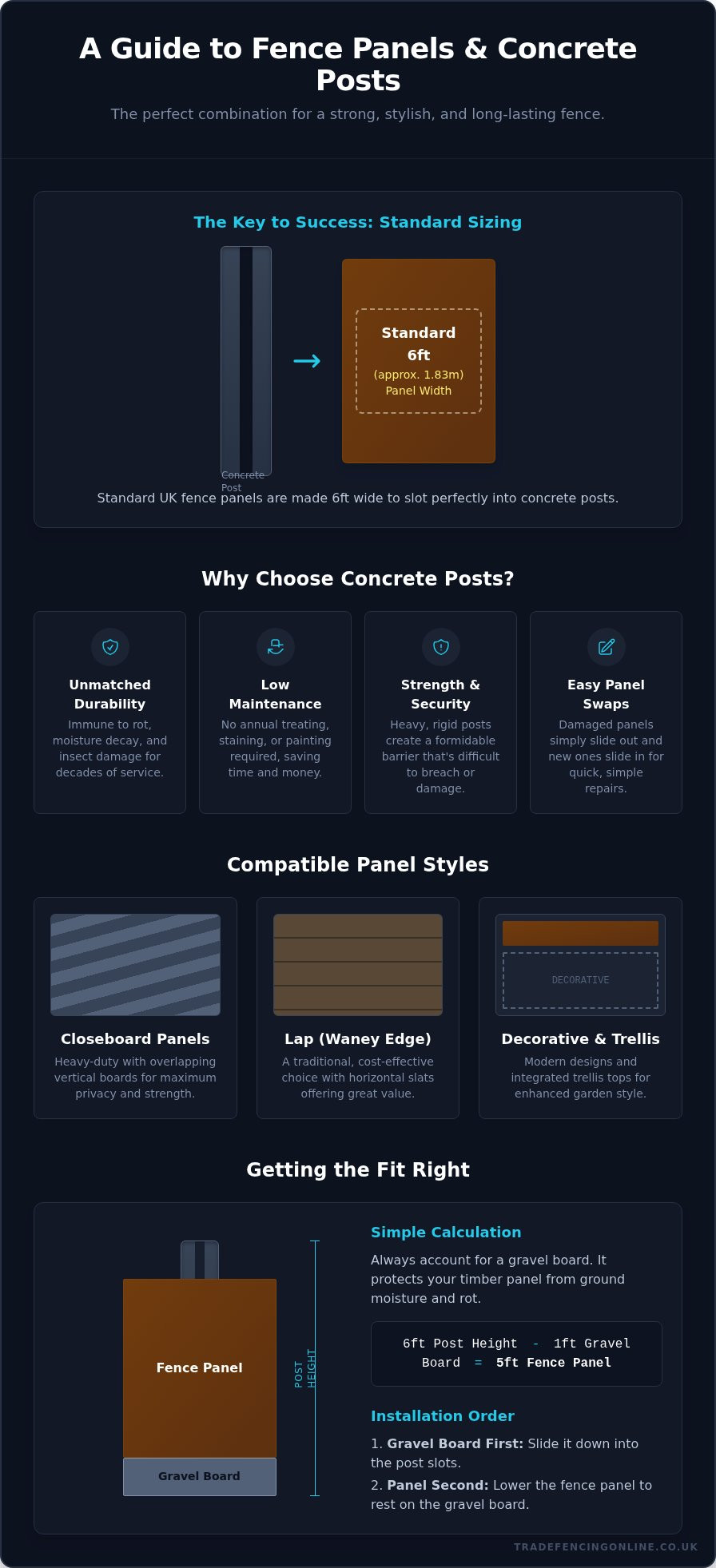
Selecting the right fence panels for concrete posts is straightforward when you understand the industry standards. The most critical rule is that standard UK fence panels are manufactured to be 6ft (approximately 1.83m) wide. Slotted concrete posts are engineered specifically to accept this width, ensuring a secure and simple installation process. Quality panels should conform to established manufacturing guidelines, such as the British Standard (BS 1722) for fences, which helps guarantee dimensions and durability.
Beyond width, matching the panel height to the exposed height of your post is essential for a professional finish. Panel thickness also plays a role; a thicker, more robust panel will offer greater strength and longevity, while a thinner panel may be more budget-friendly but less resilient against wind and impact.
Popular Panel Styles for Concrete Posts
While the width is fixed, you have complete flexibility in style. As long as a panel is 6ft wide, it will slot into standard concrete posts. This allows you to choose the best fence panels for your property's security, privacy, and aesthetic needs.
- Closeboard Panels: These are a heavy-duty option, constructed with overlapping vertical featheredge boards. They offer maximum privacy and are exceptionally strong, making them a premium choice for boundary fencing.
- Lap Panels (Waney Edge): A traditional and highly cost-effective solution. Lap panels are built with horizontal slats and provide good coverage, representing excellent value for money.
- Decorative Panels & Trellis: For a more contemporary look, decorative panels with integrated trellis tops or unique designs can enhance your garden's style without compromising the simple installation offered by concrete posts.
Measuring for a Perfect Fit
Before purchasing, always measure the internal gap between the slots on your concrete posts. While they are standardised, slight variations can exist on-site. This quick check prevents any fitting issues. Remember to account for a gravel board. If you have 6ft of post height above ground and install a 1ft high gravel board at the bottom, you will require a 5ft high fence panel to fill the remaining space. This simple calculation ensures a perfect, gap-free fit.
Material Considerations: Wood vs. Composite
Your choice of material impacts both the look and long-term maintenance of your fence. Pressure-treated timber is the standard, offering a cost-effective and reliable solution that is protected against rot and insect attack. For a modern, maintenance-free alternative, composite panels are an excellent investment. They are highly durable, will not rot or warp, and require no annual treatment. Note that many composite fencing systems require their own specific fitting components or channel adapters to work with concrete posts, so always check manufacturer guidelines.
Step-by-Step Installation: How to Slot Panels into Concrete Posts
This guide assumes your concrete posts are correctly installed, aligned, and set. The slot-in system is designed for efficiency, making it a popular choice for both trade and DIY projects. While there are many different types of fencing materials, the process for fitting standard timber panels into concrete posts is remarkably straightforward.
Step 1: Installing the Gravel Board
The gravel board always goes in first. This is a critical step for ensuring the longevity of your fence. The board acts as a protective barrier, lifting the timber panel away from damp ground to prevent moisture damage and rot. Simply lift your concrete or timber gravel board, align it with the slots on both posts, and slide it down until it sits firmly at the bottom.
Step 2: Fitting The Fence Panel
With the gravel board providing a solid foundation, you can now fit your fence panel. For standard 6ft panels, this is a two-person job for safety and ease of handling. Each person should hold one side of the panel, lift it above the posts, and carefully align the edges with the vertical slots. Gently slide the panel down the grooves until it rests securely on top of the gravel board. Avoid dropping it, as this can damage both components.
Step 3: Securing the Panel and Preventing Movement
A common issue with fence panels for concrete posts is rattling in high winds. To create a professional, silent finish, you must secure the panel within the slot. The most effective methods include:
- Wooden Wedges: Tapping small, treated timber off-cuts into the gap between the panel and the post creates a tight, pressure-fit.
- Fence Panel Grips: These purpose-made metal clips fit inside the slot and apply constant pressure, stopping all movement and noise.
For the final panel in a run, you may need to bow it slightly to pop it into the grooves of the last two posts. If this isn't possible, slide the panel in before the very last post is permanently fixed in the ground.
Now your fence is secure and professionally fitted. For all your project needs, shop for quality fence panels and gravel boards from a trusted supplier.
Common Problems and Solutions when Fitting Panels
Even with careful planning, you may encounter challenges during your fencing project. This section provides direct, practical solutions to the most common issues faced when fitting fence panels for concrete posts. Our expert advice will help you achieve a secure, professional finish and build a fence that lasts.
How to Stop Fence Panels Rattling in Concrete Posts
A loose-fitting panel can rattle in the wind, creating a persistent noise. This is caused by a small gap between the panel and the slot in the concrete post. There are several simple and effective fixes:
- Treated Timber Wedges: The traditional method is to tap small, pressure-treated timber wedges firmly into the gap on both sides of the panel. This secures it tightly within the post.
- Fence Panel Grips: For a purpose-made solution, you can buy commercial plastic or rubber grips. These are designed to push into the gap and hold the panel securely.
- Silicone Sealant: In some situations, a bead of clear, exterior-grade silicone sealant applied within the slot can effectively dampen vibrations and stop the noise.
Installing on Sloping Ground
Installing a fence on a slope does not require special angled panels. The correct and standard industry method is 'stepping'. This technique involves setting each panel and gravel board at a progressively different height to follow the contour of the land while keeping each individual panel level.
Each concrete post is set slightly lower or higher than the last, creating a stepped appearance along the fence line. This ensures a strong, stable, and visually appealing boundary using standard rectangular fence panels.
Replacing a Single Damaged Panel
A key advantage of the slotted concrete post system is the ease of repair and maintenance. If a single panel is damaged by a storm or impact, you do not need to take down the entire fence run. The replacement process is straightforward:
- First, remove any post caps or continuous capping rail that sits above the damaged panel.
- With the top clear, simply lift the old panel straight up and out of the slots.
- Slide the new panel down into the empty grooves.
- Replace the capping rail or post caps to finish the job.
This simple process saves significant time and expense. If you find yourself in need of a new panel, you can order replacement panels with fast local delivery and have your fence secure again in no time.
Your Fencing Project: Built to Last
Fitting fence panels into concrete posts is a straightforward job when you have the right know-how and materials. As this guide has shown, the process comes down to a few key principles: selecting the correct panel size for a snug fit, preparing your posts, and using the proper technique to slide the panels into place. By understanding these steps and anticipating common issues, you are well-equipped to create a strong, secure, and long-lasting garden boundary.
The foundation of any great fence is quality materials. Choosing the right fence panels for concrete posts not only ensures an easier installation but also guarantees a finish that will withstand the British weather for years to come. At Trade Fencing Online, we are committed to providing just that.
As a trusted local supplier serving Essex and East London, we offer an extensive selection of high-quality, pressure-treated fence panels and concrete posts. With fast delivery options available, you can get everything you need for the job, delivered directly to your door. Browse our full range of compatible fence panels and posts and start building with confidence today.
Frequently Asked Questions
Do you need gravel boards with concrete posts?
Yes, using gravel boards is highly recommended. A gravel board lifts the timber fence panel off the damp ground, which is the primary cause of rot and insect damage. This simple step significantly increases the lifespan of your fencing. Concrete gravel boards are the most durable option and slot directly into the channel of the concrete posts, providing a solid, maintenance-free base for the panel to sit on.
Can you use 1.8m wide fence panels with concrete posts?
Standard UK concrete posts are set to accommodate 6ft (1.83m) wide fence panels. Using a 1.8m panel will result in a 30mm (3cm) gap, causing it to be loose and rattle. To resolve this, you can fix a timber batten or a purpose-made fence panel extension strip to one side of the panel. This will fill the gap, ensuring a snug and secure fit between the posts.
How do you secure the top of a fence panel in a concrete post?
In most situations, the weight of the panel and the snug fit inside the post's channel is sufficient to keep it secure. For added stability, especially in areas exposed to high winds, you can use fence panel security brackets. These are small metal clips that are screwed into the side frame of the panel and then into the concrete post, effectively locking the panel in place and preventing it from lifting or rattling.
What is the best way to cut a fence panel to fit a smaller gap?
To cut a panel for a non-standard gap, first measure the required width precisely. Use a circular saw or a handsaw to cut the panel down to size. It is crucial that you then re-attach the vertical side frame from the offcut to the newly cut edge using galvanised screws or nails. This step is essential for maintaining the panel's structural strength and ensuring a professional, finished look.
Are special fence panels needed for concrete posts?
No, you do not need special panels. The vast majority of standard 6ft (1.83m) wide timber panels, including closeboard, lap, and decorative styles, are designed to be compatible with concrete posts. The most important factor is ensuring the width is correct. Quality fence panels for concrete posts are manufactured to a consistent size, allowing them to slide easily into the post's groove for a straightforward installation.
Can you attach trellis toppers to panels that are in concrete posts?
Yes, adding a trellis topper is a common and effective way to increase fence height and add a decorative feature. The correct method is to use concrete posts that are tall enough to accommodate both the main panel and the trellis section. The trellis simply slots into the post's channel directly on top of the fence panel. Ensure you choose a trellis that matches the width of your panel for a perfect fit.