


A fence panel can be the right height and still fail to fit your boundary. The 6 x 5 size means a panel is 6 feet wide and 5 feet high, but that label alone doesn’t tell you whether it will suit your existing posts, ground levels or full fence run. Checking those details before ordering can help you avoid gaps and missing materials.
Before you buy, understand how panel measurements work and compare the width with the spacing between supports. This guide explains what 6 x 5 means, what to measure, and how to plan compatible posts and gravel boards for a complete boundary. You’ll know which details to consider when choosing your fence panels and related products.
Key Takeaways
- Read panel measurements carefully so you know which dimension is the width and which is the height.
- For a 6 x 5 panel, compare the stated size with your boundary and the spacing between existing or planned posts.
- Measure the fence run before counting panels to make your materials plan more accurate.
- Plan panels, posts and gravel boards together, as the support setup affects how the finished fence fits.
What Does 6 x 5 Mean When You’re Choosing Fence Panels?
For fence panels, “6 x 5” is a size label, but the numbers alone don’t tell you which measurement is the width and which is the height. The shorthand is also used for products such as sheds, so make sure the listing you’re reading is for fence panels and check the dimensions stated for that specific product.
Panel size affects how it fits between supports and how much of the boundary it covers. Don’t rely on assumptions about the order of the numbers. Confirm the listed width and height, then compare them with the opening between your posts and the space available along the boundary. For background on fencing types and construction, see this overview of the Fence.
How to read a 6 x 5 fence-panel description
Before choosing a panel, look for its stated width and height in the product details. This helps you avoid ordering by shorthand alone, especially if you’re matching panels to existing posts. Measure the clear opening between supports and check that the panel dimensions suit it. If you’re planning new supports, use the panel measurements to plan their positions and spacing.
Browse the fence panels collection to compare relevant options and review the dimensions shown on each listing before selecting a panel.
How to Choose 6 x 5 Fence Panels That Fit Your Boundary
A good fit starts with accurate measurements, not a panel count based on guesswork. Follow this order before choosing your panels:
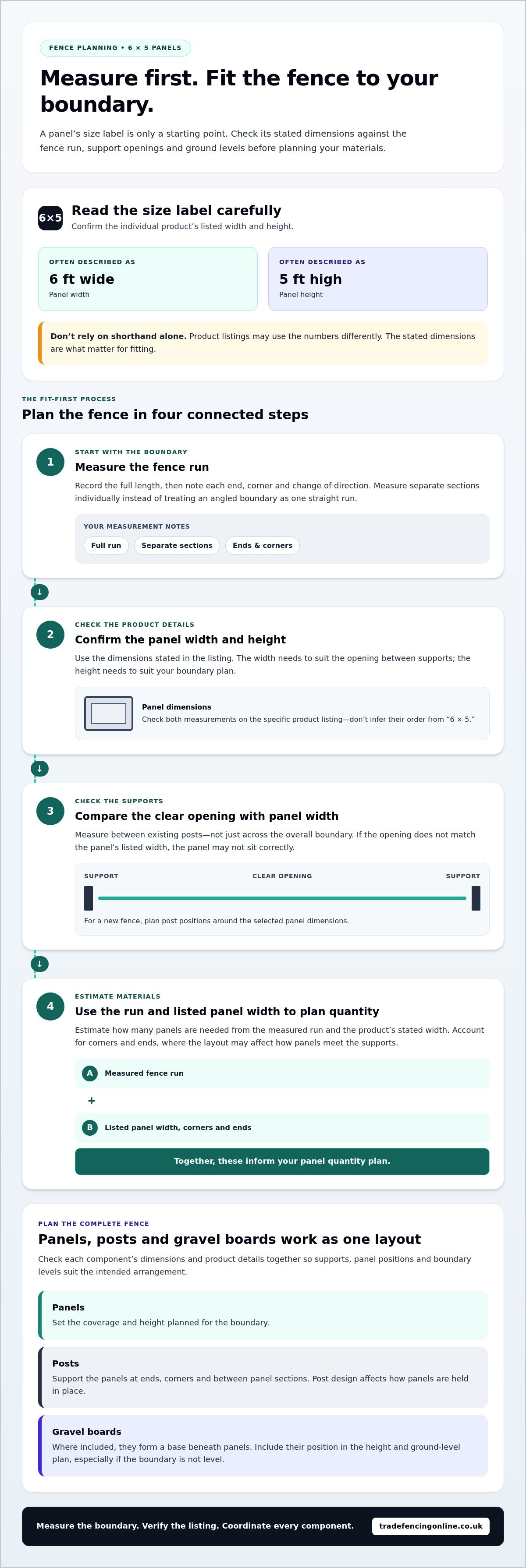
- Measure the fence run. Record the full length and note each end, corner and change of direction. Measure separate sections individually rather than treating an angled boundary as one straight run.
- Confirm the panel dimensions. Check the width and height stated in the product listing. The panel width needs to suit the opening between supports, while the height should suit your boundary plan.
- Work out the quantity. Use the measured run and the listed panel width to estimate how many panels are needed. Account for corners and ends, where the layout may affect how panels meet the supports.
Measure the fence run before selecting panels
Existing post positions can determine whether a panel fits as intended. Measure between the supports, not just across the overall boundary, and compare that opening with the panel’s listed width. If the spacing doesn’t match, the panel may not sit correctly. For a new fence, plan post positions around the selected panel dimensions before ordering.
Planning the fence height too? Review the Planning Portal’s planning permission rules for relevant guidance. Once you have your measurements, browse the fence panel range and compare the product details with your boundary notes.
Plan a Complete Fence with Panels, Posts and Gravel Boards
Panels are only one part of a finished fence. Posts support the panels, while gravel boards can form a base beneath them. Plan these components as one layout so the panel size, support positions and boundary levels work together.
Match supporting components to the panel layout
Start with the panel dimensions and the positions of the supports. The type of post you choose affects how the panels are held in place, so compare the post design with the panel layout rather than assuming every combination will fit. Browse the fence posts collection as you plan the supports.
Gravel boards sit at the bottom of the fence, beneath the panels where they form part of the design. Include their position in your height and ground-level plan, especially if the boundary isn’t level. Check the dimensions and product details for each component so your choices suit the intended arrangement.
- Panels: Set the coverage and height you’re planning for the boundary.
- Posts: Provide support at the ends, corners and between panel sections.
- Gravel boards: Create a base beneath panels where included in the layout.
Labels don’t always tell the whole story. As a general sizing principle, nominal and actual lumber sizing can differ, so use each product’s stated dimensions when planning rather than relying on a size shorthand such as 6 x 5. Review your panel, post and gravel-board choices together before ordering, then browse the fencing range online.
Get Your Fence Order Ready
A successful 6 x 5 fence plan starts with checking the panel’s stated width and height, then measuring the boundary and post openings. Count panels only after accounting for corners and ends, and plan posts and gravel boards alongside them so the components suit the layout.
With your measurements ready, browse online fencing supplies for trade and public customers. Fast local delivery is available across Essex and East London. Choose the panels and supporting materials for your project, then take the next step.
SHOP NOW
Clear measurements make it easier to build a fence plan that fits your garden. You’re ready to get started.
Frequently Asked Questions
What does 6 x 5 mean for fence panels?
For fence panels, 6 x 5 is a size description, not a guarantee that every listing uses the numbers in the same order. Check the product details to identify the panel’s stated width and height. This helps you compare it with the space available along your boundary and avoid relying on shorthand alone.
Are 6 x 5 fence panels actually 6 feet wide and 5 feet high?
Often, 6 x 5 describes a panel that is 6 feet wide and 5 feet high, but check the individual product listing before ordering. The stated measurements are what matter for fitting. Compare the listed width with the opening between supports and the height with your fence plan, including any gravel board if you’re using one.
What do I need to buy with fence panels?
Most fence plans also need posts to support the panels, and may include gravel boards along the base. The quantities and types depend on the boundary layout, panel dimensions and post positions. Count corners and ends in your plan, then check the product details so the selected panels and supporting components suit the intended arrangement.
Can I fit new fence panels between my existing posts?
You may be able to, provided the opening between the posts suits the panel’s stated width and the posts are suitable for supporting it. Measure between the supports at each section, as spacing can vary along a boundary. Also consider the posts’ condition and position before choosing panels, rather than assuming every panel fits existing supports.