


Choosing the right garden fence often comes down to one key question: what is the correct height? If you're considering 6ft fence panels, you might be wondering about UK planning permission, whether they offer enough privacy, or if they will be strong enough to withstand high winds. These are valid concerns for any homeowner looking to invest in a new, secure boundary for their property.
For most UK gardens, a 6ft (or 1.83m) height is the standard for creating a private and secure outdoor space. It provides excellent screening from neighbours and passers-by without requiring planning permission in most circumstances. But selecting the right height is just the first step. You also need to choose the correct style of panel and, crucially, the right posts to guarantee a long-lasting, durable fence.
This guide delivers all the essential information. We will walk you through the regulations, compare different panel styles, and explain exactly what you need for a professional and robust installation. By the end, you will have the confidence to choose the perfect fencing solution for your home.
Key Takeaways
- A 6ft fence provides the ideal height for maximising garden privacy and security from neighbours and passers-by.
- Understand UK planning permission rules to ensure your new fence installation is fully compliant and avoids costly mistakes.
- The style you choose for your 6ft fence panels directly impacts their strength, wind resistance, and overall longevity.
- A sturdy, long-lasting fence depends on selecting the correct posts and fixings to support the height and weight of the panels.
Why Choose 6ft Fence Panels? The Primary Benefits
When selecting fencing for a residential property in the UK, the 6ft (approximately 1.8m) height is the industry standard and most popular choice. This is no accident. This specific height provides a practical and effective solution for most garden boundaries, offering an ideal balance of privacy, security, and clean aesthetics. While there are many different types of fencing available, the 6ft panel consistently meets the core requirements of homeowners.
Our quality 6ft fence panels are designed to deliver these key advantages, establishing them as the go-to option for garden renovations and new builds. They effectively screen out neighbouring properties and public footpaths without feeling overly imposing, creating a secure and private outdoor space.
Maximising Garden Privacy
One of the primary reasons homeowners choose a 6ft height is for privacy. These panels create a secluded garden environment, shielded from the view of neighbours and passers-by. This is especially valuable for gardens that are overlooked or border public land. The result is a comfortable sense of enclosure, turning your garden into a private sanctuary for relaxing, entertaining, or family activities.
Enhancing Security
A 6ft fence is a significant physical and visual deterrent to potential intruders. Its height makes it difficult for opportunists to climb over or see into your property, reducing the risk of theft. Beyond deterring trespassers, it serves a crucial safety function by keeping children and pets securely contained within your garden's boundary, giving you complete peace of mind.
Defining a Clear Boundary
Installing a 6ft fence establishes a clear and unambiguous property line, preventing disputes and creating a well-defined space. This solid boundary provides an excellent backdrop for garden plants, flowerbeds, and other features, contributing to a neat, organised, and well-maintained appearance for your entire property. It is a simple investment that adds structure and value to your home.
UK Fence Height Rules: Are 6ft Panels Legally Compliant?
Before you buy or install your new fence, understanding the regulations is crucial. Failing to comply can lead to disputes or being forced to remove the fence at your own cost. The good news is that in most UK residential settings, installing standard 6ft fence panels is a straightforward process that does not require planning permission.
This section breaks down the key rules for fence height to ensure your project is fully compliant from the start. We will cover the standard regulations, the exceptions you need to know, and the importance of boundary lines.
The '2 Metre Rule' Explained
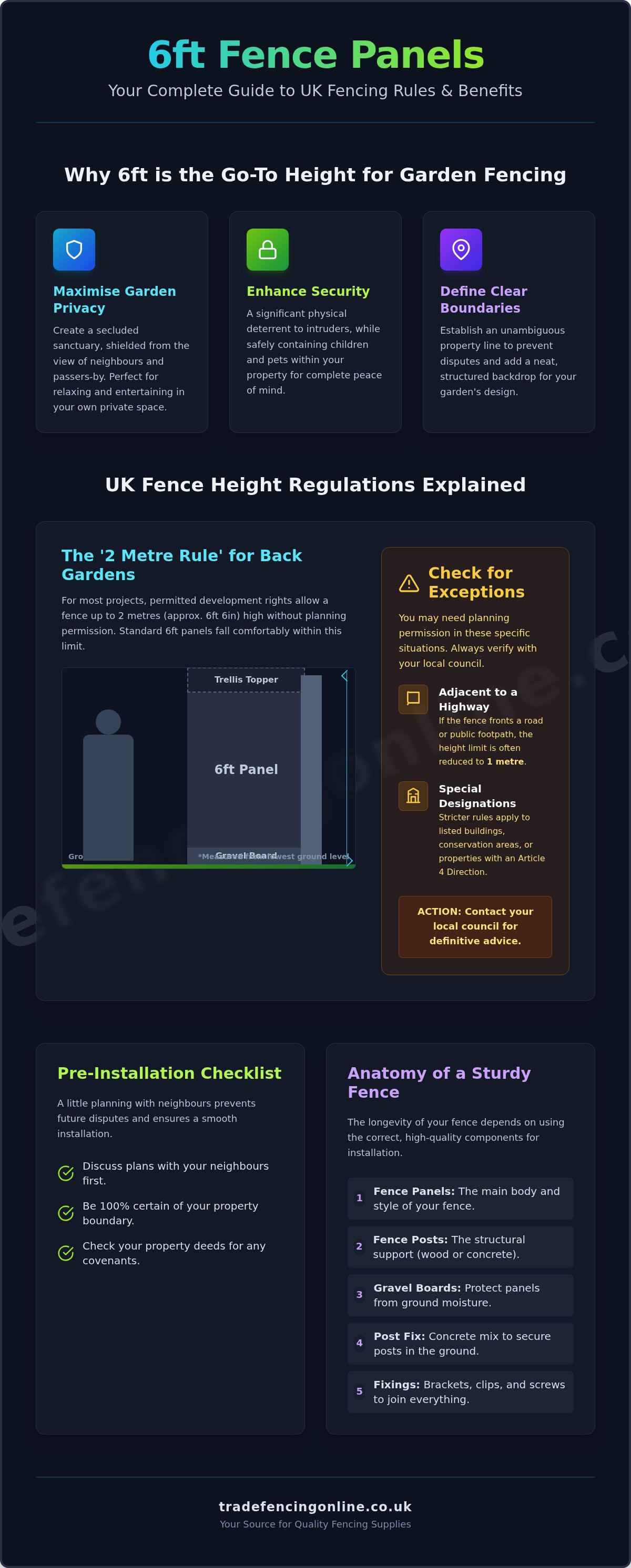
For most back gardens, UK permitted development rights allow you to erect a fence up to 2 metres high without needing planning permission. This is approximately 6 feet and 6 inches, which means our quality 6ft fence panels fall well within the permitted height for the majority of projects. It is important to remember that this 2-metre limit is the total height. This includes:
- The fence panel itself.
- Any decorative trellis or toppers you add on top.
- The height of any gravel boards used at the base.
Always measure from the ground level on your side of the boundary. If your garden is on a slope, the height is measured from the lowest ground level.
When You Might Need Planning Permission
While the 2-metre rule is a reliable guide, there are specific situations where different restrictions apply. You will likely need to apply for planning permission if your fence is adjacent to a highway or a footpath that fronts a road. In these locations, the height is typically restricted to just 1 metre (approx. 3ft 3in). Furthermore, stricter rules often apply if your property is a listed building, is located within a conservation area, or is subject to an Article 4 Direction. If you have any doubts, the most direct approach is to contact your local council's planning department for definitive advice.
Neighbours and Boundary Lines
To prevent future issues, it is always good practice to discuss your fencing plans with your neighbours before work begins. This simple step maintains good relations and avoids potential misunderstandings. Crucially, you must be certain about the exact location of your property boundary before installation. Building on your neighbour's land, even by a few inches, can lead to costly legal disputes. For official information, the government provides clear guidance on UK fence height rules and property boundaries. Taking the time to confirm this information is a vital part of any successful fencing project.
Choosing the Best Style of 6ft Fence Panel
Selecting the right style for your 6ft fence panels is about more than just appearance. The construction of the panel directly impacts its strength, privacy level, and ability to withstand the elements. A 6ft (1.83m) height is a popular choice as it offers a substantial boundary, often falling within permitted development rights. For specific regulations, it's always wise to consult the official UK planning rules for fences and enclosures before installation. To help you make a practical decision for your property, we compare the most common panel styles below.
Closeboard Panels: The Strongest Choice
Built with thick, overlapping vertical featheredge boards, Closeboard panels are the strongest and most durable option available. Their robust construction makes them the ideal choice for security-conscious homeowners and for boundaries exposed to high winds. This traditional design provides complete privacy, creating a solid and secure perimeter for your garden.
Lap Panels: The Cost-Effective Option
Also known as Waney Lap or Overlap panels, this style is the most popular budget-friendly choice in the UK. Lap panels are constructed with horizontal, overlapping timber slats fitted within a perimeter frame. They offer good levels of privacy and are a reliable, cost-effective solution for marking garden boundaries in most residential settings.
Decorative and Slatted Panels
For a more contemporary finish, decorative or slatted panels offer a stylish alternative. Slatted designs, often with small gaps between horizontal boards, allow more light and air to pass through, creating a less imposing boundary. While they may offer less privacy than solid panels, they provide a modern aesthetic that can enhance the look of your garden. Browse our full range of 6ft fence panels to see all available styles.
Essential Components for a Sturdy 6ft Fence Installation
A 6ft fence panel provides excellent privacy and security, but its height and surface area mean it requires the right support to be safe and durable. Using the correct posts, gravel boards, and fixings is non-negotiable. This ensures your fence can handle significant wind load and remain straight and stable for years to come. Getting the installation right the first time avoids costly future repairs.
Here is a checklist of the essential supplies you will need for a professional-standard installation of your 6ft fence panels.
Fence Posts: Wood vs. Concrete
The foundation of any strong fence is the post. For 6ft fence panels, you must use 8ft (2.4m) posts. This allows a crucial 2ft of the post to be securely anchored underground, providing the leverage needed to support the panel's height and weight against the elements. Choosing between wood and concrete comes down to aesthetics and long-term maintenance.
- Concrete Posts: Offer maximum durability and are completely rot-proof and maintenance-free. They are the ultimate fit-and-forget solution for a long-lasting fence line.
- Wooden Posts: Provide a traditional, seamless look that matches wooden panels. Ensure they are pressure-treated (UC4 rated) to protect against ground rot and insect attack.
The Role of Gravel Boards
A gravel board is one of the most important components for extending the life of your fence. This board, available in treated timber or concrete, sits directly beneath the fence panel. It creates a protective barrier against ground moisture, soil, and debris. By preventing direct contact with the damp ground, a gravel board is your best defence against premature rot and decay in timber panels, saving you money in the long run.
Fixings and Post Mix
Securing your posts and panels correctly is vital for a professional finish. Do not cut corners on these essential items.
- Post Mix: A fast-setting concrete mix, like Postcrete, is essential for setting posts securely in the ground. It provides a solid, stable foundation that hardens in minutes.
- Panel Fixings: Use high-quality, galvanised fence clips or brackets to attach your panels to the posts. These prevent rattling and ensure the panels are held firmly in place.
- Screws & Ironmongery: Always use appropriate exterior-grade screws that will not rust or fail over time.
As your one-stop-shop for everything fencing, we supply all the quality components you need for a successful project. Order all your fencing supplies for local delivery and get the job done right.
Your Next Step: Securing Your Property with Quality Fencing
As this guide has shown, selecting a 6ft fence is an excellent choice for enhancing garden privacy and home security. We've covered how this height is generally the maximum permitted in UK back gardens without planning permission, making it a straightforward and effective option. From traditional Closeboard to decorative panels, the right style can transform your outdoor space. Remember that a successful installation depends on using the correct, high-quality components like posts and gravel boards to ensure a long-lasting and robust boundary.
Now that you are equipped with the right information, the next step is sourcing the best materials. As a trusted local supplier based in Romford, Romford Fencing Ltd is your one-stop-shop for the project. We offer quality fencing materials at genuine trade prices, backed by fast delivery across Essex and East London. To get started, shop our quality 6ft fence panels for local delivery in Essex & London.
Build a boundary you can rely on for years to come.
Frequently Asked Questions
What is the exact height of a 6ft fence panel in metric?
A standard 6ft fence panel is 1.83 metres (183cm) high. This measurement refers to the panel itself. If you install the panel on top of a concrete or wooden gravel board to prevent rot, the total height of your fence will be higher. Always account for the gravel board when ensuring your fence complies with local height regulations.
Can I install a 6ft fence on sloping ground?
Yes, installing a fence on a slope is a common requirement. The standard method is to 'step' the panels down the gradient. This involves keeping each panel level and setting each post at a progressively lower height. A gravel board can be cut at an angle or partially buried to fill the triangular gap that forms under the panel on the downhill side.
What's the best type of 6ft fence panel for a windy area?
For windy and exposed locations, the best option is a semi-solid panel design. Styles like hit-and-miss or slatted panels allow air to pass through, reducing the pressure on the entire fence structure. Solid panels can act like a sail in high winds, putting strain on the posts. For maximum stability in any windy area, we always recommend using concrete posts for superior strength.
How do I calculate how many fence panels and posts I need?
First, measure the total length of the required fence line in feet. Divide this number by 6 (the standard width of a fence panel) to determine how many panels you need. For the posts, you will require one more post than the total number of panels to finish the run. For example, a 60-foot boundary requires 10 panels and 11 posts.
Can I attach a trellis on top of a 6ft fence panel?
While physically possible, be aware of UK planning regulations. A fence in a rear garden must not exceed 2 metres (approximately 6ft 7in) in total height without planning permission. Adding even a small trellis to a 6ft (1.83m) panel will likely take you over this limit. We advise checking the specific rules with your local council before undertaking any work.
Do I need concrete or wooden posts for 6ft panels?
Both post types can be used, but concrete offers superior durability for taller fences. Concrete posts are immune to rot and insect damage, providing a stronger, longer-lasting foundation. While wooden posts offer a more traditional look, we recommend concrete posts for the weight and height of quality 6ft fence panels to ensure maximum stability and a low-maintenance solution.
How much does a 6ft fence panel cost?
The price of a 6ft fence panel depends on its style and construction. A basic lap panel can cost between £25 and £40. A heavy-duty, pressure-treated closeboard or a decorative panel will typically range from £40 to over £70. These prices are for the panel only and do not include the cost of posts, gravel boards, fixings, or delivery.